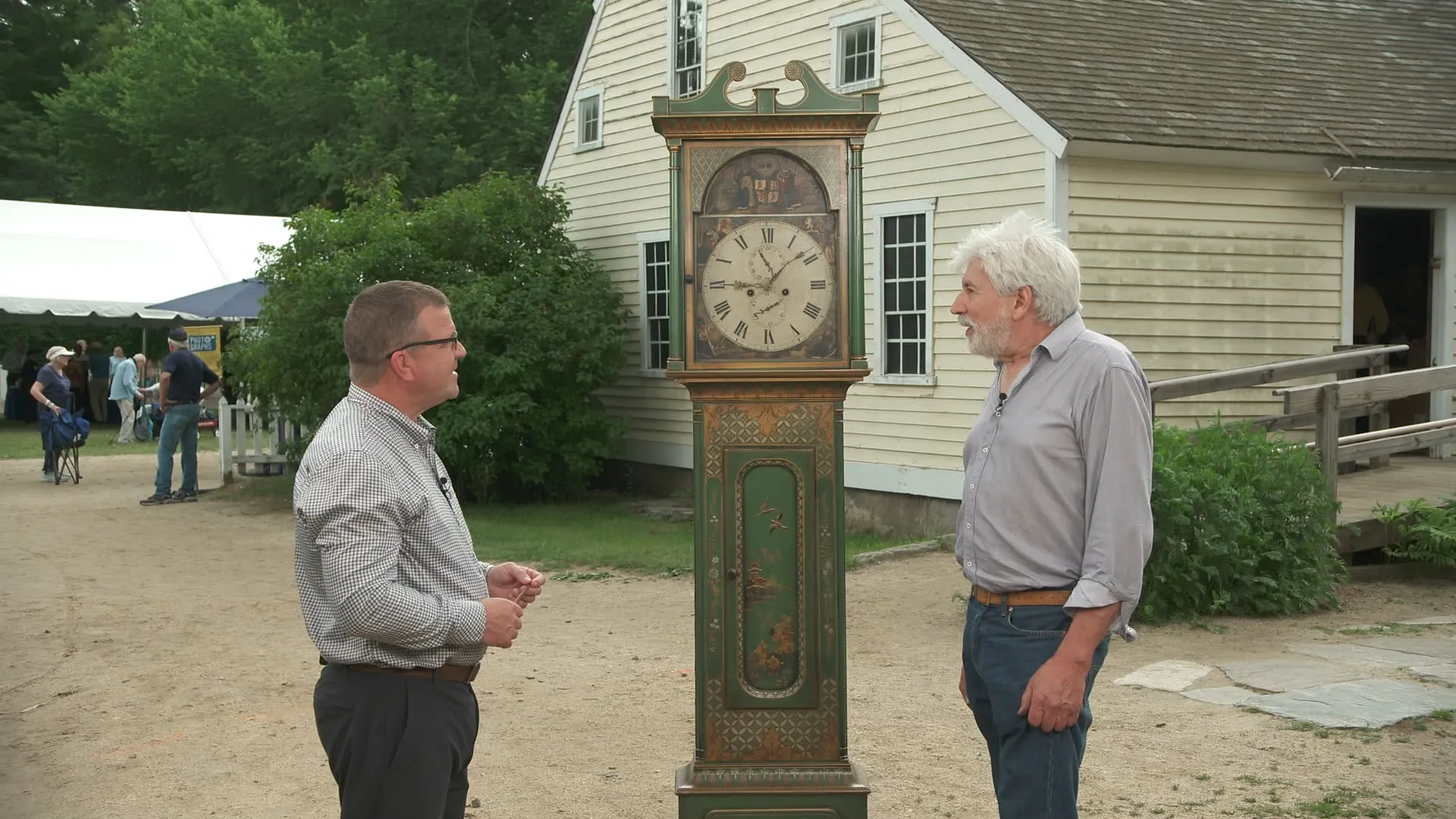
GUEST: It's been in the family since it was brand new, I believe. It's a Robert clock, and it's been handed from Robert to Robert to Robert to Robert. I'm the fifth one.
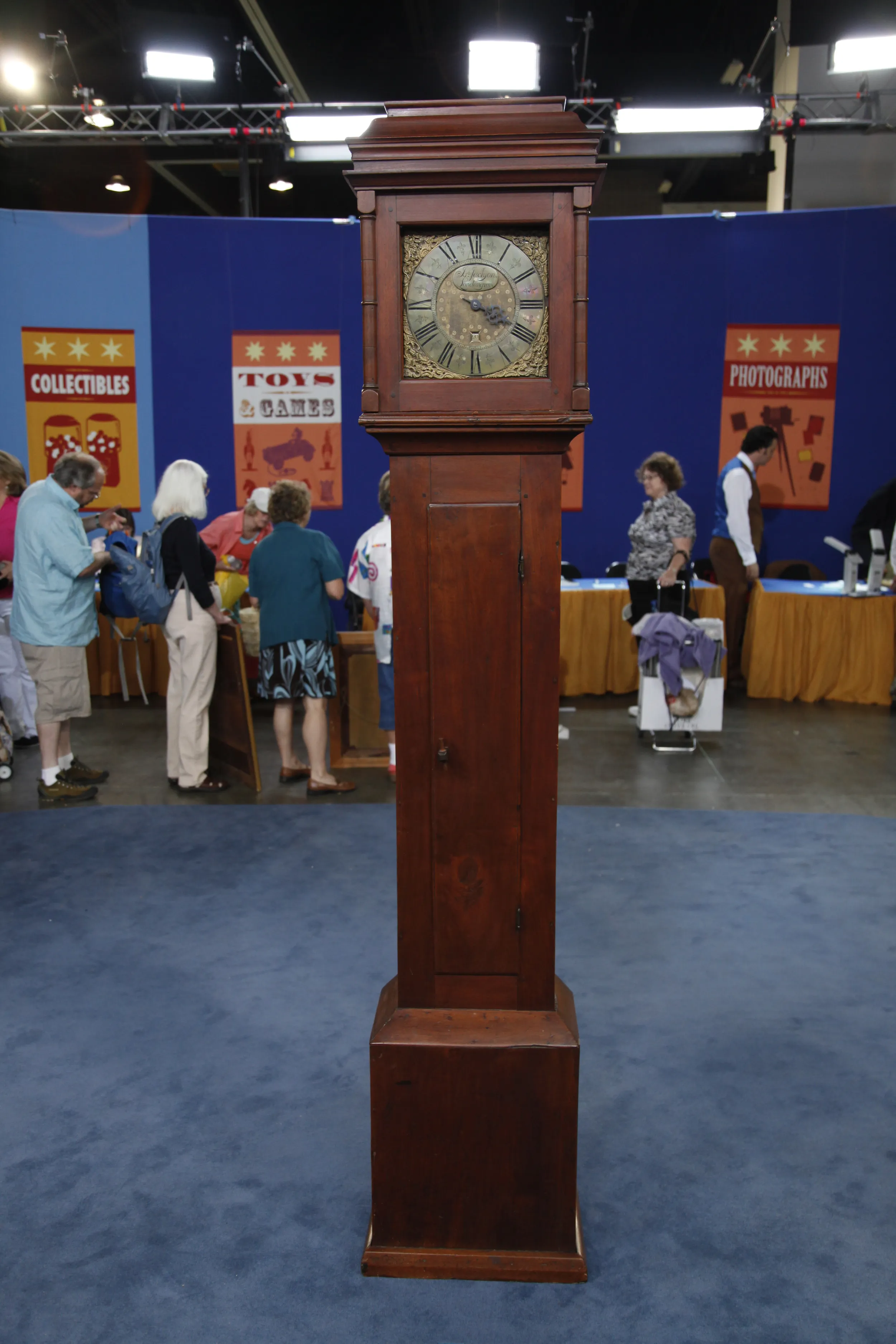
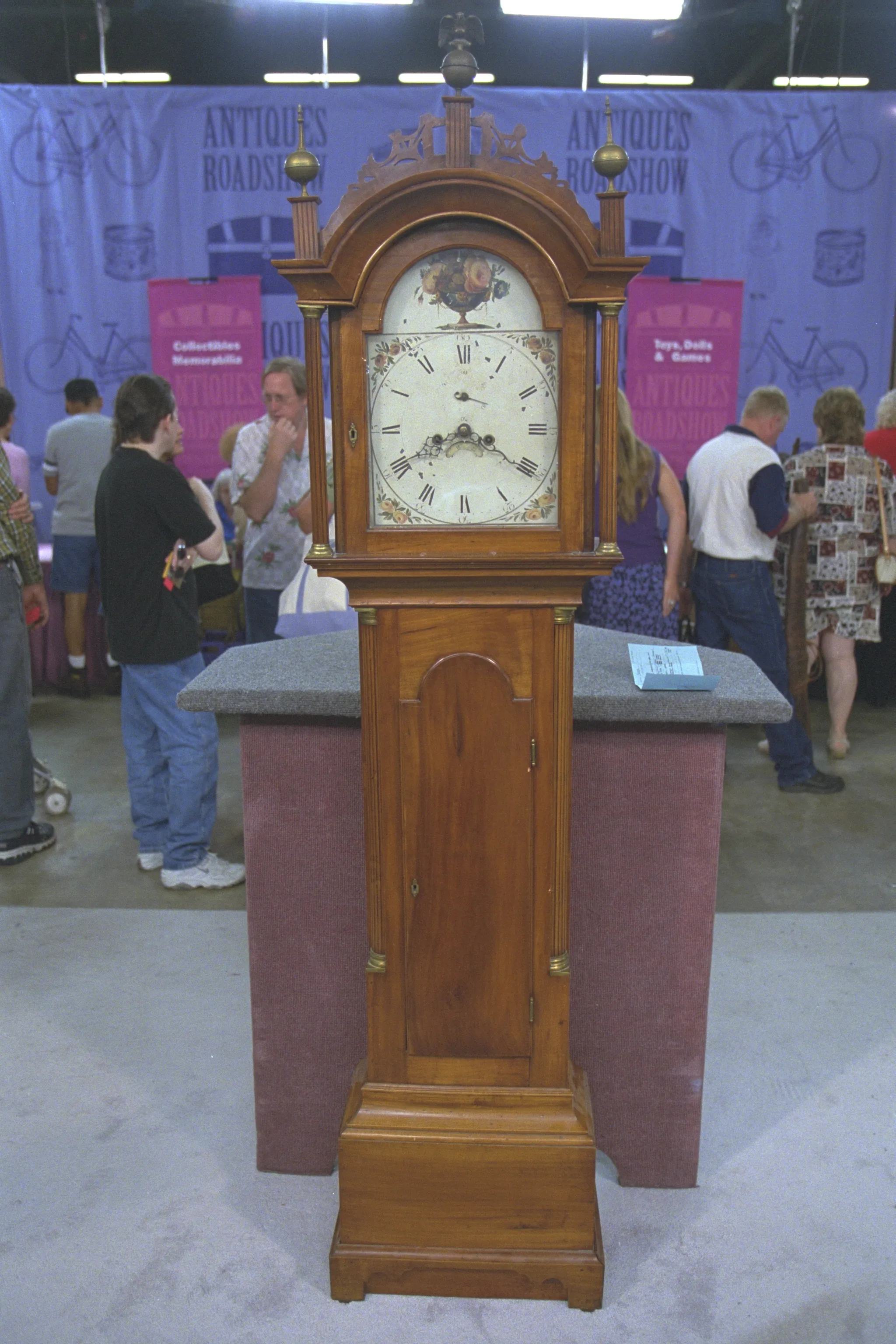
APPRAISER: Normally when you see a signature on the dial, you think that's who made the clock. Well, this clock, that's not the case. This is who sold the clock, who peddled the clock. And so it was Ezra Read and Luman Watson, and they would go around and sell just the movement, the weights and the pendulum. They've had receipts that they have found that they would sell them for around $20 for a movement like this. And this is a wooden works movement, so it runs for 30 hours on one winding. You wind it when you open the door and you pull the cords, but it has these falsified winding arbors that makes it look like an eight-day clock. The dial is in really great condition. The case is fantastic as well. Ezra Read had twin brothers that made this case. They set up shop in Xenia, Ohio, and they have these features that they used. It's an all solid cherry case with this big crotch mahogany inlay right here in the oval, and then here at the top, they have this inlay in the rosettes of this broken arch top. And then this is also another feature: this little applied molding right here. But what's really interesting about this is I know who made the movement. I slide this bonnet off... ...and I pull the works out...
GUEST: Okay.
APPRAISER: ...you'll see right here an "E.D." That stands for Ephraim Downs, who came over from Connecticut. He set up a shop in 1815-- and that's when this clock was probably made, in 1815-- in Cincinnati, Ohio. So the value of a clock like this, it would sell retail-wise for around $2,000 to $2,500.
GUEST: Okay, great.
APPRAISER: In 1990, a clock like this would sell more in the $4,000 to $5,000 range.
GUEST: Well, I don't want it to be very valuable because it's going to go to one of my sons and I don't want the others to feel out of joint.
APPRAISER: Great.
GUEST: That's good.