Scottish Tall Clock, ca. 1835
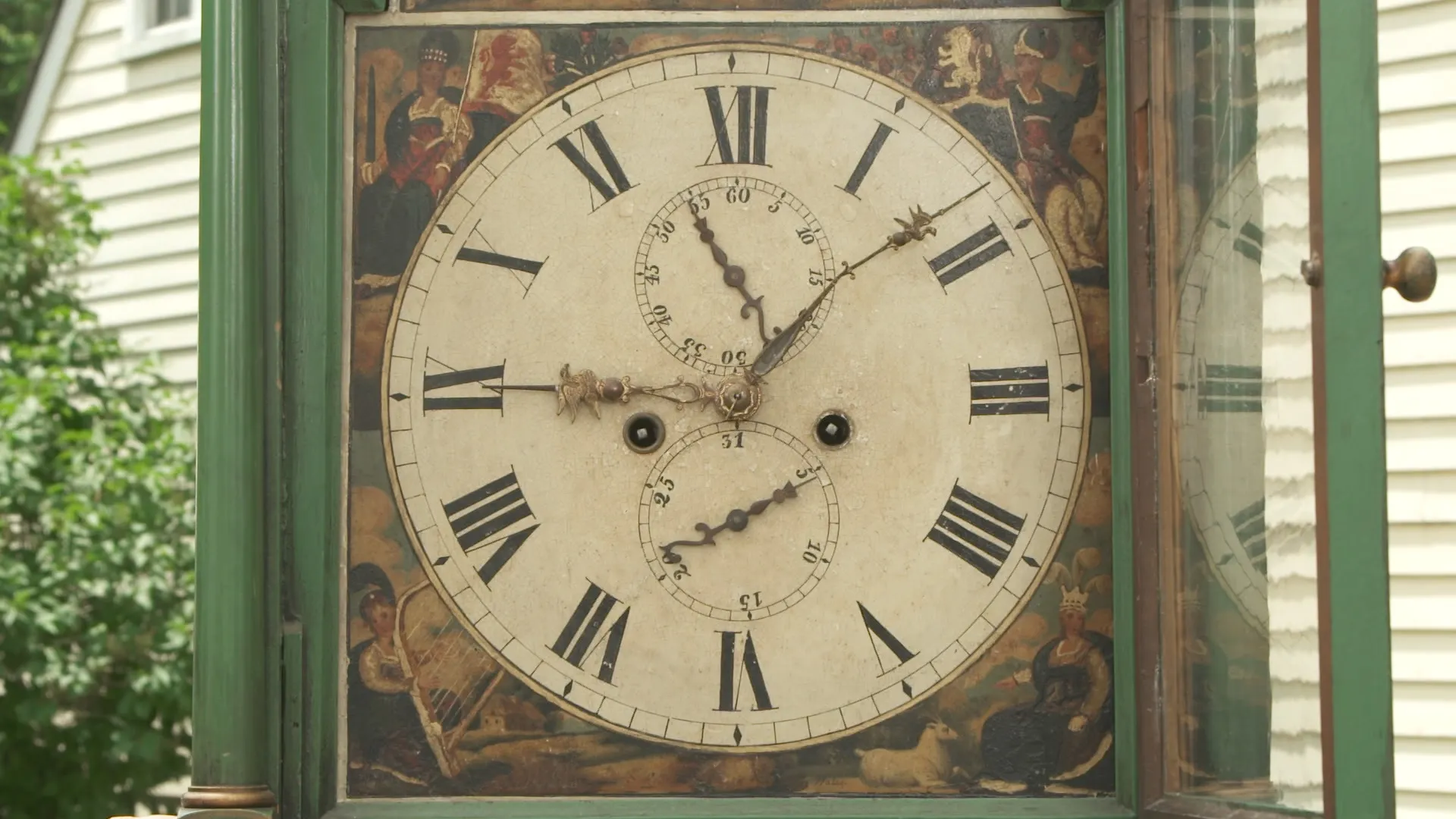
APPRAISER: It's a Scottish clock, and it was made circa 1830, 1835. Now, one of the things that leads me to that date is the dial. Earlier painted dials, every five minutes, they would have these...
GUEST: Oh, yeah.
APPRAISER: ...outer minute markings around the dial. And then the second form of a painted dial would just be at the quarters.
GUEST: Mm-hmm.
APPRAISER: And then the latest form of a painted dial is this. And this is right at the end, where you have no outer minute markings at all. They're really the end of the line for tall clocks that were made by individuals.
GUEST: Oh.
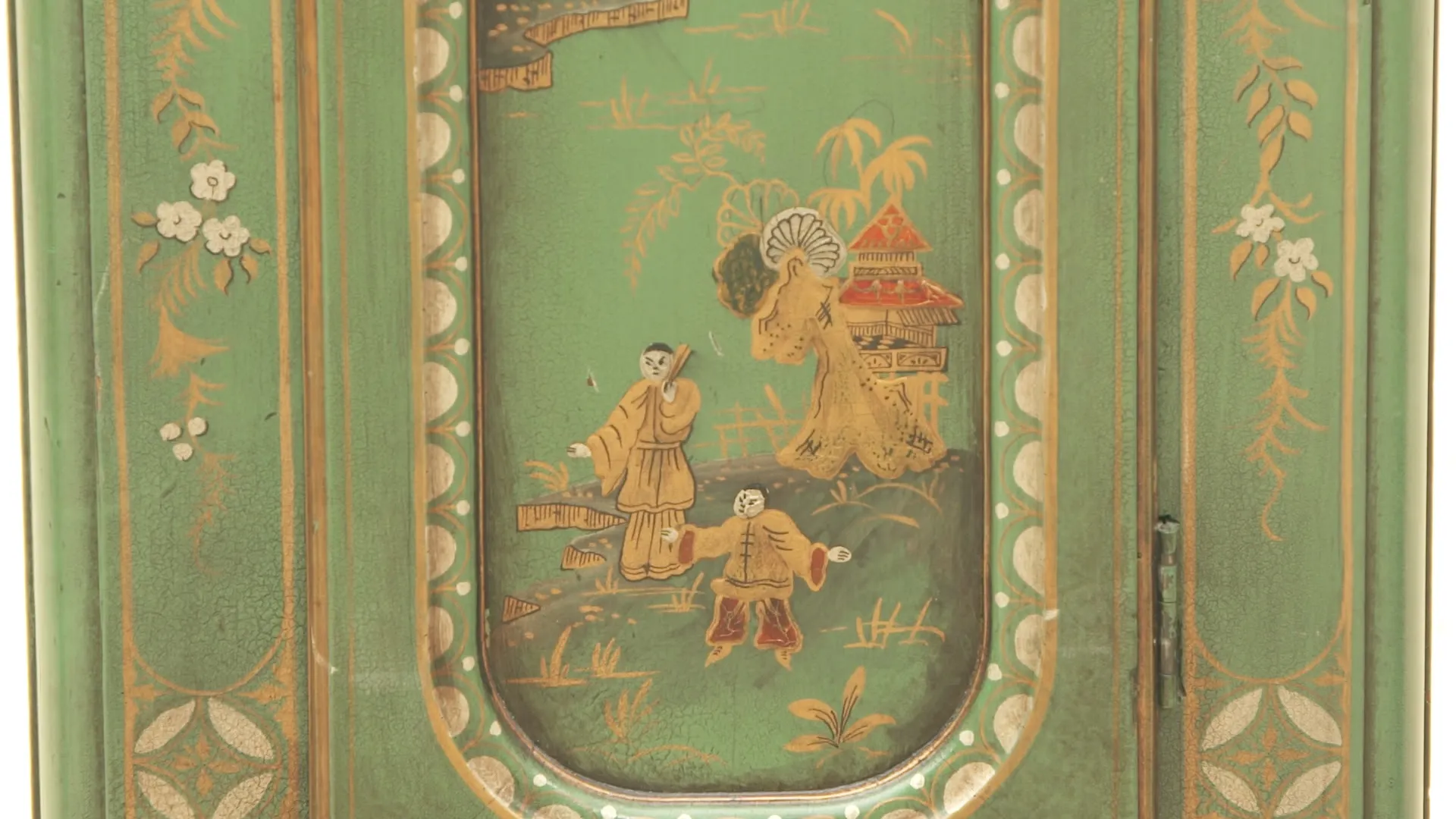
APPRAISER: They really fell out of fashion in 1830, 1840 was really when it was-- time was up. It's a very pretty case. It stands on cutout bracket feet and has a raised panel. And then it has this inset paneled door, and it comes to the bonnet, which is called a broken arch or a swan's neck pediment. It's painted, obviously repainted, as you already know. This is in chinoiserie painting...
GUEST: Chinoiserie.
APPRAISER: ...but it's made to look old. You see all this crackle in here?
GUEST: Ah.
APPRAISER: It was done on purpose. It's in beautiful shape, and it's very decorative. It's an old case, but the dial is fantastic. And it's fully painted. And most Scottish dials are fully painted in the spandrel areas here. You have Ireland represented here, you have Wales represented over here, and then England and Scotland. And then, in the arch of the dial, you have this unicorn that represents Scotland and the lion that represents England. And it says "union" right here, referring to the union in 1707 with Scottish Parliament and English Parliament, resulting in the United Kingdom. It's a very pretty clock, but it's sort of more of a decorative value because of the repainted case.
GUEST: Mm-hmm. I'll go home and strip it down.
APPRAISER: But...
GUEST: (chuckles)
APPRAISER: No, I, I-- this is so wonderfully done...
GUEST: It is.
APPRAISER: ...and it's so decorative that I would not do that. I would leave it just the way it is. I think in a retail store, this clock would sell probably in the $2,500 range.
GUEST: Okay. We'll just hang on to it.
APPRAISER: I don't blame you.

$2,500 Retail
Photos

Featured In
episode
Old Sturbridge Village, Hour 2
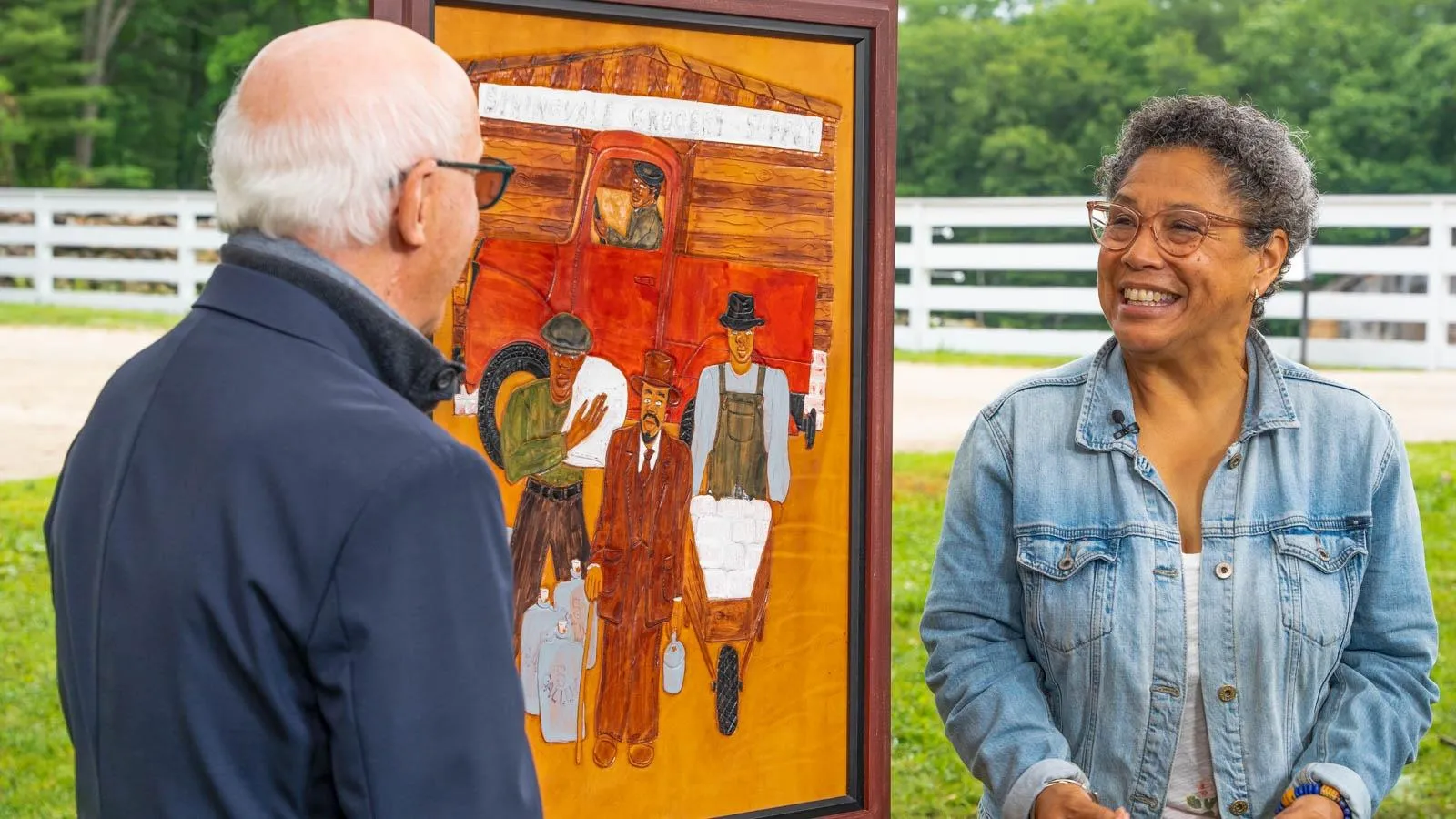
Old Sturbridge Village brings in new remarkable finds. One is $100,000 to $125,000!
19th Century
appraisal
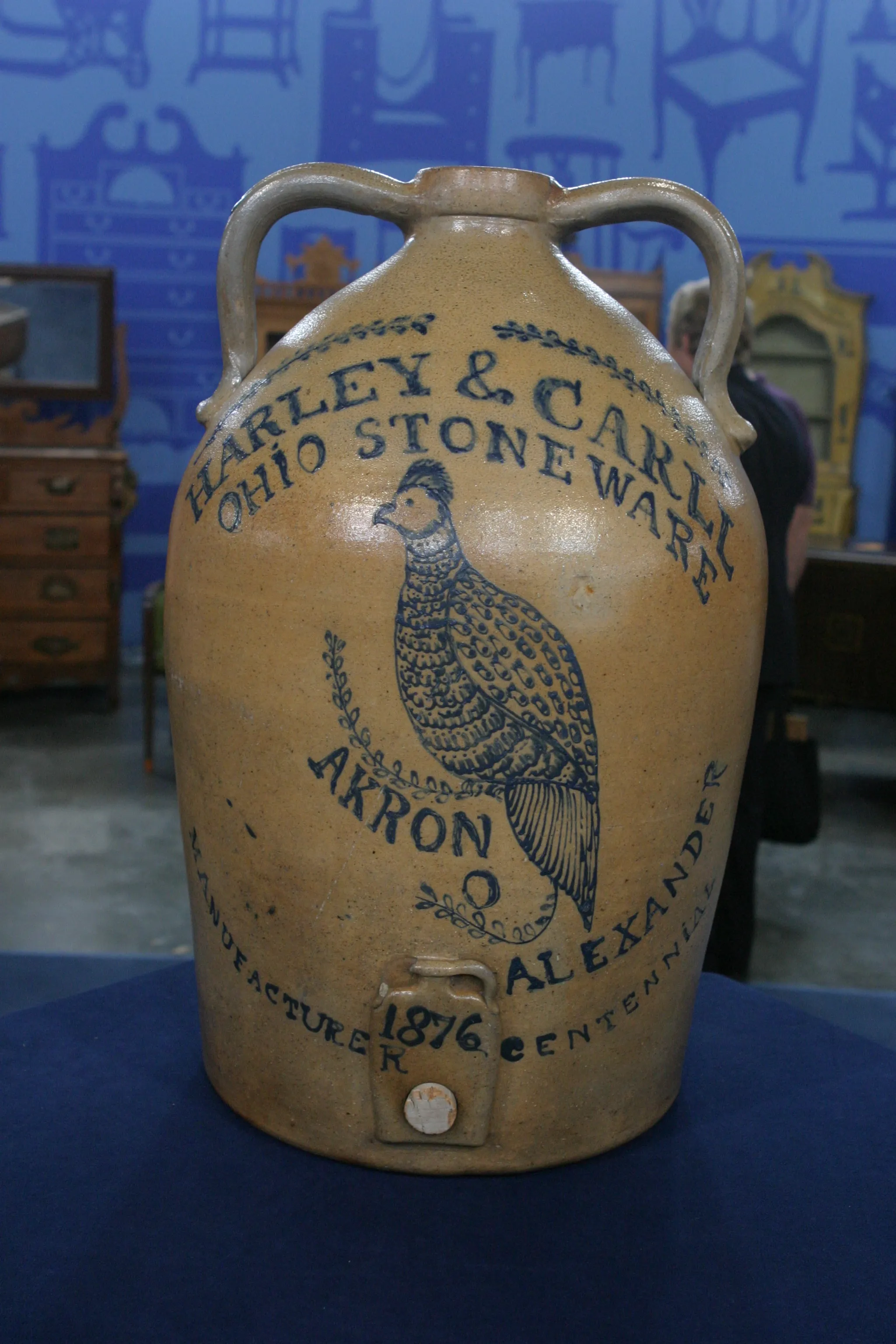
1876 John Alexander Stoneware Cooler
appraisal
Braided Rawhide Lariat, ca. 1850
appraisal
American School Portrait, ca. 1820
appraisal
Eskimo Hunting Helmet, ca. 1820
Understanding Our Appraisals
Executive producer Marsha Bemko shares her tips for getting the most out of ANTIQUES ROADSHOW.
Value can change: The value of an item is dependent upon many things, including the condition of the object itself, trends in the market for that kind of object, and the location where the item will be sold. These are just some of the reasons why the answer to the question "What's it worth?" is so often "It depends."
Note the date: Take note of the date the appraisal was recorded. This information appears in the upper left corner of the page, with the label "Appraised On." Values change over time according to market forces, so the current value of the item could be higher, lower, or the same as when our expert first appraised it.
Context is key: Listen carefully. Most of our experts will give appraisal values in context. For example, you'll often hear them say what an item is worth "at auction," or "retail," or "for insurance purposes" (replacement value). Retail prices are different from wholesale prices. Often an auctioneer will talk about what she knows best: the auction market. A shop owner will usually talk about what he knows best: the retail price he'd place on the object in his shop. And though there are no hard and fast rules, an object's auction price can often be half its retail value; yet for other objects, an auction price could be higher than retail. As a rule, however, retail and insurance/replacement values are about the same.
Verbal approximations: The values given by the experts on ANTIQUES ROADSHOW are considered "verbal approximations of value." Technically, an "appraisal" is a legal document, generally for insurance purposes, written by a qualified expert and paid for by the owner of the item. An appraisal usually involves an extensive amount of research to establish authenticity, provenance, composition, method of construction, and other important attributes of a particular object.
Opinion of value: As with all appraisals, the verbal approximations of value given at ROADSHOW events are our experts' opinions formed from their knowledge of antiques and collectibles, market trends, and other factors. Although our valuations are based on research and experience, opinions can, and sometimes do, vary among experts.
Appraiser affiliations: Finally, the affiliation of the appraiser may have changed since the appraisal was recorded. To see current contact information for an appraiser in the ROADSHOW Archive, click on the link below the appraiser's picture. Our Appraiser Index also contains a complete list of active ROADSHOW appraisers and their contact details and biographies.


