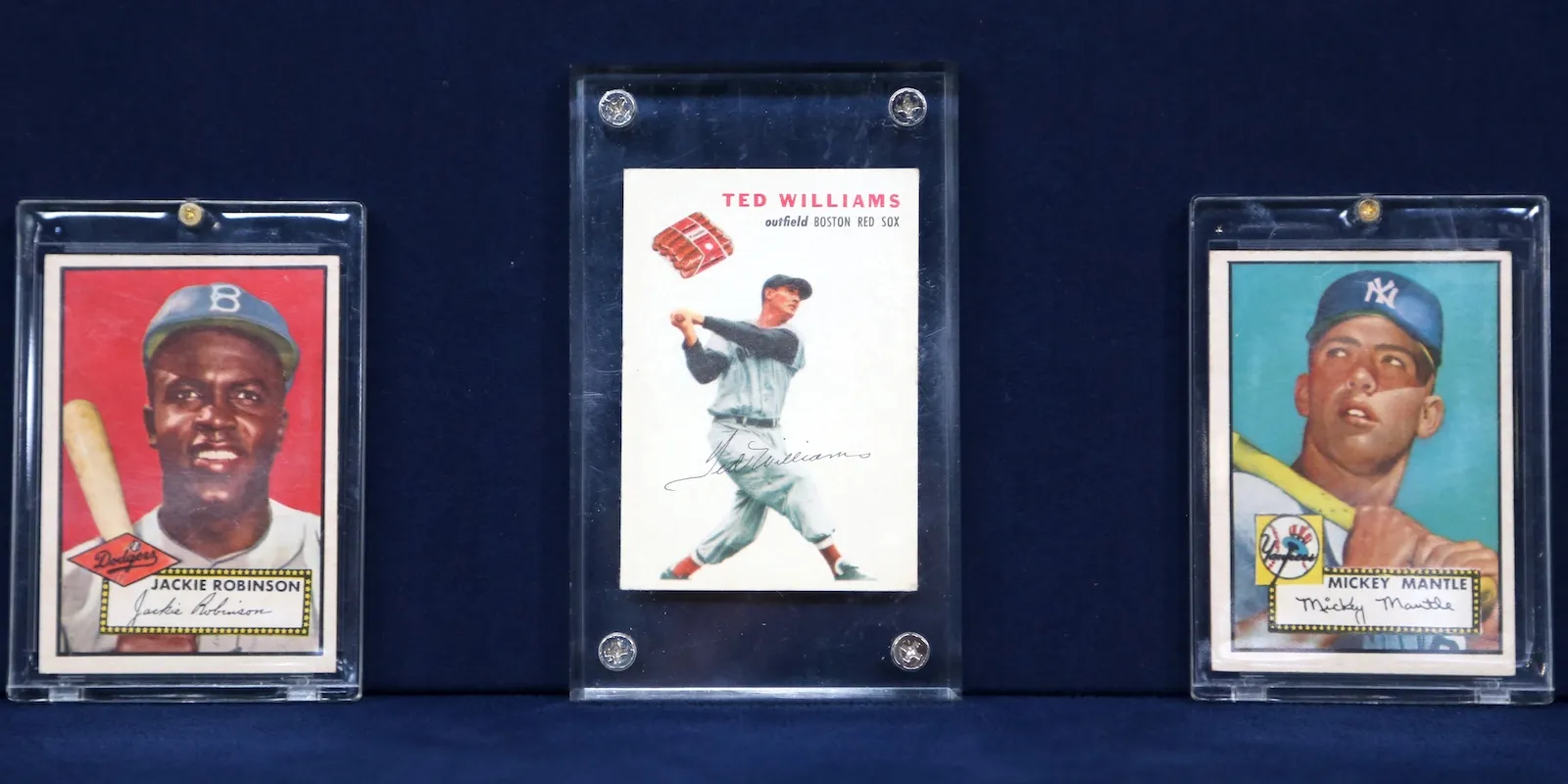
GUEST: I brought my husband's baseball cards. '51 through about '58 is when he was doing most of his collection.
APPRAISER: It's always a great story when Mom doesn't throw away my baseball cards.
GUEST: Oh, she didn't throw them away, which was unusual, because all of his friends that he grew up with, they either taped them to their walls or their moms threw them away.
APPRAISER: Mm-hmm.
GUEST: And for some reason, Maude didn't throw them away.
APPRAISER: Okay
GUEST: So she put them in a grocery bag, and we ended up putting them up in our attic. One weekend while my husband was gone, I decided I'd just look at them, and as I'm sorting them, I'm, like, "Oh, my gosh, he's really got a nice collection." And then the neat thing about it is, that a month after I did that, our home got hit by a tornado, and everything in that attic disappeared.
APPRAISER: Right.
GUEST: Along with most of the house, but...
APPRAISER: But you had rescued these... Rescued these cards about a month prior.
GUEST: Just a month prior, so it's, like, "Wow.
APPRAISER: Yeah.
GUEST: Can you believe that happened?" So I got it all organized, and then he couldn't believe-- he'd forgotten what he had.
APPRAISER: And you brought a real nice grouping today. Of your husband's cards.
GUEST: Yes, I hope so.
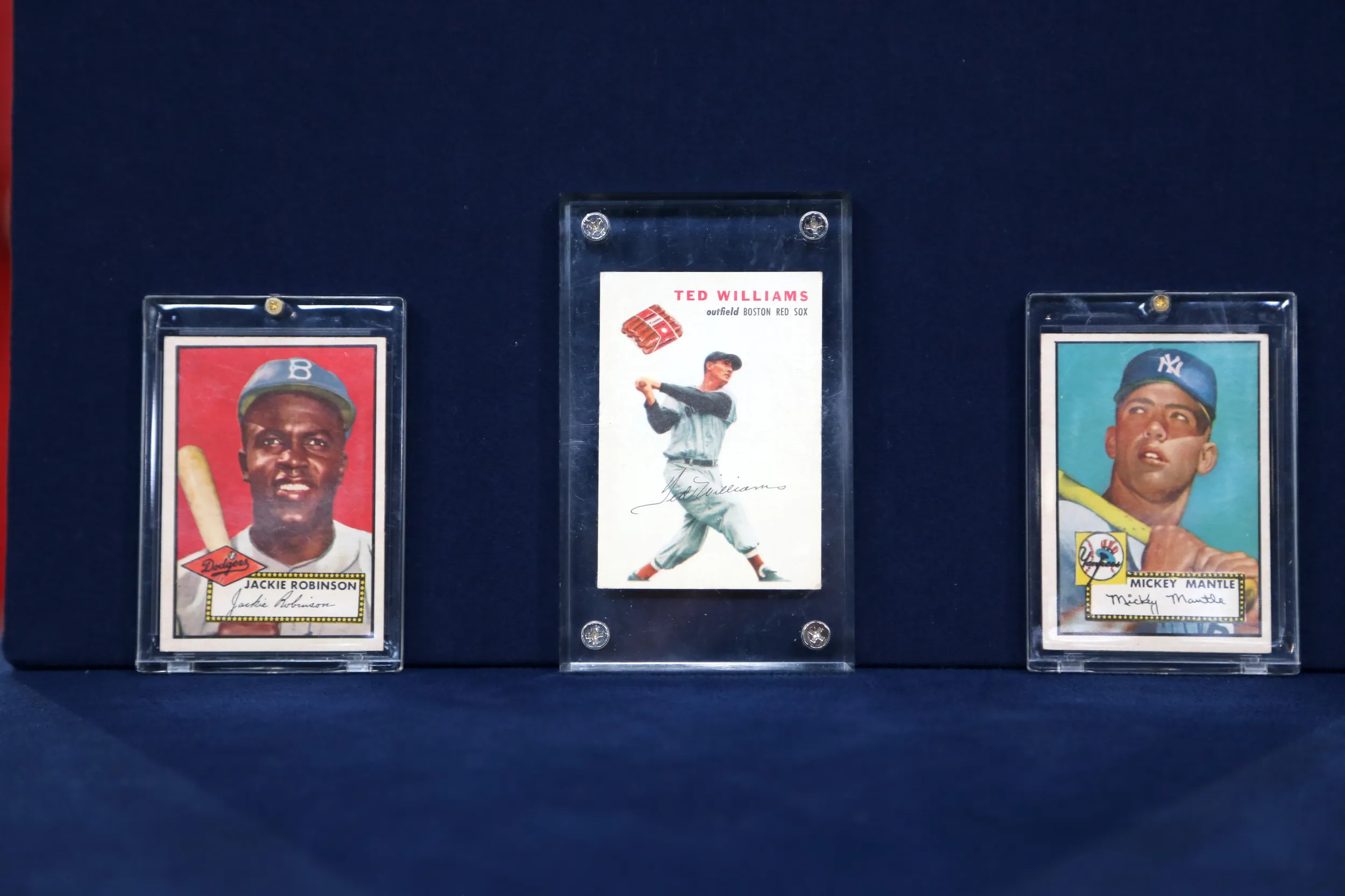
APPRAISER: And we pulled out a few to talk about specifically. The first card we have is the 1952 Topps Jackie Robinson.
GUEST: Right.
APPRAISER: So we're scrutinizing the condition, because the conditioning really goes down to a numerical grade. And ultimately, the advanced collectors, they're going to collect cards like this, where they're assigned a numerical grade on a scale of one to ten, primarily. And so we've scrutinized these heavily to also give them some preliminary numerical grading in our opinion. In my opinion, it's in the best condition of the three.
GUEST: Oh.
APPRAISER: I'm going to say a six.
GUEST: Oh, wow.
APPRAISER: And as well as all of the cards here, it has wonderful color, very little corner dings, and surface is near in perfect condition.
GUEST: Good.
APPRAISER: I would put an auction estimate on that one of $2,000 to $4,000.
GUEST: Okay, good.
APPRAISER: Next, we'll move to the Ted Williams. The 1954 Wilson Franks premium card.
GUEST: Yeah.
APPRAISER: That one actually appears by the naked eye to look better than the others, with very sharp corners, but it does have a little bit of staining on the back...
GUEST: Oh.
APPRAISER: And it has a little crease on the lower left that's very hard to detect without magnification. So that one, also at auction, $2,000 to $4,000.
GUEST: Another six?
APPRAISER: This one I'm assigning a numerical grade of four.
GUEST: Four, okay.
APPRAISER: Yeah, because of that, because of that small little crease there.
GUEST: Okay.
APPRAISER: So last card we have is the 1952 Topps Mickey Mantle rookie card.
GUEST: Right.
APPRAISER: And for any Mickey Mantle card collector, that-- if they can fit it in their budget, because even in low grades they start at about $5,000 on a one, on a scale of one to ten...
GUEST: Okay.
APPRAISER: But that's a must-have for any collector of Mickey Mantle baseball cards. That's the iconic 1952 Topps rookie card. On this one, very impressed with the surface. The coloring, very little if any fading. Very little corner or touch wear. So this one, I assigned a numerical grade of five. We put an auction value on that one of $30,000 to $40,000.
GUEST: You're kidding! Seriously!
APPRAISER: Yeah, the numerical grades are so important to the collectors, and on some of the high-end cards, that numerical grade, the difference of a five or a six is tens of thousands of dollars.
GUEST: Oh, wow.
APPRAISER: Yeah. But let's just say if I was too strict and it was a grade of six, then we would be looking at $80,000 to $120,000.
GUEST: Oh, my God. He's going to be so happy with that. Oh, thank you so much, that's just wonderful. I can't believe that!