Read the Dramatic Letter Written by an Eyewitness to Lincoln's Assassination
In 1865 a young man named John E. Bingham wrote a moving first-hand description of the fateful events of Friday night, April 14, at Ford's Theatre in Washington, D.C. Read his dramatic letter here.

Apr 9, 2018
At the August 2017 ROADSHOW in Portland, Oregon, a guest named Mary brought in a family letter written in 1865 by her grandfather (yes, that's right!) John E. Bingham, then a young man of 19, who was an eyewitness to John Wilkes Booth's assassination of President Abraham Lincoln at Ford's Theatre in Washington, D.C., on April 14 of that year.
"[The assassin's] face is impressed on my mind so strongly that I think I never will forget it. His eyes gleamed like fire, his skin almost white to transparency and his jet black hair waving in accordance with his motions. ... Such a sight as I saw there was enough to touch the heart of a savage."
In the letter dated April 21 and addressed to his uncle, Bingham describes how he had decided to go with a couple of friends to Ford's Theatre the previous Friday evening in hopes of catching a glimpse not of President Lincoln, whom he had recently stood in the rain to see deliver a speech on the country's post-war future, but of Gen. Ulysses S. Grant, the hero of the Union cause, who had received General Lee's unconditional surrender of Confederate troops at Appomattox the previous Sunday, April 9.
Bingham did not get to see the general, for perhaps luckily Grant did not attend My American Cousin after all. But as the account written a week later attests, the grave and shocking events Bingham did witness that night at Ford's Theatre affected him deeply.
Books & Manuscripts expert Ian Ehling was clearly moved at the experience of reading such a vividly written — and previously unknown — historical document, remarking that "You can't get any closer to the tragic events of that day. ... This description, it just makes my hair stand up — just unbelievable." He appraised its auction value at between $10,000 and $15,000.
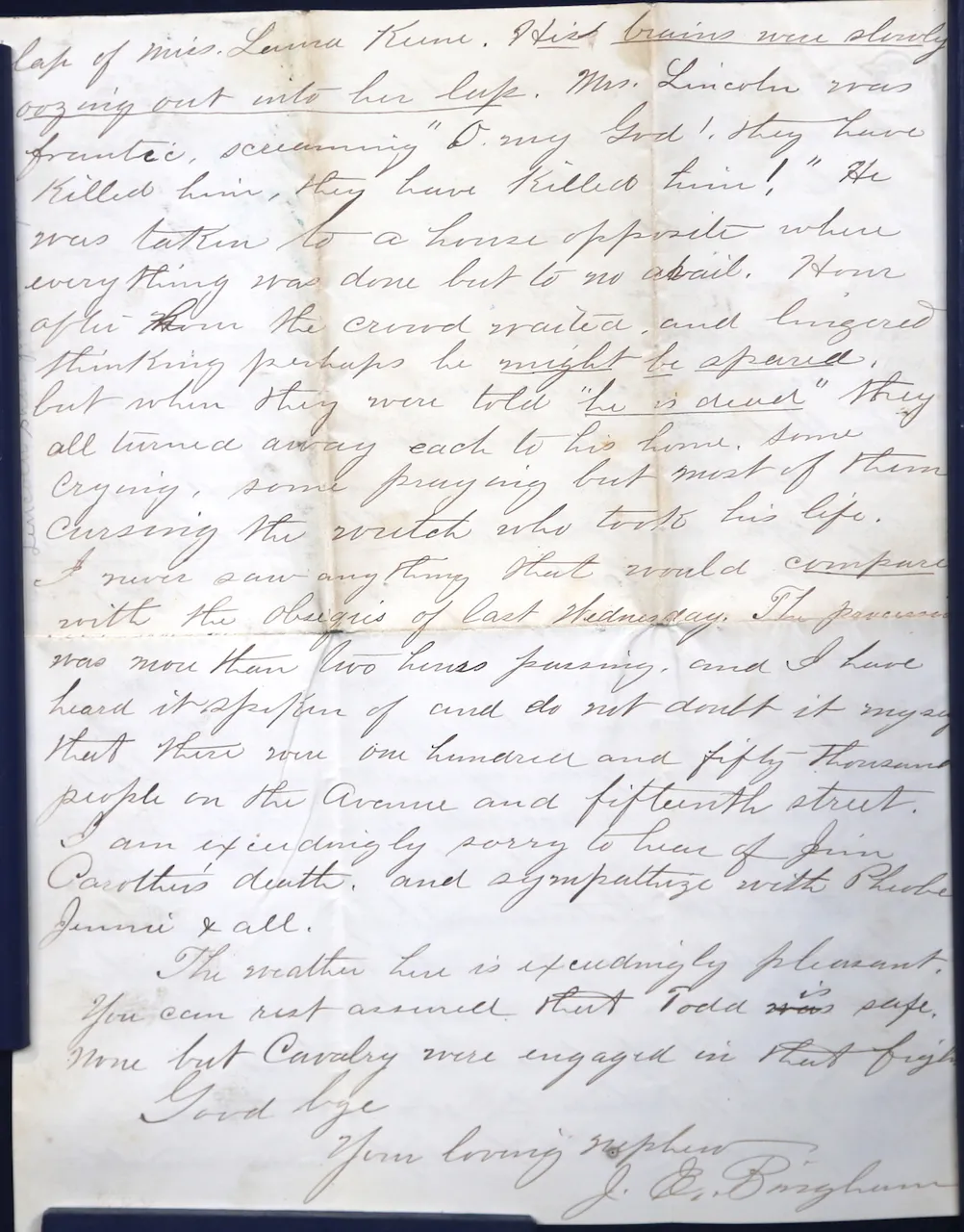
Read Bingham's full letter below.
Letter from J. E. Bingham to his uncle, April 21, 1865
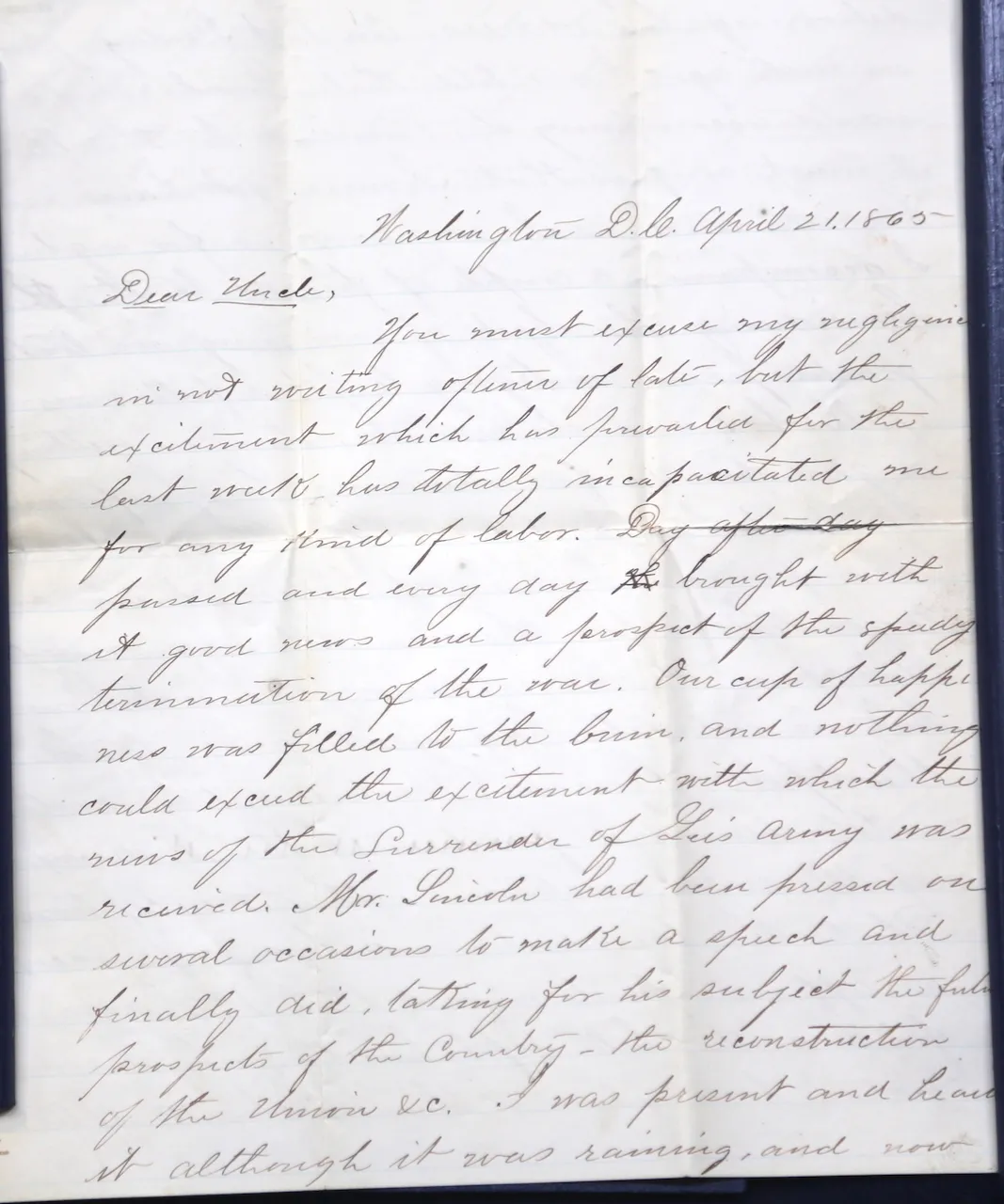
Washington D.C. April 21, 1865
Dear Uncle,
You must excuse my negligence in not writing oftener of late, but the excitement which has prevailed for the last week has totally incapacitated me for any kind of labor. Day after day passed and every day brought with it good news and a prospect of the speedy termination of the war. Our cup of happiness was filled to the brim, and nothing could exceed the excitement with which the news of the Surrender of Lee's army was received.
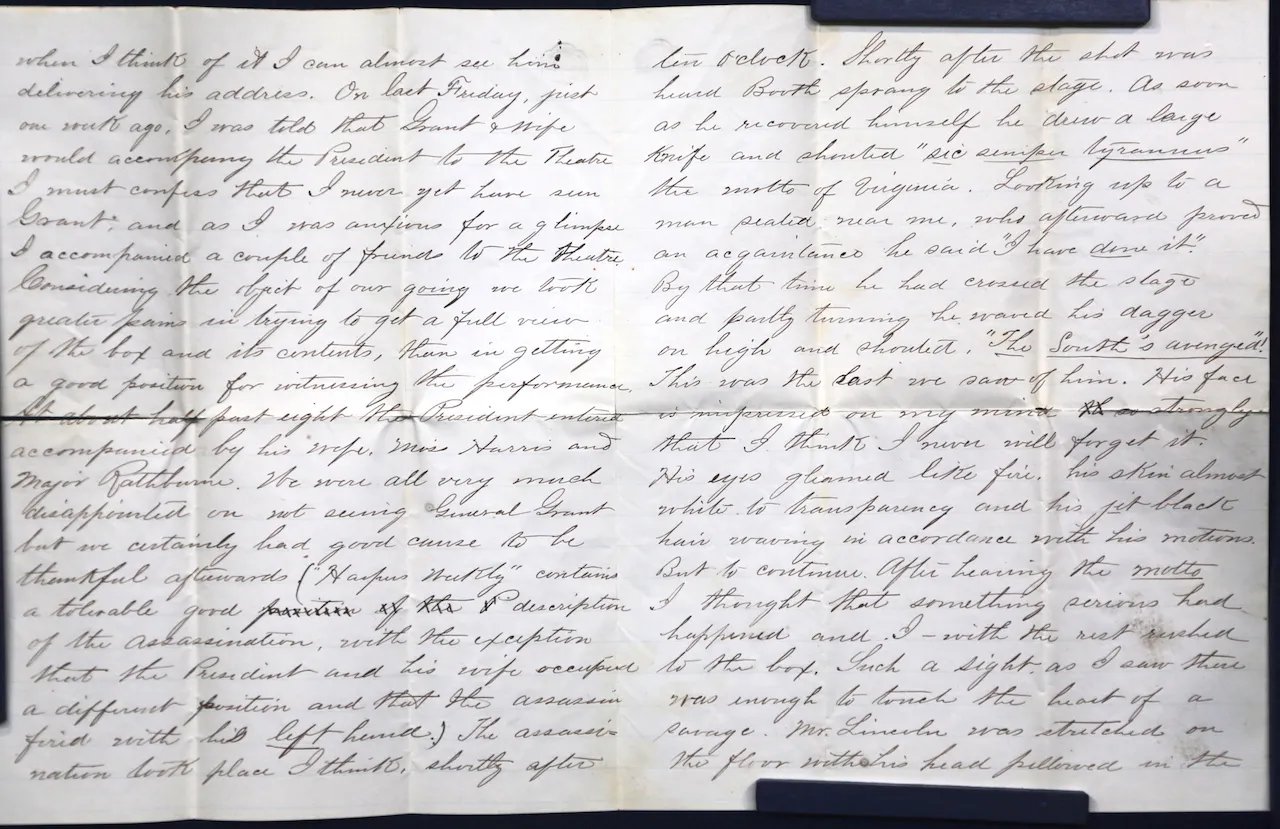
Mr. Lincoln had been pressed on several occasions to make a speech and finally did, taking for his subject the future prospects of the Country — the reconstruction of the Union, &c. I was present and heard it although it was raining, and now when I think of it I can almost see him delivering his address. On last Friday, just one week ago, I was told that Grant & wife would accompany the President to the Theatre[.] I must confess that I never yet have seen Grant, and as I was anxious for a glimpse I accompanied a couple of friends to the theatre[.] Considering the object of our going we took greater pains in trying to get a full view of the box and its contents, than in getting a good position for witnessing the performance. At about half past eight the President entered accompanied by his wife, Miss Harris and Major Rathbone.
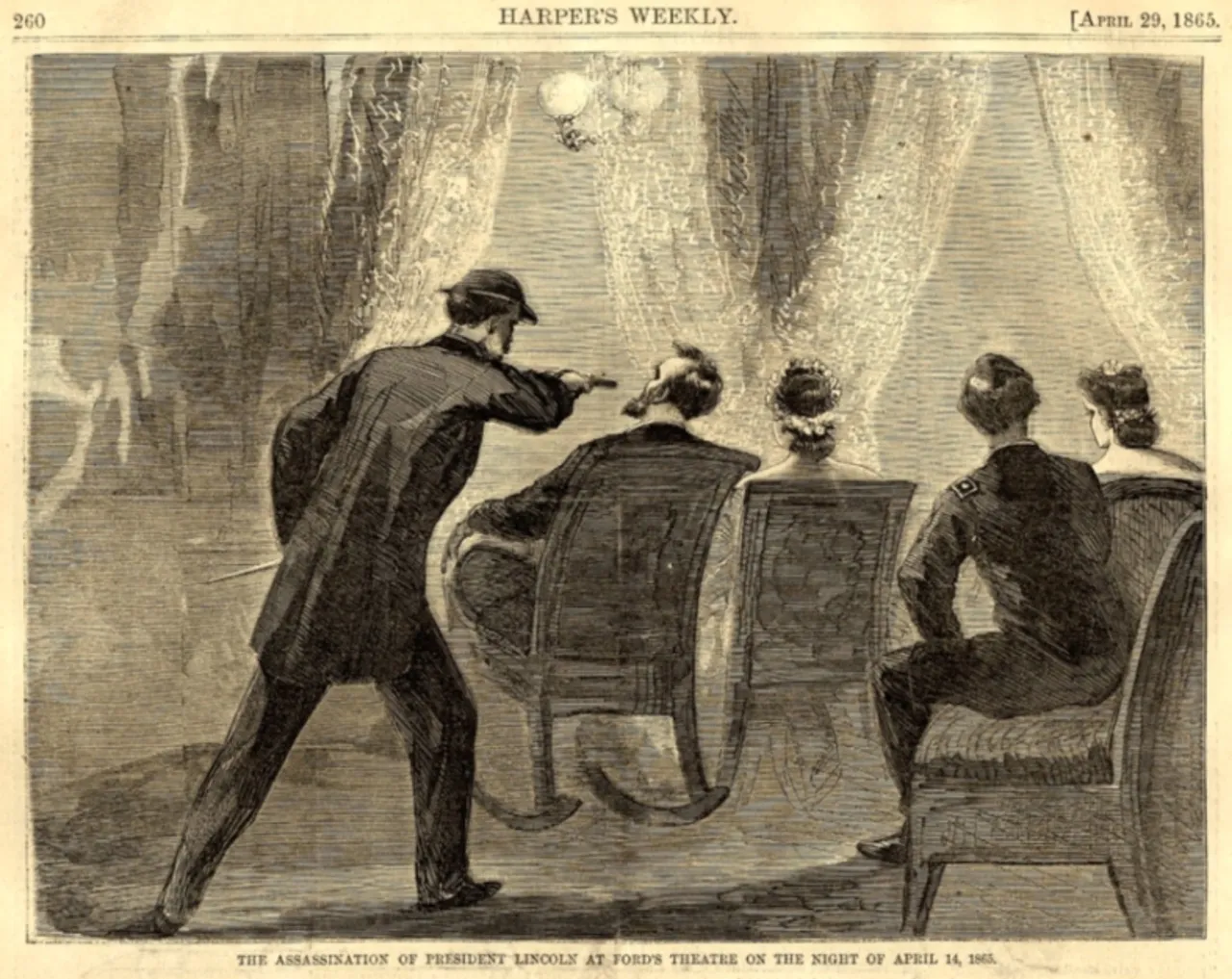
We were all very much disappointed on not seeing General Grant but we certainly had good cause to be thankful afterwards ("Harpers Weekly" contains a tolerable good description of the assassination, with the exception that the President and his wife occupied a different position and that the assassin fired with his left hand.) The assassination took place I think shortly after ten o'clock. Shortly after the shot was heard Booth sprang to the stage. As soon as he recovered himself he drew a large knife and shouted "sic semper tyrannis" the motto of Virginia. Looking up to a man seated near me, who afterwards proved an acquaintance, he said "I have done it." By that time he had crossed the stage and partly turning he waved his dagger on high and shouted, "The South's avenged!" This was the last we saw of him.
His face is impressed on my mind so strongly that I think I never will forget it. His eyes gleamed like fire, his skin almost white to transparency and his jet black hair waving in accordance with his motions. But to continue. After hearing the motto I thought that something serious had happened and I with the rest rushed to the box. Such a sight as I saw there was enough to touch the heart of a savage.
Mr. Lincoln was stretched on the floor with his head pillowed in the lap of Miss Laura Keene. His brains were slowly oozing out into her lap. Mrs. Lincoln was frantic, screaming "O my God! They have killed him, they have killed him!" He was taken to a house opposite where everything was done but to no avail. Hour after hour the crowd wailed and lingered thinking perhaps he might be spared, but when they were told "he is dead" they all turned away each to his home. Some crying, some praying but most of them cursing the wretch who took his life.
I never saw anything that would compare with the obsequies of last Wednesday. The procession was more than two hours passing, and I have heard it spoken of and do not doubt it myself that there were one hundred and fifty-thousand people in the Avenue and fifteenth street. I am exceedingly sorry to hear of Jim Caruthers' death, and sympathize with Pheobe Jinnci [?] & all.
The weather here is exceedingly pleasant. You can rest assured that Todd is safe. None but Cavalry were engaged in that fight.
Good bye
Your loving nephew
J. E. Bingham
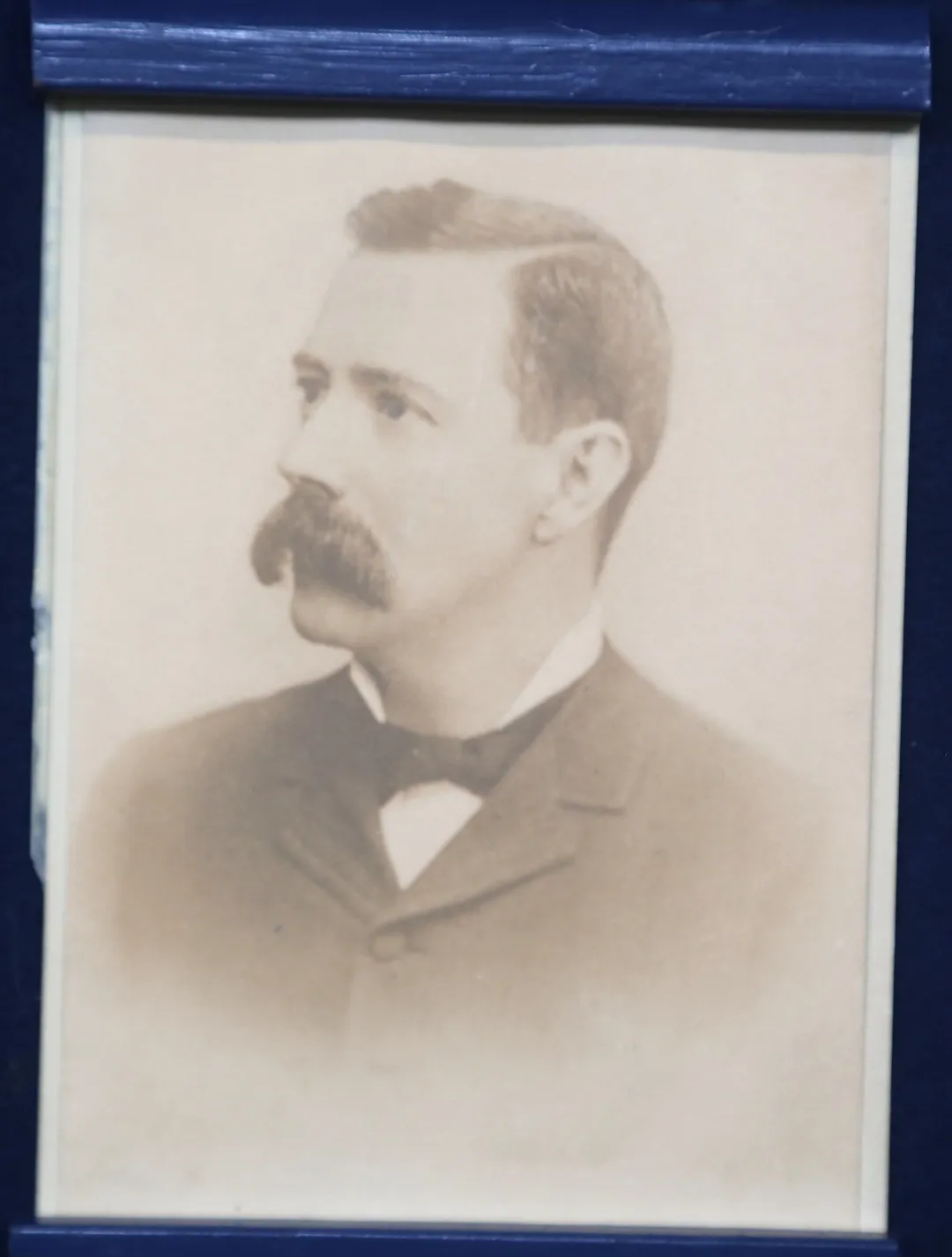
Along with the letter, Mary brought this later 19th-century photograph of its author, her grandfather, John E. Bingham.
GUEST: It's a letter from my grandfather. It was written in 1865. He wrote to his uncle, and he was in Washington, D.C., at the time. He and some friends went to the theater one evening because they had heard that Grant was going to be there, so they thought they want to make sure they could see him.
APPRAISER: Your grandfather is in Washington in 1865—
GUEST: Correct.
APPRAISER: And he's going to the theater to see Ulysses Grant.
GUEST: Yes, who he thinks is going to be there with President Lincoln.
APPRAISER: You remember which theater they were going to?
GUEST: Oh, now, that's not fair. (laughing)
APPRAISER: Well, they were going to the Ford Theatre.
GUEST: Ford Theatre, yes.
APPRAISER: As is mentioned in the letter. The letter's written on April 21, 1865, and your grandfather is at the theater on the Friday before, which was April 14, the day of the assassination. And it is just incredibly moving. The detail of the letter just blew me away.
GUEST: (chuckles)
APPRAISER: So we get the date here, April 21, 1865, and he's describing the events, like he's describing positioning himself to see the president. Let's turn the page here, and if you can give me a hand, we can get to the inside and the more descriptive part of the letter. Written in a wonderful hand, and just a very incredible style. Your grandfather was a very gifted writer. So he's at the theater, he's describing what is going on. "'Harper's Weekly’ contains a good description of the assassination, with the exception that the president and his wife occupied a different position and that the assassin fired with his left hand," underlined. So "Harper's," according to your grandfather, made the mistake of not really accurately describing the event. Up here, this just said, you know, "Shortly after the shot was heard, Booth sprang to the stage, he broke his ankle there. As soon as he had recovered himself, he drew a large knife and shouted, 'Sic semper tyrannis, the motto of Virginia. Looking up to a man seated near me who afterwards proved an acquaintance, he said, 'I have done it.' By that time he had crossed the stage, and partly turning, he waved his dagger on high and shouted, 'The South's avenged.'" This description just... let's my... let's my hair stand up. (chuckles) It's just unbelievable. Where do you keep it?
GUEST: At the bank. (laughs)
APPRAISER: In a safety deposit box, right.
GUEST: Yes, and I'm really concerned, because I think it needs some sort of preservation, for sure.
APPRAISER: It does. The letter written by your grandfather, he wasn't like, a recognized person, right? So a letter written by him would be-- just have a very dear family value. But the contents of this letter just makes it so incredibly important. A conservative estimate at auction would be $10,000 to $15,000. I would expect it to go much higher than that, but at auction, you want to play things safe, and you also want to get people to bid, and so $10,000 to $15,000 would be an awesome starting point.
Luke Crafton is ANTIQUES ROADSHOW's director of digital content and managing editor of the series website. Luke has been a producer with ROADSHOW since 2006.


