Jan 27, 2014
GUEST: This has been passed down through our family. It would be my husband's great-great-grandma's uncle. He was in the Civil War. As far as we know, it's always been hanging from his gun that he used in the Civil War. We were told that it's a tobacco dryer, and he would put his tobacco in there and chew it and then put it in there to dry and then get it back out and chew it again, and so...
APPRAISER: Well, this was probably not made by your great-uncle. Who do you think may have made it?
GUEST: We were told Eskimos made it.
APPRAISER: Eskimo for sure, Alaskan Eskimo.
GUEST: Okay, that's what we were told, so...
APPRAISER: And it may well have been attached to an Eskimo's gun at one time. It was indeed for tobacco or snuff.
GUEST: Okay, so we were right.
APPRAISER: An Eskimo hunter out on the icy tundra may want a little bit of a pick-me-up, and the snuff would do that.
GUEST: Okay.
APPRAISER: The image is of a seal, and that very likely is what the hunter was looking for. And in a curious twist of fate, the seal's energy or inner powers are helping the hunter find the seal. It's a very, very fascinating complex.
GUEST: Wow!
APPRAISER: On the back of this object, there's another face.
GUEST: I... I didn't even notice that.
APPRAISER: It's just a remarkable face, and it reflects the indwelling spirit of the seal. This snuff container also functioned as a small finger mask, and it would be put on and danced with.
GUEST: Really?
APPRAISER: There are very, very tiny holes all around the periphery of the head, and there would be little feathers attached into the head, and so when this was held, the feathers would flutter. It would have a very animated effect. It's rather early; it probably dates to 1850. The wood was carefully selected. The wood is northern cedar. This is a particularly useful wood in a very, very damp climate. It resists moisture, resists cracking. It's light, yet durable.
GUEST: Okay.
APPRAISER: We can open this and see the cavity that actually contained that. And that's where the tobacco and snuff would be contained.
GUEST: We never opened it before!
APPRAISER: It can be in there rather firmly.
GUEST: Okay.
APPRAISER: It's a very, very rare piece, and it'd be very, very desirable. I think readily, on a retail market, about $8,500.
GUEST: Really?
APPRAISER: It's a very desirable object, beautifully carved.
GUEST: Wow! Oh, my gosh! We had no idea.
APPRAISER: Well, will you attach it back to the gun and hang it on the wall?
GUEST: (laughing) Probably not. It'll probably have to go on something nicer now. Wow!
APPRAISER: Thanks so much for bringing it.
GUEST: Thanks, that's amazing.
At the Detroit ROADSHOW event in June 2013, Ted Trotta appraised this wooden Alaskan Eskimo piece, formed in the image of a seal and possibly used by a hunter as a snuff container, which reflected the indwelling spirit of the seal. The seal is "very likely what the hunter was looking for," Trotta explained, "and in a curious twist of fate, the seal's energy or inner powers are helping the hunter find the seal." In addition, the piece functioned as a small finger mask; it would have had feathers attached that would flutter when worn. This particular example is missing the feathers, though the light and durable northern cedar is still in good condition. Ted placed a retail value of $8,500 on the piece.
According to Trotta, these Yup’ik dance fans from Alaska show what the one brought in to Detroit would look like when fully decorated. These particular ones are made of wood, duck tail feathers, snowy owl feathers, and caribou fur, as well as some pigment.
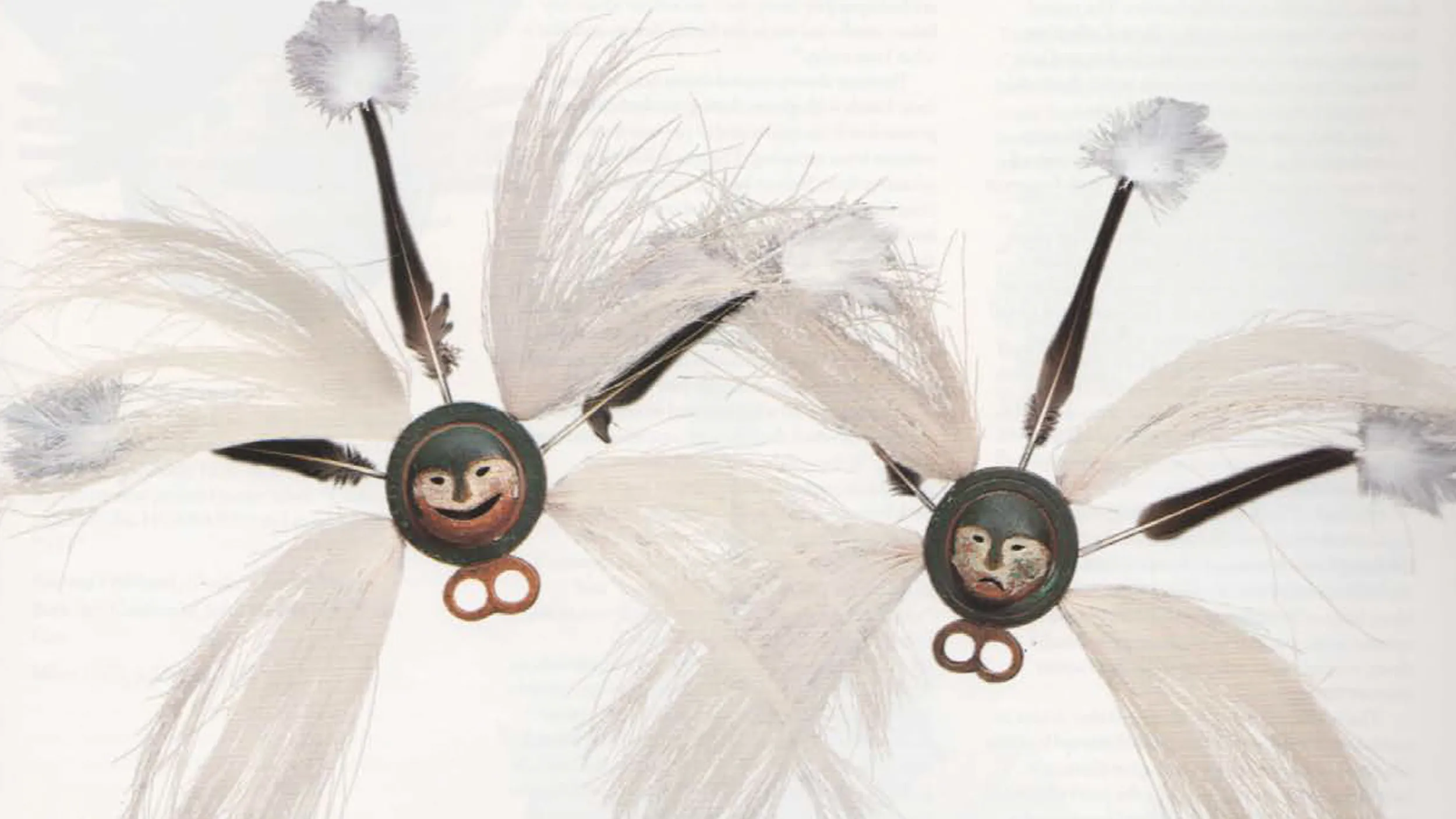
Yup’ik dance fans from Alaska. Image provided by Ted Trotta from "Art of the North American Indians: The Thaw Collection" from the Fenimore Art Museum, Cooperstown, New York.
Dylan Hayley Leavitt was ANTIQUES ROADSHOW's digital associate producer from 2012 to 2017.


