World War II WAVES Pilot Group
GUEST: This is my mother's, uh, flight jacket, two pictures of her, and her flight log. In the Navy, she was a stewardess. She was one of only 30 WAVES who were, uh, taken into a squadron and given the namesake "The 30," uh... Guys, when they were being discharged, there was a guy that was slashing the back of the jackets, and she just refused. So she ended up stealing it from the Navy and had to stand the captain's mast for that. So, we're very proud of it. (chuckles)
APPRAISER: As you should be. So, what is the captain's mast?
GUEST: It's one step below a court-martial, and, uh, she could have been in serious problem for, uh, stealing it. But, uh, fortunately, they let her go.
APPRAISER: They were demilitarizing...
GUEST: Yes.
APPRAISER: ...all of the material from the Navy.
GUEST: Yeah. The, the 30, uh, jackets were all being destroyed, and as far as I know, that's the only one that has survived.
APPRAISER: Yeah. I've never seen another one for a WAVE before.
GUEST: Mm-hmm.
APPRAISER: The WAVES, Women Accepted for Voluntary Emergency Services. The WAVES were formed in, in 1942 to alleviate some of the services, get men out into, into ships and in combat. So they did all sorts of jobs, from working in hospitals to, like your mom, be working on an aircrew of an aircraft.
GUEST: Mm-hmm.
APPRAISER: To be crewing a plane at that time was pretty impressive. They were in service through the end of the war, and were demobilized in, in 1948. They had done that so that they could be actually integrated into the regular Army, Navy. And that was due to their service, um...
GUEST: Mm-hmm.
APPRAISER: ...during World War II, that they actually became regular members of the, of the military. And she served when?
GUEST: The very end of World War II into peacetime.
APPRAISER: So it looked like from... The... ...the, the logbook here...
GUEST: Mm-hmm.
APPRAISER: Looked like the fall of 1945 into '46, '47?
GUEST: Yeah, mm-hmm.
APPRAISER: And it seems like she did some traveling. She flew around quite a bit. She did.
GUEST: Her main unit was covering from Boston to Miami, and then she did Bermuda to San Francisco.
APPRAISER: Well, it's wonderful that we have a leather flight jacket, a U.S. Navy version AN-J-3A. The only ones I've ever seen before were worn by men. You've got a wool waistband, cuffs that have a few holes, it's got a little wear from use, but it's still in good condition. You said your mother is wearing it in this photograph?
GUEST: Yes. Her jacket there and her boots. Her flight boots. Yeah. She stole, actually, the flight boots...
APPRAISER: (chuckles)
GUEST: ...also, from the Navy.
APPRAISER: For the group, we would put an auction estimate of $1,000 to $1,500.
GUEST: Oh, really?
APPRAISER: Part of the value being in the jacket itself, but the historical value is what's really important with it. I'm sure glad that we could see this today...
GUEST: Thank you, Mom.
APPRAISER: ...and talk about your mom.

$1,000 - $1,500 Auction
Featured In
episode
Idaho Botanical Garden, Hour 2
Watch breathtaking Boise appraisals at Idaho Botanical Garden. One is up to $40,000!
19th Century
appraisal
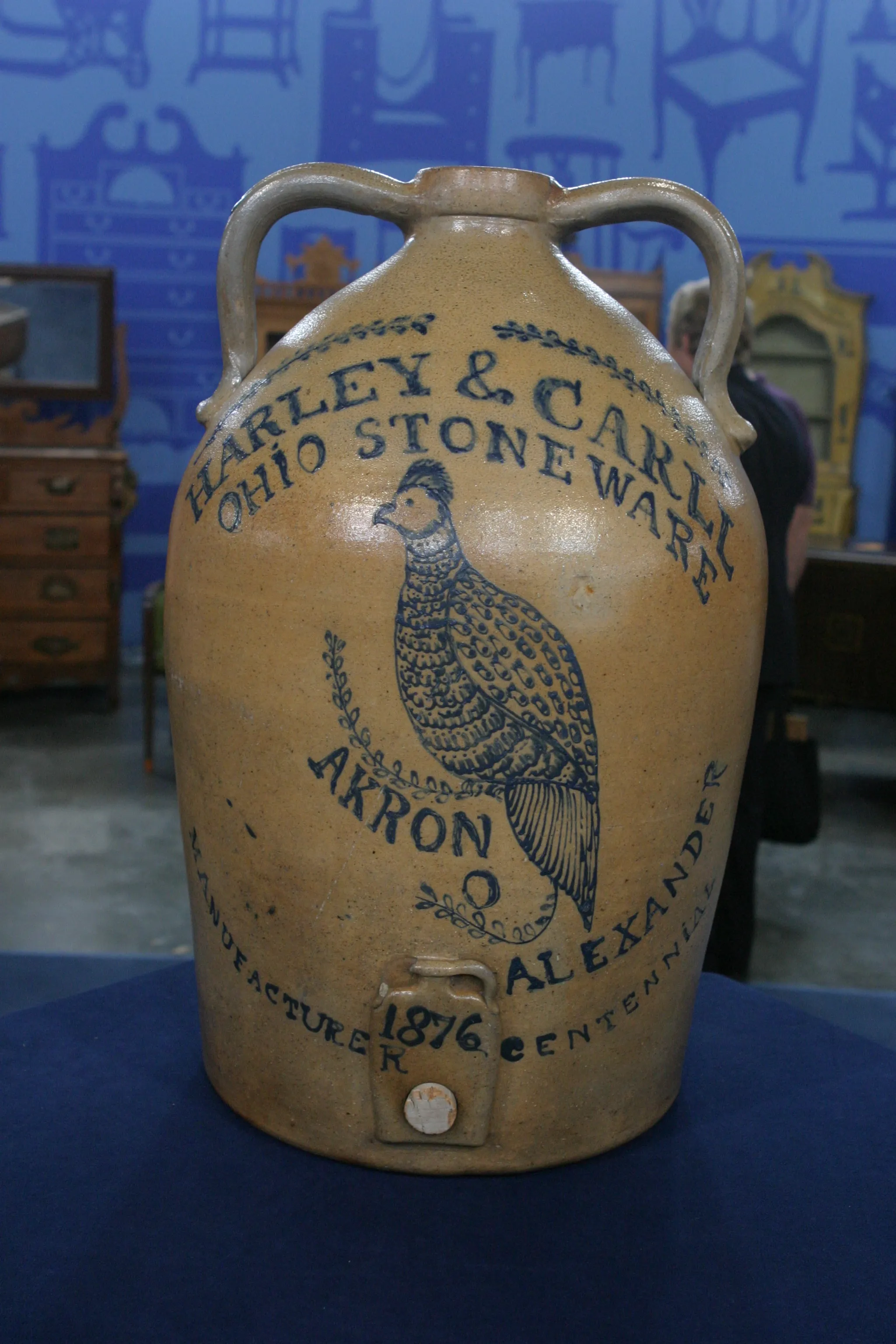
1876 John Alexander Stoneware Cooler
appraisal
Braided Rawhide Lariat, ca. 1850
appraisal
American School Portrait, ca. 1820
appraisal
Eskimo Hunting Helmet, ca. 1820
Understanding Our Appraisals
Executive producer Marsha Bemko shares her tips for getting the most out of ANTIQUES ROADSHOW.
Value can change: The value of an item is dependent upon many things, including the condition of the object itself, trends in the market for that kind of object, and the location where the item will be sold. These are just some of the reasons why the answer to the question "What's it worth?" is so often "It depends."
Note the date: Take note of the date the appraisal was recorded. This information appears in the upper left corner of the page, with the label "Appraised On." Values change over time according to market forces, so the current value of the item could be higher, lower, or the same as when our expert first appraised it.
Context is key: Listen carefully. Most of our experts will give appraisal values in context. For example, you'll often hear them say what an item is worth "at auction," or "retail," or "for insurance purposes" (replacement value). Retail prices are different from wholesale prices. Often an auctioneer will talk about what she knows best: the auction market. A shop owner will usually talk about what he knows best: the retail price he'd place on the object in his shop. And though there are no hard and fast rules, an object's auction price can often be half its retail value; yet for other objects, an auction price could be higher than retail. As a rule, however, retail and insurance/replacement values are about the same.
Verbal approximations: The values given by the experts on ANTIQUES ROADSHOW are considered "verbal approximations of value." Technically, an "appraisal" is a legal document, generally for insurance purposes, written by a qualified expert and paid for by the owner of the item. An appraisal usually involves an extensive amount of research to establish authenticity, provenance, composition, method of construction, and other important attributes of a particular object.
Opinion of value: As with all appraisals, the verbal approximations of value given at ROADSHOW events are our experts' opinions formed from their knowledge of antiques and collectibles, market trends, and other factors. Although our valuations are based on research and experience, opinions can, and sometimes do, vary among experts.
Appraiser affiliations: Finally, the affiliation of the appraiser may have changed since the appraisal was recorded. To see current contact information for an appraiser in the ROADSHOW Archive, click on the link below the appraiser's picture. Our Appraiser Index also contains a complete list of active ROADSHOW appraisers and their contact details and biographies.


