Union Blockade Archive, ca. 1863
GUEST: I brought in a British flag that was captured by my great-great-great-uncle Jimmy Hartshorn during the Civil War, the naval engagement off of Galveston. Jimmy was an ensign, and he served off the gunboat the Katahdin and did most of his service up and down that coast. Went to Galveston to try and be involved in the blockade at that time, and he came away with this flag and he wrote lots of letters home, and this is the one that refers to the flag. He did die three months after he captured this flag.
APPRAISER: Really?
GUEST: Very quickly from, they think, malaria.
APPRAISER: So this would've been one of the last pieces that he sent home before he died.
GUEST: Absolutely, yes.
APPRAISER: During the Civil War, they set up a Naval blockade of the South. And basically it was their way to shut down commerce in the South. So your ancestor was serving on one of the ships in the Union Navy, guarding to be sure that the ships didn't make it into the Confederacy.
GUEST: Exactly.
APPRAISER: This one's from 1863, and it talks about capturing this flag.
GUEST: Yes.
APPRAISER: And it's kind of cool because in the letter it says they were chasing him, and it says they were flying the English flag all the way. They ran them aground, the sailors scattered. They were going inland as the boarding party came aboard. They burned the boat, but before he did he took what he could.
GUEST: Yes.
APPRAISER: This flag was part of it, and he states that there was a southeaster coming, and the rain was going and when they made it aboard ship they looked more like drowned rats than they did men. The flag itself is beautifully hand sewn. It's got so much character. You can see the holes, the wear.
GUEST: The wear.
APPRAISER: It's beautiful. Do you know why it has the red field?
GUEST: No, no, I don't.
APPRAISER: They made them three different versions. The red was actually for British merchant ships. And... which goes right along with a privateer trying to get in to Galveston.
GUEST: Sure.
APPRAISER: Flags are one of the few things that when it's bigger it's not always better.
GUEST: Oh.
APPRAISER: This one's the perfect size because it's big enough that it stands out.
GUEST: Okay.
APPRAISER: But it's small enough you can still frame it and enjoy it.
GUEST: Hmm...
APPRAISER: This image is of your ancestor?
GUEST: Yes.
APPRASIER: It's a beautiful daguerreotype.
GUEST: Yeah.
APPRAISER: And what's special about it, we have the photographer studio stamp of Matthew Brady in New York. Matthew Brady was the most famous of all photographers.
GUEST: I missed that looking up stuff-- wow.
APPRAISER: And it's in beautiful condition. Detail is wonderful, the case is solid, it's just a nice group all the way around. Since it's an ancestor I assume you would be looking for an insurance value.
GUEST: Absolutely.
APPRAISER: If this were my family's flag, letter and image, I would insure it for $7,000.
GUEST: Oh, my goodness. We'll do it. Thank you so much! Cool. (chuckles) Very exciting.

$7,000 Insurance
Photos


Featured In

episode
Albuquerque, NM, Hour 2
A Jasper Johns print, a signed "Pinocchio" book, and a jade snuff bottle: one is $50K-$60K
Textiles & Needlecraft
appraisal
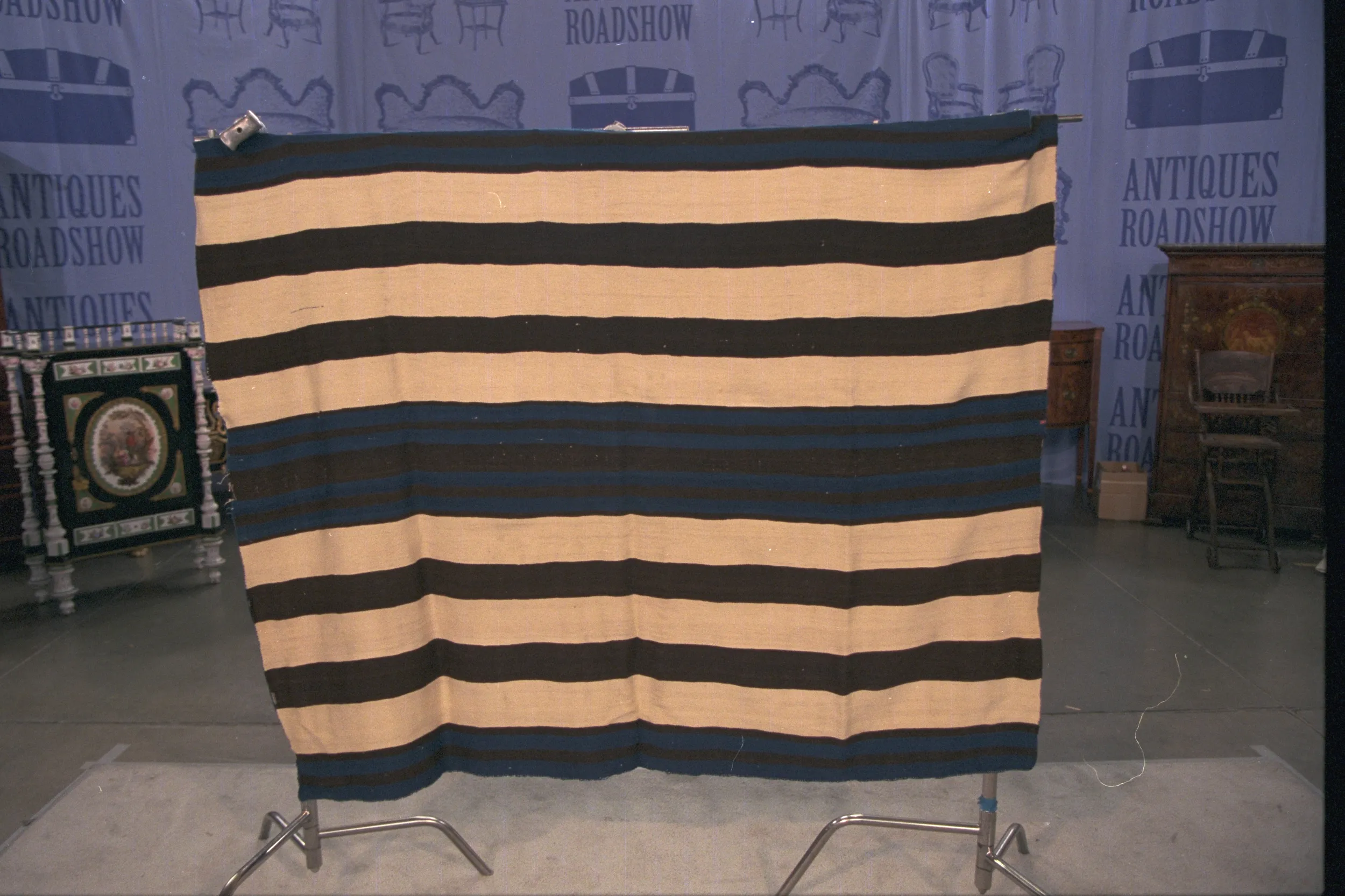
Navajo Ute First Phase Blanket, ca. 1850

appraisal

appraisal

appraisal
Mary Balch School Mourning Picture, ca. 1805
Understanding Our Appraisals
Executive producer Marsha Bemko shares her tips for getting the most out of ANTIQUES ROADSHOW.
Value can change: The value of an item is dependent upon many things, including the condition of the object itself, trends in the market for that kind of object, and the location where the item will be sold. These are just some of the reasons why the answer to the question "What's it worth?" is so often "It depends."
Note the date: Take note of the date the appraisal was recorded. This information appears in the upper left corner of the page, with the label "Appraised On." Values change over time according to market forces, so the current value of the item could be higher, lower, or the same as when our expert first appraised it.
Context is key: Listen carefully. Most of our experts will give appraisal values in context. For example, you'll often hear them say what an item is worth "at auction," or "retail," or "for insurance purposes" (replacement value). Retail prices are different from wholesale prices. Often an auctioneer will talk about what she knows best: the auction market. A shop owner will usually talk about what he knows best: the retail price he'd place on the object in his shop. And though there are no hard and fast rules, an object's auction price can often be half its retail value; yet for other objects, an auction price could be higher than retail. As a rule, however, retail and insurance/replacement values are about the same.
Verbal approximations: The values given by the experts on ANTIQUES ROADSHOW are considered "verbal approximations of value." Technically, an "appraisal" is a legal document, generally for insurance purposes, written by a qualified expert and paid for by the owner of the item. An appraisal usually involves an extensive amount of research to establish authenticity, provenance, composition, method of construction, and other important attributes of a particular object.
Opinion of value: As with all appraisals, the verbal approximations of value given at ROADSHOW events are our experts' opinions formed from their knowledge of antiques and collectibles, market trends, and other factors. Although our valuations are based on research and experience, opinions can, and sometimes do, vary among experts.
Appraiser affiliations: Finally, the affiliation of the appraiser may have changed since the appraisal was recorded. To see current contact information for an appraiser in the ROADSHOW Archive, click on the link below the appraiser's picture. Our Appraiser Index also contains a complete list of active ROADSHOW appraisers and their contact details and biographies.


