GUEST: Well, it happened in about 1975, at an estate auction. And I was able to find that at that auction. And I had to pay about $75 for it at the time.
APPRAISER: Did you know what it was at the time?
GUEST: Yes, I do, because when I was in grade school, it had this type of a thing. But I was always fascinated with it.
APPRAISER: So you had to get your own so you could mess with it.
GUEST: Yeah.
APPRAISER: And do you have any idea what it might be worth?
GUEST: I have no idea. I've never seen one anyplace I've gone. I've never seen it at another auction.
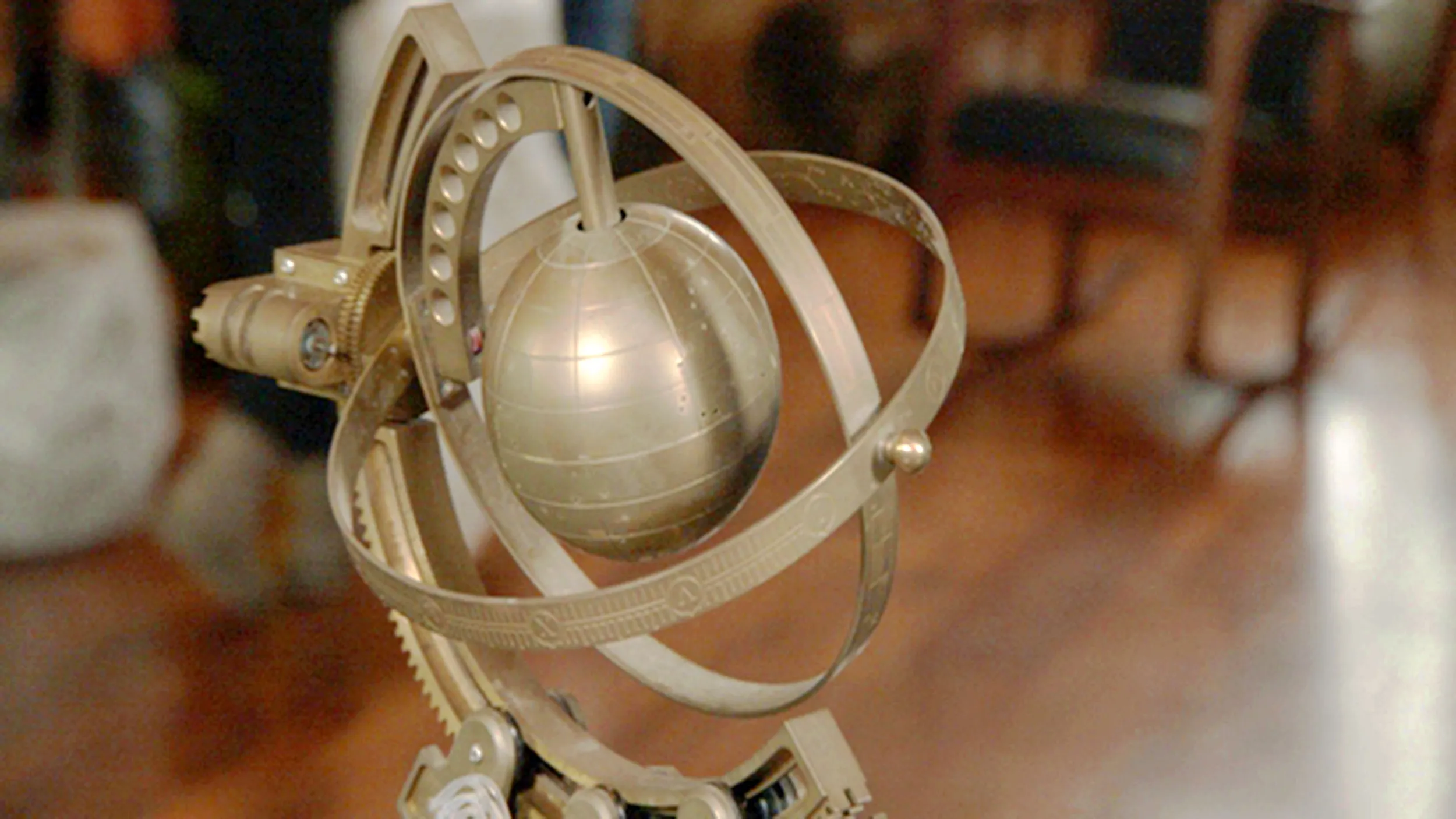
APPRAISER: Well, we see them from time to time. But what I can tell you is that this is one of the best ones I've seen. And this is what's called a planetarium, or an orrery. And it's essentially an educational tool. It's used to explain how the solar system works. We have the sun, a planet which orbits the sun, we think it's Venus. We have the Earth, and then we have the Earth's moon. And it's designed with this chain-and-gear mechanism so that when it's moved, all the pieces sort of rotate around each other like it does in the solar system. And you can get this great idea of how that works. We have a compass that they inlay on the top so you can see which direction it's pointing as you rotate it. And then on the base we have a seasonal, a monthly and then a zodiac calendar that is inlaid in this brass base. These were popular from the 18th century on. And this was produced by the Trippensee Planetarium Company, which was in Detroit, Michigan. And this is one of the earliest ones that they made. They made it around 1900. What's great about this example is that you also have the original box that it came in, which has its original label, who made it, and so forth. And it's great, because someone put a picture of a professor using it in a classroom center in the box.
GUEST: Okay.
APPRAISER: This we know is early. It has the Trippensee Planetarium Company insignia here on the Earth globe. It's got a spun-brass Sun, and it's in great condition. There is a good market for these. On a good day, at auction, this could bring anywhere from $3,000 to $5,000.
GUEST: No kidding? I'd have never dreamt that. No way. I figured maybe a couple of hundred dollars or so. But okay.