Tippco Large Motorcycle with Sidecar, ca. 1935
GUEST: I brought a toy that actually belonged to my father. He was born in 1927. And so it was a toy that he had in his childhood. We didn't know he had these toys until after he passed away.
APPRAISER: Okay.
GUEST: And then my mother distributed the, the four toys. This happened to be the one that I was able to get. So... I got to choose first, before my two sister siblings. But I am the oldest daughter, so it's okay.
APPRAISER: Okay.
GUEST: (chuckles)
APPRAISER: So, on the gas tank here, we have what is a "T-C-O," and that stands for Tipp & Company. Tipp & Co. or just Tippco. And they were a German tin toy maker. This toy would have been made in the mid-'30s. And Germany-- we went to war shortly thereafter. So this toy in particular would not have had a very long production run.
GUEST: Okay.
APPRAISER: That most likely is contributing to how rare this toy is.
GUEST: Sure.
APPRAISER: Um, in addition...
GUEST: Hmm.
APPRAISER:...a lot of the Tippco motorcycles are... much smaller. Um, this is about 12 inches or so. The more common size we see for a large Tippco motorcycle is about nine inches. And then they make an even smaller one at seven inches.
GUEST: Right.
APPRAISER: The large size of it really makes this a show... a show stopper. This is a nice motorcycle. It has a wind-up motor on the side here, which would propel it. So winding this would drive the rear wheel. You could set your front wheel to go in a circle or a straight motion. And it was just a s... a little wind-up floor toy that could kind of scoot along. Do you have any idea of what a toy like this could be worth today?
GUEST: No, other than my neighbor, who was a toy collector, looked at it and I don't, I don't remember how much he... It seemed like a lot of money
that he thought it was worth at that moment.
APPRAISER: Okay.
GUEST: (chuckles)
APPRAISER: Um, how much did he think it was worth at that time?
GUESET: I want to say, like, $1,000, maybe.
APPRAISER: Okay.
GUEST: You know, maybe a little more.
APPRAISER: Well, I'm happy to report that, uh, this toy is worth much more than that. So, it's good that you kept it.
GUEST: Good.
APPRAISER: It is all original. All the tinplate is correct. All of the lithography is correct. I've actually only ever seen one other example of this toy.
GUEST: Mm.
APPRAISER: The estimate I would conservatively place on this piece would be $15,000 to $25,000.
GUEST: Oh, my goodness. Make me cry. (laughs) Oh, my goodness. My dad would flip over, wouldn't he? (laughs) That's wonderful. Thank you.
APPRAISER: A couple years ago, one had gone to auction. Uh, it had an estimate of $15,000 to $25,000, and it finished at just over $40,000.
GUEST: Oh, my goodness. I think of my sweet dad, what he would think. This toy, he... you know, held back for so many years. So...
APPRAISER: Sure.
GUEST: Thank you.
APPRAISER: And now, looking back, it was good that you didn't get to play with it. With your brothers and sisters because...
GUEST: Yes, yes. We'd have wrecked it. (laughs)
APPRAISER: Here it is, preserved.

$15,000 - $25,000 Auction
Featured In

episode
Living History Farms, Hour 1
ROADSHOW visits Living History Farms for treasures and a top $75,000 to $125,000 find.
Toy

appraisal
Lehmann Swing Windup Toy, ca. 1890

appraisal
Steiff Camel & Monkey, ca. 1908
appraisal
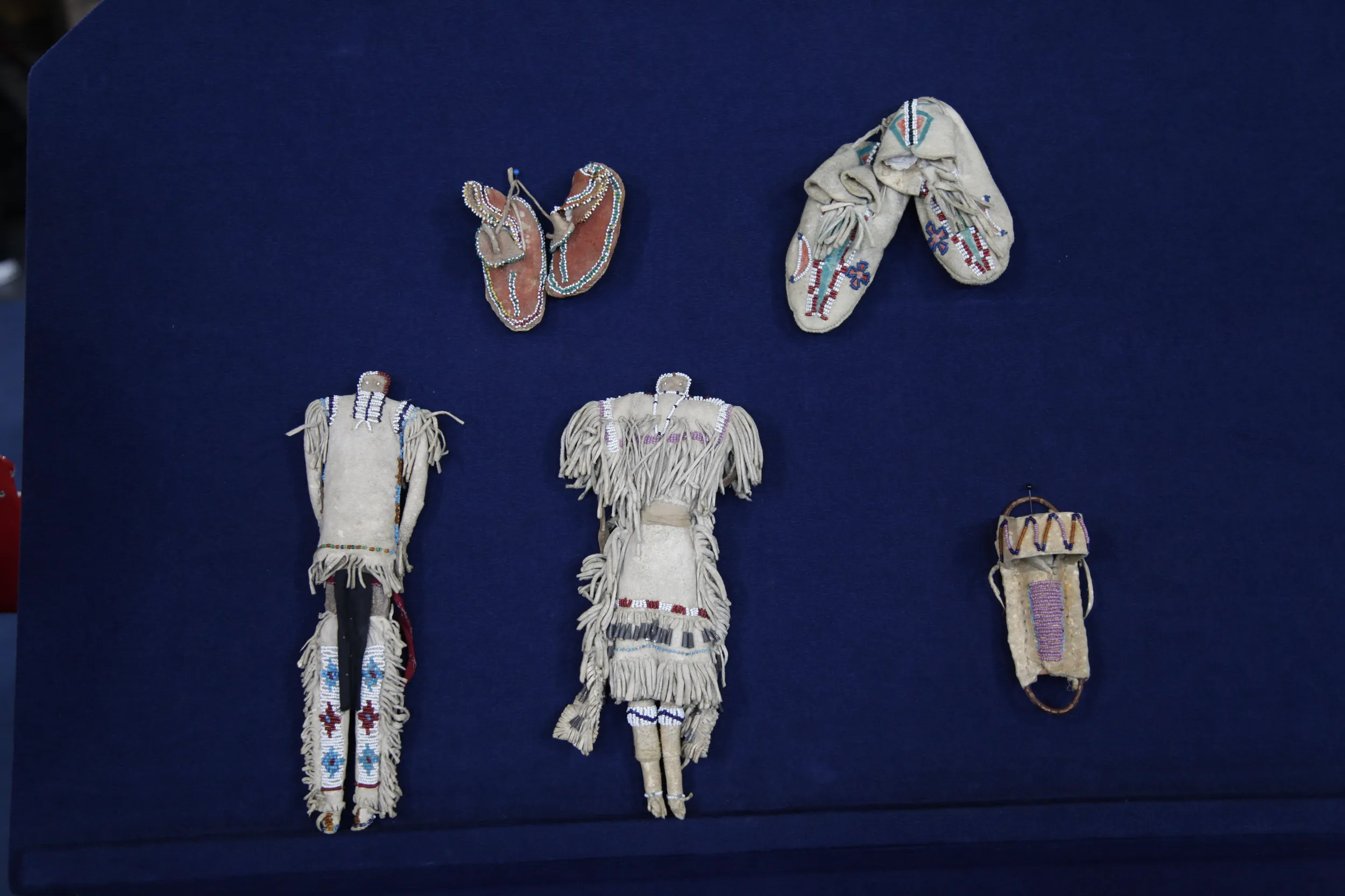
Apache Children's Toys & Moccasins c. 1880-90
appraisal
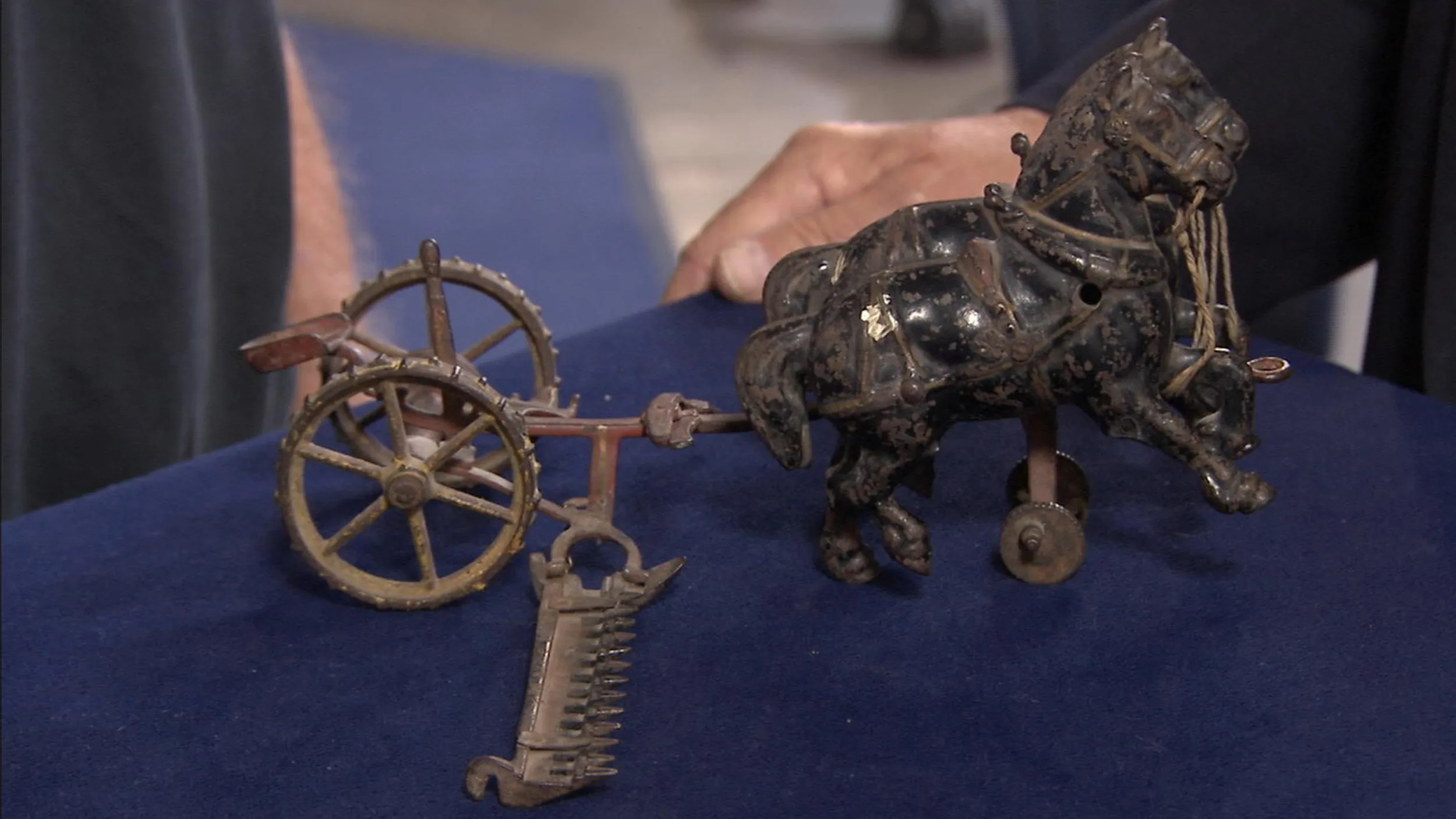
Wilkins Sickle Mower, ca. 1895
Understanding Our Appraisals
Executive producer Marsha Bemko shares her tips for getting the most out of ANTIQUES ROADSHOW.
Value can change: The value of an item is dependent upon many things, including the condition of the object itself, trends in the market for that kind of object, and the location where the item will be sold. These are just some of the reasons why the answer to the question "What's it worth?" is so often "It depends."
Note the date: Take note of the date the appraisal was recorded. This information appears in the upper left corner of the page, with the label "Appraised On." Values change over time according to market forces, so the current value of the item could be higher, lower, or the same as when our expert first appraised it.
Context is key: Listen carefully. Most of our experts will give appraisal values in context. For example, you'll often hear them say what an item is worth "at auction," or "retail," or "for insurance purposes" (replacement value). Retail prices are different from wholesale prices. Often an auctioneer will talk about what she knows best: the auction market. A shop owner will usually talk about what he knows best: the retail price he'd place on the object in his shop. And though there are no hard and fast rules, an object's auction price can often be half its retail value; yet for other objects, an auction price could be higher than retail. As a rule, however, retail and insurance/replacement values are about the same.
Verbal approximations: The values given by the experts on ANTIQUES ROADSHOW are considered "verbal approximations of value." Technically, an "appraisal" is a legal document, generally for insurance purposes, written by a qualified expert and paid for by the owner of the item. An appraisal usually involves an extensive amount of research to establish authenticity, provenance, composition, method of construction, and other important attributes of a particular object.
Opinion of value: As with all appraisals, the verbal approximations of value given at ROADSHOW events are our experts' opinions formed from their knowledge of antiques and collectibles, market trends, and other factors. Although our valuations are based on research and experience, opinions can, and sometimes do, vary among experts.
Appraiser affiliations: Finally, the affiliation of the appraiser may have changed since the appraisal was recorded. To see current contact information for an appraiser in the ROADSHOW Archive, click on the link below the appraiser's picture. Our Appraiser Index also contains a complete list of active ROADSHOW appraisers and their contact details and biographies.


