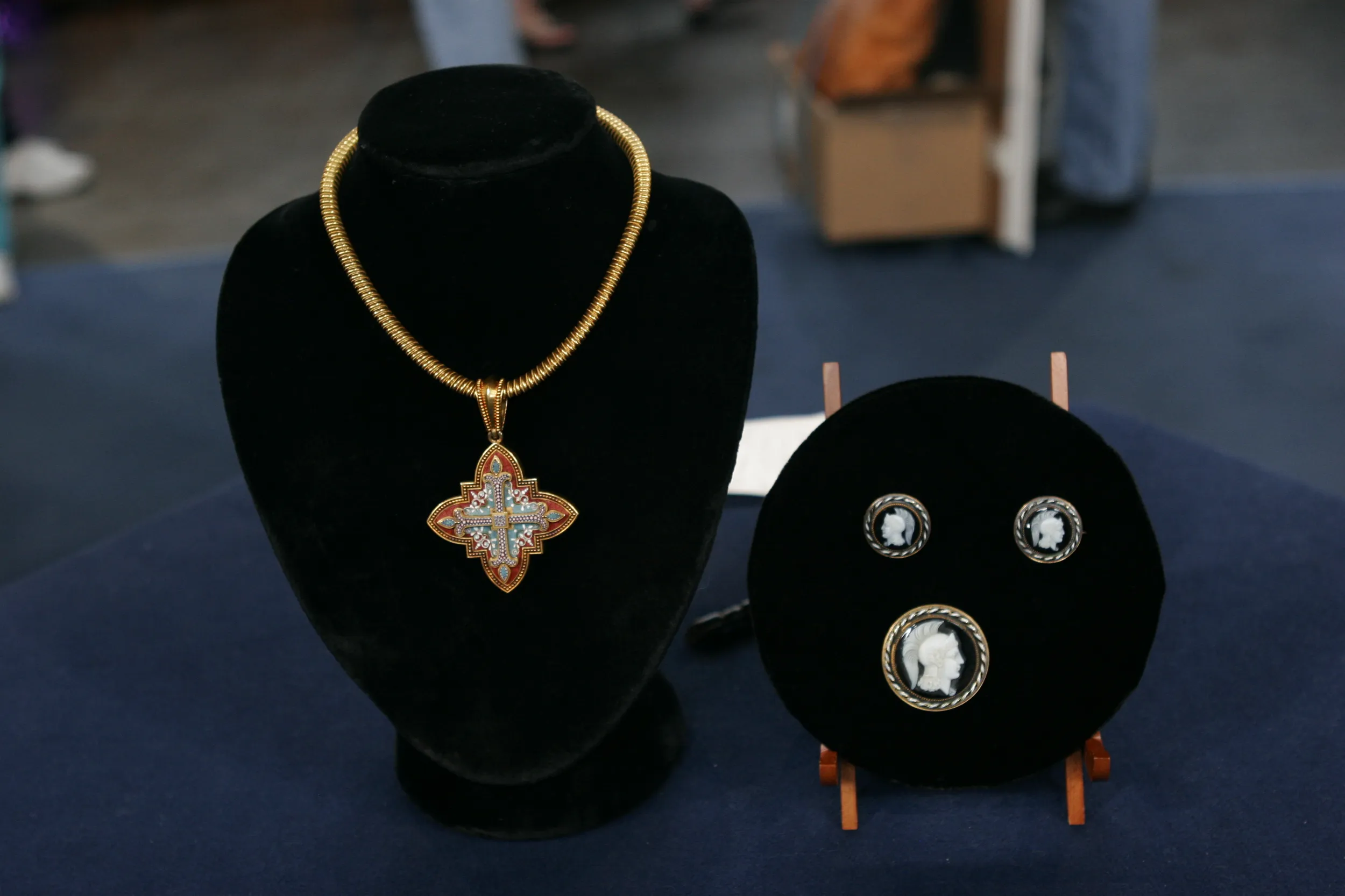
GUEST: It was given by my great-grandfather to my great-grandmother on their wedding day as a wedding present for the bride. And, uh, they were married January 1, 1872. She passed it down to her oldest daughter, which was my grandmother, and my grandmother willed it to me.
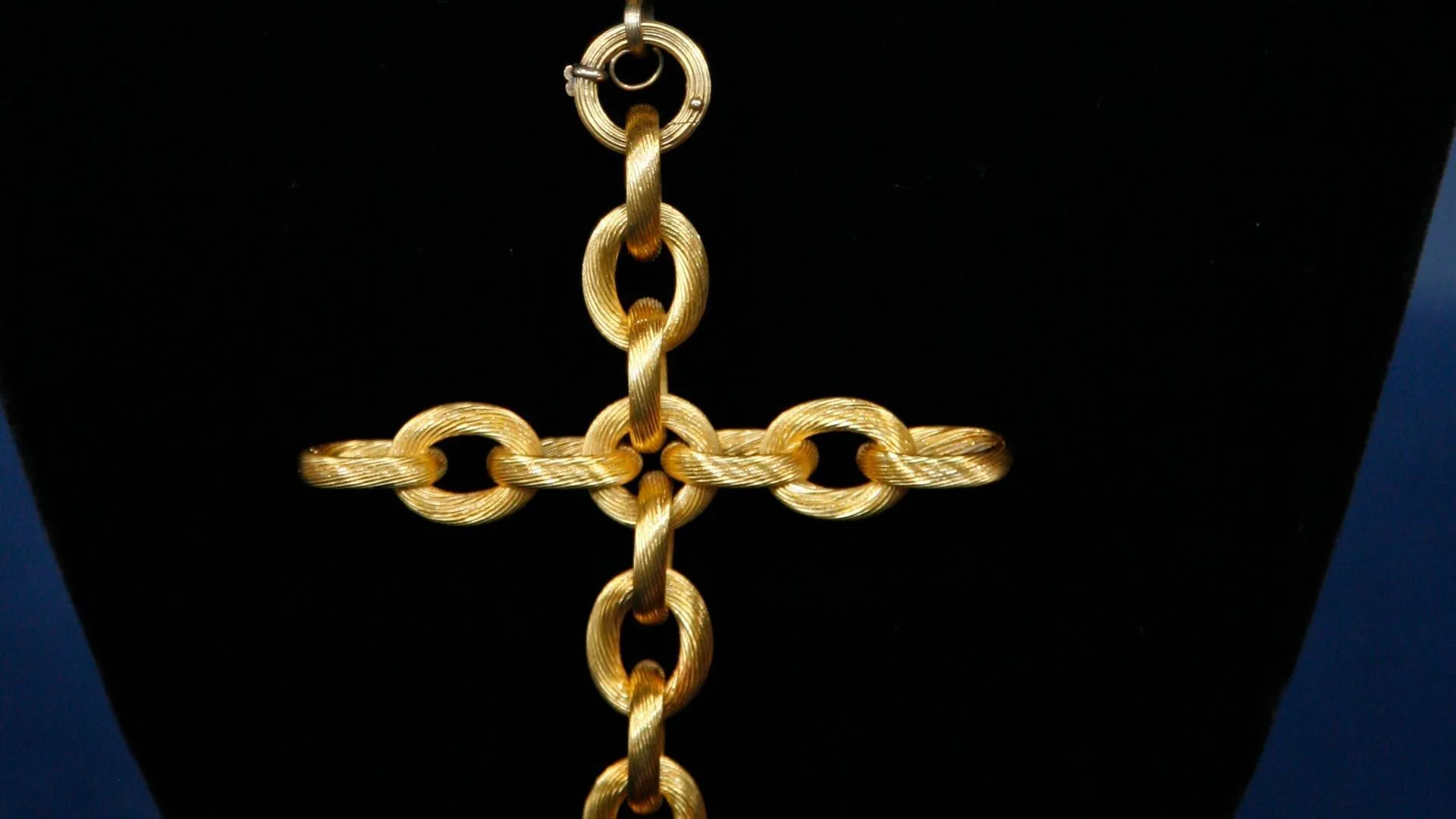
APPRAISER: I see. Well, it's a lovely piece. The necklace is 14-karat yellow gold.
GUEST: Okay.
APPRAISER: And it was made in the early 1870s. And the box is also an important part of the story. And if we open up the box here, what we will see is that the inside of the box, it says "Tiffany and Company..."
GUEST: Mm-hmm.
APPRAISER: "Union Square." Now, Tiffany is an important retailer and manufacturer of jewelry in America in the late 19th century and certainly for the 20th century. But it's at this time period that Tiffany is really seating the foundation of the business...
GUEST: Mm-hmm.
APPRAISER: ...that will later become the major jewelry retailer that we know them as today.
GUEST: Yes.
APPRAISER: They were still a dry goods dealer, as well. They dealt in stationery...
GUEST: Oh, mm-hmm.
APPRAISER: Pots and pans, jewelry, et cetera. Now, they were not a jewelry manufacturer at this time, except for basic wedding rings and small pieces. So chances are, this piece was perhaps made overseas or it was something that they in turn subcontracted. They don't really start becoming a full-time manufacturer until the late 1800s.
GUEST: Mm-hmm.
APPRAISER: What's also interesting about this necklace to me is that it also speaks very much of the era. Here we have the cross and the chain, and it's what's called a reeded chain.
GUEST: Mm-hmm.
APPRAISER: These are hollow links that are machine-made. Also, what I like about this is that it has a lot of opulence. It has visual weight.
GUEST: Yes.
APPRAISER: Even though the piece does not weigh a lot. And this is also in part due to the fact that even though the Gold Rush was in 1849, there's still not as much gold in the marketplace yet. And so the idea was to take a small amount of material and make a very large-looking ensemble.
GUEST: Mm-hmm.
APPRAISER: The other important thing to remember is that because this piece is not signed, you always will need to keep it with the box. Because if the box and the piece become separated...
GUEST: Mm-hmm.
APPRAISER: ...then nobody's going to know that the piece is actually Tiffany.
GUEST: Right.
APPRAISER: Do you have any idea of the value of the piece?
GUEST: Not really. I had it appraised about 20 years ago, and they told me it was only worth the scrap weight of gold.
APPRAISER: Well, it's certainly worth more than the scrap rate these days.
GUEST: Mm-hmm.
APPRAISER: At auction, one would expect to gain anywhere between $3,000 and $4,000.
GUEST: Mm-hmm.
APPRAISER: For insurance purposes, it should probably be insured for about $9,000.
GUEST: Oh, that much? Thank you.
APPRAISER: You're welcome.