Tiffany & Co. Carriage Clock with Case, ca. 1890
GUEST: It's a Tiffany carriage clock. We've had it for about 25 years. It's in its original case, and it has, I think, most of its original tools with it as well. We purchased it out of a abandoned storage unit. When we purchased the clock, we were told that the storage unit belonged to a woman from Uruguay who had had a ill-fated romance with an American diplomat.
APPRAISER: Uh-huh.
GUEST: And so, the unit had been abandoned, and, uh, we believed a lot of her belongings to be inside.
APPRAISER: So, what you brought in today is a very special example of a carriage clock retailed by the Tiffany clock company. Made in France for them to retail sometime around circa 1890. Could've been sold in Europe in a Tiffany location. Uh, but Tiffany, of course, is world-renowned for being anchored in New York City. The fact that the case is six-sided makes it a very unusual example; most of them were four-sided.
GUEST: Mm-hmm.
APPRAISER: So, having the additional two sides probably put it on the scale of a special order. In the front, you have the retailer's name, Tiffany & Company, and then you have this porcelain panel with the four puttis and the garlands. You have these side porcelain panels representing the four seasons. When we look at the back, we have the three hammers, one being for the alarm, the other two being for the strike sequence. We also have two gongs, and down on the bottom left hand corner is the alarm. Very unusual to have that in that location. Most of the time, the alarms are indicated from the front. And if we tip it upside down here, we can see the lever that indicates that it's a "grande sonnerie" mechanism, and that means that it is a complication, that it does more than just strike the hour, it actually strikes the hour and quarter-hour and will do that on demand, and it does that by depressing this button here at the top. You can see remnants of the original gilt wash, so this is a brass case originally fire-gilt. We conservatively estimate this clock to have a retail value of $7,500.
GUEST: Wow, wow, I didn't ex-- I didn't expect that. I was thinking, "Okay, maybe $3,000." Okay, that's fantastic.
APPRAISER: Very few carriage clocks achieve that level of, uh, monetary value.

$7,500 Retail
Featured In

episode
Maryland Zoo, Hour 3
ROADSHOW searches for hidden treasures in Maryland including one $150,000 - $200,000 find!
Brass
appraisal
Duncan Phyfe Sewing Table, ca. 1805
appraisal
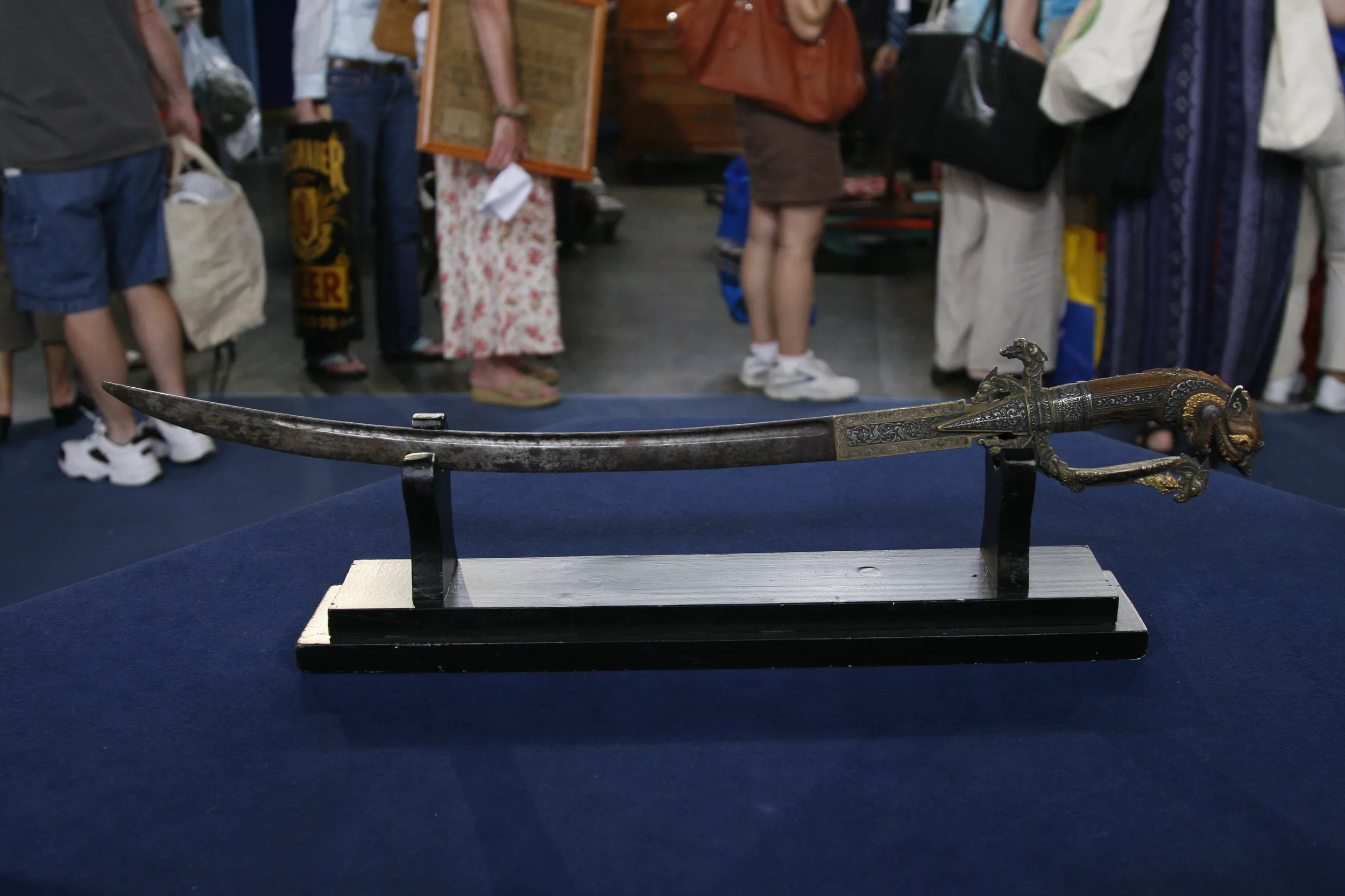
Sri Lankan Kastane (Sword), ca. 1800

appraisal
New England Gentleman's Chest, ca. 1830
appraisal
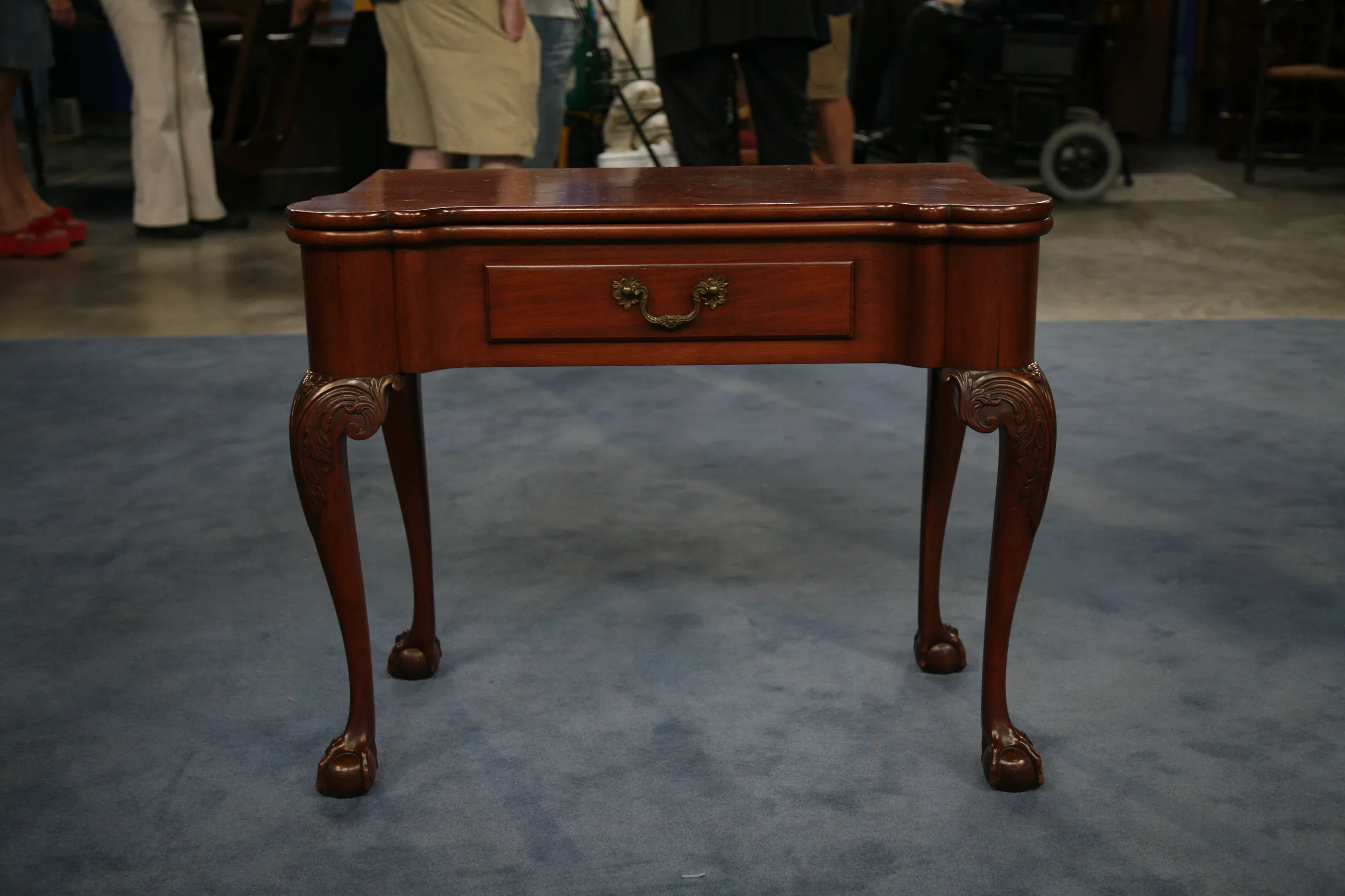
Philadelphia Card Table, ca. 1760
Understanding Our Appraisals
Executive producer Marsha Bemko shares her tips for getting the most out of ANTIQUES ROADSHOW.
Value can change: The value of an item is dependent upon many things, including the condition of the object itself, trends in the market for that kind of object, and the location where the item will be sold. These are just some of the reasons why the answer to the question "What's it worth?" is so often "It depends."
Note the date: Take note of the date the appraisal was recorded. This information appears in the upper left corner of the page, with the label "Appraised On." Values change over time according to market forces, so the current value of the item could be higher, lower, or the same as when our expert first appraised it.
Context is key: Listen carefully. Most of our experts will give appraisal values in context. For example, you'll often hear them say what an item is worth "at auction," or "retail," or "for insurance purposes" (replacement value). Retail prices are different from wholesale prices. Often an auctioneer will talk about what she knows best: the auction market. A shop owner will usually talk about what he knows best: the retail price he'd place on the object in his shop. And though there are no hard and fast rules, an object's auction price can often be half its retail value; yet for other objects, an auction price could be higher than retail. As a rule, however, retail and insurance/replacement values are about the same.
Verbal approximations: The values given by the experts on ANTIQUES ROADSHOW are considered "verbal approximations of value." Technically, an "appraisal" is a legal document, generally for insurance purposes, written by a qualified expert and paid for by the owner of the item. An appraisal usually involves an extensive amount of research to establish authenticity, provenance, composition, method of construction, and other important attributes of a particular object.
Opinion of value: As with all appraisals, the verbal approximations of value given at ROADSHOW events are our experts' opinions formed from their knowledge of antiques and collectibles, market trends, and other factors. Although our valuations are based on research and experience, opinions can, and sometimes do, vary among experts.
Appraiser affiliations: Finally, the affiliation of the appraiser may have changed since the appraisal was recorded. To see current contact information for an appraiser in the ROADSHOW Archive, click on the link below the appraiser's picture. Our Appraiser Index also contains a complete list of active ROADSHOW appraisers and their contact details and biographies.


