Shik Munakata Print, ca. 1967
GUEST: My parents bought it at a show at the May Company in Cleveland. And the May Company is a big department store, and they were having a showing of the artist's work. They bought this picture for $139. I believe my parents met him because we have a signature on the back of one of the programs.
APPRAISER: This is a fantastic example of the work of Shiko Munakata, who is one of the most important Japanese artists of the 20th century. He's a modern master of printmaking. And this is a very good example of his work from the mid-1960s. 1967 was when the show was at the May Company.
GUEST: Mm-hmm. Right.
APPRAISER: It was actually his third trip to the United States.
GUEST: Oh.
APPRAISER: And it went on, this show, to the Smithsonian and the Brooklyn Museum. So he really already reached, uh, quite a level of notoriety in the United States. At the time, you wouldn't acquire the actual print. They would have an example, and then the artist would then later produce the one that the customer ordered.
GUEST: I know that my father had put a notation on the bottom of the, uh, program that it would arrive in six weeks.
APPRAISER: Yes, so...
GUEST: So he didn't take it home that day.
APPRAISER: The work might be slightly different from the work that they saw. Part of that is his technique, because they're multiples, they are woodcut prints, printed from a wood block.
GUEST: Mm-hmm, mm-hmm.
APPRAISER: But each one has its unique qualities. There's a lot of variation in his prints, and then the coloring can, can vary. And he printed them not like a modern edition, where they're each numbered. He would just produce one at a time per order. The black ink is printed from the carving, and then they're colored from behind with watercolor, and it bleeds through the thin Japanese paper. This print is "Ode to Shinkai." And "shinkai" in Japanese means an uncultivated open space, or something uncharted, or a deep sea. So it, it really sums up this print. It's a wonderful image. It shows his incorporation of landscape and Japanese text. The colors are really fresh. It's been well looked after. Do you have a sense of the value of this print?
GUEST: Well, when I inherited it, it was appraised at $5,000 for the estate tax. And then later, we had somebody else look at it who said it could be worth up to $15,000.
APPRAISER: $15,000 would be more of a retail price. I'm more comfortable with an auction value, because that's what I see more of. I would value a print like this at auction between $6,000 and $9,000.
GUEST: Okay, so kind of right in the middle of the two appraisals I got.
APPRAISER: Munakata prints reached their peak in the '90s as far as collectibility. But fine examples like this, with color, with a lot of expressive qualities, are very collectible.
GUEST: Okay, great.

$6,000 - $9,000 Auction
Featured In
episode
Junk in the Trunk 11
Discover all new appraisals from ROADSHOW’s Season 26 tour, like a find of up to $75,000!
2D Art
appraisal

appraisal
Frank Zappa Painting, ca. 1960

appraisal
Edgar Alwin Payne Painting, ca. 1925
appraisal
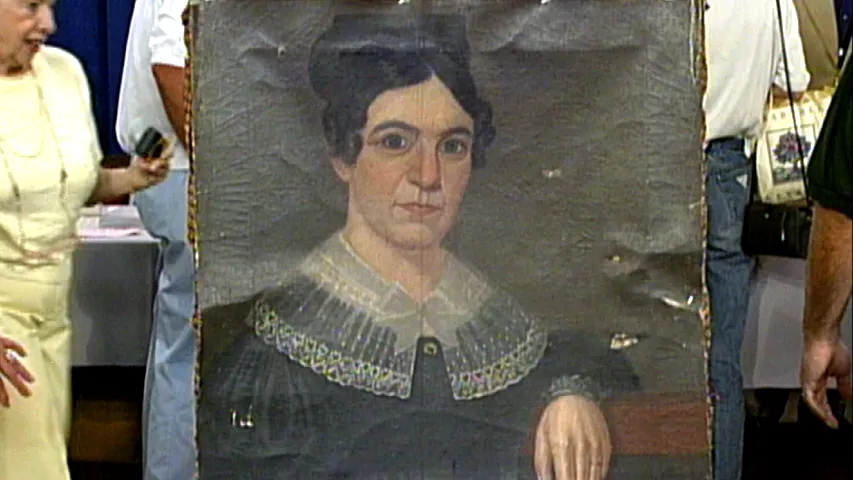
American School Portrait, ca. 1820
Understanding Our Appraisals
Executive producer Marsha Bemko shares her tips for getting the most out of ANTIQUES ROADSHOW.
Value can change: The value of an item is dependent upon many things, including the condition of the object itself, trends in the market for that kind of object, and the location where the item will be sold. These are just some of the reasons why the answer to the question "What's it worth?" is so often "It depends."
Note the date: Take note of the date the appraisal was recorded. This information appears in the upper left corner of the page, with the label "Appraised On." Values change over time according to market forces, so the current value of the item could be higher, lower, or the same as when our expert first appraised it.
Context is key: Listen carefully. Most of our experts will give appraisal values in context. For example, you'll often hear them say what an item is worth "at auction," or "retail," or "for insurance purposes" (replacement value). Retail prices are different from wholesale prices. Often an auctioneer will talk about what she knows best: the auction market. A shop owner will usually talk about what he knows best: the retail price he'd place on the object in his shop. And though there are no hard and fast rules, an object's auction price can often be half its retail value; yet for other objects, an auction price could be higher than retail. As a rule, however, retail and insurance/replacement values are about the same.
Verbal approximations: The values given by the experts on ANTIQUES ROADSHOW are considered "verbal approximations of value." Technically, an "appraisal" is a legal document, generally for insurance purposes, written by a qualified expert and paid for by the owner of the item. An appraisal usually involves an extensive amount of research to establish authenticity, provenance, composition, method of construction, and other important attributes of a particular object.
Opinion of value: As with all appraisals, the verbal approximations of value given at ROADSHOW events are our experts' opinions formed from their knowledge of antiques and collectibles, market trends, and other factors. Although our valuations are based on research and experience, opinions can, and sometimes do, vary among experts.
Appraiser affiliations: Finally, the affiliation of the appraiser may have changed since the appraisal was recorded. To see current contact information for an appraiser in the ROADSHOW Archive, click on the link below the appraiser's picture. Our Appraiser Index also contains a complete list of active ROADSHOW appraisers and their contact details and biographies.


