Sèvres-style Pottery Urns, ca. 1900
GUEST: These belonged to my great-grandfather. He lived in Leicester in England, and as a child, I used to go visit him, and he had a house full of antiques. When he passed away in 1973, my mother inherited them. My parents emigrated to the United States in the '70s, and in one of their moves, these got lost. She just passed away this last year, and we found them in a storage unit in November.
APPRAISER: So your mother passed away thinking that these were forever lost...
GUEST: Yes.
APPRAISER: ...and she would never see them again.
GUEST: Yes. And they were in a box labeled "kitchen utensils."
APPRAISER: What do you think these are?
GUEST: When I was growing up, they were always referred to as the Sèvres vases.
APPRAISER: The Sèvres factory started in 1740, and in 1756, they moved to Sèvres, which is on the outskirts of Paris. These are very typical of what we would expect Sèvres porcelain to look like, especially if we look at the hand-painted designs. The raised gilding, the ram's head handles is very typical of Sèvres porcelain. So when we look at what we think might be Sèvres porcelain, we have to look at all kinds of things. When I see a Sèvres mark, uh, they're almost always fake. In fact, I would say 99% of the Sèvres marks that I see on porcelain or pottery are actually fake marks.
GUEST: Oh, wow.
APPRAISER: So it's definitely a category where it's, they're guilty until proven innocent. So the quality of the painting is quite nice. If we turn it, we see on the backside there is another scene, a pastoral scene of, a landscape, with trees and so forth. The one near you is a little wobbly.
GUEST: Right.
APPRAISER: And because it's a little wobbly, I don't want to spin it.
GUEST: Okay.
APPRAISER: It, it might be a little precarious, but the back scene is very similar, complementary, but different. If we turn it over, we do see a hand-painted Sèvres mark, but we can see that this is actually made of pottery and not soft-paste porcelain.
GUEST: Ah.
APPRAISER: So even though there are other things that might suggest that these could be authentic Sèvres, Sèvres didn't do pottery.
GUEST: Right.
APPRAISER: So, bam. They, sadly, were not made by Sèvres.
GUEST: Okay.
APPRAISER: So these are antique, hand-painted pottery Sèvres-style urns. I would guess that they are late 19th century. They could be early 20th century. Who made them? Don't know. I'm gonna guess that they are British.
GUEST: Okay.
APPRAISER: But they could be French. Both lids have damages. This lid has, like, five chips on it, and there's a little bit of gold wear. So with damages, I would think a retail value for the pair might be in the range of $400 to $600.
GUEST: Okay. Lovely.
APPRAISER: Yeah.
GUEST: Thank you.

$400 - $600 Retail
Featured In

episode
Georgia State Railroad Museum, Hour 3
Premiered Mon, Feb 9, 2026 — Travel with ROADSHOW to historic Savannah and learn about intriguing Georgia discoveries!
Pottery & Porcelain
appraisal
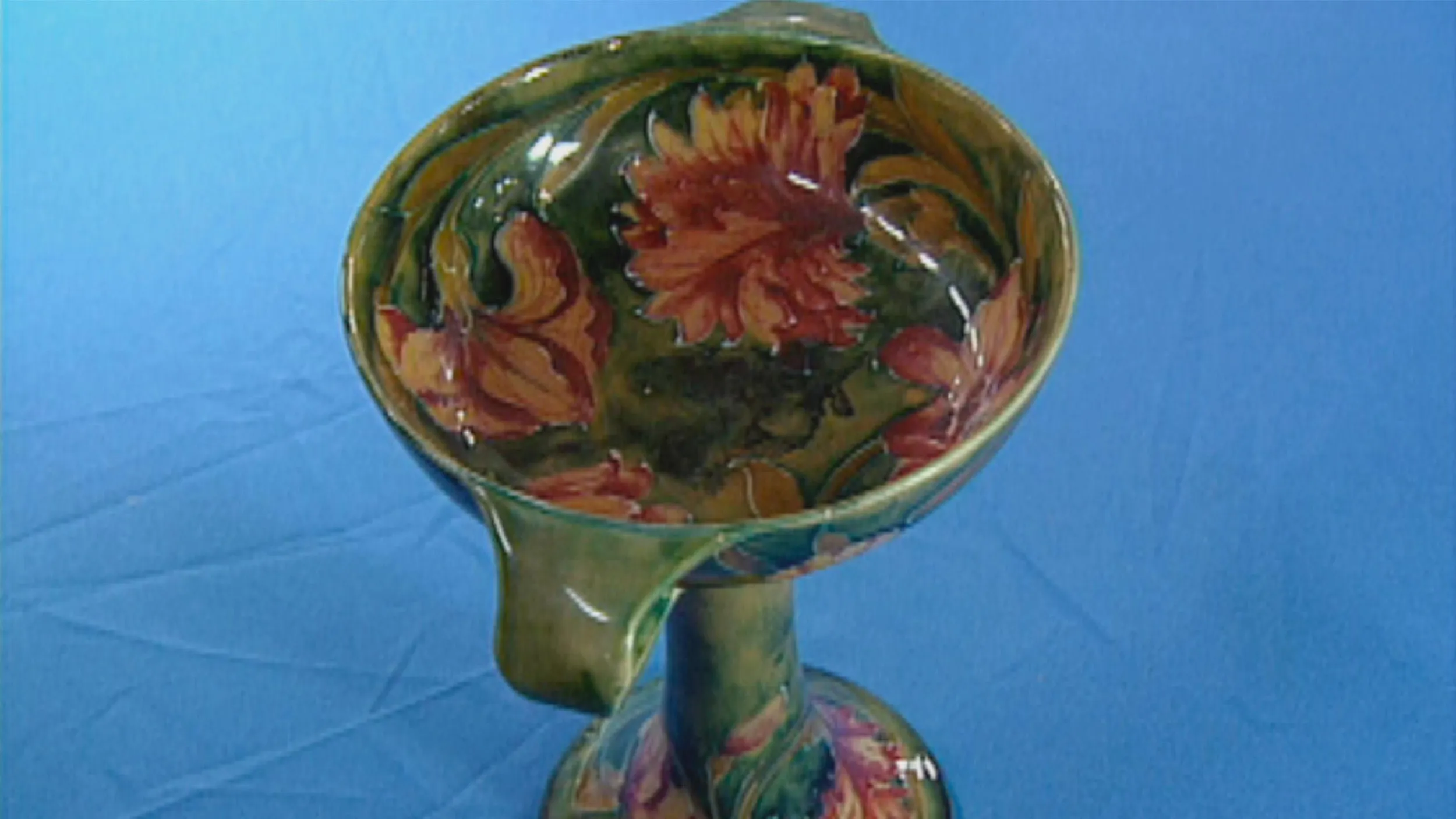
William Moorcroft Pottery, ca. 1910

appraisal
1876 John Alexander Stoneware Cooler
appraisal
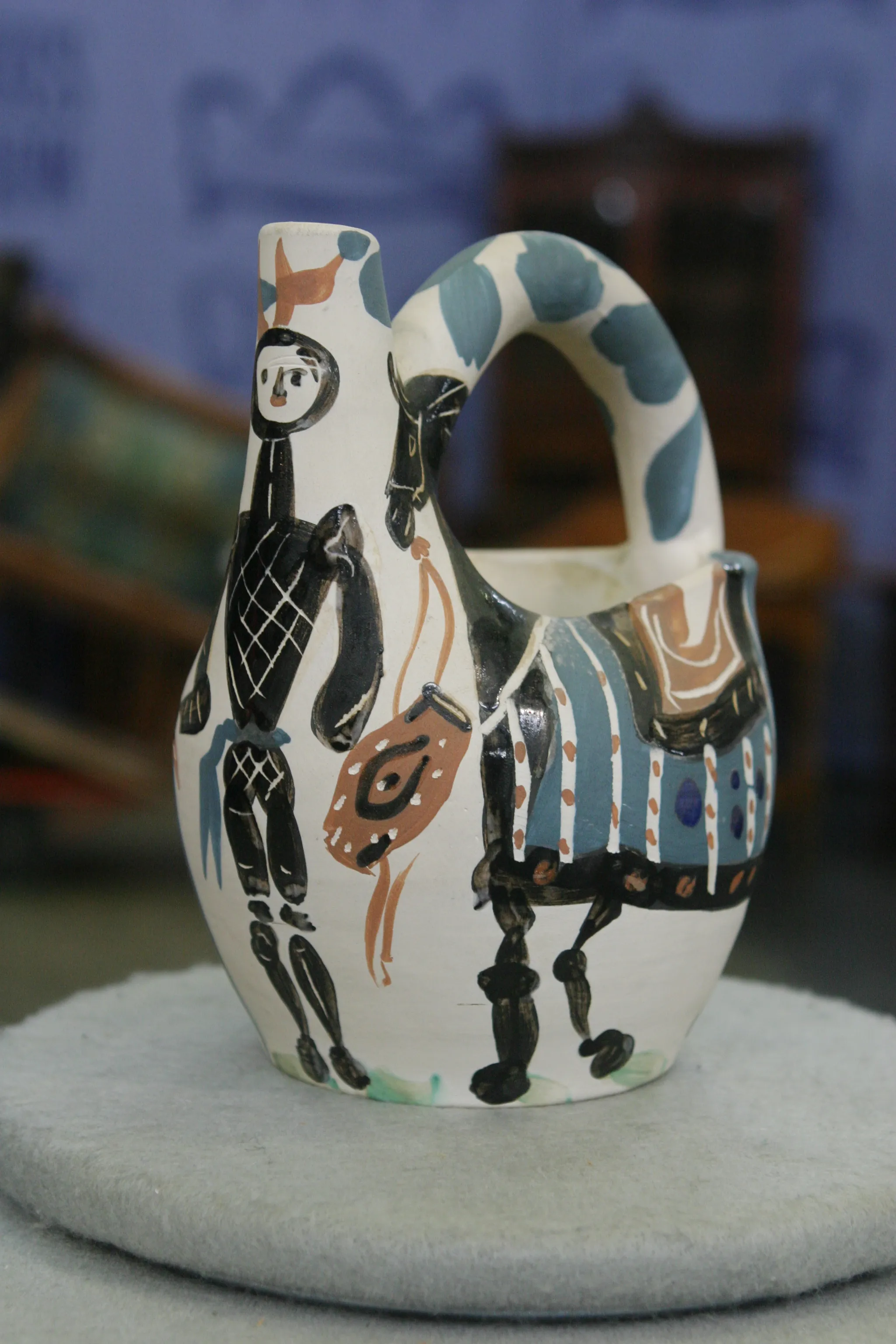
1952 Picasso Madoura Ceramic Jug

appraisal
Understanding Our Appraisals
Executive producer Marsha Bemko shares her tips for getting the most out of ANTIQUES ROADSHOW.
Value can change: The value of an item is dependent upon many things, including the condition of the object itself, trends in the market for that kind of object, and the location where the item will be sold. These are just some of the reasons why the answer to the question "What's it worth?" is so often "It depends."
Note the date: Take note of the date the appraisal was recorded. This information appears in the upper left corner of the page, with the label "Appraised On." Values change over time according to market forces, so the current value of the item could be higher, lower, or the same as when our expert first appraised it.
Context is key: Listen carefully. Most of our experts will give appraisal values in context. For example, you'll often hear them say what an item is worth "at auction," or "retail," or "for insurance purposes" (replacement value). Retail prices are different from wholesale prices. Often an auctioneer will talk about what she knows best: the auction market. A shop owner will usually talk about what he knows best: the retail price he'd place on the object in his shop. And though there are no hard and fast rules, an object's auction price can often be half its retail value; yet for other objects, an auction price could be higher than retail. As a rule, however, retail and insurance/replacement values are about the same.
Verbal approximations: The values given by the experts on ANTIQUES ROADSHOW are considered "verbal approximations of value." Technically, an "appraisal" is a legal document, generally for insurance purposes, written by a qualified expert and paid for by the owner of the item. An appraisal usually involves an extensive amount of research to establish authenticity, provenance, composition, method of construction, and other important attributes of a particular object.
Opinion of value: As with all appraisals, the verbal approximations of value given at ROADSHOW events are our experts' opinions formed from their knowledge of antiques and collectibles, market trends, and other factors. Although our valuations are based on research and experience, opinions can, and sometimes do, vary among experts.
Appraiser affiliations: Finally, the affiliation of the appraiser may have changed since the appraisal was recorded. To see current contact information for an appraiser in the ROADSHOW Archive, click on the link below the appraiser's picture. Our Appraiser Index also contains a complete list of active ROADSHOW appraisers and their contact details and biographies.


