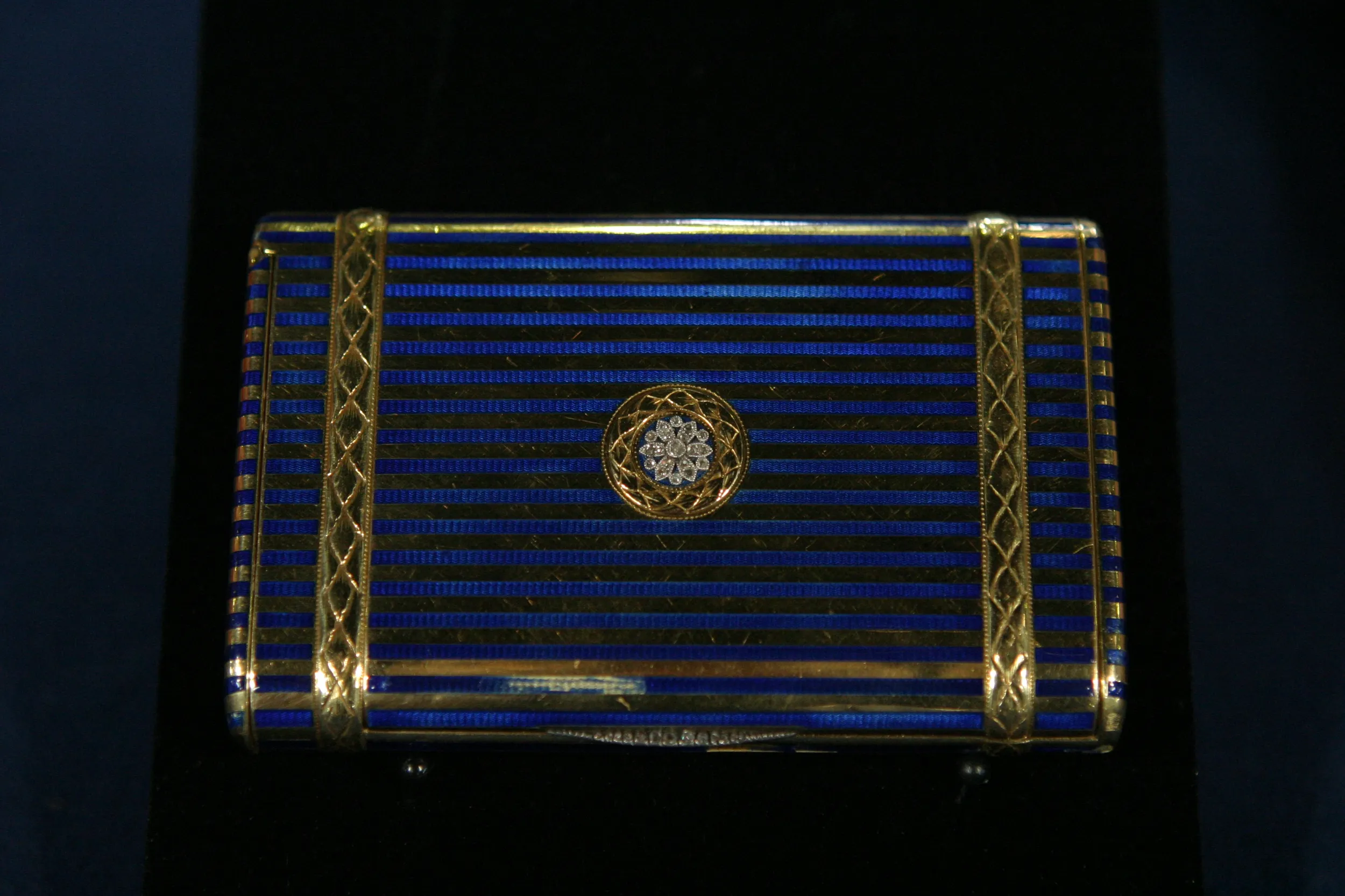
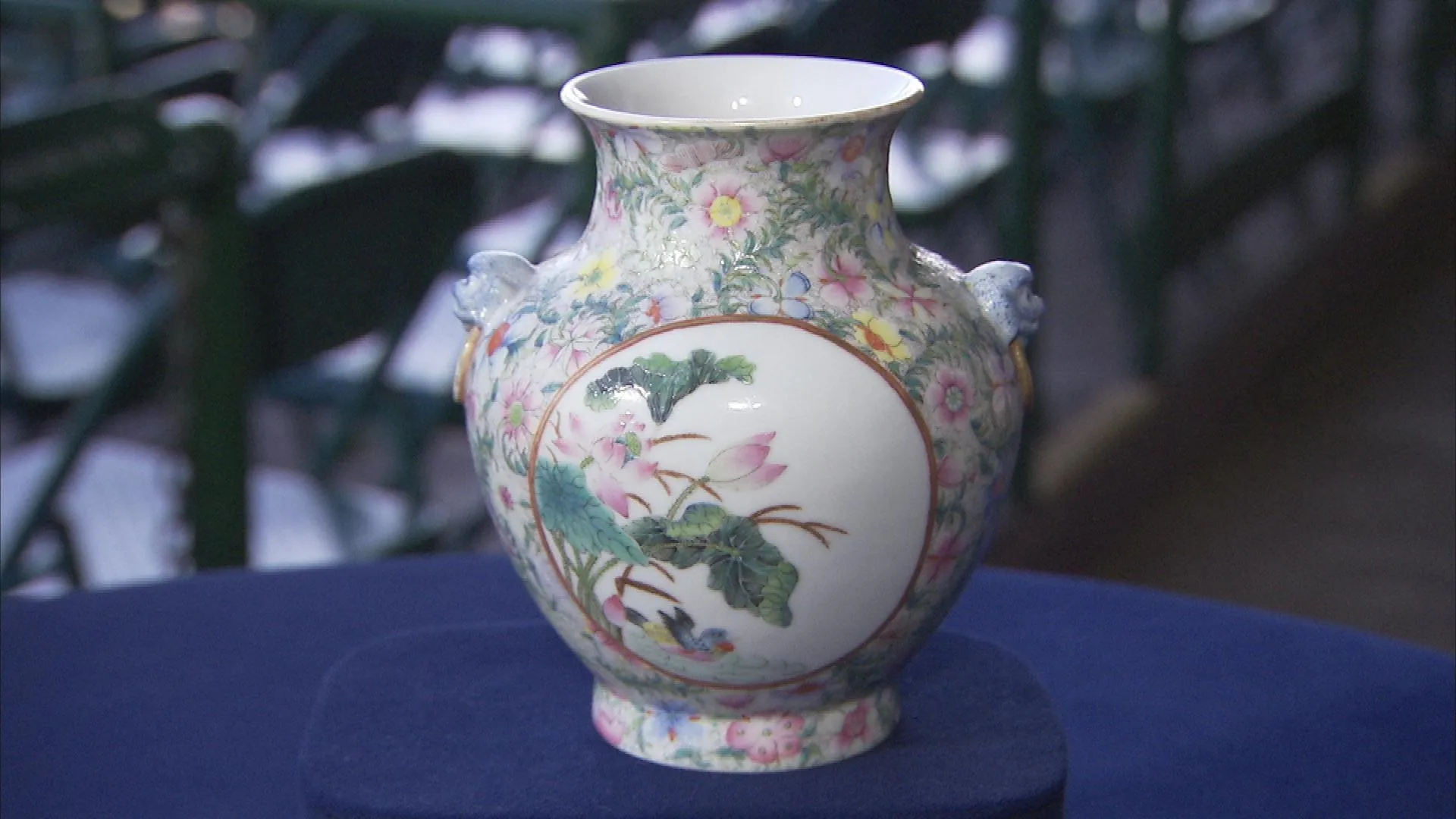
GUEST: Well, when I first saw it, my instinct said, "This is something wonderful." I loved the color. I loved the paintings, the gold work. And I said, "This is going to be something special."
APPRAISER: And where did you find this piece?
GUEST: I found this in Englewood, New Jersey, in an antique shop somewhere between 35 and 38 years ago.
APPRAISER: So, when you bought it, what did you buy it as?
GUEST: It's a... actually a trembleuse cup from France.
APPRAISER: And were you told at all about who had made it or its age or any background like that?
GUEST: No, but I trusted the dealer very much. I had bought several other things from him and I felt he was honorable and I was happy to get it.
APPRAISER: Um... Stylistically, it is the kind of production that was made in France in the 18th century by the Sëvres factory, which was the national factory of France. Before it was called the Sëvres factory, it's referred to as Vincennes because at that point the factory was on the other side of the Seine river. Um... this mark here, on an 18th-century piece, would refer to the date at which it was made and that "D" is part of a letter date code that would mean that it was made in 1756-- '55, '56. They started using those date codes in 1753 with "A." Um... this turquoise color was referred to by the factory as bleu celeste-- "celestial blue," sky blue...
GUEST: Yes.
APPRAISER: And these amorous couples, the amorous couple painted on it... very typical of French painting of the 18th century associated with Boucher, Fragonard-- the great painters of the age. The gilding was something that the Vincennes and Sëvres factory developed. It's a raised gilding and it does... it had honey in it. And it's sometimes referred to as honey gilding.
GUEST: Oh.
APPRAISER: The problem is that this piece is not made by the Sëvres factory, and it's not old.
GUEST: Oh, my, I can't bel...
APPRAISER: Sorry. It is referred to as Sëvres style. The Sëvres factory was known for making pieces out of a very soft paste porcelain.
GUEST: Yes.
APPRAISER: This is made out of hard-paste porcelain. It is a shape that was made by the 18th-century manufactory. Originally, it would have also had a cover and it would have been for a hot milk or a hot drink. But this piece, I think, was probably made in France; I think was made in this century and very possibly, um... by one of the manufactories located near Limoges. It's very typical Sëvres-style decoration, but unfortunately it's 200 years younger than you want it to be.
GUEST: That's too bad.
APPRAISER: And it's a false mark that's on the bottom. Um... can you tell me what you paid for the piece?
GUEST: No, I can't remember. No, but I know it wasn't terribly expensive. And the only other one that I had seen was at the Madison Square Garden Armory in New York. So I thought it was something special.
APPRAISER: It's actually a very nice example of its type and I would have thought at auction... still worth $150 or $200.
GUEST: Thank you very much.
APPRAISER: You're welcome.