Sequoyah School Pottery, ca. 1940
GUEST: It's Sequoyah Orphanage Training School pottery. After forced removal, uh, of the Cherokee Nation from the East Coast to modern-day Oklahoma, it left a lot of parentless children, orphans. And so Cherokees have a long history of taking care of the orphans with an orphanage asylum, and then later the Sequoyah Orphanage Training School. My own parents went to Sequoyah boarding school, which is an Indian boarding school in Tahlequah, Oklahoma. There's a direct connection between the role that I have at Cherokee Nation. I'm Cherokee Nation's delegate to Congress. It is a position that is mandated in our removal treaty, the very treaty that led to, unfortunately, so many parentless children. I became familiar with it because my aunt had a collection of it, and it-it was so rare to find. There are reproductions. But I started collecting the originals, and it really is in honor of my parents. But it also, it honors the past because each piece uniquely has the name of the student...
APPRAISER: Wow, fantastic.
GUEST: ...of the orphan who made each piece. And so it also gives them visibility. They're not forgotten.
APPRAISER: So between 1938 and 1943, all of this pottery was being used to sell to help raise money for the orphans. And also what I find really interesting about a lot of the figurative works, you see, this is sort of a stylized dog...
GUEST: Mm-hmm.
APPRAISER: ...and then frogs and then birds. They're a vessel, but they also are animated with the creature.
GUEST: Absolutely. Mm-hmm.
APPRAISER: Right? But some of this feels a little bit more like early prehistoric.
GUEST: Yeah.
APPRAISER: Like almost Caddoan. When I look at these, I see each one of them different.
GUEST: Mm-hmm.
APPRAISER: I'm seeing that they're all red, though.
GUEST: Mm-hmm.
APPRAISER: Did they come in other colors?
GUEST: They do come in other colors. I have dark browns, blues and whites. There's also green and yellow.
APPRAISER: I'm gonna just take a look at the bottom of some of these. Each one of them is signed by-- this one, Mary Watson.
GUEST: Mm-hmm.
APPRAISER: And some of them were last names like Mankiller...
GUEST: Mm-hmm.
APPRAISER: ...and Johnson. And many of these people are—These are Cherokee names?
GUEST: Mm-hmm.
APPRAISER: Now, in terms of assessing these values, they turn up at obscure auctions, and the predominance of them are coming out of Oklahoma and the Midwest. The small frog here, it's just wonderful. He's got a lot of character...
GUEST: Mm-hmm.
APPRAISER: ...ver-- tons of personality. And I would give that a retail value of about $450.
GUEST: Mm-hmm.
APPRAISER: The wonderful manifestation of how this is built, it's got some modernity to it.
GUEST: Mm-hmm.
APPRAISER: It feels deco, but always essentially Cherokee and Native American.
GUEST: Mm-hmm.
APPRAISER: So I just love that it just finds its way back to its source and its roots. Something like that is probably $650 to $750.
GUEST: Mm-hmm.
APPRAISER: The wonderful frog here, it's about $600.
GUEST: Mm-hmm.
APPRAISER: So it's just fantastic. Now, the duck, which I really like a lot...
GUEST: Mm-hmm.
APPRAISER: ...because it almost has these very...
GUEST: Yes.
APPRAISER:...beautiful, almost feels like basketware...
GUEST: Mm-hmm.
APPRAISER:...up at the top, but it's also pottery. And I would say something like that would be around $900.
GUEST: Wow.
APPRAISER: And the fantastic original dog vessel, I would say, is probably worth about $2,500 to $3,000.
GUEST: Wow.
APPRAISER: But to me, it's about culture...
GUEST: Absolutely.
APPRAISER: ...it's about history.
GUEST: Me, too.
APPRAISER: And it's about your vision, and I love it. I think what you're doing this here means a lot to...
GUEST: Thank you.
APPRAISER: ...not only your own tribe...
GUEST: Mm-hmm.
APPRAISER: ...but the artisans...
GUEST: Mm-hmm.
APPRAISER: ...to bring them to light and to let people know that these are really exceptional parts of American history.

$5,100 - $5,700 Retail
Featured In

episode
Crystal Bridges Museum of American Art, Hour 2
ANTIQUES ROADSHOW searches for amazing treasures in Arkansas. One is worth up to $90,000!
1940s

appraisal
appraisal
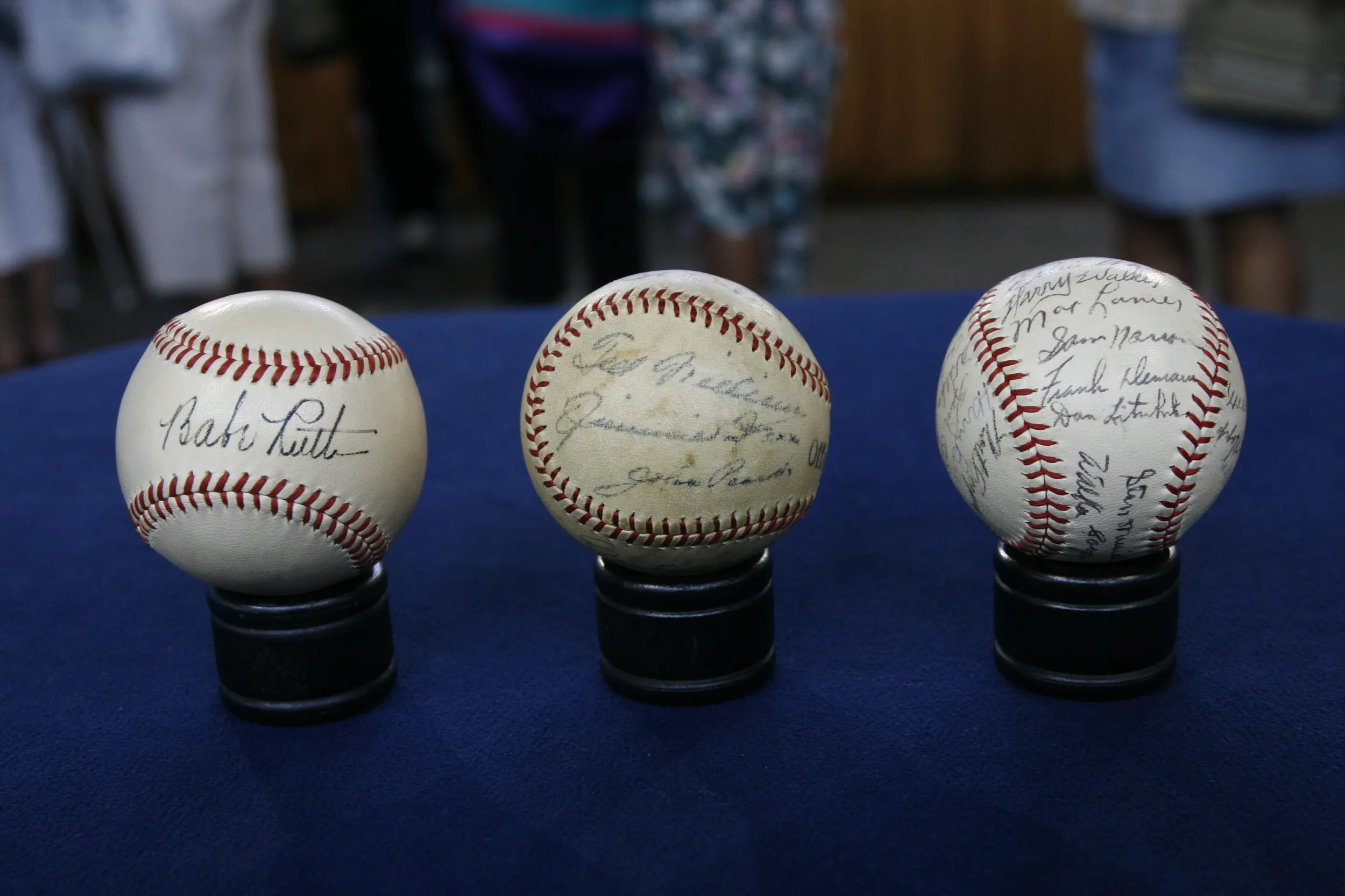
Three 1940s Signed Baseballs
appraisal
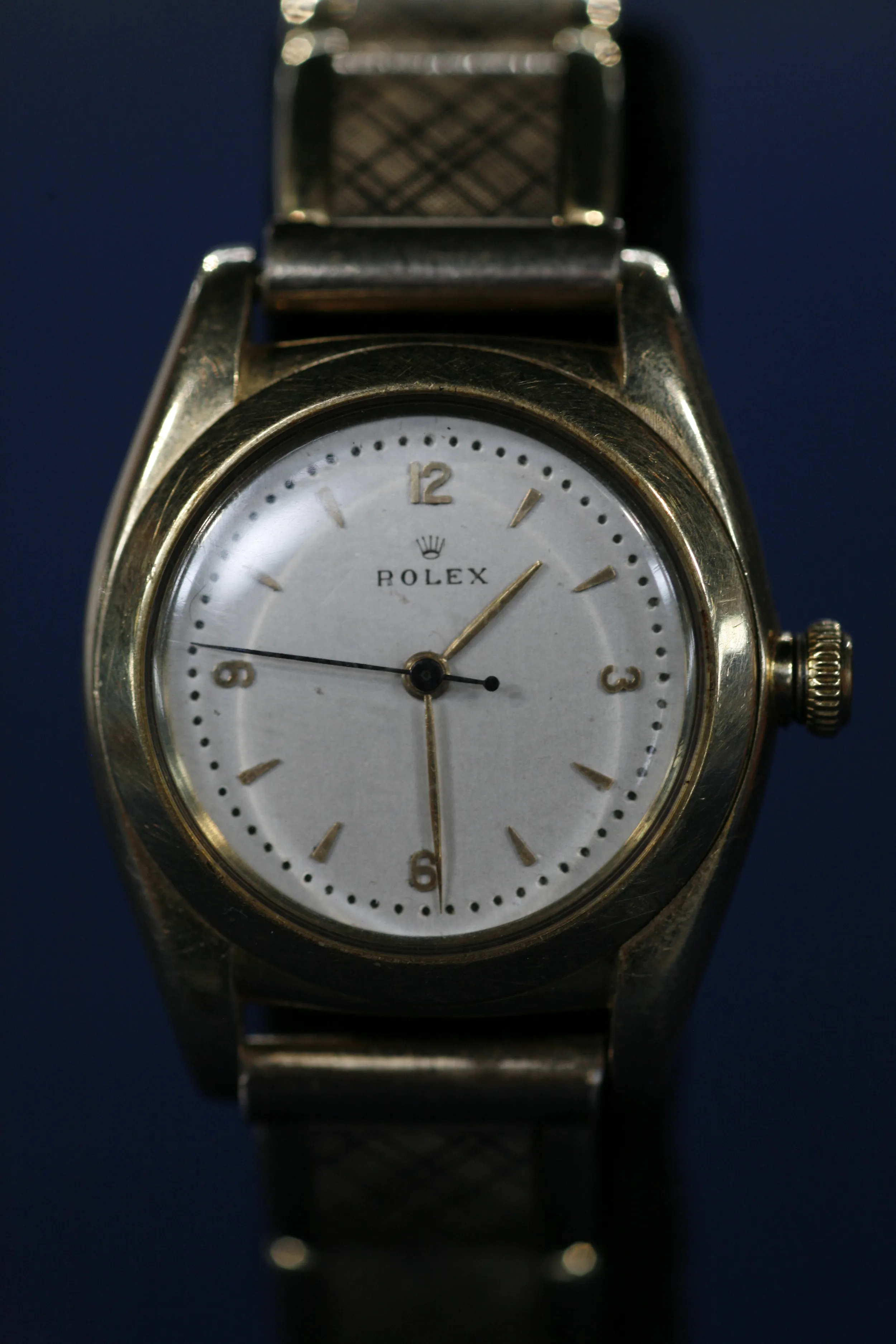
Rolex "Bubbleback" Watch, ca. 1940

appraisal
Audemars Piguet Watch, ca. 1940
Understanding Our Appraisals
Executive producer Marsha Bemko shares her tips for getting the most out of ANTIQUES ROADSHOW.
Value can change: The value of an item is dependent upon many things, including the condition of the object itself, trends in the market for that kind of object, and the location where the item will be sold. These are just some of the reasons why the answer to the question "What's it worth?" is so often "It depends."
Note the date: Take note of the date the appraisal was recorded. This information appears in the upper left corner of the page, with the label "Appraised On." Values change over time according to market forces, so the current value of the item could be higher, lower, or the same as when our expert first appraised it.
Context is key: Listen carefully. Most of our experts will give appraisal values in context. For example, you'll often hear them say what an item is worth "at auction," or "retail," or "for insurance purposes" (replacement value). Retail prices are different from wholesale prices. Often an auctioneer will talk about what she knows best: the auction market. A shop owner will usually talk about what he knows best: the retail price he'd place on the object in his shop. And though there are no hard and fast rules, an object's auction price can often be half its retail value; yet for other objects, an auction price could be higher than retail. As a rule, however, retail and insurance/replacement values are about the same.
Verbal approximations: The values given by the experts on ANTIQUES ROADSHOW are considered "verbal approximations of value." Technically, an "appraisal" is a legal document, generally for insurance purposes, written by a qualified expert and paid for by the owner of the item. An appraisal usually involves an extensive amount of research to establish authenticity, provenance, composition, method of construction, and other important attributes of a particular object.
Opinion of value: As with all appraisals, the verbal approximations of value given at ROADSHOW events are our experts' opinions formed from their knowledge of antiques and collectibles, market trends, and other factors. Although our valuations are based on research and experience, opinions can, and sometimes do, vary among experts.
Appraiser affiliations: Finally, the affiliation of the appraiser may have changed since the appraisal was recorded. To see current contact information for an appraiser in the ROADSHOW Archive, click on the link below the appraiser's picture. Our Appraiser Index also contains a complete list of active ROADSHOW appraisers and their contact details and biographies.


