Joan Miró pencil on paper, ca. 1965
GUEST: Well, my husband and I took an art class at University of Missouri when we were in college. And I fell in love with one of the artists, and it was Miró. And not too long after that, we went to an estate sale, and this was on the wall. And I'm, like, "Wow." It was eight dollars, and I had to borrow it from my father. (chuckling) 'Cause we didn't have it with us.
APPRAISER: (chuckling) Okay.
GUEST: So, that's how we bought it. And then, we tried to figure out if it was real or not. We went to the art museum, and she said, "Well, I'll give you the name of a dealer in New York City." And the dealer turned out to be Pierre Matisse, Henri Matisse's son.
APPRAISER: Uh-huh.
GUEST: And he had a, a shop in New York, and he did all of the, I guess, everything for the Miró line. And we wrote to him, and he said, "Looks like it's real."
APPRAISER: Okay.
GUEST: And then, few weeks later, he said, "But you need to send me the original."
APPRAISER: Right.
GUEST: And we sent it. And he said, "Nah, I'm not so sure it's real."
APPRAISER: (chuckling) Okay.
APPRAISER: "Would you like me to check with the artist?"
GUEST: And, um, you know, I'm, like, "Oh, that sounds like a good choice."
APPRAISER: Sure.
GUEST: "Yeah, sure, go ahead, check with the artist." So, Miró lives in Spain, and Matisse was going to visit him, and he took the picture, and the artist said, "Yeah, I did it." So, it took about a year for all the paperwork, but, uh, I'm thrilled to have it.
APPRAISER: Yeah, and what year was that?
GUEST: I think we bought it at the house sale in 1971...
APPRAISER: Okay.
GUEST: ...and started corresponding with the gallery in '72, and got the final letter in '73.
APPRAISER: Mm-hmm. This work is a pencil-on-paper drawing by Joan Miró. He's born in 1893. He's a very interesting character in modern art and especially in 20th-century art. Uh, by 1920, he already is meeting Picasso in Paris.
GUEST: Mm-hmm.
APPRAISER: And, uh, from there, Miró seemingly is part of not every major art movement, but a lot of them. Really an artist who mastered every medium, from sculpture, to drawing to painting, and to prints. So, in this particular case, he says here, in the note, "It is possibly an idea for a lithograph which I intended to do, done at the printer's." And I think that, date-wise, his real, deep dive into lithography starts in the late '50s?
GUEST: Late '50s, okay.
APPRAISER: Uh, and then proceeds, really, throughout his career. But given that you acquired it by '71, I, I would say we can pretty safely say this was likely done in the 1960s. I think that an insurance evaluation would be $35,000.
GUEST: Whoa! (chuckles) That's, that's wonderful. That's more than I thought it would've been.
APPRAISER: Yeah, pretty good for eight bucks.
GUEST: (laughs) Yeah, for eight bucks.

$35,000 Insurance
Featured In

episode
Grant's Farm, Hour 1
Meet us in St. Louis as ROADSHOW discovers midwest treasures at Grant’s Farm! — Mon, April 27, 2026
Drawing
appraisal
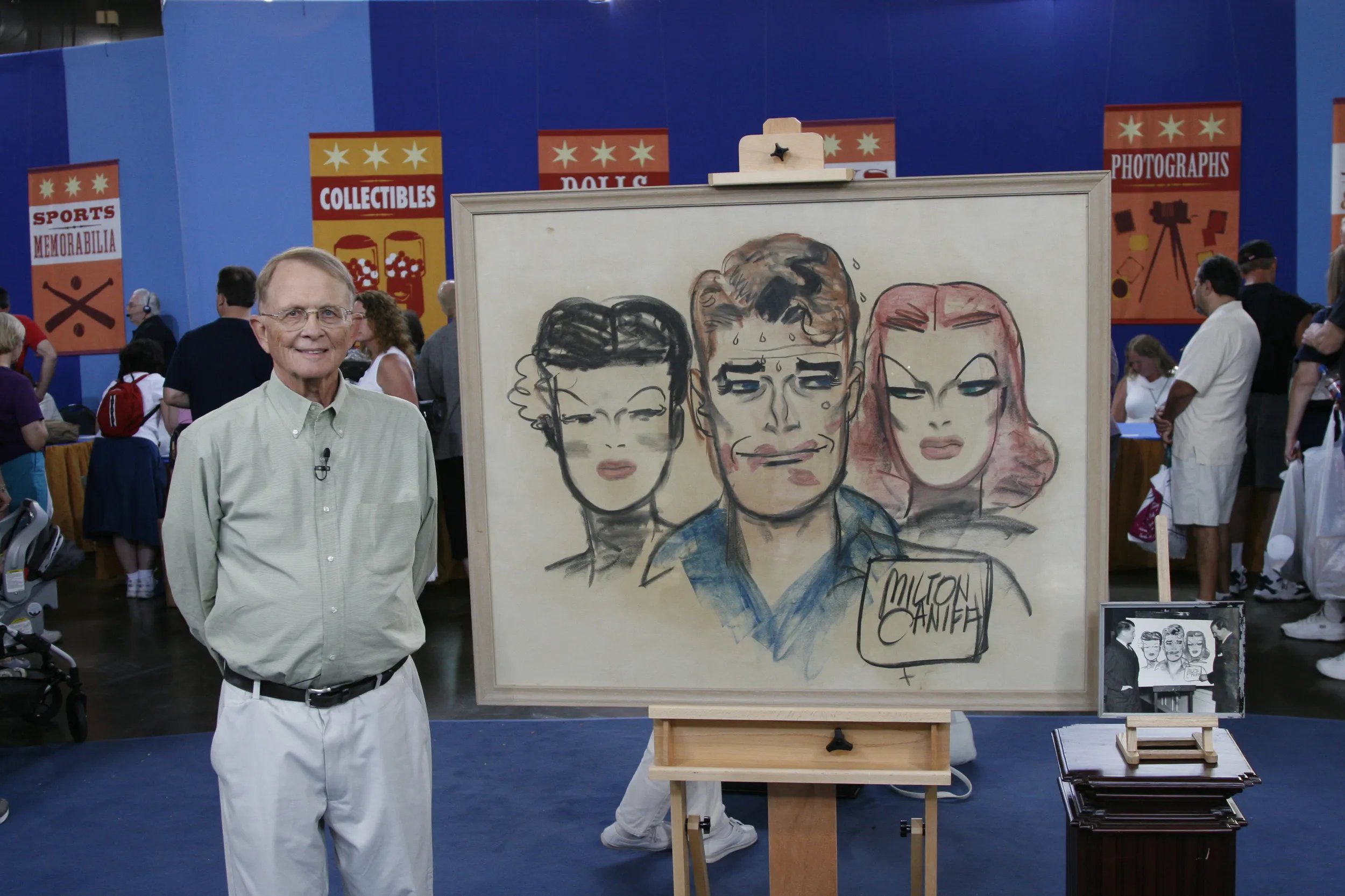
1946 Milton Caniff Pastel Drawing
appraisal
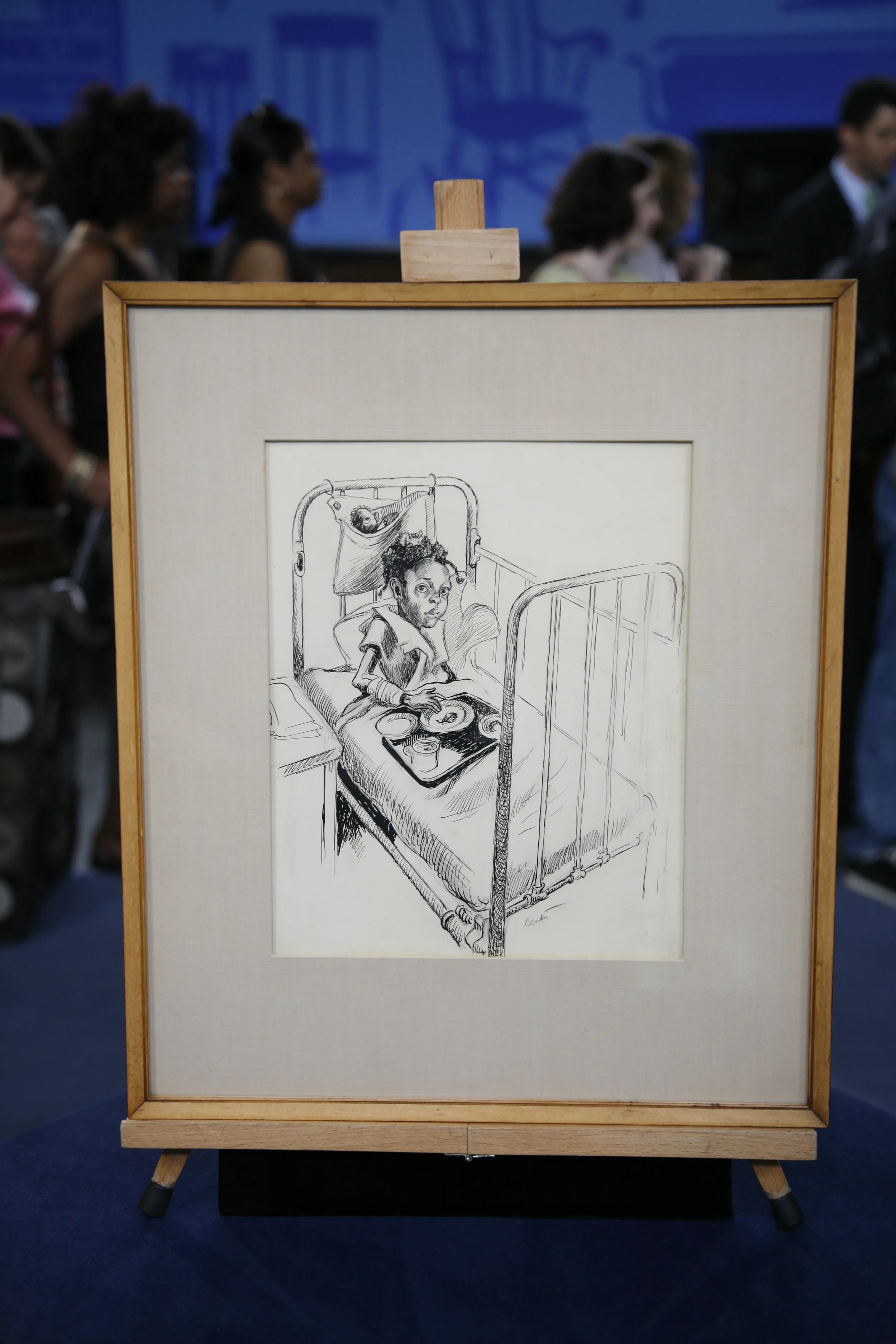
Thomas Hart Benton Drawing, ca. 1933
appraisal
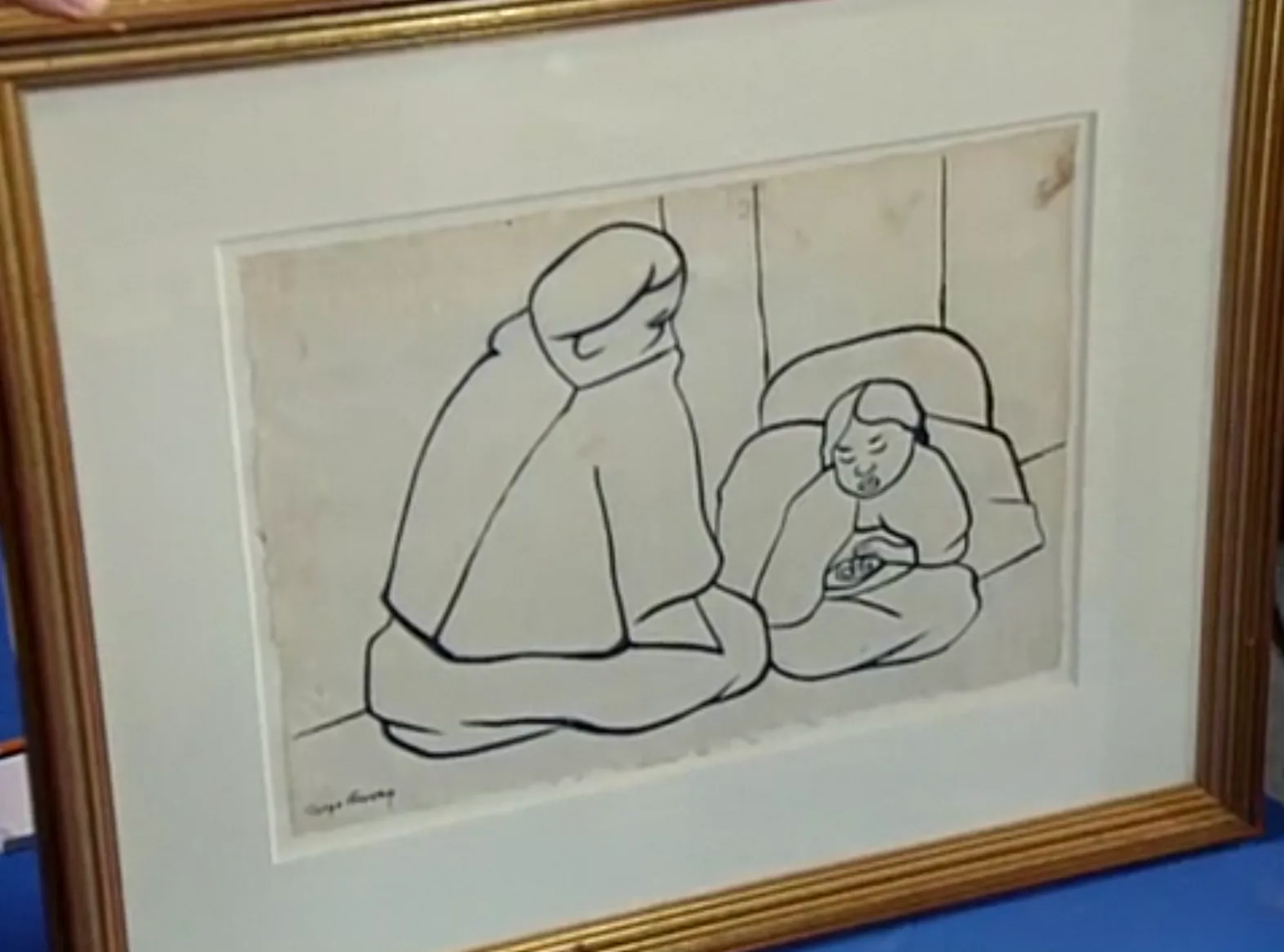
Diego Rivera Ink Drawing, ca. 1940
appraisal
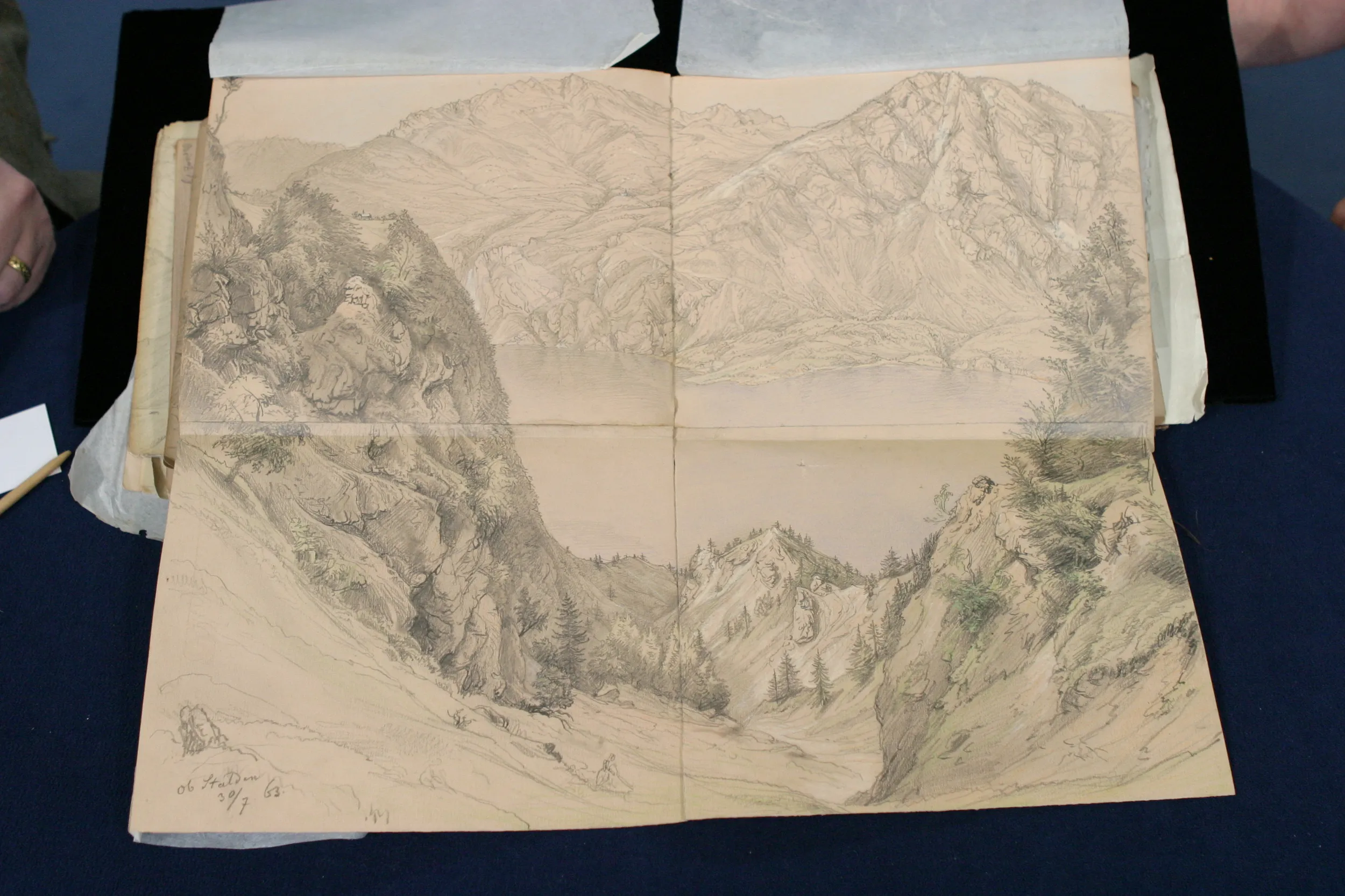
1862 Julius Jacob Sketchbook
Understanding Our Appraisals
Executive producer Marsha Bemko shares her tips for getting the most out of ANTIQUES ROADSHOW.
Value can change: The value of an item is dependent upon many things, including the condition of the object itself, trends in the market for that kind of object, and the location where the item will be sold. These are just some of the reasons why the answer to the question "What's it worth?" is so often "It depends."
Note the date: Take note of the date the appraisal was recorded. This information appears in the upper left corner of the page, with the label "Appraised On." Values change over time according to market forces, so the current value of the item could be higher, lower, or the same as when our expert first appraised it.
Context is key: Listen carefully. Most of our experts will give appraisal values in context. For example, you'll often hear them say what an item is worth "at auction," or "retail," or "for insurance purposes" (replacement value). Retail prices are different from wholesale prices. Often an auctioneer will talk about what she knows best: the auction market. A shop owner will usually talk about what he knows best: the retail price he'd place on the object in his shop. And though there are no hard and fast rules, an object's auction price can often be half its retail value; yet for other objects, an auction price could be higher than retail. As a rule, however, retail and insurance/replacement values are about the same.
Verbal approximations: The values given by the experts on ANTIQUES ROADSHOW are considered "verbal approximations of value." Technically, an "appraisal" is a legal document, generally for insurance purposes, written by a qualified expert and paid for by the owner of the item. An appraisal usually involves an extensive amount of research to establish authenticity, provenance, composition, method of construction, and other important attributes of a particular object.
Opinion of value: As with all appraisals, the verbal approximations of value given at ROADSHOW events are our experts' opinions formed from their knowledge of antiques and collectibles, market trends, and other factors. Although our valuations are based on research and experience, opinions can, and sometimes do, vary among experts.
Appraiser affiliations: Finally, the affiliation of the appraiser may have changed since the appraisal was recorded. To see current contact information for an appraiser in the ROADSHOW Archive, click on the link below the appraiser's picture. Our Appraiser Index also contains a complete list of active ROADSHOW appraisers and their contact details and biographies.


