Salesman's Model Carousel Horse, ca. 1925
GUEST: So, I got this from my mom, who got it from my great-grandfather. My great-grandfather was a master carpenter for Euclid Beach Park, which is a now-closed amusement park on the east side of Cleveland.
APPRAISER: Mm-hmm.
GUEST: And he was leaving work and found it in the trash. He decided to take it home. He had two daughters, so he thought they might like it. It's from Philadelphia Toboggan Company. They made small ones to sell, and that's what they would bring to sell the carousel.
APPRAISER: And when did he work at the amusement park?
GUEST: I believe 1936 or '38, to the 1940s.
APPRAISER: It was made by the Philadelphia Toboggan Company.
GUEST: Okay.
APPRAISER: It's a company that specialized in the production of carousels as well as, uh, roller coasters. So with the company being founded in 1904, and your great-grandfather working at the park by the sort of late 1930s, we can obviously very safely date this to perhaps the 1920s, early '30s. They were known for their very detailed, very lifelike figures that they made. And, and-- and I agree with you. This is almost certainly a salesman's model to show both the, the style of figures that they made for carousels, but also the quality of their work. It's constructed of carved and painted wood. It has glass eyes. I love the fact that it is... it has a complete array of very lifelike details, including the teeth and tongue in the mouth.
GUEST: Yeah.
APPRAISER: Very nicely carved and painted. The saddle has all of the, the tooling marks in black there that you would see on a, on a full-size real saddle. And of course, the, uh, the saddle blanket being red with the yellow striping and then the gold-painted trim at the bottom representing fringe. And I also really appreciate the fact that at the back corner of the saddle blanket, you have carved there the PTC for Philadelphia Toboggan Company.
GUEST: Yeah, it was... Mm-hmm.
APPRAISER: There's a little bit of very nice restoration to it. The artist captured the muscle structures, the hooves, took great care to very carefully repair the top of the ear there, and as well as the rear hoof and joint in the leg there. And I actually really personally like the fact that they didn't repaint those restored areas.
GUEST: Yeah.
APPRAISER: It's restored to show the form and the elegance of the piece, but not trying to hide the fact that it is a restoration. Carousel horses are quite collectible.
GUEST: Oh, okay.
APPRAISER: But they're very large. Something like this, being a small version of that, as a salesman model...
GUEST: Yeah.
APPRAISER: ...we think would likely appeal more so to collectors than a full-size horse. Because think about it, if you had a full-size carousel horse...
GUEST: Yeah.
APPRAISER: ...where are you going to put it in your house? If it were to be offered in an auction setting...
GUEST: Mm-hmm.
APPRAISER: ...I would suggest an, an auction estimate of between $4,000 and $6,000 for it.
GUEST: Oh, wow. Okay. That's more than I thought.
APPRAISER: I think a very fair insurance valuation for it would be about $8,000.
GUEST: Okay.

$4,000 Auction
$8,000 Insurance
Featured In

episode
Castle Farms, Hour 1
Don't miss ROADSHOW's first visit to charming Charlevoix, Michigan! — Mon, March 30, 2026
Nostalgic Collectibles
appraisal
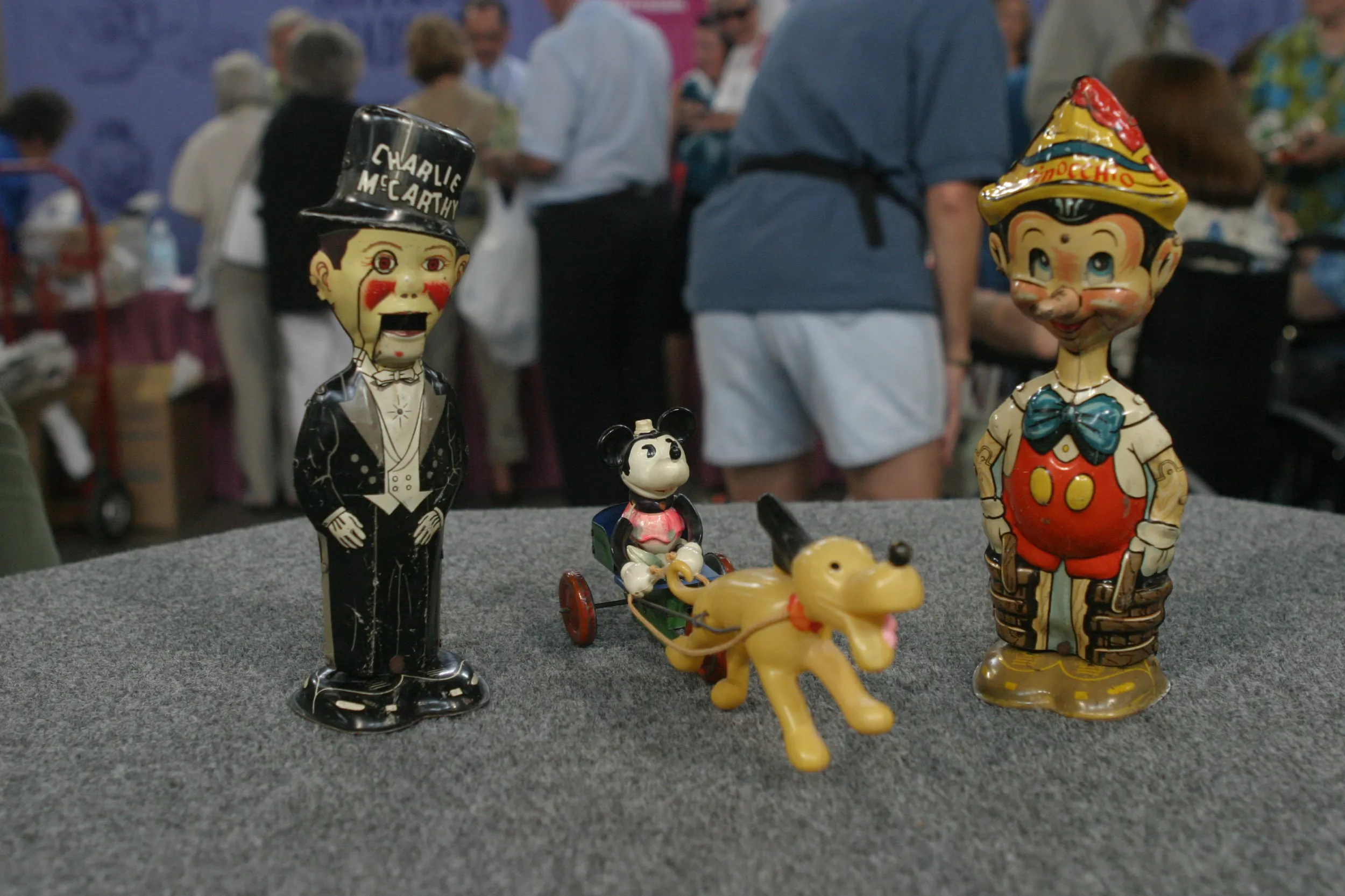
Comic Wind-up Toys, ca. 1930
appraisal
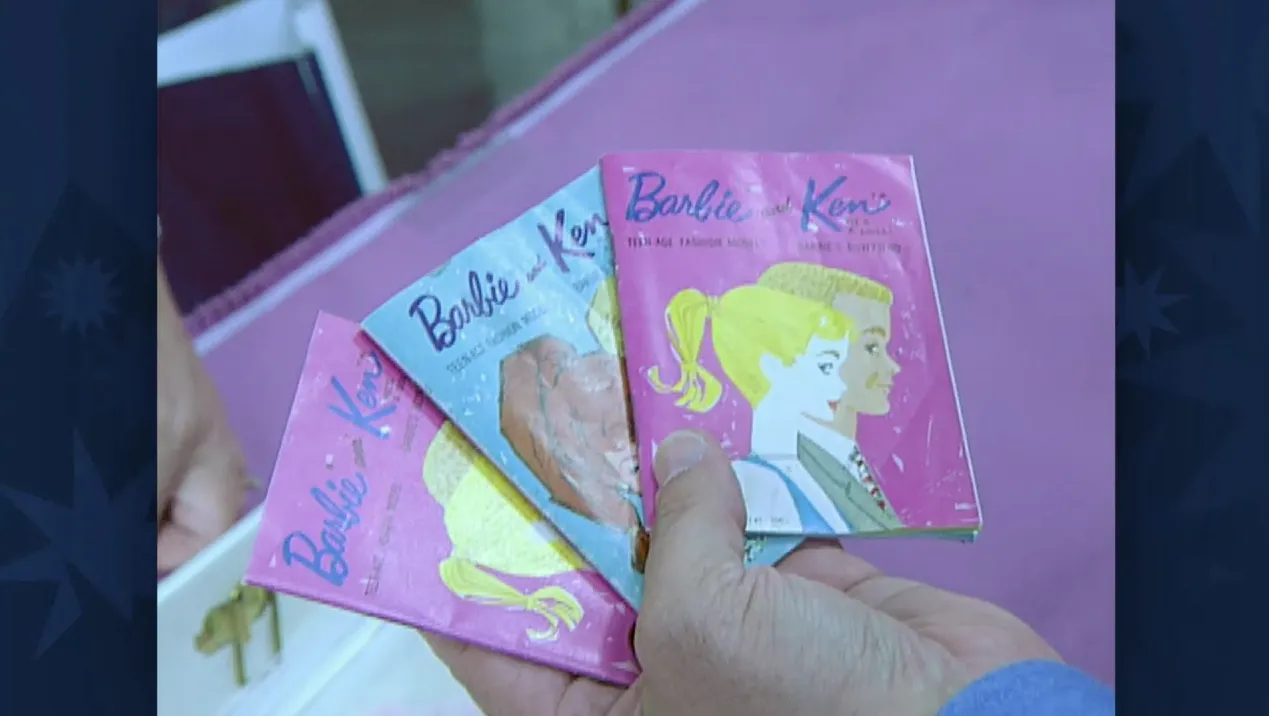
Barbie Accessories & Case, ca. 1960
appraisal

appraisal
Frank Zappa Painting, ca. 1960
Understanding Our Appraisals
Executive producer Marsha Bemko shares her tips for getting the most out of ANTIQUES ROADSHOW.
Value can change: The value of an item is dependent upon many things, including the condition of the object itself, trends in the market for that kind of object, and the location where the item will be sold. These are just some of the reasons why the answer to the question "What's it worth?" is so often "It depends."
Note the date: Take note of the date the appraisal was recorded. This information appears in the upper left corner of the page, with the label "Appraised On." Values change over time according to market forces, so the current value of the item could be higher, lower, or the same as when our expert first appraised it.
Context is key: Listen carefully. Most of our experts will give appraisal values in context. For example, you'll often hear them say what an item is worth "at auction," or "retail," or "for insurance purposes" (replacement value). Retail prices are different from wholesale prices. Often an auctioneer will talk about what she knows best: the auction market. A shop owner will usually talk about what he knows best: the retail price he'd place on the object in his shop. And though there are no hard and fast rules, an object's auction price can often be half its retail value; yet for other objects, an auction price could be higher than retail. As a rule, however, retail and insurance/replacement values are about the same.
Verbal approximations: The values given by the experts on ANTIQUES ROADSHOW are considered "verbal approximations of value." Technically, an "appraisal" is a legal document, generally for insurance purposes, written by a qualified expert and paid for by the owner of the item. An appraisal usually involves an extensive amount of research to establish authenticity, provenance, composition, method of construction, and other important attributes of a particular object.
Opinion of value: As with all appraisals, the verbal approximations of value given at ROADSHOW events are our experts' opinions formed from their knowledge of antiques and collectibles, market trends, and other factors. Although our valuations are based on research and experience, opinions can, and sometimes do, vary among experts.
Appraiser affiliations: Finally, the affiliation of the appraiser may have changed since the appraisal was recorded. To see current contact information for an appraiser in the ROADSHOW Archive, click on the link below the appraiser's picture. Our Appraiser Index also contains a complete list of active ROADSHOW appraisers and their contact details and biographies.


