Saarinen House
HOST: You can't miss those beautiful art pieces right there at the fireplace, those andirons. Tell me about them.
APPRAISER: They're made out of bronze, and they're believed to be peacocks. They were designed for this house as art of the fireplace. The fireplace itself was designed by Saarinen. He designed the unusual shape of the tiles, and those tiles were executed by the Pewabic Pottery Company here in Detroit. The peacocks are also a great example of design. While they are figurative, they are very, very abstracted, very slimmed down in detail, and I think that's what gives them such a great presence. They were made in the late '20s and exhibited at an exhibition at the Metropolitan Museum of Art in 1929. I wasn't able to find any similar examples having come up in auction. Smaller pieces might bring in the tens of thousands of dollars, so a piece like this would bring many times that amount.
HOST: I can only imagine. Well, thank you, Eric.
APPRAISER: Thank you.
Featured In
episode
Detroit, Hour 3
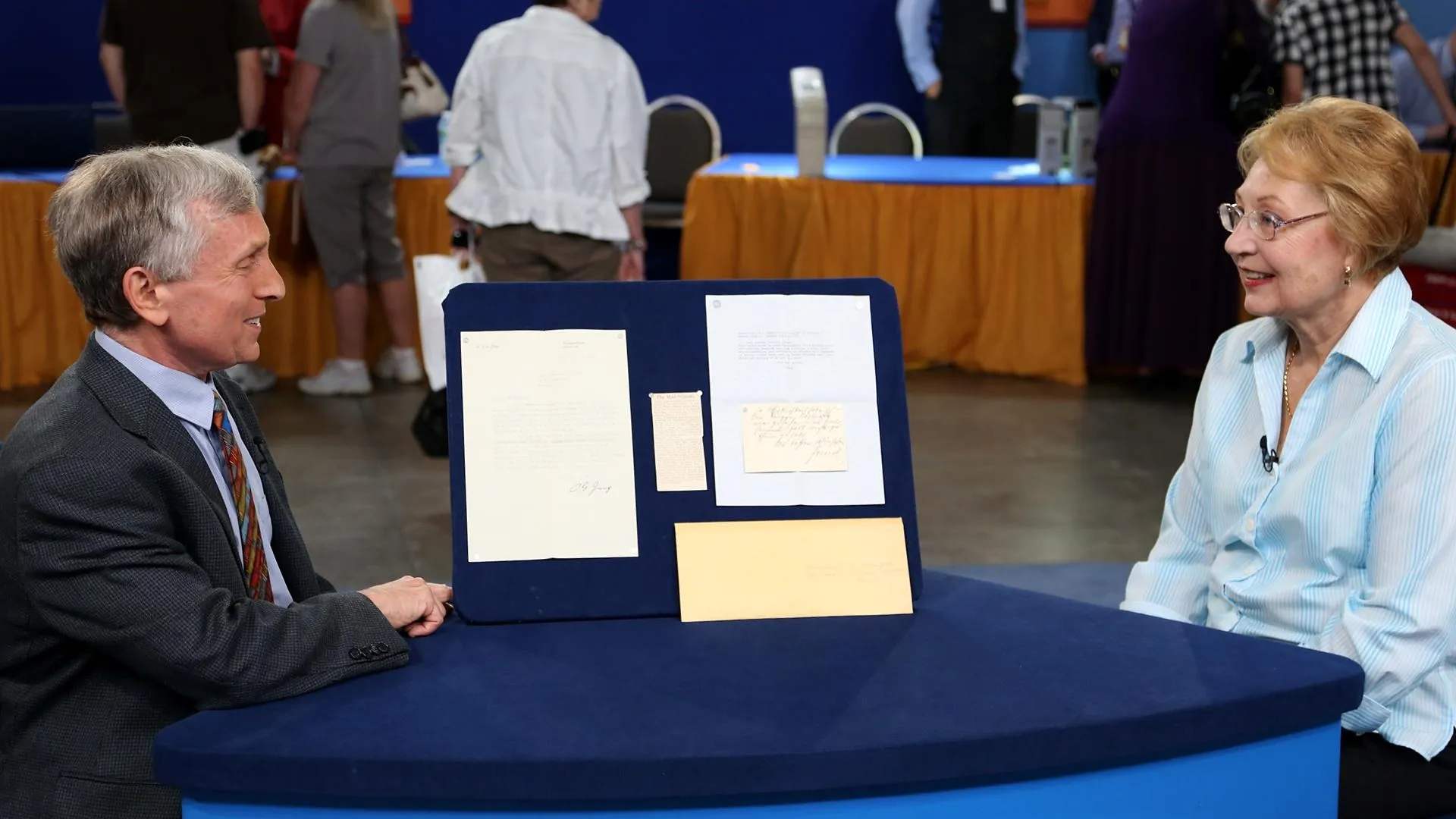
Host Mark L. Walberg and appraiser Eric Silver travel to the Cranbrook Academy of Art.
Understanding Our Appraisals
Executive producer Marsha Bemko shares her tips for getting the most out of ANTIQUES ROADSHOW.
Value can change: The value of an item is dependent upon many things, including the condition of the object itself, trends in the market for that kind of object, and the location where the item will be sold. These are just some of the reasons why the answer to the question "What's it worth?" is so often "It depends."
Note the date: Take note of the date the appraisal was recorded. This information appears in the upper left corner of the page, with the label "Appraised On." Values change over time according to market forces, so the current value of the item could be higher, lower, or the same as when our expert first appraised it.
Context is key: Listen carefully. Most of our experts will give appraisal values in context. For example, you'll often hear them say what an item is worth "at auction," or "retail," or "for insurance purposes" (replacement value). Retail prices are different from wholesale prices. Often an auctioneer will talk about what she knows best: the auction market. A shop owner will usually talk about what he knows best: the retail price he'd place on the object in his shop. And though there are no hard and fast rules, an object's auction price can often be half its retail value; yet for other objects, an auction price could be higher than retail. As a rule, however, retail and insurance/replacement values are about the same.
Verbal approximations: The values given by the experts on ANTIQUES ROADSHOW are considered "verbal approximations of value." Technically, an "appraisal" is a legal document, generally for insurance purposes, written by a qualified expert and paid for by the owner of the item. An appraisal usually involves an extensive amount of research to establish authenticity, provenance, composition, method of construction, and other important attributes of a particular object.
Opinion of value: As with all appraisals, the verbal approximations of value given at ROADSHOW events are our experts' opinions formed from their knowledge of antiques and collectibles, market trends, and other factors. Although our valuations are based on research and experience, opinions can, and sometimes do, vary among experts.
Appraiser affiliations: Finally, the affiliation of the appraiser may have changed since the appraisal was recorded. To see current contact information for an appraiser in the ROADSHOW Archive, click on the link below the appraiser's picture. Our Appraiser Index also contains a complete list of active ROADSHOW appraisers and their contact details and biographies.


