GUEST: The town that I live in, I saw this chair on the back of a truck along with another piece of furniture. And the man wanted to sell it. And I bought the chair and the other piece for less than $50.
APPRAISER: What was the other piece, please?
GUEST: It was a love seat.
APPRAISER: The love seat...
GUEST: Yeah.
APPRAISER: Did it match?
GUEST: No, it didn't. It was just another piece of furniture.
APPRAISER: You have another part of the story. About the storm.
GUEST: Yes. So, was this on the back of the truck... Before the storm, about seven years before the storm. And then the storm... And then the storm came in August of 2005. I lost the house, but I did retrieve pieces of furniture, and this is one of the pieces.
APPRAISER: I'm sorry you lost your home.
GUEST: Thank you.
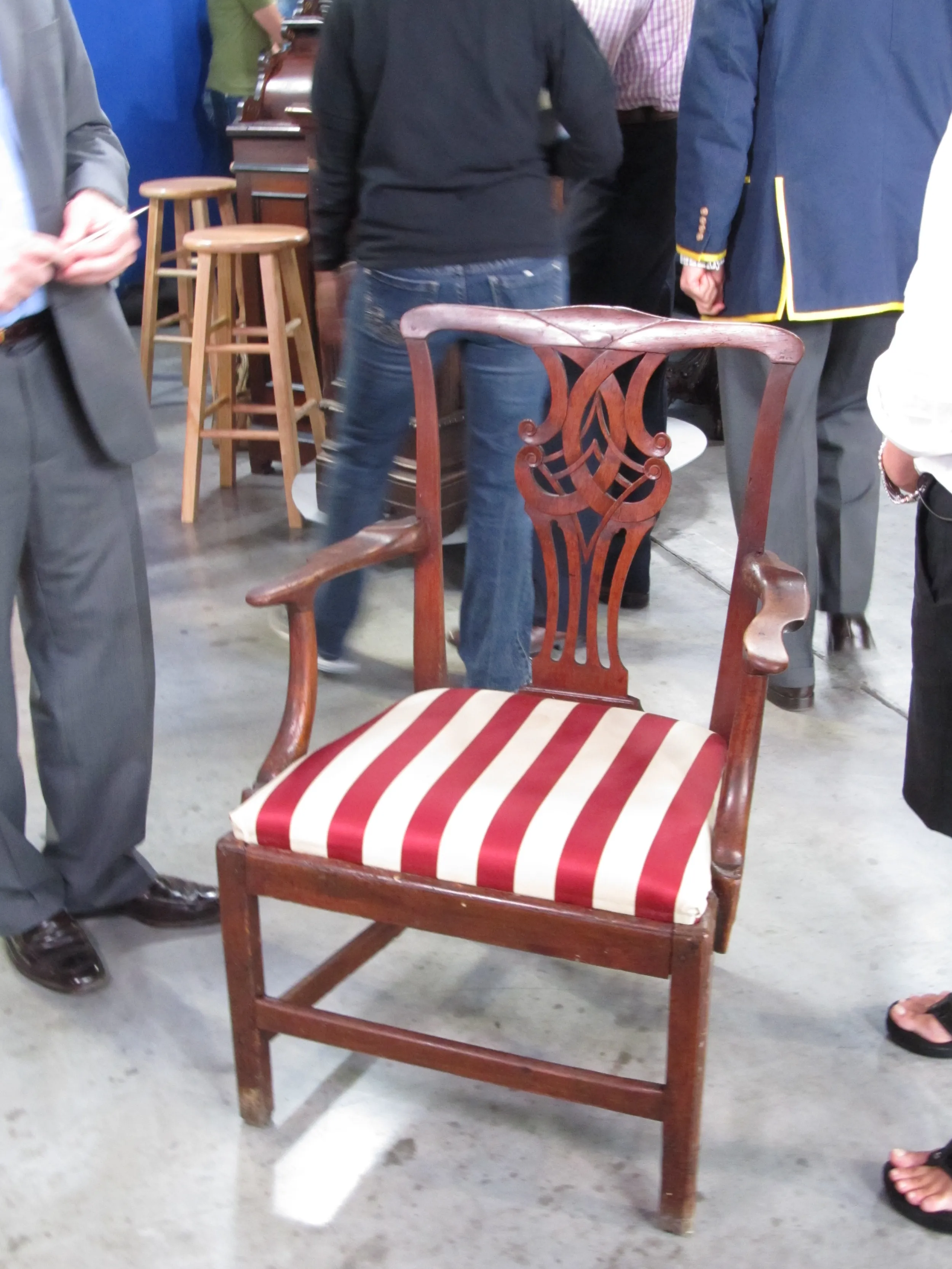
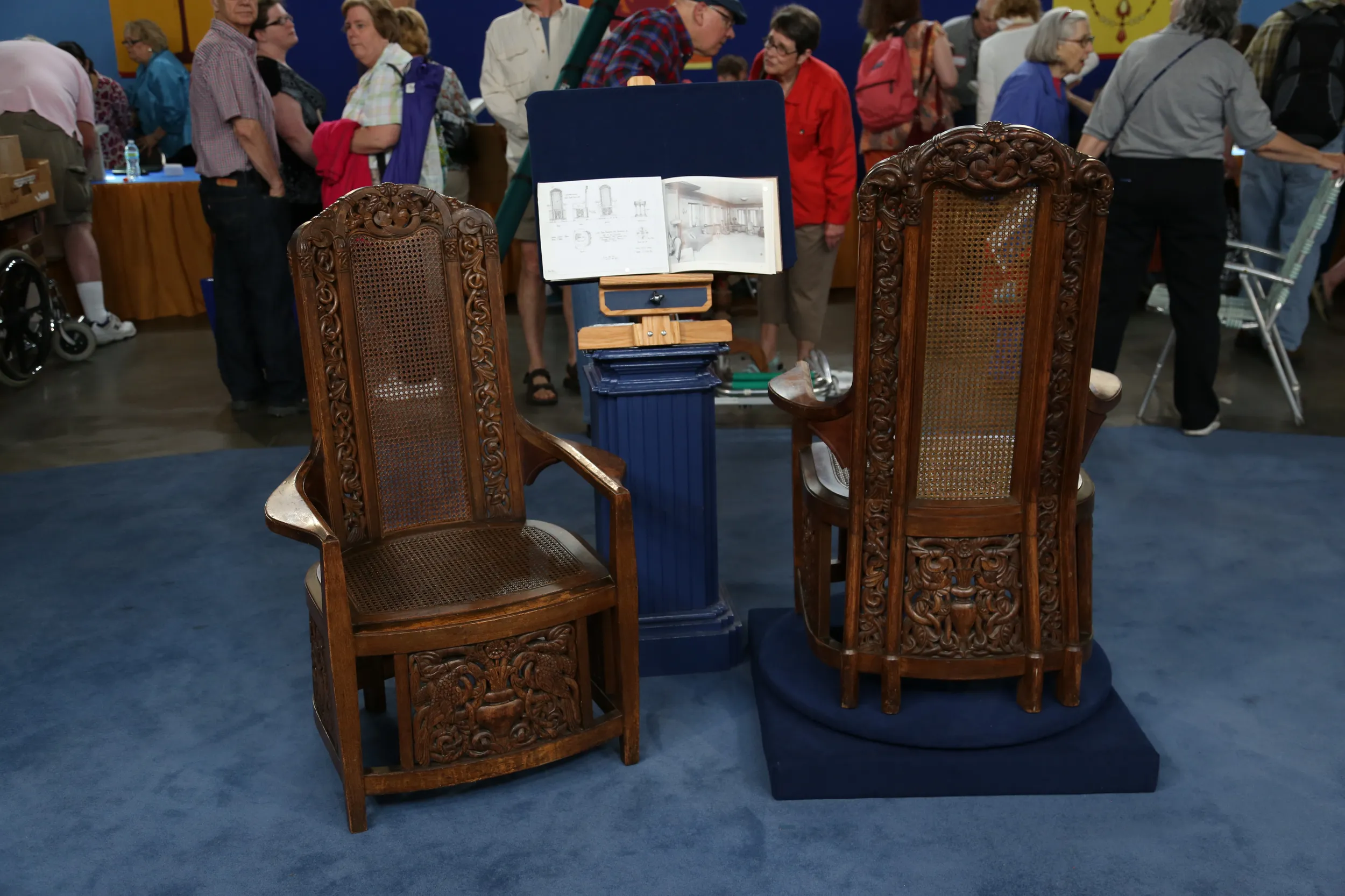
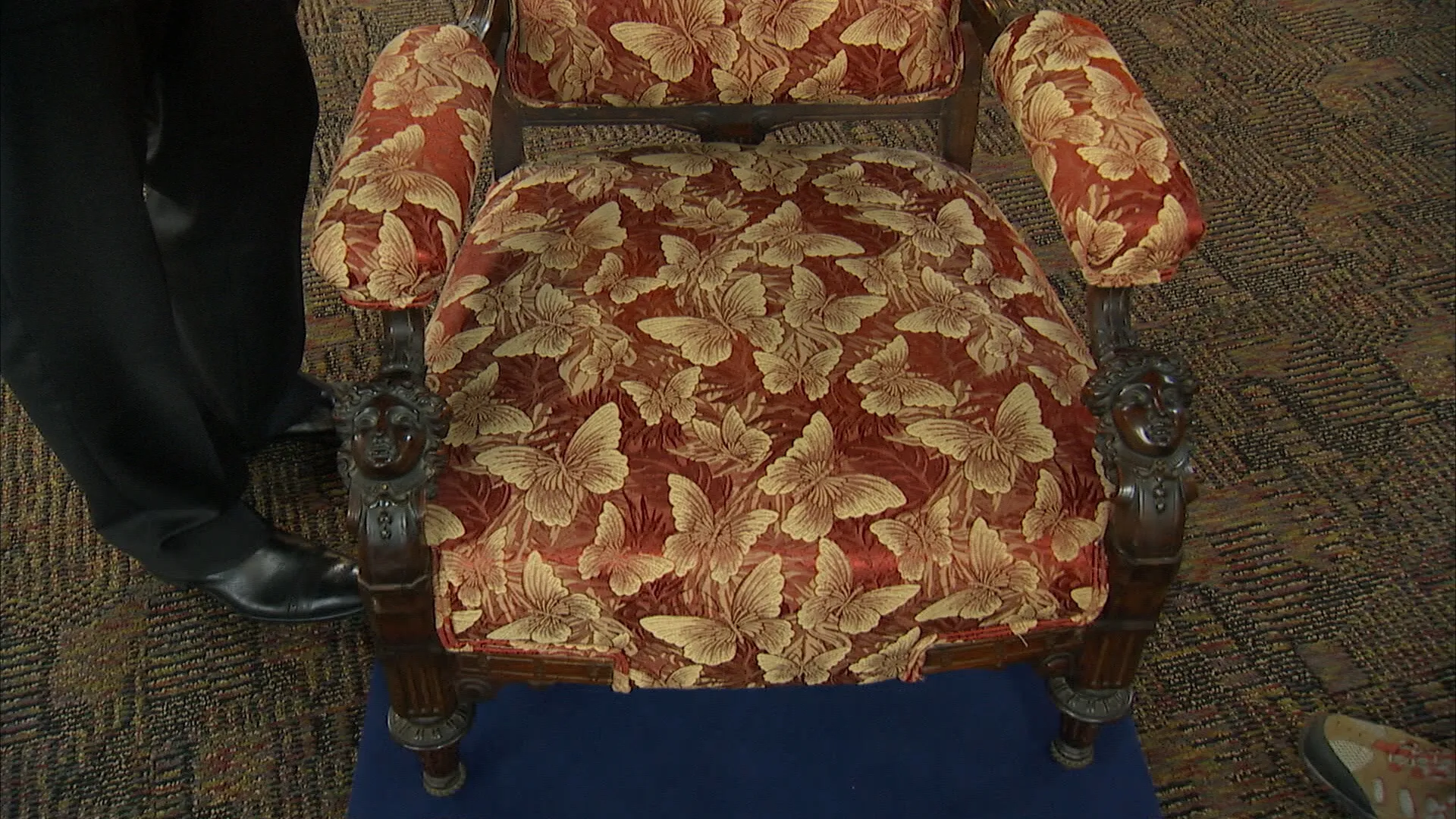
APPRAISER: Well, you brought in here a Renaissance revival armchair. And the Renaissance revival style was in America 1860 to 1890. I'd probably date this right around 1880. And what the Renaissance revival was was a revival of the Italian Renaissance, where we see these throne-like chairs, with these lion's heads, which were symbols of authority, power, strength. And then these acanthus leaves, fish scales and these big paw feet. And the lion, the Italian Renaissance makers look back to Rome and Greece. And the Greeks and the Romans thought that lions carried the chariots of the gods and goddesses. So it goes way back to antiquity, that use of that symbol. This is all made of carved, beautiful, imported mahogany. Very rich wood. See that great grain in there?
GUEST: Yes.
APPRAISER: And very tough to carve. So this really took a lot of work. It's probably made in Grand Rapids, Michigan. They made a lot of these in Grand Rapids, Michigan, a huge furniture town. Now, what about the finish? Did you change the finish or anything?
GUEST: Well, the chair was always dark, and the place that I brought it to had put on this little gloss here.
APPRAISER: So they put the shine on this?
GUEST: Yes.
APPRAISER: Okay. And what about the seat?
GUEST: The seat is new. The original was red, so I tried to keep the same color.
APPRAISER: So, was it water damage?
GUEST: Yeah.
APPRAISER: Because of the storm, right?
GUEST: Yes. I think this is how this got here, because of the water.
APPRAISER: That's not going to hurt a thing, because that's just a shrinkage crack.
GUEST: Can that be repaired?
APPRAISER: I wouldn't touch it if I were you. It's part of the aging of the piece. With this period furniture, the finish is not as important. It's okay to actually to refinish it. So, you didn't do a bad thing.
GUEST: Okay.
APPRAISER: Sometimes we say don't refinish something. It's okay with this period; depends on the piece. Would you mind sitting in the chair?
GUEST: Oh, yeah.
APPRAISER: Okay, great.
GUEST: It's comfortable.
APPRAISER: You look very regal. I wanted you also to sit down because if this chair were in an antique shop, they'd probably ask about a thousand dollars for it.
GUEST: Oh, my. Thank you. Thank you. A thousand dollars?
APPRAISER: You did very well.