Regina Music Box, ca. 1895
APPRAISER: I was so excited when I saw you walking across in front of my table with this, and I overheard you say, "Nobody knows what this is," and I shouted out, "I do!"
GUEST: (laughs)
APPRAISER: It looks just like a small slant front desk.
GUEST: Mm-hmm.
APPRAISER: However, it's a music box.
GUEST: It's been in our family since 1957, and we actually have the original receipt from the seller, who was an elderly lady. She sold it to my stepfather.
APPRAISER: The Regina Music Box Company was founded by a man named Gustave Brachhausen in 1889 in Germany, and within three years of founding the factory, he had expanded to Jersey City, New Jersey in 1892, where he began making cases for the parts for the insides were still being imported from Germany. Within just a few years, all of the operations were made in New Jersey, but in a larger factory in Rahway, New Jersey. This stylistically does date from the late 19th century and probably this case, and all of the works, were made in that Rahway, New Jersey factory. In the late 19th century, people loved things that were whimsical and sort of secretive, and this you would not have necessarily known that this was a music box if you just walked into someone's parlor and saw it. I searched through lots of records to try to find examples of this...
GUEST: (soft chuckle)
APPRAISER: ...and I could not find this exact model anywhere. So I think it's probably--
GUEST: Could be a good thing.
APPRAISER: I think it's a good thing. I think it's probably a very rare example; now, the downside is that the music box market is, uh, not especially robust at the moment.
GUEST: I wouldn't think that's a hip thing to have in your house right now.
APPRAISER: Yeah. The generation that was interested in those has aged out of the collecting phase of their lives...
GUEST: Mm-hmm.
APPRAISER: ...if they're even still here. In the current market, this being such an unusual example, I think, realistically, you could put a, uh, $4,000 to $6,000 estimate maybe even a $5,000 to $8,000 auction estimate on it.
GUEST: Fantastic.
APPRAISER: Because it is such a rare example.
GUEST: That's fantastic, I appreciate that.
APPRAISER: So you think you want to crank it up for us?
GUEST: Yeah.
APPRAISER: And see how it sounds?
GUEST: Let's, let's, let’s uh let’s give it a little whirl, so to speak. Let's see what it sounds like.
(music box playing)

$4,000 - $8,000 Auction
Featured In

episode
Junk in the Trunk 14
Watch newly revealed treasures from all five stops of ROADSHOW's Season 29 Tour!
Musical
appraisal
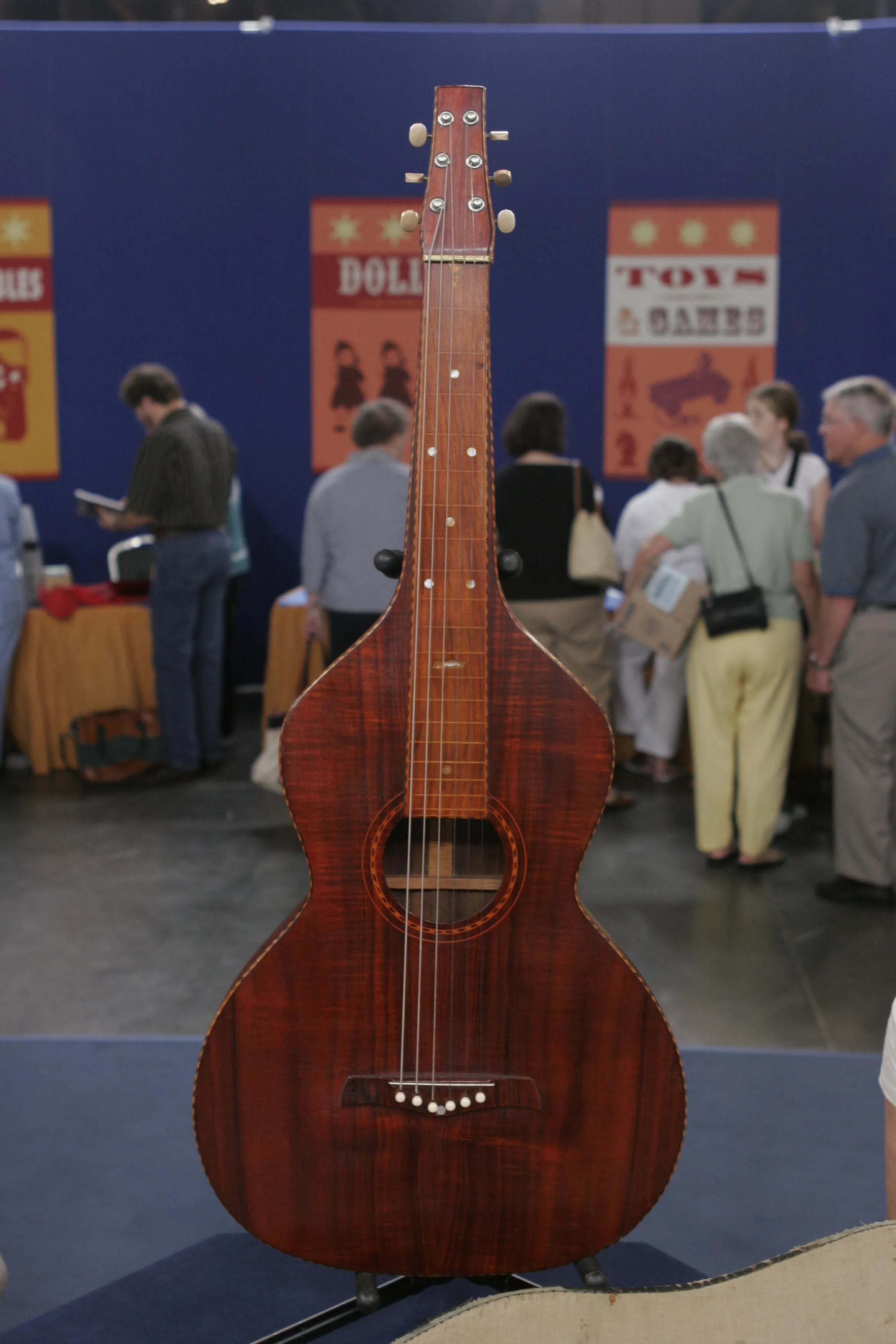
Weissenborn Style 4 Guitar, ca. 1925
appraisal

appraisal
appraisal
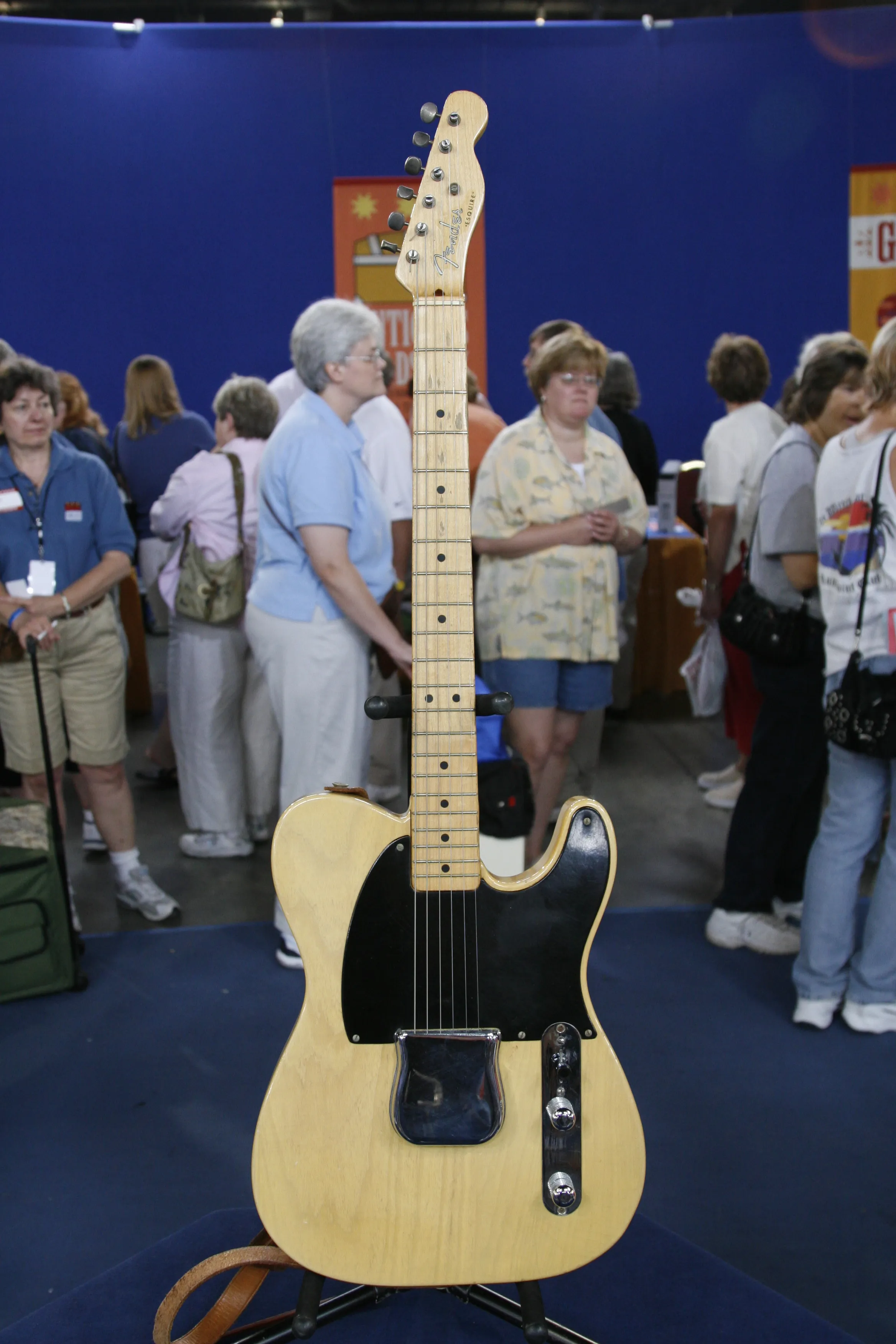
1952 Fender Esquire Guitar
Understanding Our Appraisals
Executive producer Marsha Bemko shares her tips for getting the most out of ANTIQUES ROADSHOW.
Value can change: The value of an item is dependent upon many things, including the condition of the object itself, trends in the market for that kind of object, and the location where the item will be sold. These are just some of the reasons why the answer to the question "What's it worth?" is so often "It depends."
Note the date: Take note of the date the appraisal was recorded. This information appears in the upper left corner of the page, with the label "Appraised On." Values change over time according to market forces, so the current value of the item could be higher, lower, or the same as when our expert first appraised it.
Context is key: Listen carefully. Most of our experts will give appraisal values in context. For example, you'll often hear them say what an item is worth "at auction," or "retail," or "for insurance purposes" (replacement value). Retail prices are different from wholesale prices. Often an auctioneer will talk about what she knows best: the auction market. A shop owner will usually talk about what he knows best: the retail price he'd place on the object in his shop. And though there are no hard and fast rules, an object's auction price can often be half its retail value; yet for other objects, an auction price could be higher than retail. As a rule, however, retail and insurance/replacement values are about the same.
Verbal approximations: The values given by the experts on ANTIQUES ROADSHOW are considered "verbal approximations of value." Technically, an "appraisal" is a legal document, generally for insurance purposes, written by a qualified expert and paid for by the owner of the item. An appraisal usually involves an extensive amount of research to establish authenticity, provenance, composition, method of construction, and other important attributes of a particular object.
Opinion of value: As with all appraisals, the verbal approximations of value given at ROADSHOW events are our experts' opinions formed from their knowledge of antiques and collectibles, market trends, and other factors. Although our valuations are based on research and experience, opinions can, and sometimes do, vary among experts.
Appraiser affiliations: Finally, the affiliation of the appraiser may have changed since the appraisal was recorded. To see current contact information for an appraiser in the ROADSHOW Archive, click on the link below the appraiser's picture. Our Appraiser Index also contains a complete list of active ROADSHOW appraisers and their contact details and biographies.


