Queen Anne Mini Valuables Chest, ca. 1750
GUEST: I inherited it when my mother died. But as a child I used it to put my important things in it. And I put them in there, and I pretended it was money.
APPRAISER: What you have is an 18th century, circa 1740 to 1770, walnut Queen Anne chest. And it was called, really, a valuables chest. Let me just pull out a drawer and just show you what you have here. This is actually cedar, which should keep away insects. And on the side this is poplar. You see that green wood? Those two woods were used in Philadelphia, Chester County, all those areas near Philadelphia, in the Queen Anne period on furniture. See those wonderful dovetails?
GUEST: Yes.
APPRAISER: And look at the back of the drawer. Here are the original post and nut. So you have the original Chippendale brasses on this. You have this overhanging cornice, wonderful, molded drawers, three over two, over a graduated set of three. Now, if I take this top off and we look at the bottom of this chest right here, you can see that from the witness mark, the light poplar...
GUEST: Right.
APPRAISER: it shows that this is exposed to air, and this is not oxidized. That means this always had a base like this on there.
GUEST: Okay.
APPRAISER: It didn't have bracket feet at one time. That's important. It always had a base. The base would have looked exactly like this. But this is not an old enough base. I'm sorry to say that. It was done 100 years ago.
GUEST: Okay.
APPRAISER: Okay, so it's nothing you did or your parents. There was something lovingly done. Right here on the back, if you look at the tool marks, you see these chatter marks right here?
GUEST: Yeah.
APPRAISER: That's from a machine tool.
GUEST: (chuckling): Oh-oh, yes.
APPRAISER: It wasn't invented in the 18th century. Also, if you look on the back side of this-- all the edges are so sharp you can cut yourself. Feel the edge of that now. Run your hand on that. See how all that's beat up and... that's from 200 years of use. That's why we don't refinish pieces, we don't clean them away. And that's why this is such a treasure. I was so excited. You made my day, okay?
GUEST: Yes, and you made mine.
APPRAISER: As a wonderful piece that has a replaced base, it is worth at auction probably $5,000 to $8,000, in that range. Now, if this had its original base, it would be worth in the range of $60,000 to $80,000.
GUEST: (laughing) Oh-ho-oh.

$3,000 - $5,000 Auction
$5,000 - $8,000 Auction
Featured In

episode
Vintage Atlantic City, Hour 2
Revisit Atlantic City treasures 15 years after ROADSHOW’s stop, including a $150,000 find!
Chest
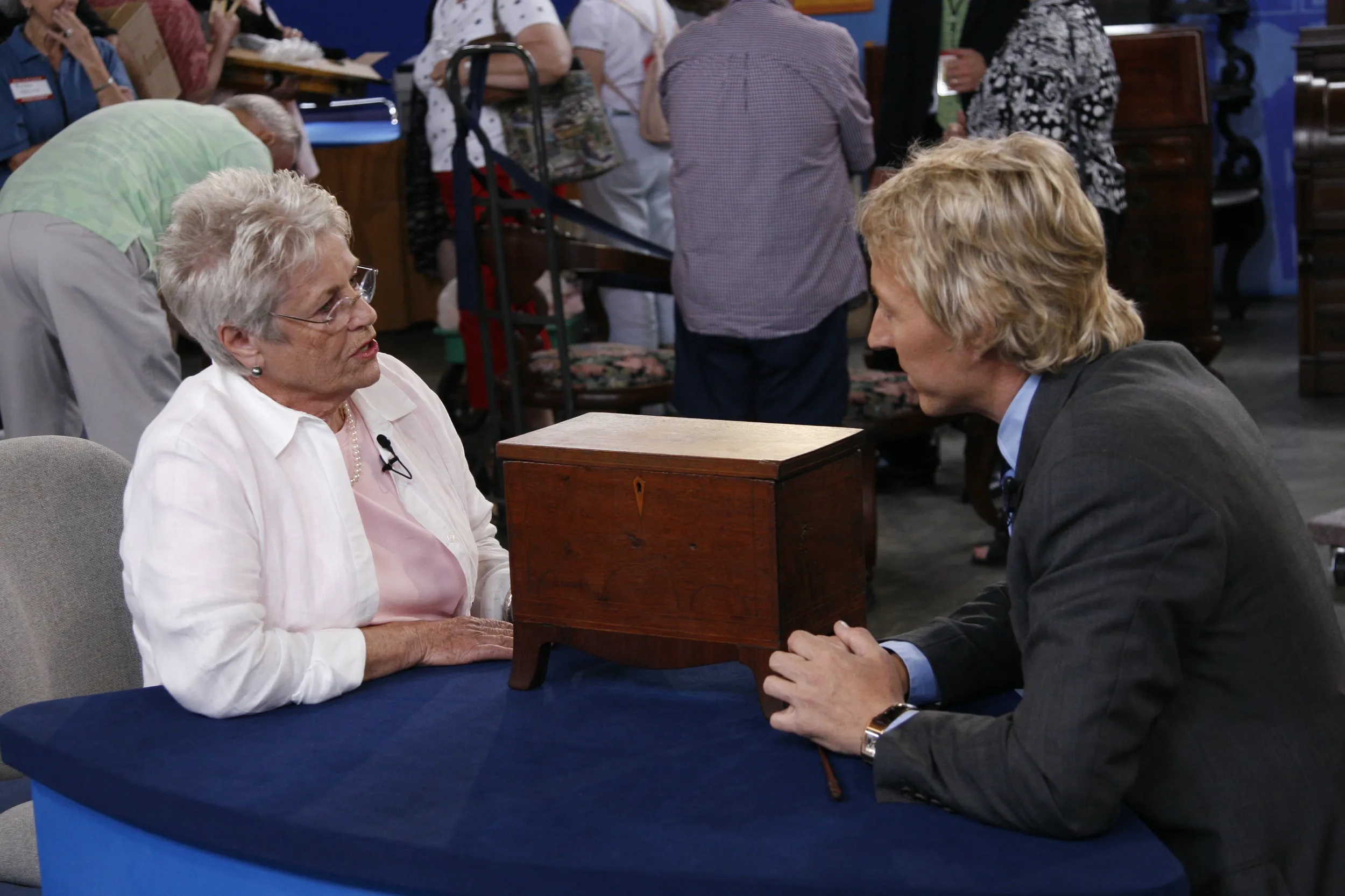
appraisal
Federal Walnut Document Box, ca. 1800
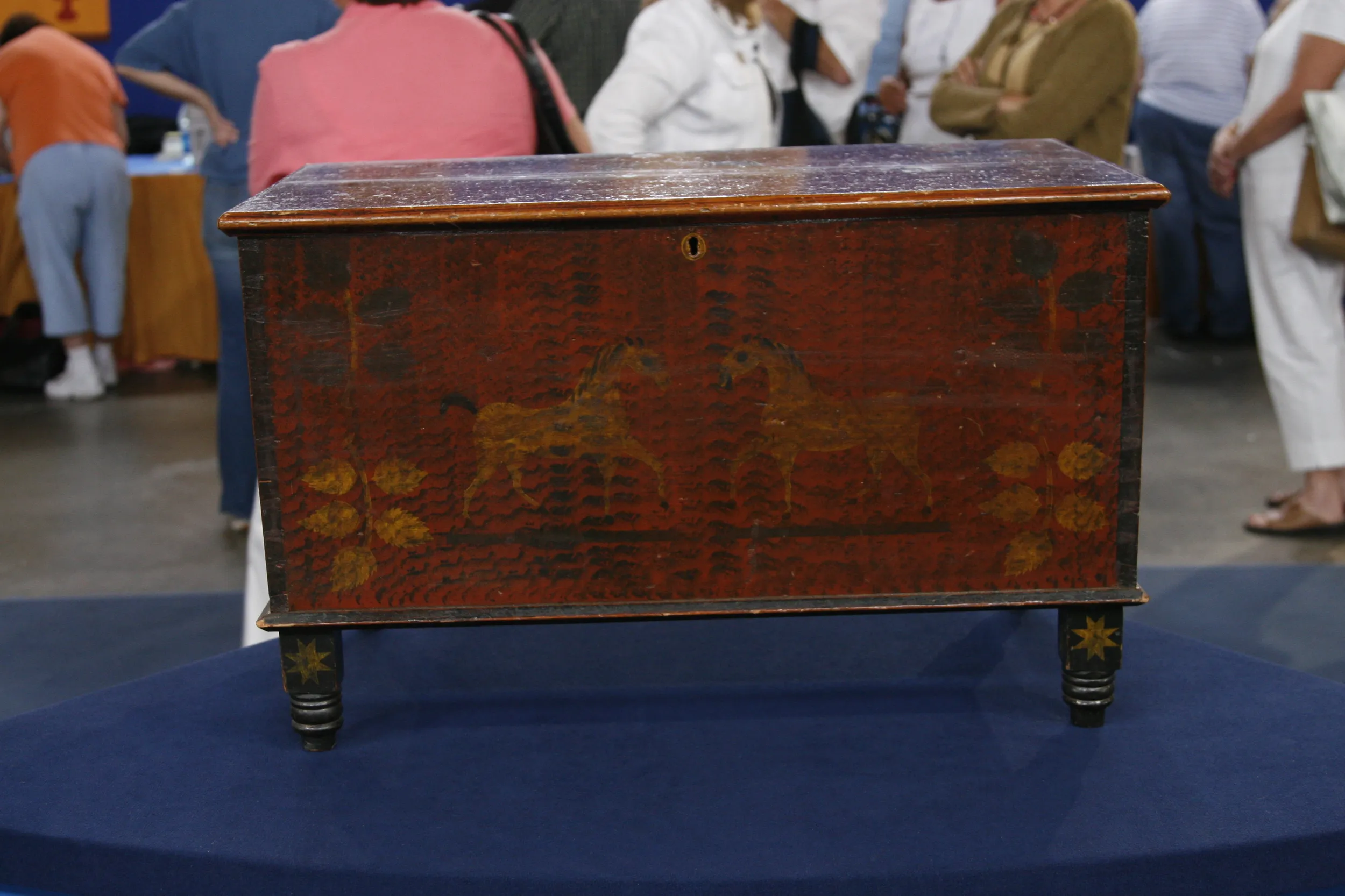
appraisal
Virginia Painted Blanket Chest, ca. 1850
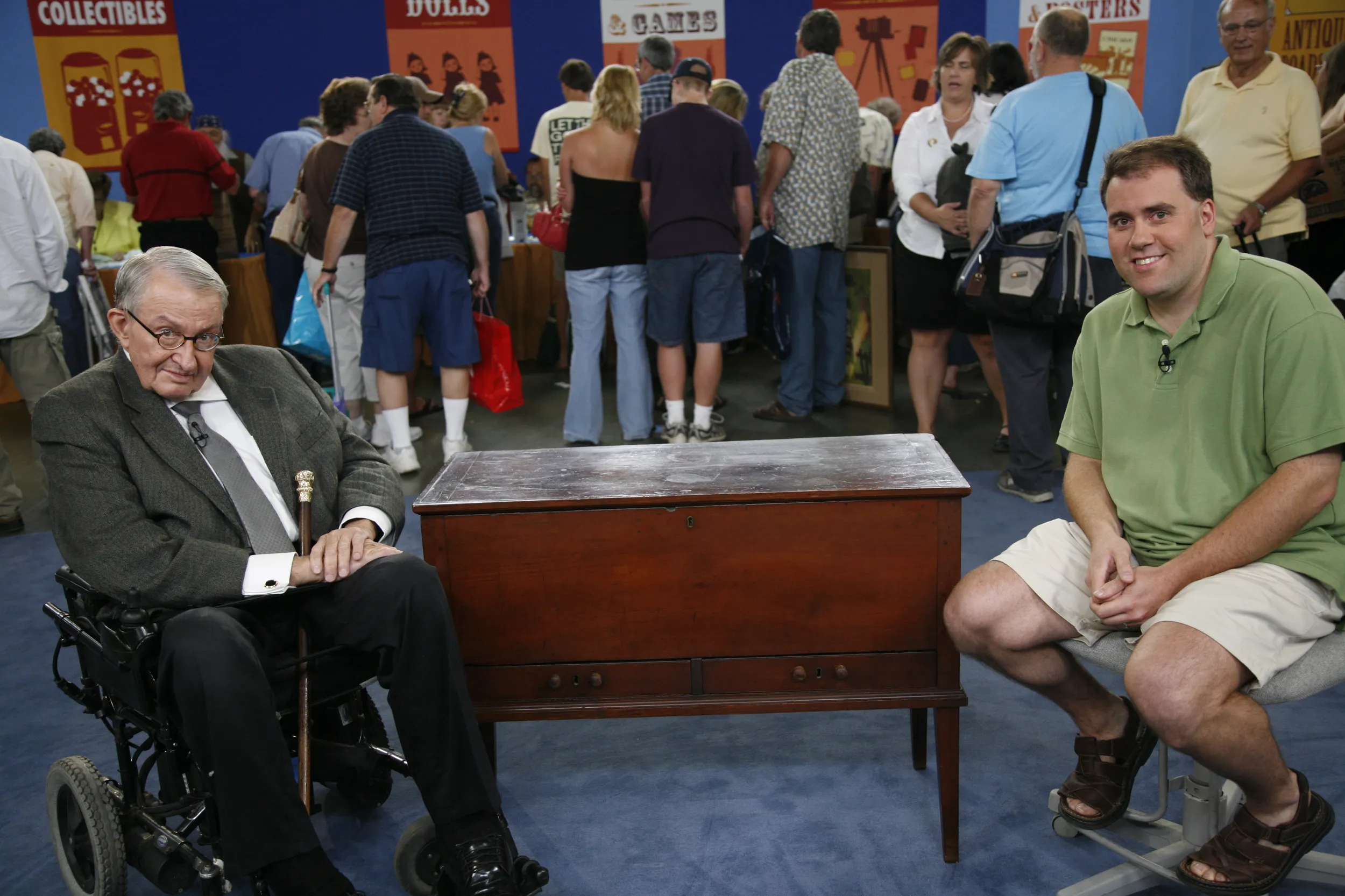
appraisal
Kentucky Cherry Sugar Chest, ca. 1800
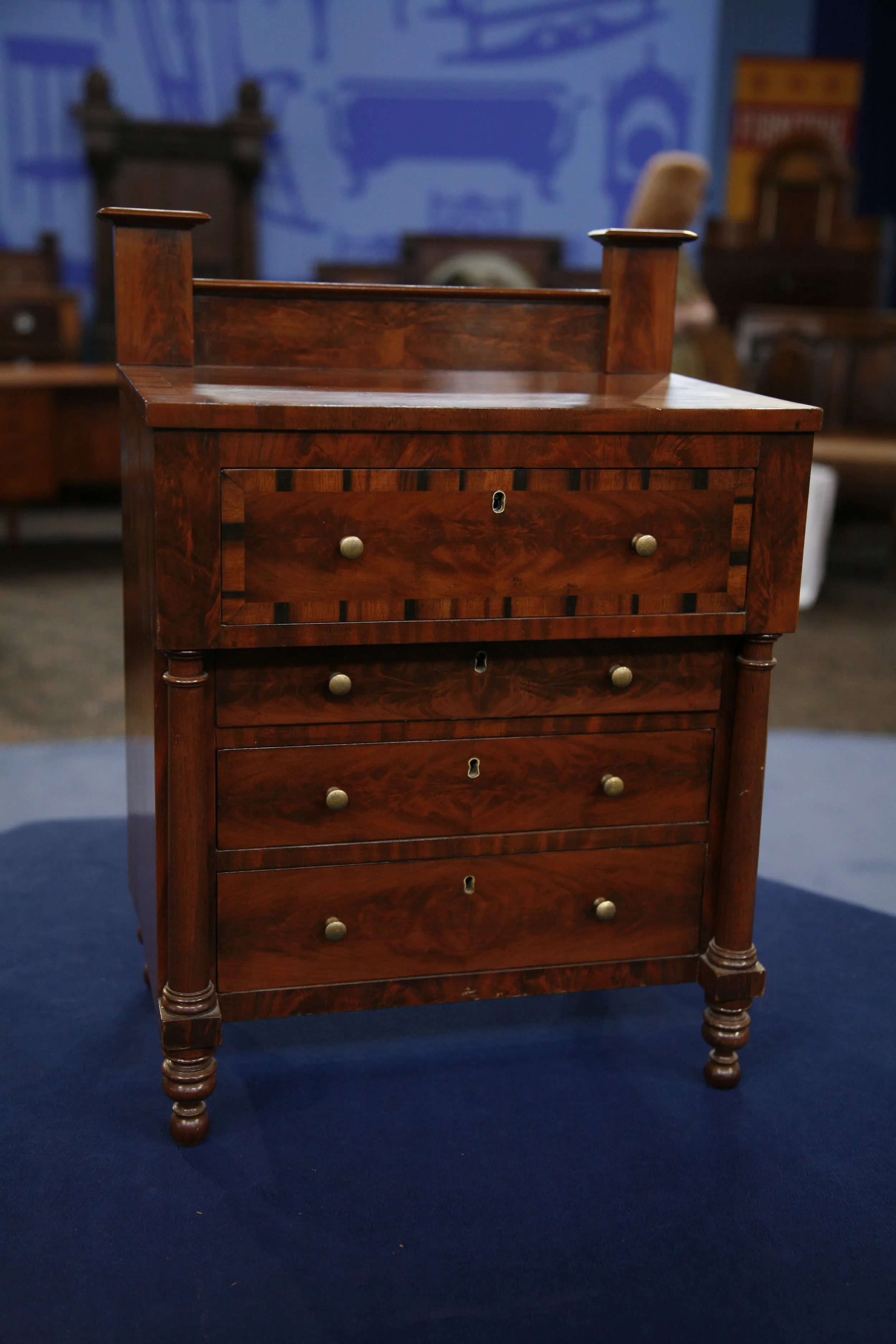
appraisal
1839 Miniature Chest with Document
Understanding Our Appraisals
Executive producer Marsha Bemko shares her tips for getting the most out of ANTIQUES ROADSHOW.
Value can change: The value of an item is dependent upon many things, including the condition of the object itself, trends in the market for that kind of object, and the location where the item will be sold. These are just some of the reasons why the answer to the question "What's it worth?" is so often "It depends."
Note the date: Take note of the date the appraisal was recorded. This information appears in the upper left corner of the page, with the label "Appraised On." Values change over time according to market forces, so the current value of the item could be higher, lower, or the same as when our expert first appraised it.
Context is key: Listen carefully. Most of our experts will give appraisal values in context. For example, you'll often hear them say what an item is worth "at auction," or "retail," or "for insurance purposes" (replacement value). Retail prices are different from wholesale prices. Often an auctioneer will talk about what she knows best: the auction market. A shop owner will usually talk about what he knows best: the retail price he'd place on the object in his shop. And though there are no hard and fast rules, an object's auction price can often be half its retail value; yet for other objects, an auction price could be higher than retail. As a rule, however, retail and insurance/replacement values are about the same.
Verbal approximations: The values given by the experts on ANTIQUES ROADSHOW are considered "verbal approximations of value." Technically, an "appraisal" is a legal document, generally for insurance purposes, written by a qualified expert and paid for by the owner of the item. An appraisal usually involves an extensive amount of research to establish authenticity, provenance, composition, method of construction, and other important attributes of a particular object.
Opinion of value: As with all appraisals, the verbal approximations of value given at ROADSHOW events are our experts' opinions formed from their knowledge of antiques and collectibles, market trends, and other factors. Although our valuations are based on research and experience, opinions can, and sometimes do, vary among experts.
Appraiser affiliations: Finally, the affiliation of the appraiser may have changed since the appraisal was recorded. To see current contact information for an appraiser in the ROADSHOW Archive, click on the link below the appraiser's picture. Our Appraiser Index also contains a complete list of active ROADSHOW appraisers and their contact details and biographies.


