Qing Dynasty Celadon Jade Bi
GUEST: This was a gift from my Aunt Juanita. She went to Shanghai in 1929 to teach English at Shanghai University, and they lived in Shanghai until 1957 and then moved to New York City. And I don't know if it's something that she had in China and brought with her, or if it's something she purchased in New York City.
APPRAISER: So one of the first things one notices about this is the shape, the circular shape. And the second thing one notices is the color, which, pale green we refer to as celadon. The other thing to notice about this is the surface is carved with this undulating pattern of clouds or waves populated by several dragons. And there's a dragon right there. And you can see the head a little bit lower. And they're almost impossible to tell, because they're weaving in and out among the clouds or waves. You look at it and you go, “What in the world is this about?" So on the reverse, there's this fine crosshatch pattern that covers the entire surface. And that's really important, because this is a reference to a type of ritual jade object that was included in burials from as early as 3000, 3400 B.C. up through roughly around the Han Dynasty, which was second century A.D. And now one might ask, well, why in the world did they put this in a tomb? It's because this shape, the circular shape called a bi, B-I, has a connotation in Chinese culture of representing the sky. And it was complemented by another form called a cong, spelled C-O-N-G, which is this rectangular vessel that has open ends and represented the earth. So you would include these from an ancient period of time in burials, because it was the connection between our earthly existence and our heavenly existence. But the question then leads us to when?
GUEST: Yes.
APPRAISER: It wasn't done at an ancient period of time, because the ancient period would not have had the dragon and wave and cloud surface.
GUEST: Okay.
APPRAISER: It would have been a different kind of surface. The first time, believe, you would have seen something like this would likely have been in the 18th century. But this is really unusual, so it's not something that we can compare it to. And there was, during the early 20th century, a revival of object styles that were popular during the 18th century, or had references back to earlier Chinese history. So I'm not sure. I'd love to be sure always, but I'm not sure whether this actually is an 18th century bi, or is this an early 20th century version of the same thing? So what I'm going to do in terms of value is use the more conservative figure.
GUEST: Okay.
APPRAISER: As if it dated from the early 20th century. But it's the kind of thing that's going to require more research. You want to venture a guess on what kind of value this would have?
GUEST: Well, before hearing all that, I might have said, like, $400, $500.
APPRAISER: I think a more reasonable amount would be $15,000 to $20,000.
GUEST: Oh, geezy-peasy.
APPRAISER: At auction.
GUEST: Oh, goodness. Wow. My friend told me not to get emotional. Another treasure from Aunt Juanita.

$15,000 - $20,000 Auction
$15,000 - $20,000 Auction
Featured In
episode
Virginia Beach, Hour 1
John Wayne mugs, a Frank McCarthy oil, and 1984 signed Olympic posters.
Carved
appraisal
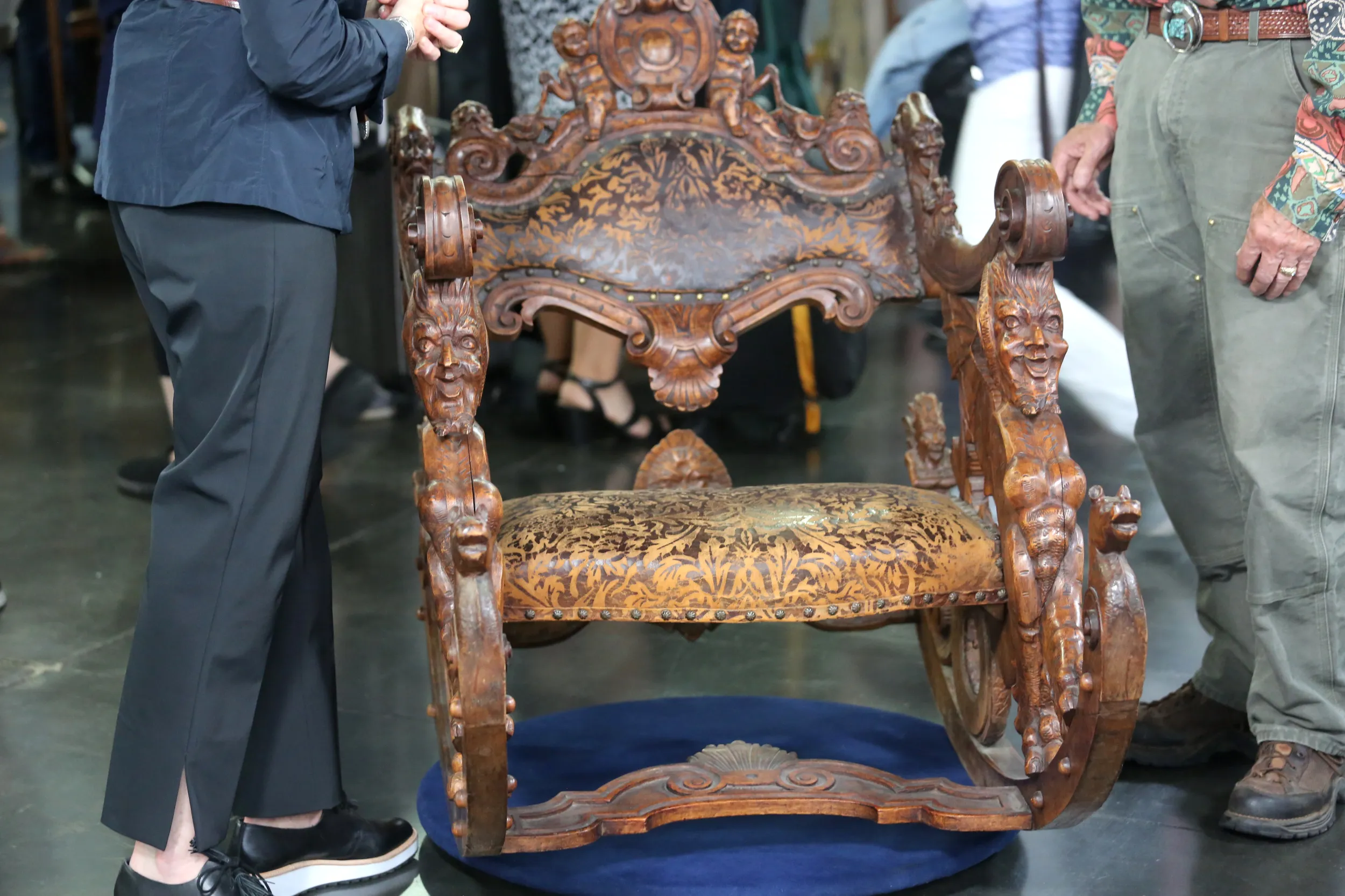
Venetian Hand-carved Rocking Chair, ca. 1880
appraisal
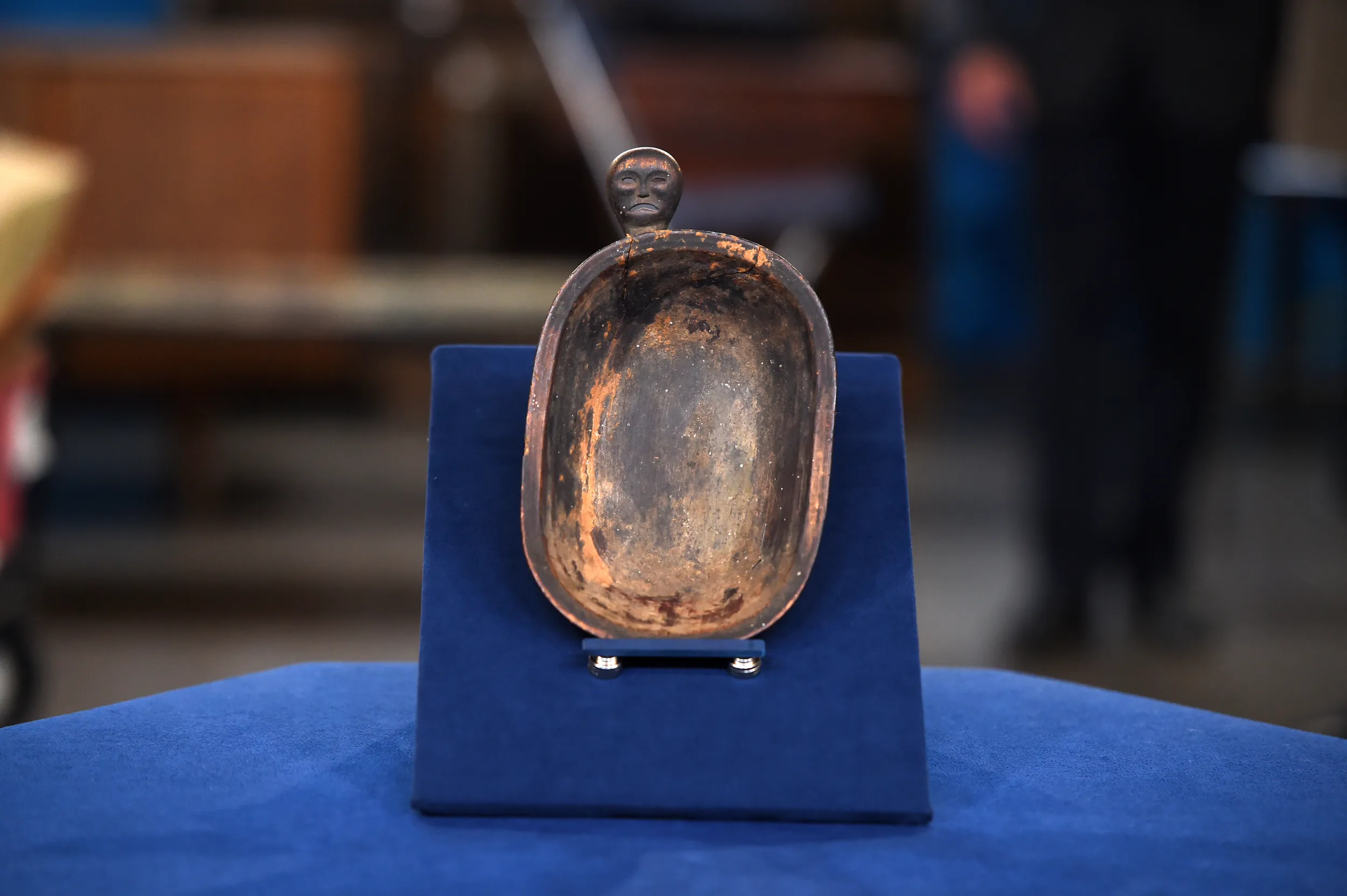
Wooden Native Alaskan Bowl, ca. 1800
appraisal
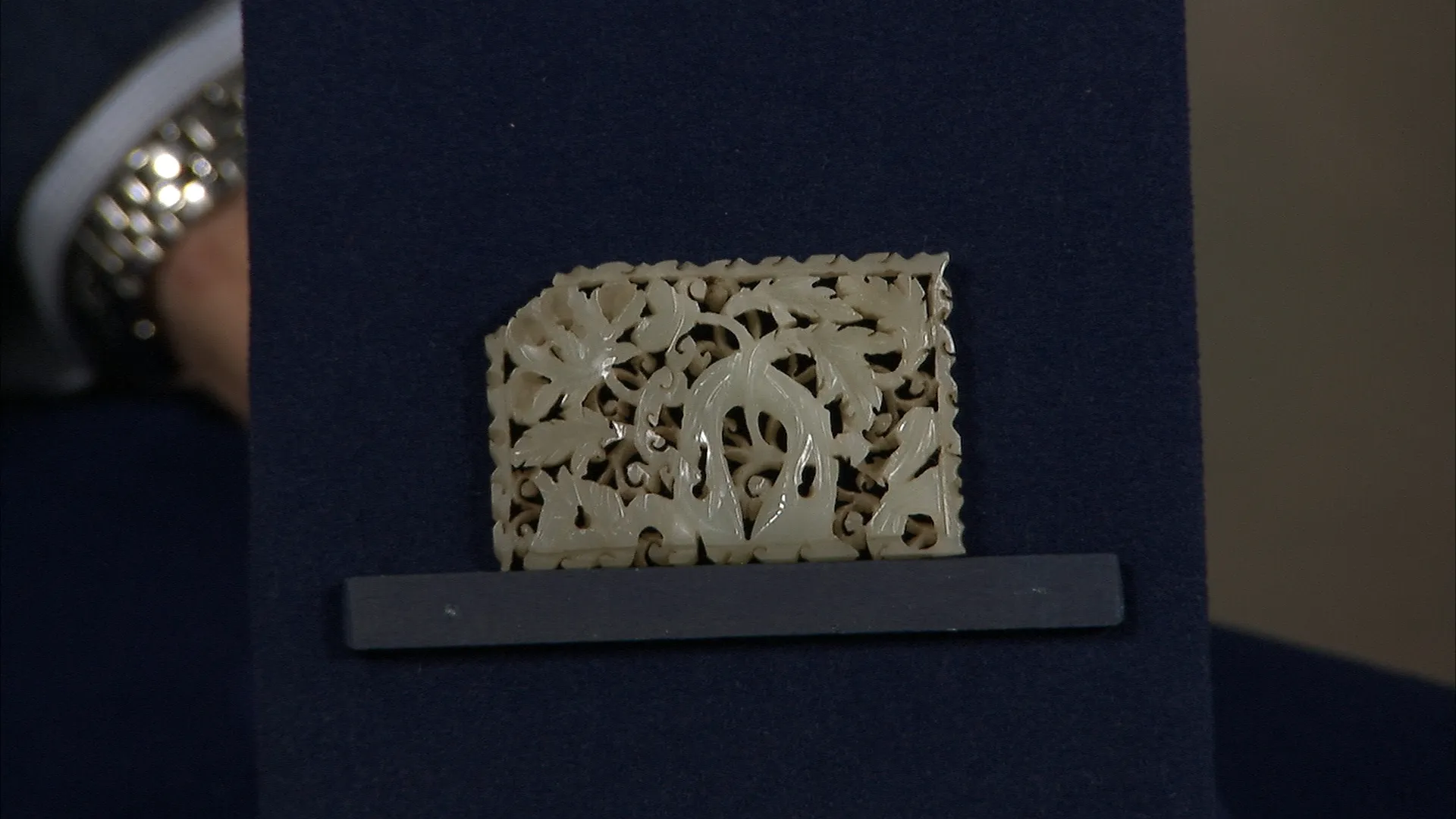
Chinese Carved Jade Belt Plaque
appraisal
Ed Moulthrop Turned Wood Globe, ca. 1980
Understanding Our Appraisals
Executive producer Marsha Bemko shares her tips for getting the most out of ANTIQUES ROADSHOW.
Value can change: The value of an item is dependent upon many things, including the condition of the object itself, trends in the market for that kind of object, and the location where the item will be sold. These are just some of the reasons why the answer to the question "What's it worth?" is so often "It depends."
Note the date: Take note of the date the appraisal was recorded. This information appears in the upper left corner of the page, with the label "Appraised On." Values change over time according to market forces, so the current value of the item could be higher, lower, or the same as when our expert first appraised it.
Context is key: Listen carefully. Most of our experts will give appraisal values in context. For example, you'll often hear them say what an item is worth "at auction," or "retail," or "for insurance purposes" (replacement value). Retail prices are different from wholesale prices. Often an auctioneer will talk about what she knows best: the auction market. A shop owner will usually talk about what he knows best: the retail price he'd place on the object in his shop. And though there are no hard and fast rules, an object's auction price can often be half its retail value; yet for other objects, an auction price could be higher than retail. As a rule, however, retail and insurance/replacement values are about the same.
Verbal approximations: The values given by the experts on ANTIQUES ROADSHOW are considered "verbal approximations of value." Technically, an "appraisal" is a legal document, generally for insurance purposes, written by a qualified expert and paid for by the owner of the item. An appraisal usually involves an extensive amount of research to establish authenticity, provenance, composition, method of construction, and other important attributes of a particular object.
Opinion of value: As with all appraisals, the verbal approximations of value given at ROADSHOW events are our experts' opinions formed from their knowledge of antiques and collectibles, market trends, and other factors. Although our valuations are based on research and experience, opinions can, and sometimes do, vary among experts.
Appraiser affiliations: Finally, the affiliation of the appraiser may have changed since the appraisal was recorded. To see current contact information for an appraiser in the ROADSHOW Archive, click on the link below the appraiser's picture. Our Appraiser Index also contains a complete list of active ROADSHOW appraisers and their contact details and biographies.


