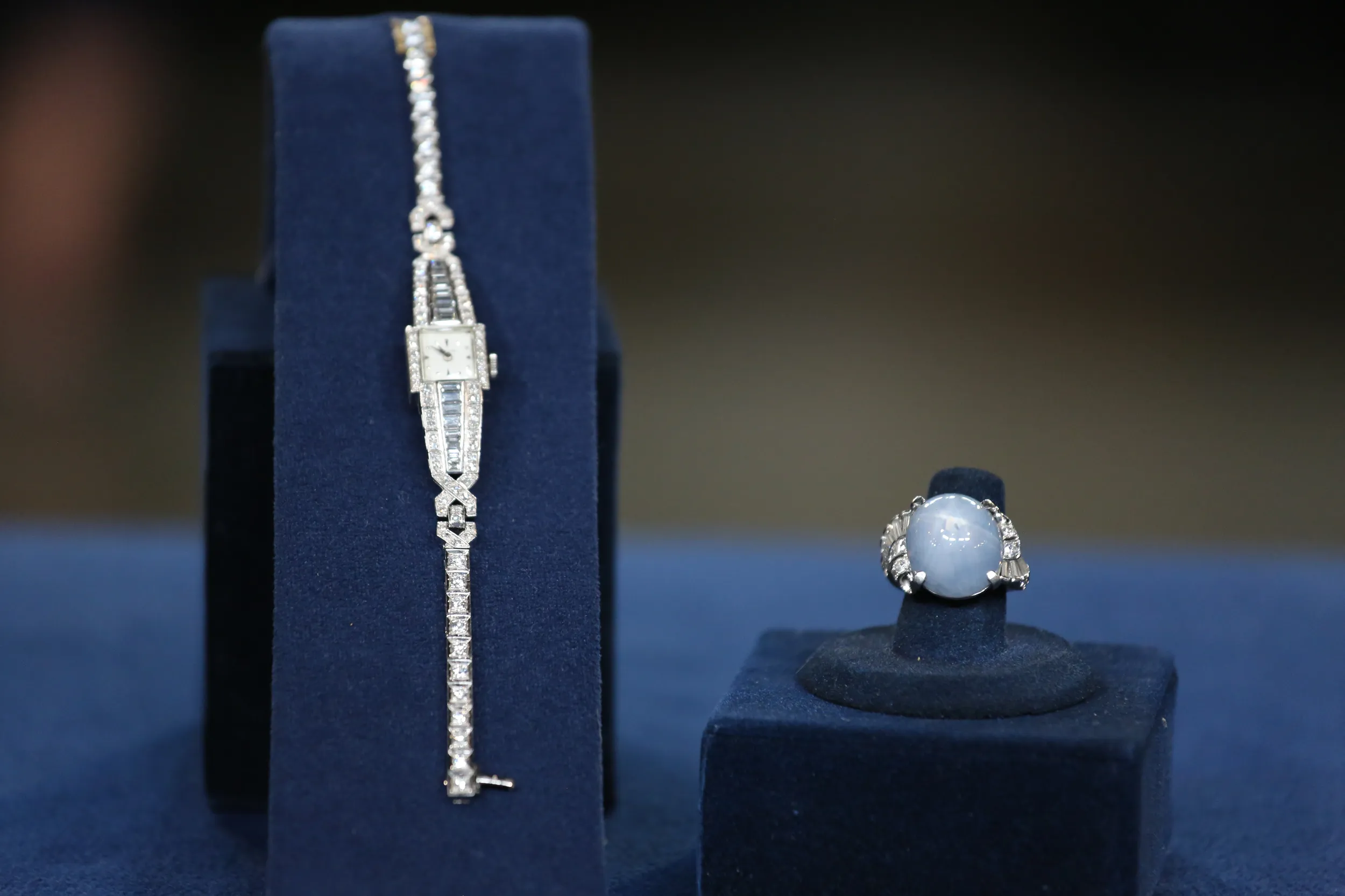
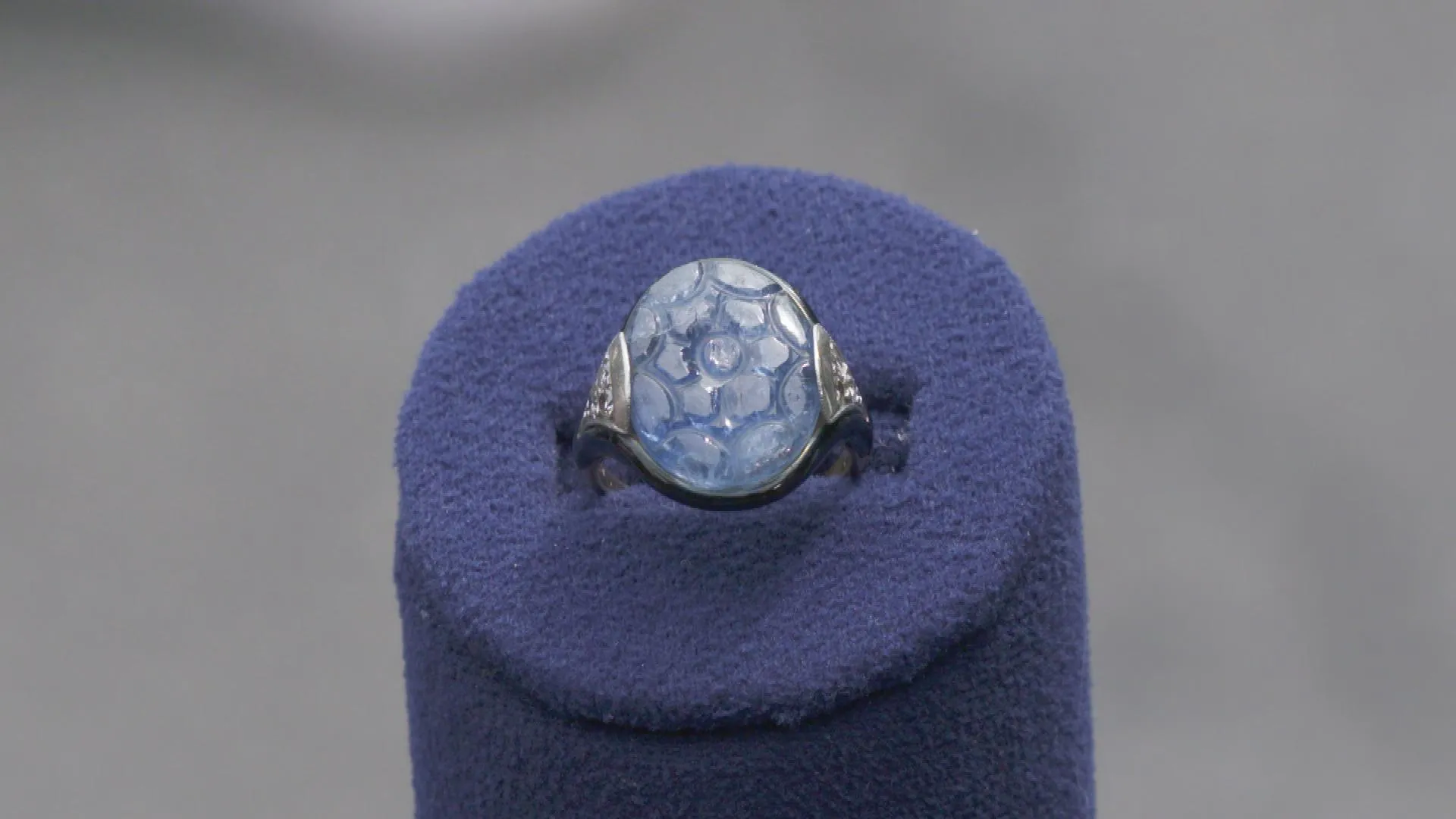
GUEST: Well, this ring belonged to my grandmother, and she purchased it from one Emilie von Blankendorff in 1935 for $500. And the idea was, Emilie had fallen on hard times, and she needed some money, and my grandmother was able to help her out, with the idea that she could buy the ring back when she got back on her feet again. Eventually, I found a letter that said, "My star has fallen and it will never happen. So the ring is yours to keep for good." The story I heard was, Emilie was the niece of the ambassador to tsarist Russia, and the ring was a gift from the tsar and his wife.
APPRAISER: It's an American setting.
GUEST: Okay.
APPRAISER: 1935, it's still hard in the Depression, even though we're climbing out of it-- we're climbing out of it very slowly. Really, it's the Second World War that brings us out of the Depression, right? The industrialization leading to the Second World War. That being said, this is one heck of a stone. $500 would be cheap even then.
GUEST: Yeah.
APPRAISER: And it's possible that it was from Russian jewels re-set here in America. You had another appraisal perhaps done on this afterwards, just to ascertain that it's a sapphire?
GUEST: Yes, and we also had one of the little diamonds on the side replaced-- it had gone missing.
APPRAISER: Sapphires are heavy. They're 15% heavier than diamonds. I took a good close look at it, it has a formula-- considering the fact that it bulges in the back, I'm seeing something in the 12- to 13-carat range on this.
GUEST: Oh, my.
APPRAISER: I'm seeing also evidence that it has not been heated. There's a secondary silt growth within it. So that makes this pretty important.
GUEST: Hm.
APPRAISER: I would still suggest we get a lab report on it. A 13-carat, untreated, potentially-- I mean strongly potentially-- untreated purple sapphire, of this quality of cut, this quality of clarity, as a retail price, this piece of jewelry can be worth between $60,000 and $120,000.
GUEST: My goodness!