Pacific Coast Buckleback Jeans, ca. 1900
GUEST: I was, uh, taking apart an old house probably built in the 1880s, in a mining town, uh, west of Boulder in Colorado. Was pulling down the ceiling boards in the living room, and, and they just dropped out of the ceiling. All of a sudden they were, like, right there.
APPRAISER: It seems a bit strange that that's how you'd find them, but actually, old clothing is often found, kind of, stuffed in walls or stuffed in ceilings as makeshift insulation. So that would be my guess as to why they were there.
GUEST: Okay
APPRAISER: So what we have here is a pair of jeans that I would date from between 1890 and 1910. So one of the first identifiers of it being an early pair of jeans is the cinch right here, which is called a buckleback. These we would be classifying as buckleback jeans. So bucklebacks went away in about the 1940s, as the belt became more ubiquitous, but it allowed for waist adjustability, which was key because jeans were often worn by multiple different people working at the same place. So as someone would clock in for a shift, they might throw these on. So that allowed them to need to own fewer pairs. These are not Levi's, but when we're talking about early denim, it's always relevant to talk about Levi's. So, uh, Levi's was founded in 1853, in San Francisco, California at the height of the California gold rush. In 1873, Levi's patented riveted clothing, which ostensibly was the patent for, uh, denim and for blue jeans. In 1890, the patent expired. And when the patent expired, many brands and manufacturers leapt at the opportunity to make riveted clothing or denim of their own. And I believe this is a pair, kind of, shortly after 1890 when that patent expired for a few reasons. Most notably, here on the label, you can see "Pacific Coast." That's the name of the brand, as well as two bears pulling at a pair of jeans. And this is heavily influenced by the Levi's two horses design, which you still find on the back of Levi's jeans today. Two horses pulling in opposite directions, fruitlessly trying to tear apart some jeans. These are rarer than Levi's. I've only seen one other pair of Pacific Coast that was found in a mine in 2020. But there is a larger collector base for Levi's, since that's the real name. This is great condition for something like this, uh, that's this old. It also shows, kind of, the history of it. There's some marks here of candle wax, which would have been from the miners who would have worn these. And instead of headlamps, they would have had candles...
GUEST: Right.
APPRAISER: ...and candles affixed to their helmets at times. There's also a very interesting patch right here with a crotch rivet. The crotch rivet was later done away with after someone sat by a campfire and realized that it may burn them.
GUEST: (chuckling)
APPRAISER: Uh, so this is a very unusual patch. I would say, conservatively, at auction, these would be worth $15,000 to $20,000.
GUEST: Wow. That's incredible.
APPRAISER: If these were Levi's that were also bucklebacks and-and from this era, I'd say it would be something closer to the $40,000 or $50,000 range.
GUEST: Okay.

$15,000 - $20,000 Auction
Featured In

episode
Denver Botanic Gardens Chatfield Farms, Hour 1
Discover delightful ROADSHOW treasures at Denver Botanic Gardens Chatfield Farms!
19th Century
appraisal
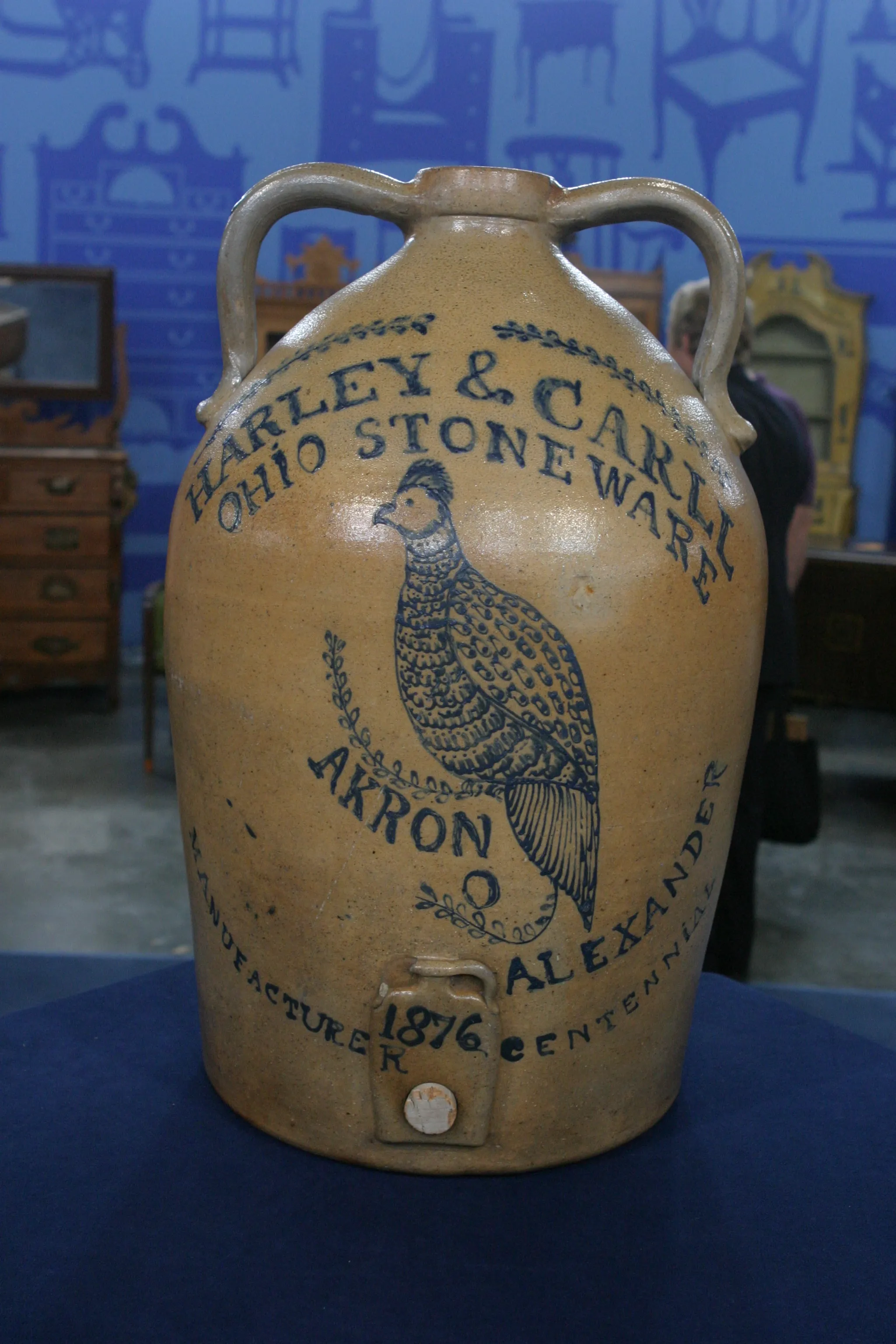
1876 John Alexander Stoneware Cooler
appraisal
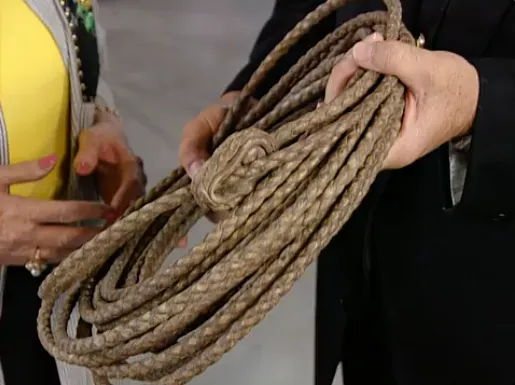
Braided Rawhide Lariat, ca. 1850
appraisal
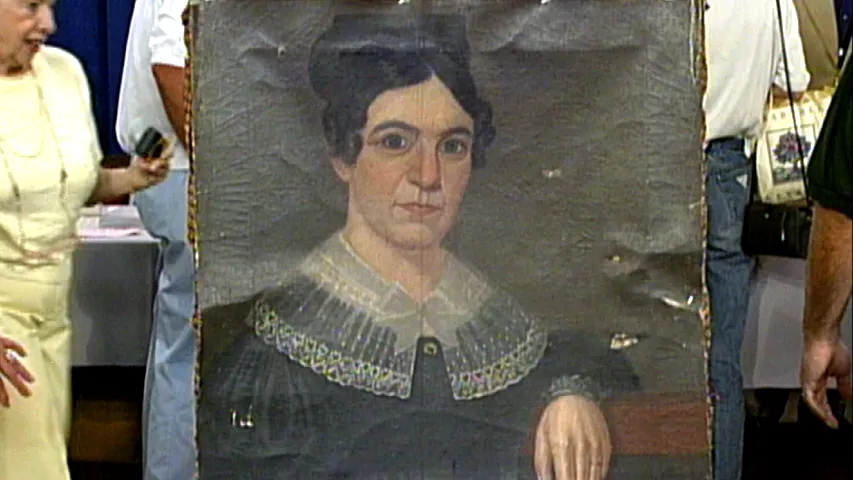
American School Portrait, ca. 1820
appraisal
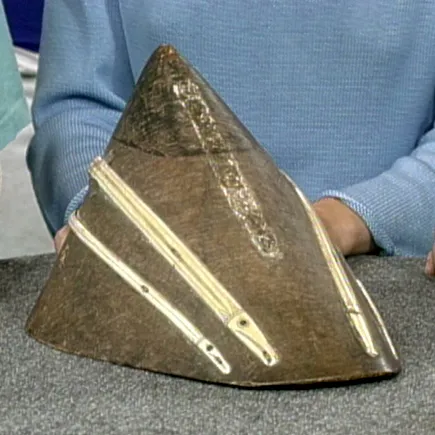
Eskimo Hunting Helmet, ca. 1820
Understanding Our Appraisals
Executive producer Marsha Bemko shares her tips for getting the most out of ANTIQUES ROADSHOW.
Value can change: The value of an item is dependent upon many things, including the condition of the object itself, trends in the market for that kind of object, and the location where the item will be sold. These are just some of the reasons why the answer to the question "What's it worth?" is so often "It depends."
Note the date: Take note of the date the appraisal was recorded. This information appears in the upper left corner of the page, with the label "Appraised On." Values change over time according to market forces, so the current value of the item could be higher, lower, or the same as when our expert first appraised it.
Context is key: Listen carefully. Most of our experts will give appraisal values in context. For example, you'll often hear them say what an item is worth "at auction," or "retail," or "for insurance purposes" (replacement value). Retail prices are different from wholesale prices. Often an auctioneer will talk about what she knows best: the auction market. A shop owner will usually talk about what he knows best: the retail price he'd place on the object in his shop. And though there are no hard and fast rules, an object's auction price can often be half its retail value; yet for other objects, an auction price could be higher than retail. As a rule, however, retail and insurance/replacement values are about the same.
Verbal approximations: The values given by the experts on ANTIQUES ROADSHOW are considered "verbal approximations of value." Technically, an "appraisal" is a legal document, generally for insurance purposes, written by a qualified expert and paid for by the owner of the item. An appraisal usually involves an extensive amount of research to establish authenticity, provenance, composition, method of construction, and other important attributes of a particular object.
Opinion of value: As with all appraisals, the verbal approximations of value given at ROADSHOW events are our experts' opinions formed from their knowledge of antiques and collectibles, market trends, and other factors. Although our valuations are based on research and experience, opinions can, and sometimes do, vary among experts.
Appraiser affiliations: Finally, the affiliation of the appraiser may have changed since the appraisal was recorded. To see current contact information for an appraiser in the ROADSHOW Archive, click on the link below the appraiser's picture. Our Appraiser Index also contains a complete list of active ROADSHOW appraisers and their contact details and biographies.


