Over-the-Shoulder Saxhorn, ca. 1865
GUEST: I found it in a little junk shop in Louisville, Kentucky, in 1967. And I knew enough about instruments. I was attracted to the rotary valves because I knew they were unusual. And then I realized it didn't look like any instrument I'd ever seen before, and so, I got it. I was in college, took it back to school, took it to the trumpet player, and uh he played it and said it's really nice, and I've seen pictures of similar horns with Civil War regimental bands, and uh that's about all I know.
APPRAISER: How much did you pay for it at the junk shop?
GUEST: No more than five dollars; I was a college student that couldn't have afforded more than five dollars.
APPRAISER: (chuckling): Okay, well, it's an over-the-shoulder, E-flat soprano saxhorn. It has three string-actuated rotary valves. We call these top action rotary valves, and when you press down, the string turns the valve. Period-wise, about 1865, could be 1870. But we generally think of these as Civil War-period horns. Over-the-shoulder horns are played, as you know, in front of the army.
GUEST: Yeah.
APPRAISER: And you'd have every different size of, of uh over-the-shoulder horn, from the little E-flat soprano up to the big bass horn, which would stand about this tall.
GUEST: Wow.
APPRAISER: The material is German silver.
GUEST: Okay.
APPRAISER: They were made in both brass and German silver-- German silver is a nickel silver and it would have been the higher grade...
GUEST: Oh.
APPRAISER: ...horn at the time. And this has the extra garland around the bell, which was a reinforcement, and that's part, probably why the bell is undented.
GUEST: Okay.
APPRAISER: Usually, these are a mess...
GUEST: Yeah.
APPRAISER: ...but this one is incredibly intact. This bell garland is also German silver-- sometimes, you'd see them in a different material.
GUEST: Okay.
APPRAISER: It says "Peters & Bro."
GUEST: Yeah.
APPRAISER: And that's all it says, nothing else, and that probably is original to the horn. But I tried to figure out who Peters was-- I've never heard of Peters. My guess is that Peters are music merchants rather than manufacturers. And... the form of the horn and these interesting little braces-- that curlicue brace—
GUEST: Yeah.
APPRAISER: and you've got another one right here-- I see a lot in the Boston manufacturers, especially a guy named E.G. Wright, who was a very, very famous Boston maker, and some of the New York makers are doing it, too, like Stratton. And I'm not really sure which one it is-- it could be a Boston, it could be a New York. Sold through a merchant. This is a beautifully crafted horn-- it was not made by guys who made a few horns. This is a major manufacturer, beautifully done.
GUEST: Yeah.
APPRAISER: It has just a few little dents. And it's the rarest of all of the over-the-shoulder horns.
GUEST: Oh, wow.
APPRAISER: I think that, if you were to see this in a musical instrument shop for sale, it would probably sell in the range of $4,000.
GUEST: Oh, wow.
APPRAISER: Perhaps even $5,000.
GUEST: Wow.
APPRAISER: And I should really hold it up the way they'd hold it, which is just like this.
GUEST: Yeah.
APPRAISER: Like that, over the shoulder. Unfortunately, missing the mouthpiece, but you can find a mouthpiece for it. (chuckling): It's... it's such a beautiful little thing.
GUEST: Well, thank you very much. I appreciate it. It's good to know.

$5,000 - $7,000 Retail
$4,000 - $5,000 Retail
Featured In
episode
Chattanooga, Hour 2
ROADSHOW looks at minor league baseball memorabilia at Chattanooga's AT&T Field.

episode
Vintage Chattanooga, Hour 1
Check out updated Chattanooga appraisals from 2009, including one $250,000 find!
Metals & Alloys
appraisal
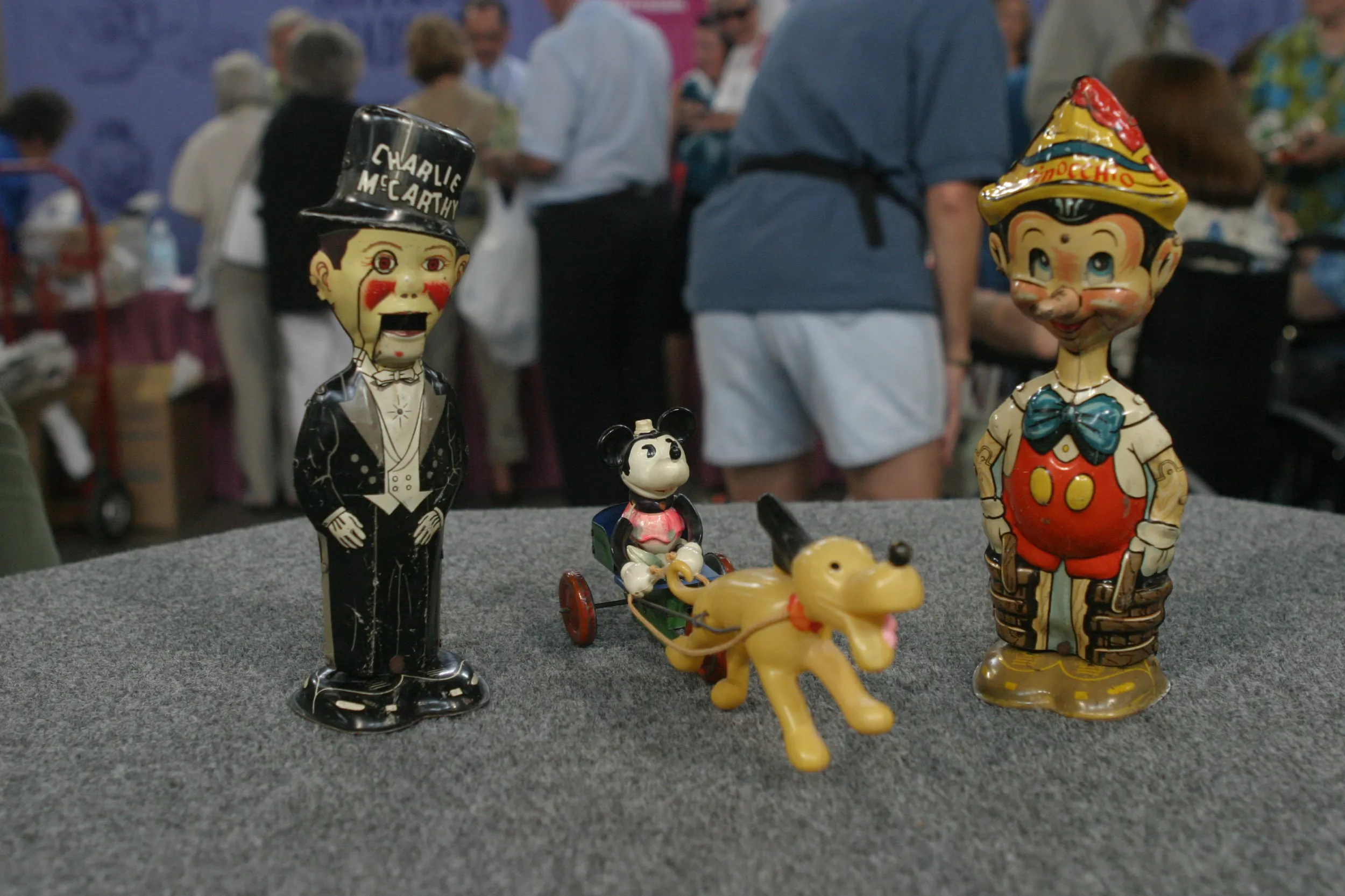
Comic Wind-up Toys, ca. 1930
appraisal
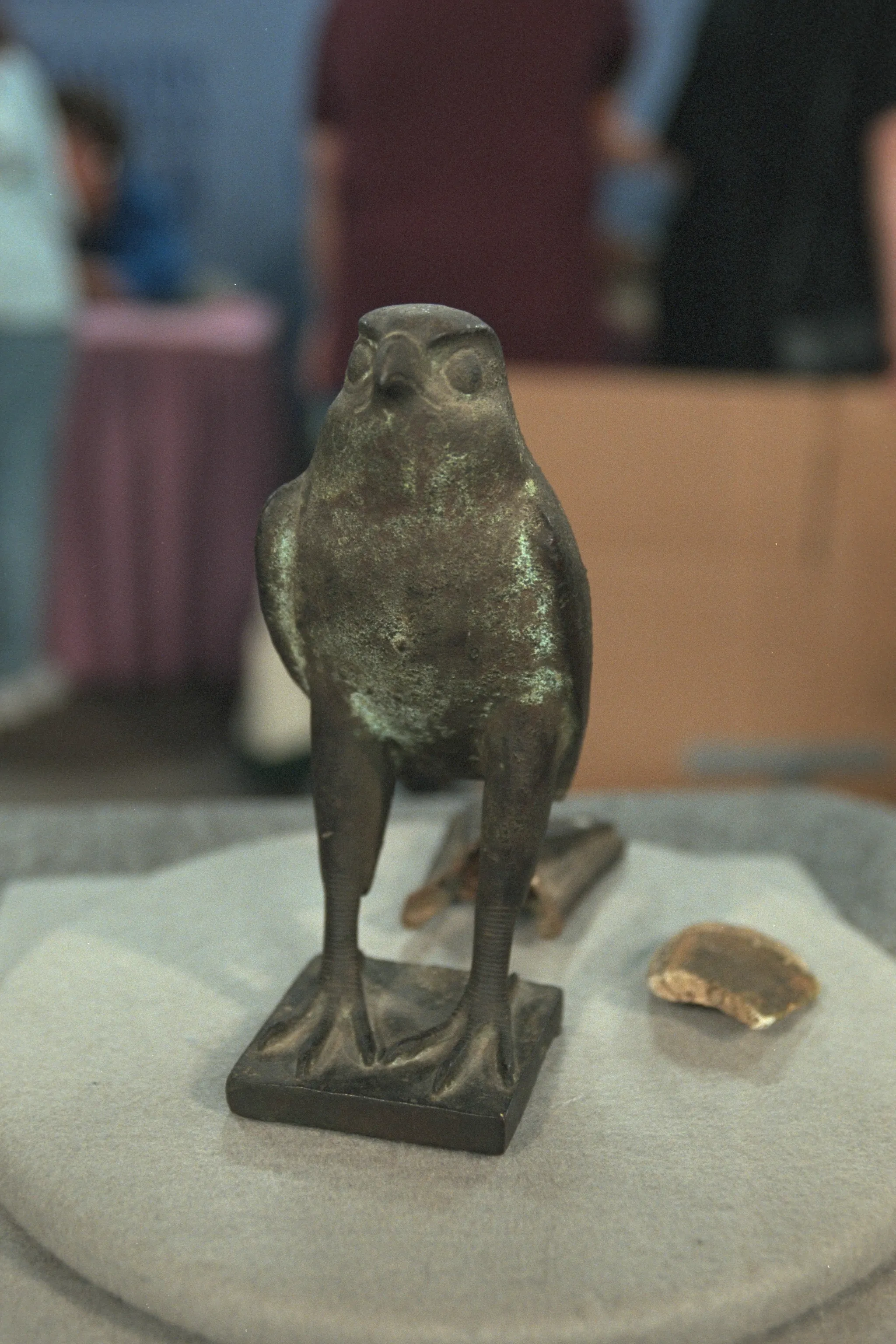
Late Period Egyptian Bronze Falcon

appraisal
Elgin Student Watch & Papers, ca. 1924
appraisal
Duncan Phyfe Sewing Table, ca. 1805
Understanding Our Appraisals
Executive producer Marsha Bemko shares her tips for getting the most out of ANTIQUES ROADSHOW.
Value can change: The value of an item is dependent upon many things, including the condition of the object itself, trends in the market for that kind of object, and the location where the item will be sold. These are just some of the reasons why the answer to the question "What's it worth?" is so often "It depends."
Note the date: Take note of the date the appraisal was recorded. This information appears in the upper left corner of the page, with the label "Appraised On." Values change over time according to market forces, so the current value of the item could be higher, lower, or the same as when our expert first appraised it.
Context is key: Listen carefully. Most of our experts will give appraisal values in context. For example, you'll often hear them say what an item is worth "at auction," or "retail," or "for insurance purposes" (replacement value). Retail prices are different from wholesale prices. Often an auctioneer will talk about what she knows best: the auction market. A shop owner will usually talk about what he knows best: the retail price he'd place on the object in his shop. And though there are no hard and fast rules, an object's auction price can often be half its retail value; yet for other objects, an auction price could be higher than retail. As a rule, however, retail and insurance/replacement values are about the same.
Verbal approximations: The values given by the experts on ANTIQUES ROADSHOW are considered "verbal approximations of value." Technically, an "appraisal" is a legal document, generally for insurance purposes, written by a qualified expert and paid for by the owner of the item. An appraisal usually involves an extensive amount of research to establish authenticity, provenance, composition, method of construction, and other important attributes of a particular object.
Opinion of value: As with all appraisals, the verbal approximations of value given at ROADSHOW events are our experts' opinions formed from their knowledge of antiques and collectibles, market trends, and other factors. Although our valuations are based on research and experience, opinions can, and sometimes do, vary among experts.
Appraiser affiliations: Finally, the affiliation of the appraiser may have changed since the appraisal was recorded. To see current contact information for an appraiser in the ROADSHOW Archive, click on the link below the appraiser's picture. Our Appraiser Index also contains a complete list of active ROADSHOW appraisers and their contact details and biographies.


