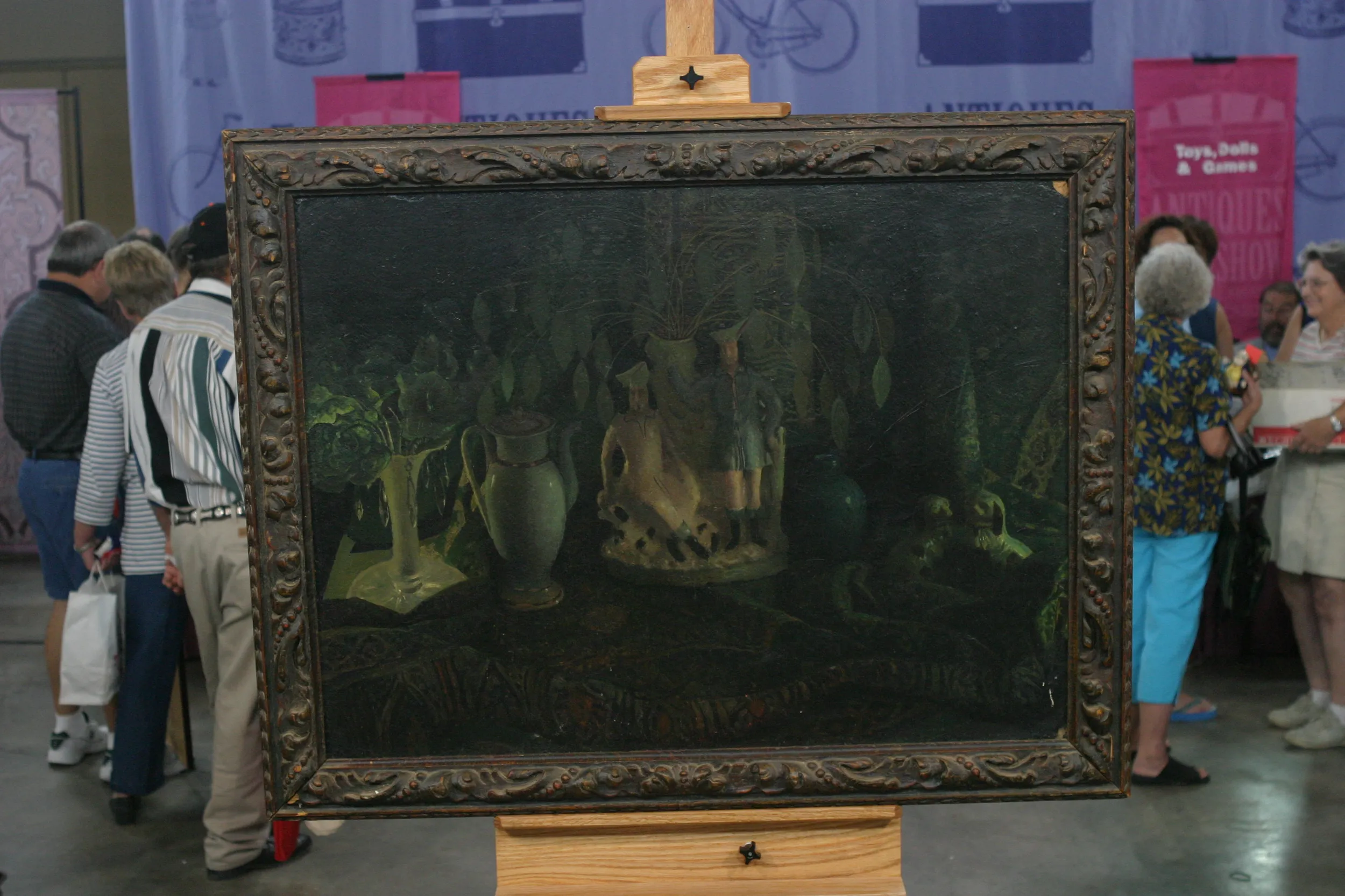
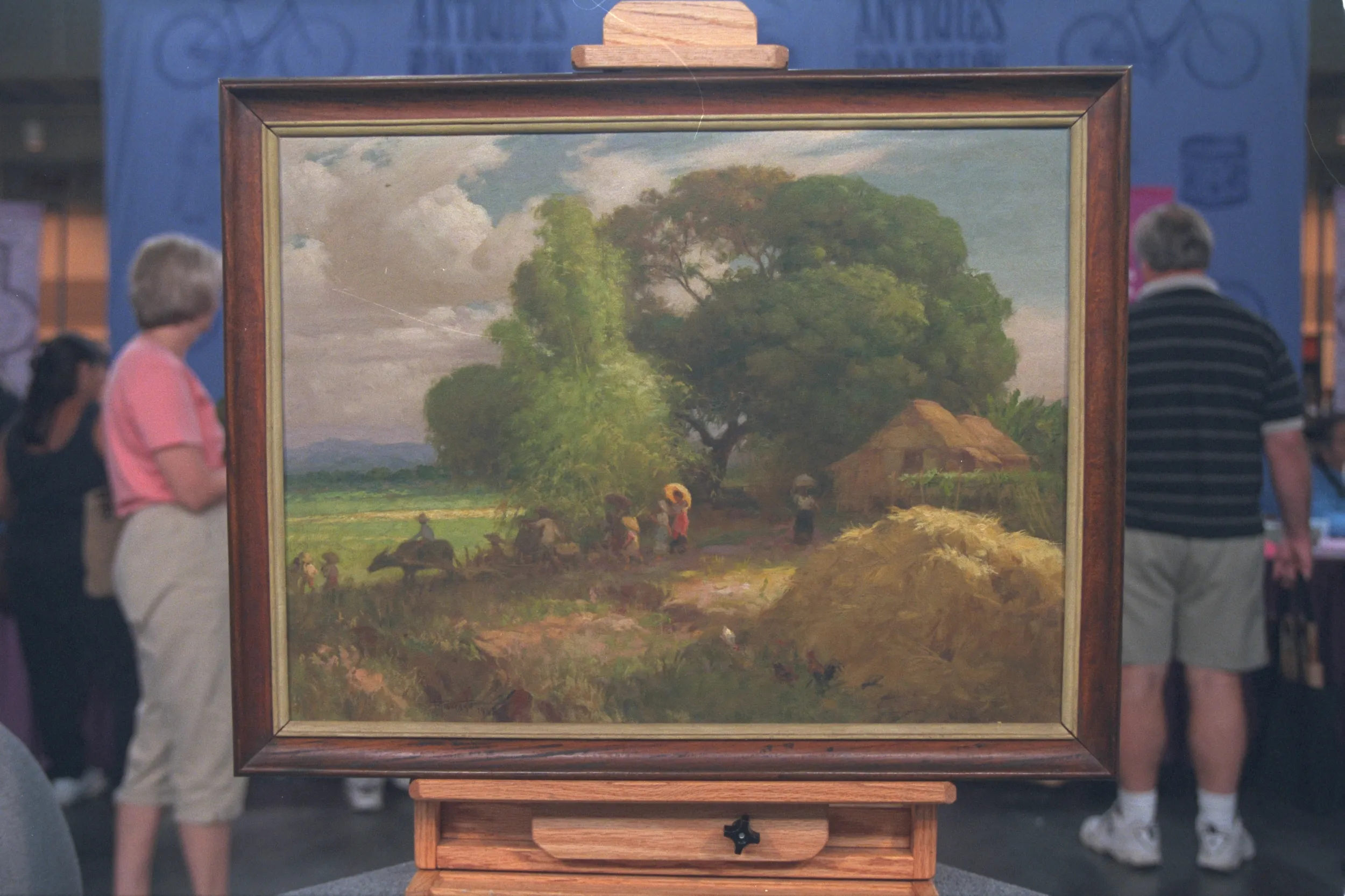
GUEST: In 1937, my husband, who was then almost 16 years old, went to France with his mother and his sister. And they bought this painting, and they paid $30 for it. So it's been hanging in various family homes ever since, and now it's mine.
APPRAISER: And do you know anything about the artist?
GUEST: I know his name is Friesz. That's all I know about him.
APPRAISER: Emile Othon Friesz, who laterally was known just as Othon Friesz. He was born in Le Havre, the French port in Normandy, and came from a long line of mariners. But his parents were very encouraging of his artistic career, and he went to art school in Le Havre and became friends with Raoul Dufy, a famous French impressionist who was to become a lifelong friend. And also at the same time, he got to know George Braque, who subsequently went on to develop cubism with Picasso. He had studied in Paris. I think he moved to Paris around about 1897 or so. And there he met Matisse, and he met Manguin, Rouault. And all those artists are associated with a group of painters known as the Fauves, who I'm sure you've heard of. I don't know if you know what the Fauves literally translates as.
GUEST: Tell me.
APPRAISER: The wild beasts.
GUEST: (laughing) Oh my.
APPRAISER: It was one of these pejorative terms used by a critic during one of their exhibitions. He was called a wild beast basically because they were using such aggressive brushwork, and vivid, strong bold colors. And this was considered outrageous at the time. Now, Othon Friesz was perhaps best known for his association with those Fauve painters. Perhaps Matisse is the best known of them, followed by perhaps Derain. And Friesz wasn't quite in that company, he was perhaps in the secondary group, but he was still a wonderful artist. And those critical years were really from about 1904 to 1908. And for those works, there's great demand at auction. Now, this is a later work. And I suspect it may even have been painted around about the time that your husband bought the painting. You said 1937 or so.
GUEST: Right.
APPRAISER: So I would think maybe the 1930s or so. But it's a very nice example of that later mature style. He actually reverted after his foray into the world of the wild beasts. He became more of a traditional painter and looked more to the old masters, artists like Poussin and Chardin, rather than his contemporaries, artists like Matisse. I suspect that this is indeed an original frame. I'm not sure what $30 would translate into in current monetary terms, but at auction I would expect a piece like this to fetch somewhere in the $8,000 to $12,000 range.
GUEST: Oh, how wonderful. Oh, that...the kids will be thrilled.
APPRAISER: Good. In 2007, I believe it was, in London one of the paintings that he did in 1906 when he was really at the top of his Fauve game sold for $2.5 million.
GUEST: Oh my.