Omega Seamaster 300 Wristwatch, ca. 1965
GUEST: I brought a watch which we believe is an Omega watch. I found it, um, on the side of a road in a free box. And my husband was complaining that we were stopping at a free box and we'd been yard sale-ing, and I kind of threw it at him jokingly, like, "Here's a watch.” Thinking it would be a, you know, a fake watch, because I couldn't fathom anybody putting out a watch, um, on the side of the road. Yeah, and we've had it since, it's been about a year-and-a-half, and my husband believes it's real, and we're here to find out what it is.
APPRAISER: It's an Omega Seamaster 300."300" is for 300 meters, which is indicated right there on the dial. That's 980 feet. And this one dates early 1960s to mid-1960s. It was marketed and sold as a diver's watch. It's a little bit larger than what you think most wristwatches would be, because it would have to fit over a wetsuit. So originally it would have come with a metal bracelet. Perhaps it came with some kind of a nylon or rubber strap that could be adjusted for size, because the wetsuits can get quite big. It's a 552 caliber automatic winding movement, which means with the movement of your wrist, it winds itself, it keeps running perpetually.
GUEST: Okay.
APPRAISER: You don't have to sit and wind it up. You notice the large black rotating bezel? That rotates because the divers have to know exactly how much time they have underwater.
GUEST: Oh.
APPRAISER: So this is a very important instrument and tool of diving. Omega refined the diving watch. They were one of the best because this could save your life. You'll notice the face is a nice matte black finish with luminous numerals and hands. Glow in the dark underwater. In the world of collecting right now, in the world of value, this watch, you don't want to clean it, you don't want to touch it. In terms of desirability, this is way up on the list. Watch collecting world, right now, would fight for this, they're very coveted. Retail, this watch right now will bring $8,000 to $10,000.
GUEST: Okay. All right. (laughing): That's amazing. (chuckling): Not bad for picking it up on the side of the street, I think.

$8,000 - $10,000 Retail
Featured In

episode
Crystal Bridges Museum of American Art, Hour 3
Head to bustling Bentonville for ROADSHOW finds at Crystal Bridges Museum of American Art!
Timepieces

appraisal
Elgin Student Watch & Papers, ca. 1924

appraisal
Seth Thomas Wall Gallery Clock, ca. 1922

appraisal
Patek Philippe Pocket Watch, ca. 1900
appraisal
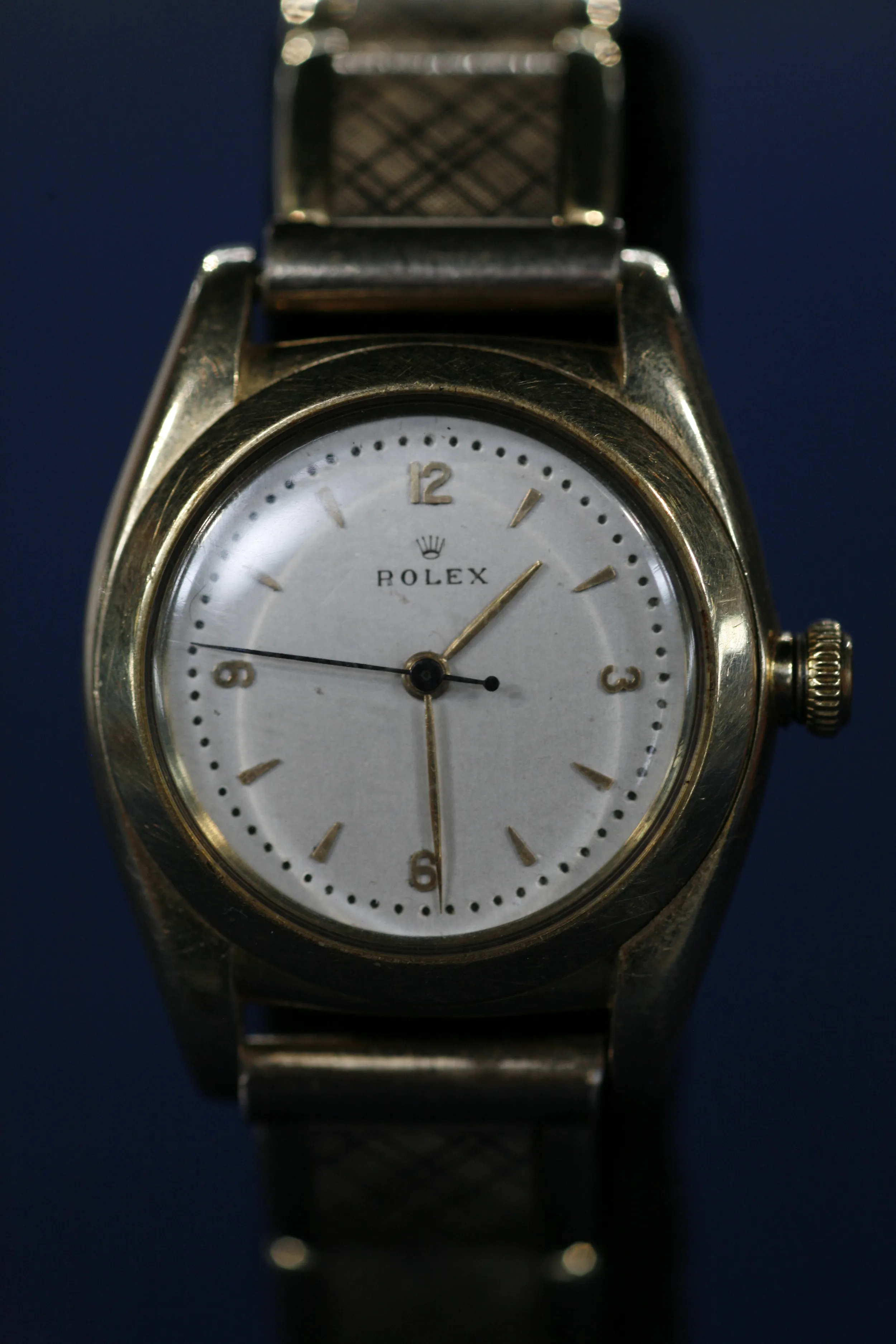
Rolex "Bubbleback" Watch, ca. 1940
Understanding Our Appraisals
Executive producer Marsha Bemko shares her tips for getting the most out of ANTIQUES ROADSHOW.
Value can change: The value of an item is dependent upon many things, including the condition of the object itself, trends in the market for that kind of object, and the location where the item will be sold. These are just some of the reasons why the answer to the question "What's it worth?" is so often "It depends."
Note the date: Take note of the date the appraisal was recorded. This information appears in the upper left corner of the page, with the label "Appraised On." Values change over time according to market forces, so the current value of the item could be higher, lower, or the same as when our expert first appraised it.
Context is key: Listen carefully. Most of our experts will give appraisal values in context. For example, you'll often hear them say what an item is worth "at auction," or "retail," or "for insurance purposes" (replacement value). Retail prices are different from wholesale prices. Often an auctioneer will talk about what she knows best: the auction market. A shop owner will usually talk about what he knows best: the retail price he'd place on the object in his shop. And though there are no hard and fast rules, an object's auction price can often be half its retail value; yet for other objects, an auction price could be higher than retail. As a rule, however, retail and insurance/replacement values are about the same.
Verbal approximations: The values given by the experts on ANTIQUES ROADSHOW are considered "verbal approximations of value." Technically, an "appraisal" is a legal document, generally for insurance purposes, written by a qualified expert and paid for by the owner of the item. An appraisal usually involves an extensive amount of research to establish authenticity, provenance, composition, method of construction, and other important attributes of a particular object.
Opinion of value: As with all appraisals, the verbal approximations of value given at ROADSHOW events are our experts' opinions formed from their knowledge of antiques and collectibles, market trends, and other factors. Although our valuations are based on research and experience, opinions can, and sometimes do, vary among experts.
Appraiser affiliations: Finally, the affiliation of the appraiser may have changed since the appraisal was recorded. To see current contact information for an appraiser in the ROADSHOW Archive, click on the link below the appraiser's picture. Our Appraiser Index also contains a complete list of active ROADSHOW appraisers and their contact details and biographies.


