Northwest Coast Masks
HOST: There's a strong tradition of mask making on the northwest coast of North America, from Oregon and Washington up through British Columbia and Alaska. Appraiser Ted Trotta was excited to highlight some examples here at the Burke Museum of Natural History and Culture. Ted, masks have such broad appeal for collectors, and these beautiful examples from the Pacific Northwest are no exception. Can you tell us about these?
APPRAISER: I'd love to, these are fabulous. This mask is from the southern northwest coast. It's from the Kwakwaka'wakw tribe, which was previously known as the Kwakiutl tribe. It's a mythological creature, it's called a Dzunuk'wa. This is the wild woman of the woods. A cannibal creature, she would abduct children. A frightening presence in the tribe, and it would be used to great effect, no doubt, by the parents. It's dramatic, it has human hair, deep facial plains, color contrast. This was made for theatrical performance. It would be seen at firelight. The individual wearing this mask would disappear, transform beneath it. This mask dates to the early 20th century, probably around the 1920s or '30s. We're fortunate to know the maker, George Walkus. His work is bold, dramatic, and he maintained tribal tradition. His work actually reflects a slightly older period, something along the lines of the late 19th century.
HOST: Let's talk about the smaller mask here, tell me about this.
APPRAISER: This mask is from the northern northwest coast, a distinctly different carving style. It dates to the mid-19th century, perhaps as early as 1840, 1850.
HOST: I immediately think that this is a sad face and that this might have been a mask used in a mourning ceremony, but I'm wrong there, aren't I?
APPRAISER: This mask depicts a shark-- a dogfish shark-- a ferocious beast, of course. All of the lines, all of the facial planes on this mask point downward. If you were seized by this creature, you would be in the abyss.
HOST: Let's now, as best we can, talk about value. These obviously are here at the Burke Museum and won't come up for auction.
APPRAISER: Of course.
HOST: But if we were to find comparable masks of this style in this condition, let's start with this one, the larger one.
APPRAISER: This mask would be hard to find. A mask like this would have a value in the $100,000 to $120,000 range. With such dramatic appeal, there would be many people who would have an interest in it.
HOST: Certainly. This smaller mask is from a much earlier time. I would imagine that would add to the value.
APPRAISER: I would estimate a comparable mask in the range of $200,000 to $225,000.
HOST: Well, it's amazing to see these masks up close. Everything here in the museum is pretty spectacular. What an education. Thanks for sharing these.
APPRAISER: Thank you so much for having me.
Featured In
episode
19th Century
appraisal
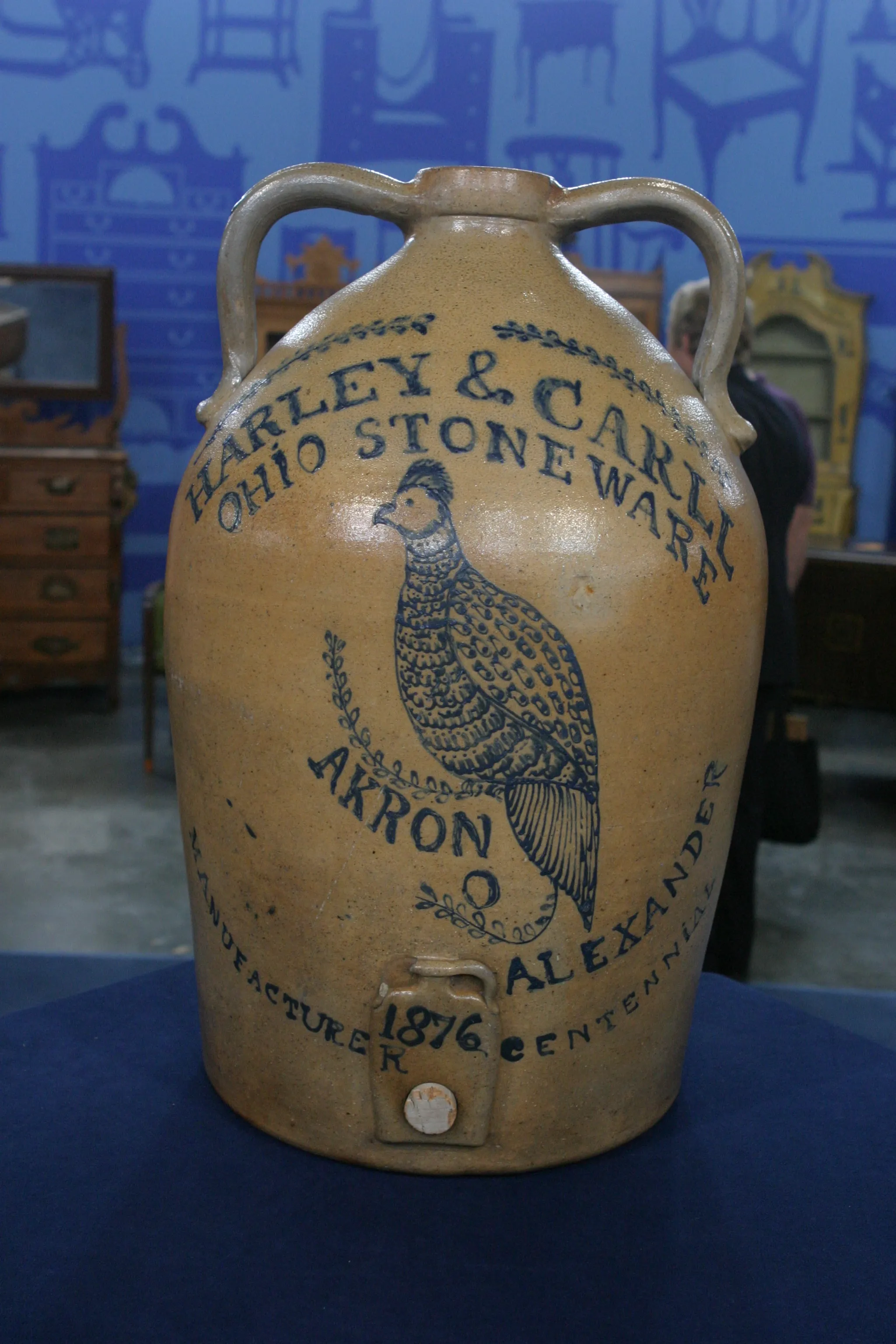
1876 John Alexander Stoneware Cooler
appraisal
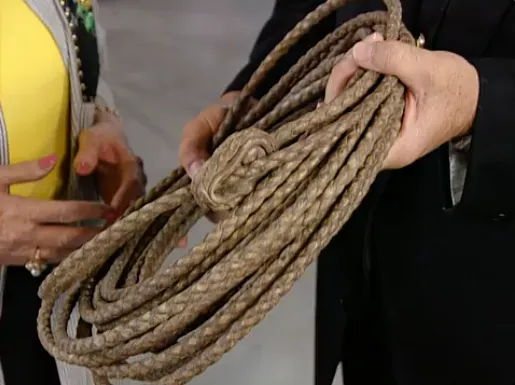
Braided Rawhide Lariat, ca. 1850
appraisal
American School Portrait, ca. 1820
appraisal
Eskimo Hunting Helmet, ca. 1820
Understanding Our Appraisals
Executive producer Marsha Bemko shares her tips for getting the most out of ANTIQUES ROADSHOW.
Value can change: The value of an item is dependent upon many things, including the condition of the object itself, trends in the market for that kind of object, and the location where the item will be sold. These are just some of the reasons why the answer to the question "What's it worth?" is so often "It depends."
Note the date: Take note of the date the appraisal was recorded. This information appears in the upper left corner of the page, with the label "Appraised On." Values change over time according to market forces, so the current value of the item could be higher, lower, or the same as when our expert first appraised it.
Context is key: Listen carefully. Most of our experts will give appraisal values in context. For example, you'll often hear them say what an item is worth "at auction," or "retail," or "for insurance purposes" (replacement value). Retail prices are different from wholesale prices. Often an auctioneer will talk about what she knows best: the auction market. A shop owner will usually talk about what he knows best: the retail price he'd place on the object in his shop. And though there are no hard and fast rules, an object's auction price can often be half its retail value; yet for other objects, an auction price could be higher than retail. As a rule, however, retail and insurance/replacement values are about the same.
Verbal approximations: The values given by the experts on ANTIQUES ROADSHOW are considered "verbal approximations of value." Technically, an "appraisal" is a legal document, generally for insurance purposes, written by a qualified expert and paid for by the owner of the item. An appraisal usually involves an extensive amount of research to establish authenticity, provenance, composition, method of construction, and other important attributes of a particular object.
Opinion of value: As with all appraisals, the verbal approximations of value given at ROADSHOW events are our experts' opinions formed from their knowledge of antiques and collectibles, market trends, and other factors. Although our valuations are based on research and experience, opinions can, and sometimes do, vary among experts.
Appraiser affiliations: Finally, the affiliation of the appraiser may have changed since the appraisal was recorded. To see current contact information for an appraiser in the ROADSHOW Archive, click on the link below the appraiser's picture. Our Appraiser Index also contains a complete list of active ROADSHOW appraisers and their contact details and biographies.


