GUEST: I bought this clock when I was 12 years old. My great-aunt and her husband had owned a store, and he died unexpectedly, and she just closed the store. Within a few years later, she decided she wanted to sell it, but the guy that wanted to buy it said, "I don't want all that junk that's in that store."
APPRAISER: Yeah, yeah.
GUEST: So she hired me at 50 cents an hour to get rid of all the junk. I went up and ask her if I could have the clock, and she said, "Do you really want that?" I said, "Yes, I do." And she said, "Well, if you give me two dollars, you can have the clock." I gave her two dollars and took the clock home on the handlebars of my bicycle.
APPRAISER: And what year was this?
GUEST: Oh, this was about '56, '57.
APPRAISER: That was a lot of money.
GUEST: That was a lot of money.
APPRAISER: To a 12-year-old kid.
GUEST: Well, it was a half a day's pay.
APPRAISER: Tell me what you know about the clock.
GUEST: They said it was an advertising clock, that if you sold so many suits of clothes they would give you a clock.
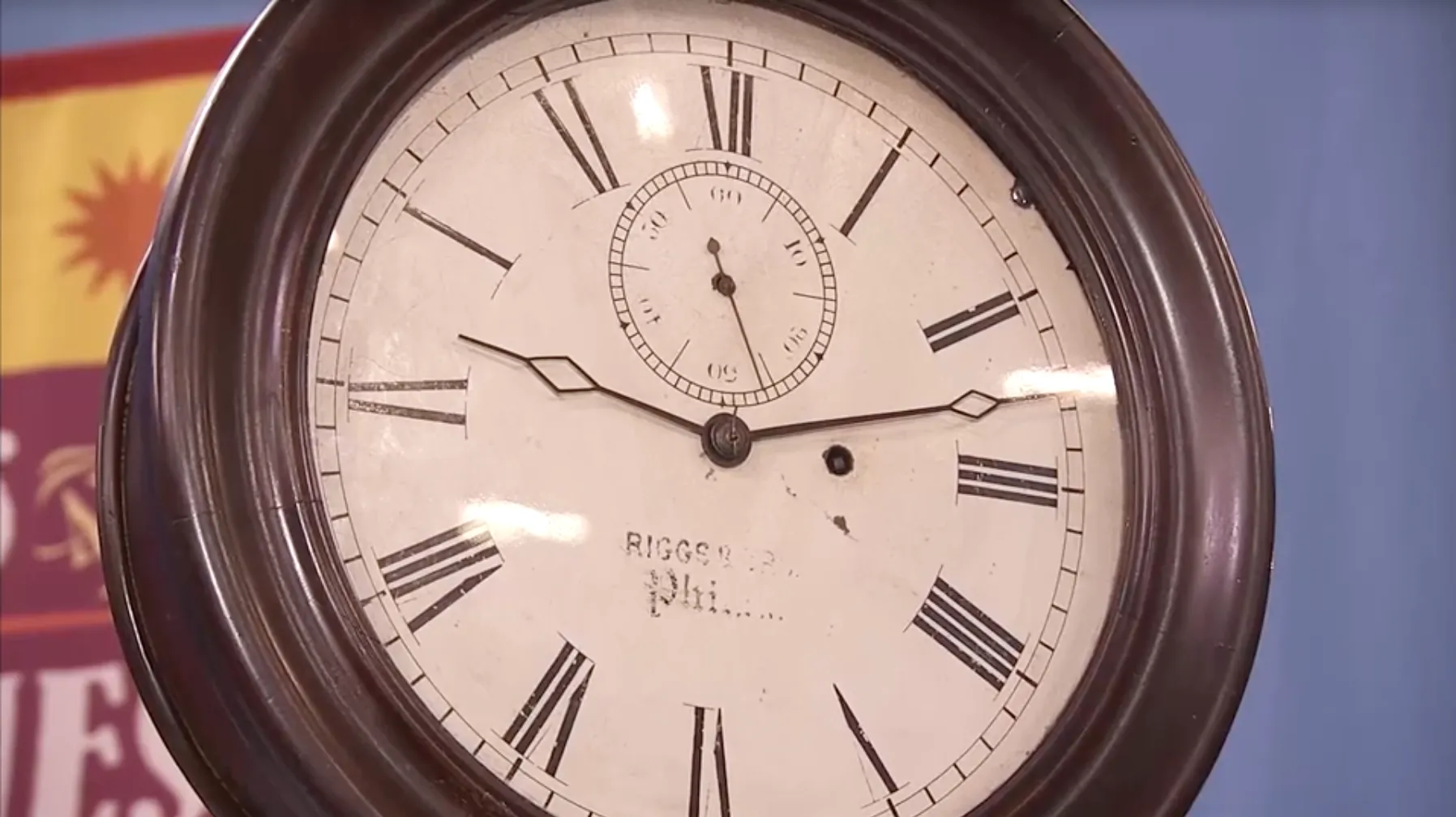
APPRAISER: First of all, I've never seen this model of clock before. I know who made the clock movement-- it was made by New Haven Clock Company in New Haven, Connecticut. And I can tell that just from the dial itself. And undoubtedly, this International Tailoring Company provided clocks to general stores. Have you ever had any restoration work done on the clock?
GUEST: Yes, I did. The black had started to peel off. Some of the gold was touched up when I took it for restoration.
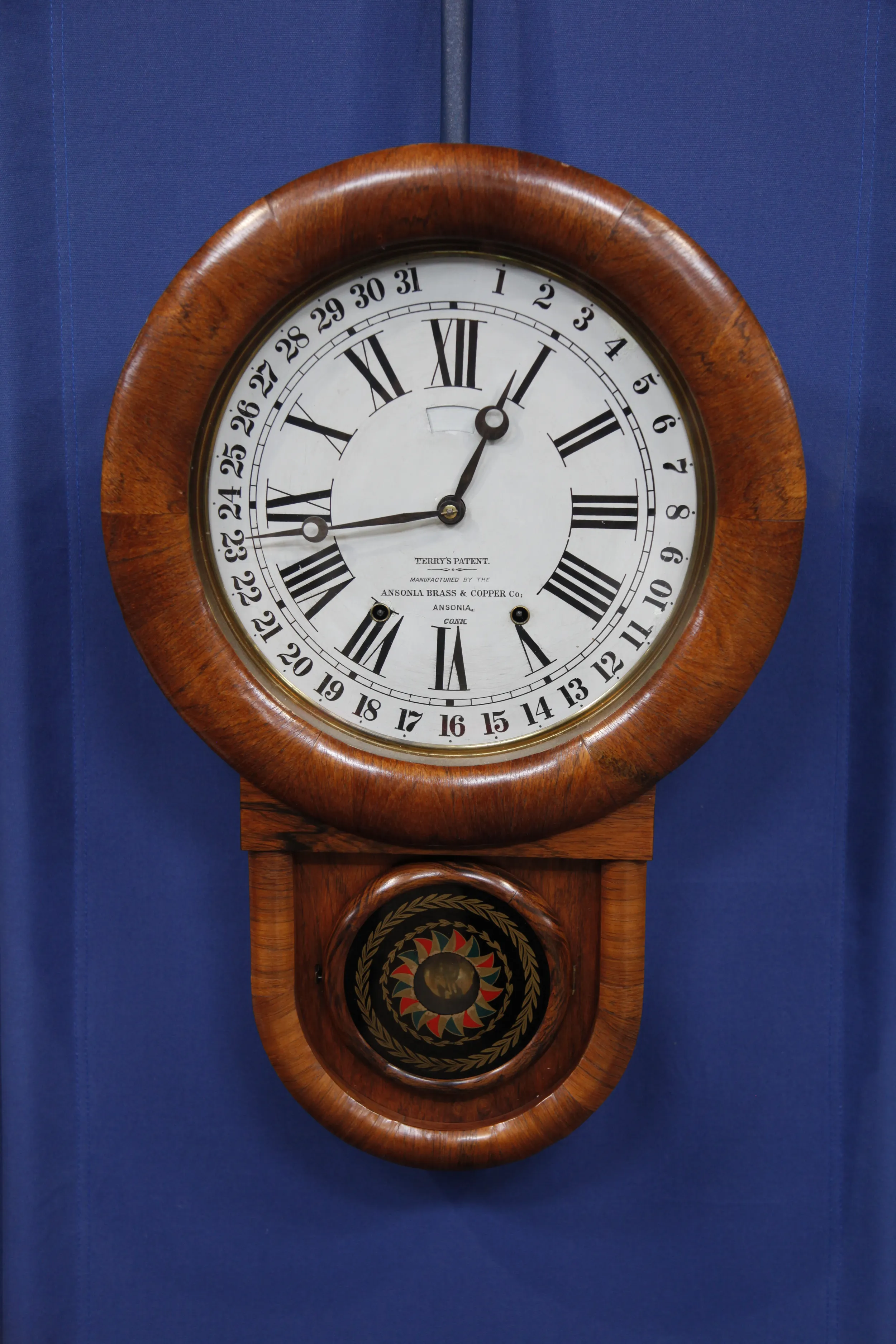
APPRAISER: Well, that's good-- it shows very well. So often we see these patent Timepieces or banjo clocks with these églomisé or reverse-painted glasses
that have been restored. Really hurts the value. In this case, I don't think it's
hurt it at all. I love the clock-- I love the size. Not having ever seen it, I'm comparing it to other advertising clocks, and I would probably appraise this clock in the $2,200 to $2,500 range.
GUEST: That's a lot better than two dollars that I paid for it.