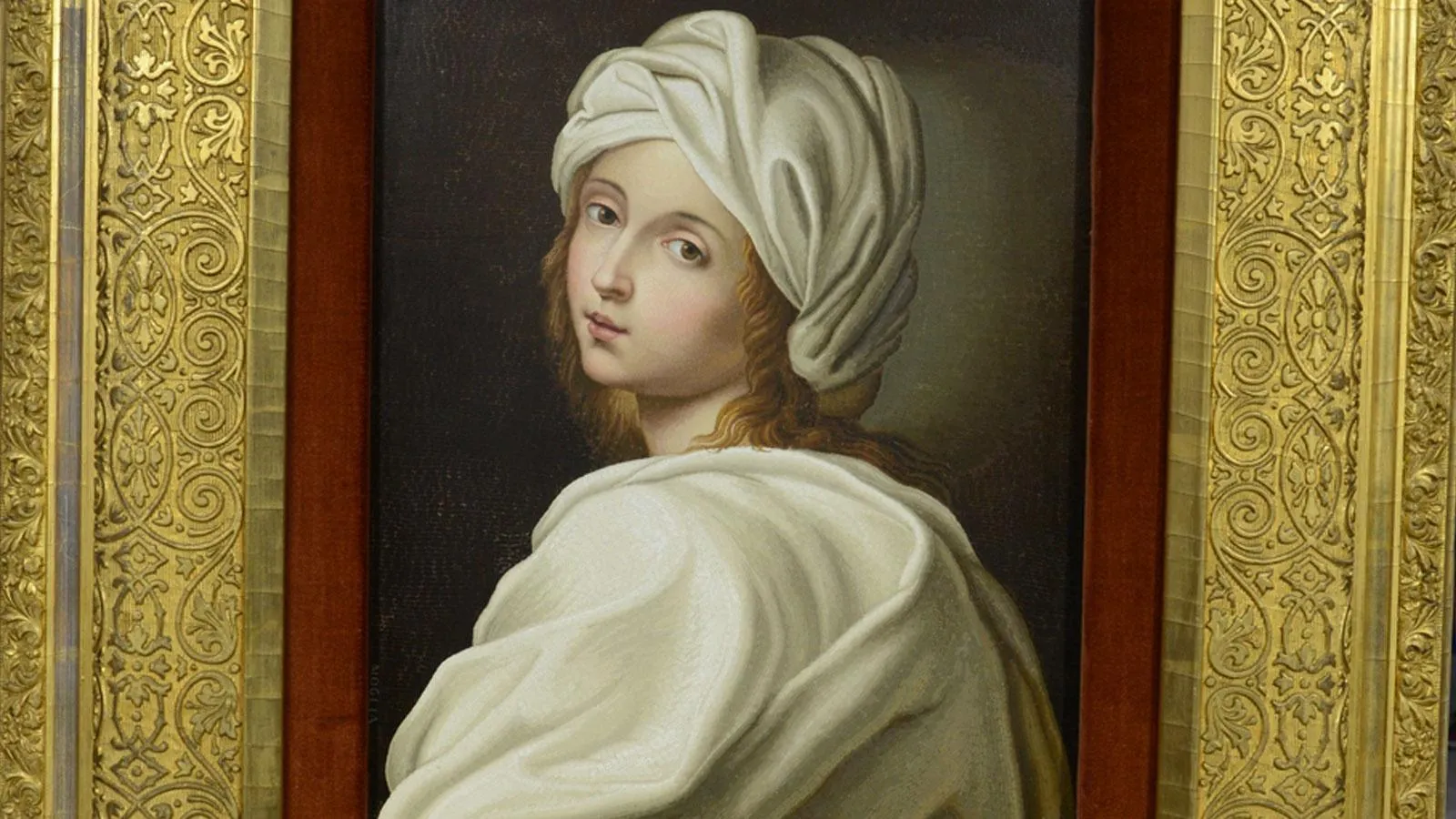
GUEST: It's a micromosaic. We don't know if it's from Italy or Russia. It's by the artist Moglia, but there's a father and a son. So that's one of the things I'd like to find out. My grandmother was an antique dealer.
APPRAISER: Uh-huh.
GUEST: And it used to be in her home. As long as I can remember growing up, it was in our home. And I always loved it. I was amazed that something made from stone or ceramic could actually look like a painting.
APPRAISER: Well, as you said, it is a micromosaic. The term "micromosaic" was given in the 20th century to denote this type of artwork, which is literally the introduction or the placement of these tiny little what we call tesserae into a ground.
GUEST: Mm-hmm.
APPRAISER: So the tesserae, actually, you mentioned ceramic or stone.
GUEST: Are these stone or are they ceramic?
APPRAISER: Mosaics are stone, are stone often. These are neither ceramic or stone.
GUEST: Okay.
APPRAISER: These are actually glass.
GUEST: Ah!
APPRAISER: They made them in tiny, tiny, tiny, tiny sizes. And so many different colors. Up to 15,000 different colors in glass would have been made to create micromosaic artwork. The technique really sort of came into its own in the 18th century, and into the 19th century, as increasing numbers of Grand Tourists visited Italy and purchased these.
GUEST: Mm-hmm. Right.
APPRAISER: In micromosaic that depicted some of the antiquities that they found there, sort of the archaeological sites, the forums, St. Peter's Basilica, and great old master paintings such as this.
GUEST: Mm-hmm.
APPRAISER: Tell me a little bit, if you know, about the subject itself.
GUEST: Well, this is Beatrice. Beatrice and her stepmother were abused by her father. They murdered him. They were convicted of murder, and ultimately, they were both, uh, I don't if they were hung or how they were killed.
APPRAISER: They were, I believe they were beheaded.
GUEST: Okay, beheaded.
APPRAISER: Yeah.
GUEST: Partly because she's so beautiful, partly because she stood up for her rights. She was both a heroine as well as a murderer.
APPRAISER: She's a tragic hero, absolutely, yeah.
GUEST: Okay.
APPRAISER: Some people say that Guido Reni, the artist of the original painting...
GUEST: Mm-hmm.
APPRAISER: On which this is based...
GUEST: Right.
APPRAISER: Visited her the night before she was beheaded.
GUEST: Right.
APPRAISER: That's just hearsay, though, I believe. But it's one of the stories, unsubstantiated...
GUEST: Good story.
APPRAISER: About how this painting was created. She was executed in 1599. Guido Reni painted the original painting on which this is copied.
GUEST: Right.
APPRAISER: In 1600. Guido Reni was one of the great Baroque painters. He was from Bologna. And the painting itself, because it captured her at such a tragic moment...
GUEST: Mm-hmm.
APPRAISER: The night before she was going to be killed, it inspired so many people-- especially in the 19th century-- authors, poets, and so forth. This was made in the 19th century.
GUEST: Right.
APPRAISER: Probably somewhere between 1850 and 1875.
GUEST: Okay.
APPRAISER: You wondered if the mosaic was done in Italy or in Russia. It was almost certainly done in Italy.
GUEST: Because the son went to the Russian court, was my understanding.
APPRAISER: There was... there was more than two Moglias.
GUEST: Okay.
APPRAISER: So you mentioned Moglia. It is signed Moglia here, on the margin. There were three of them-- Luigi, Augusta. There was Domenico. They all flourished in the 19th century when they were making these wonderful works of art. I don't know for certain, but I think it's by Luigi. Moglia, the family of Moglia, who created this, are considered some of the best. The Moglia family exhibited in 1851 at the Great Exhibition.
GUEST: Mm-hmm.
APPRAISER: To huge acclaim. They created artworks in mosaic, paintings after old masters, such as this. But they also not only made great pictures like this, they made small bits of jewelry.
GUEST: Right.
APPRAISER: Little plaques that would have been inserted into snuffboxes. The art of micromosaic on this sort of scale, which is actually very, very large for a mosaic, is incredibly rare and incredibly exciting to find on ANTIQUES ROADSHOW. I would think an insurance valuation of $85,000...
GUEST: Cool.
APPRAISER: Would be a fair price.
GUEST: Excellent.
APPRAISER: It's an absolutely splendid work of art. I nearly leapt over my colleague to look at this.
GUEST: (laughs)