Ming Dynasty Bronze Vase
GUEST: My mother had two bishops... (chuckling): ...as her grandfathers, and their children went to China as missionaries around the turn of the last century. They s, s, married and set up a household in China. Every day, my grandmother and her sister walked to the market and they passed a Chinese antiquities dealer. They wanted a Ming vase, and we are told this is a Ming vase, reportedly.
APPRAISER: Mm-hmm.
GUEST: And after about five or six years, they wore the gentleman down, and they bought their Ming vase.
APPRAISER: How long have you lived with this?
GUEST: About 25 years-- I inherited it in 1999.
APPRAISER: Okay, about the turn... What city were they in?
GUEST: They were in Shanghai. This was probably purchased in about 1920.
APPRAISER: It's kind of a pear shape. In the bulbous part of the body, there's a mask, and that's called a taotie mask, T-A-O-T-I-E. So, it's liter, literally, a monster mask and that's something that was characteristic of ancient Chinese bronze ritual vessels. When I say ancient, we're talking about archaic vessels from a very early period of time, roughly around 1000 B.C. Around the neck, there is a very complicated design. It's kind of a wave form.
GUEST: Mm-hmm.
APPRAISER: It's referencing ancient Chinese jade carvings. And on the foot, you'll see this grid-like pattern.
GUEST: Mm-hmm.
APPRAISER: Which is something that would have been seen on ancient Chinese ritual bronze vessels of a much earlier date than the Ming Dynasty. It's a reasonable assumption to be able to say this is from the Ming Dynasty. It's very possible, with additional research, that it might be something that we could actually push back to an earlier date. On the inside here...
GUEST: Mm-hmm.
APPRAISER: ...on the wall, what do you see?
GUEST: It looks like it's been repaired. It looks like a break mark in the surface.
APPRAISER: It does. And then, as I turn this, on the outside, it's a jagged patch. If I violently knocked this off, and it fell onto a stone floor, and it happened to have a handle that was a curved handle...
GUEST: Oh, God.
APPRAISER: ...starting here.
GUEST: It knocked the handle off.
APPRAISER: One would expect at auction this to realize somewhere in the $5,000 to $8,000 range.
GUEST: Okay-- that's what my wife said. So there you go.
(both laugh)
APPRAISER: So...
GUEST: It wasn't my $50,000 that I wanted. Well, that's wonderful-- it's excellent.

$5,000 - $8,000 Auction
Featured In

episode
Georgia State Railroad Museum, Hour 3
Premiered Mon, Feb 9, 2026 — Travel with ROADSHOW to historic Savannah and learn about intriguing Georgia discoveries!
Metals & Alloys
appraisal
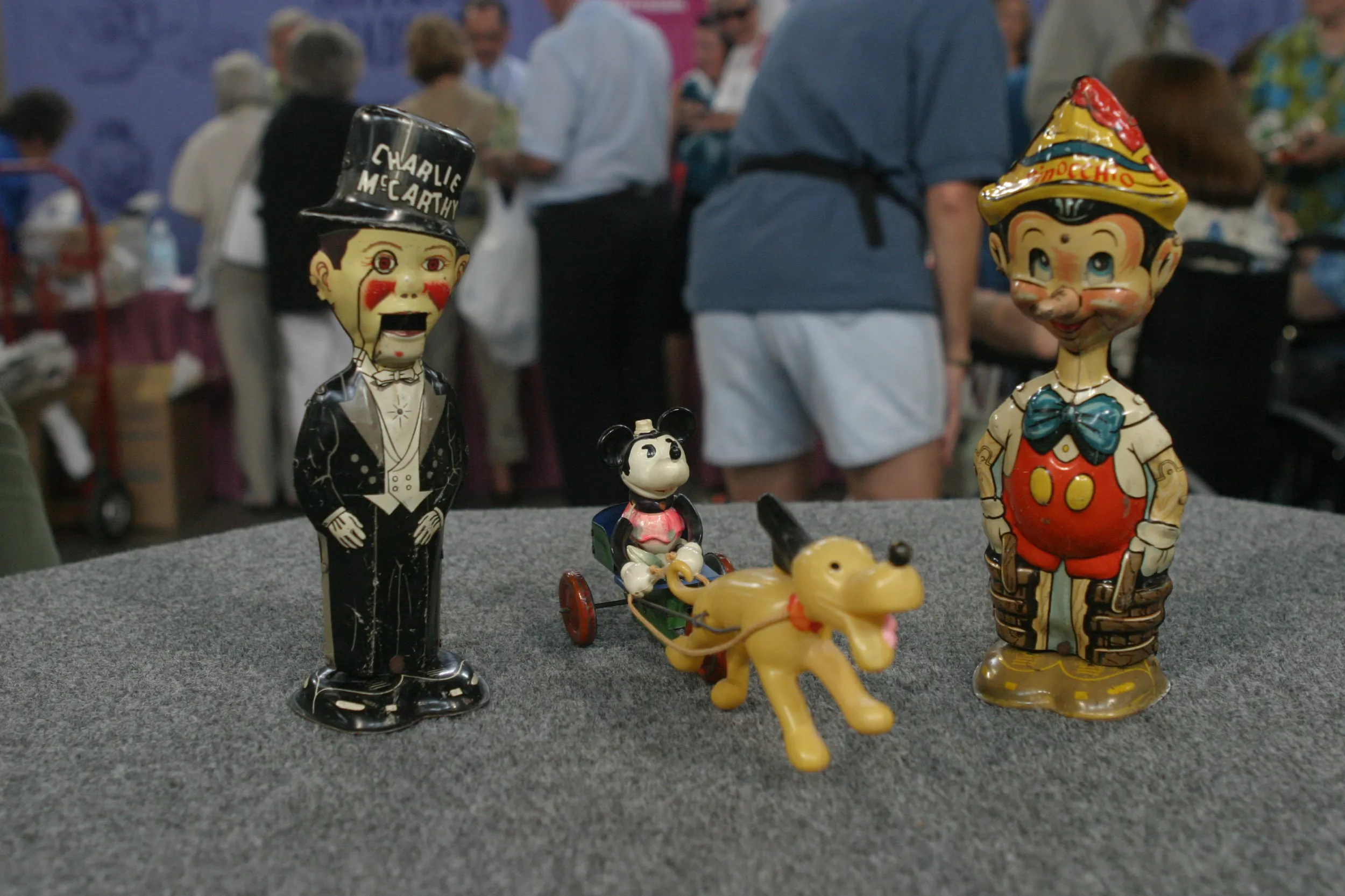
Comic Wind-up Toys, ca. 1930
appraisal
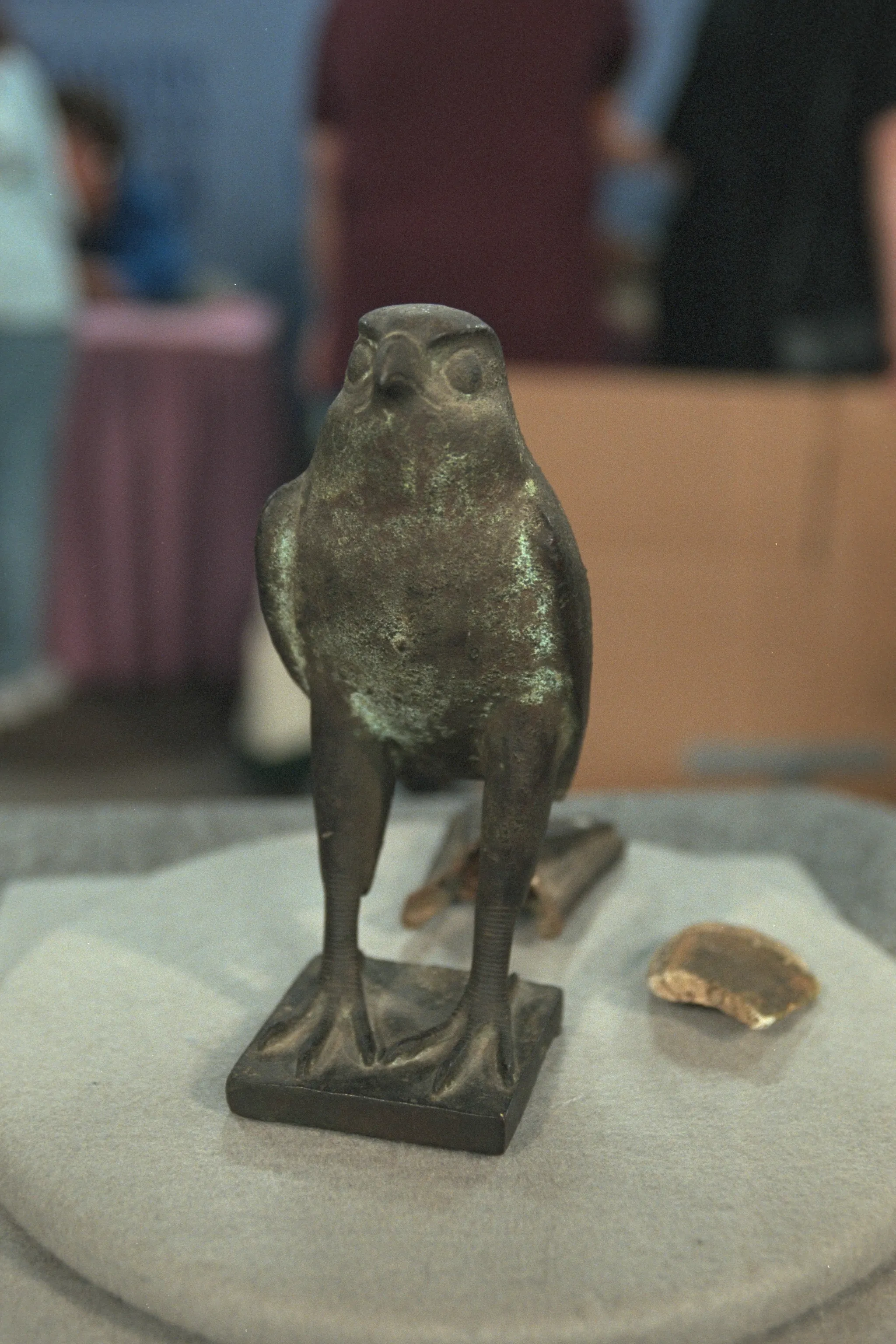
Late Period Egyptian Bronze Falcon
appraisal
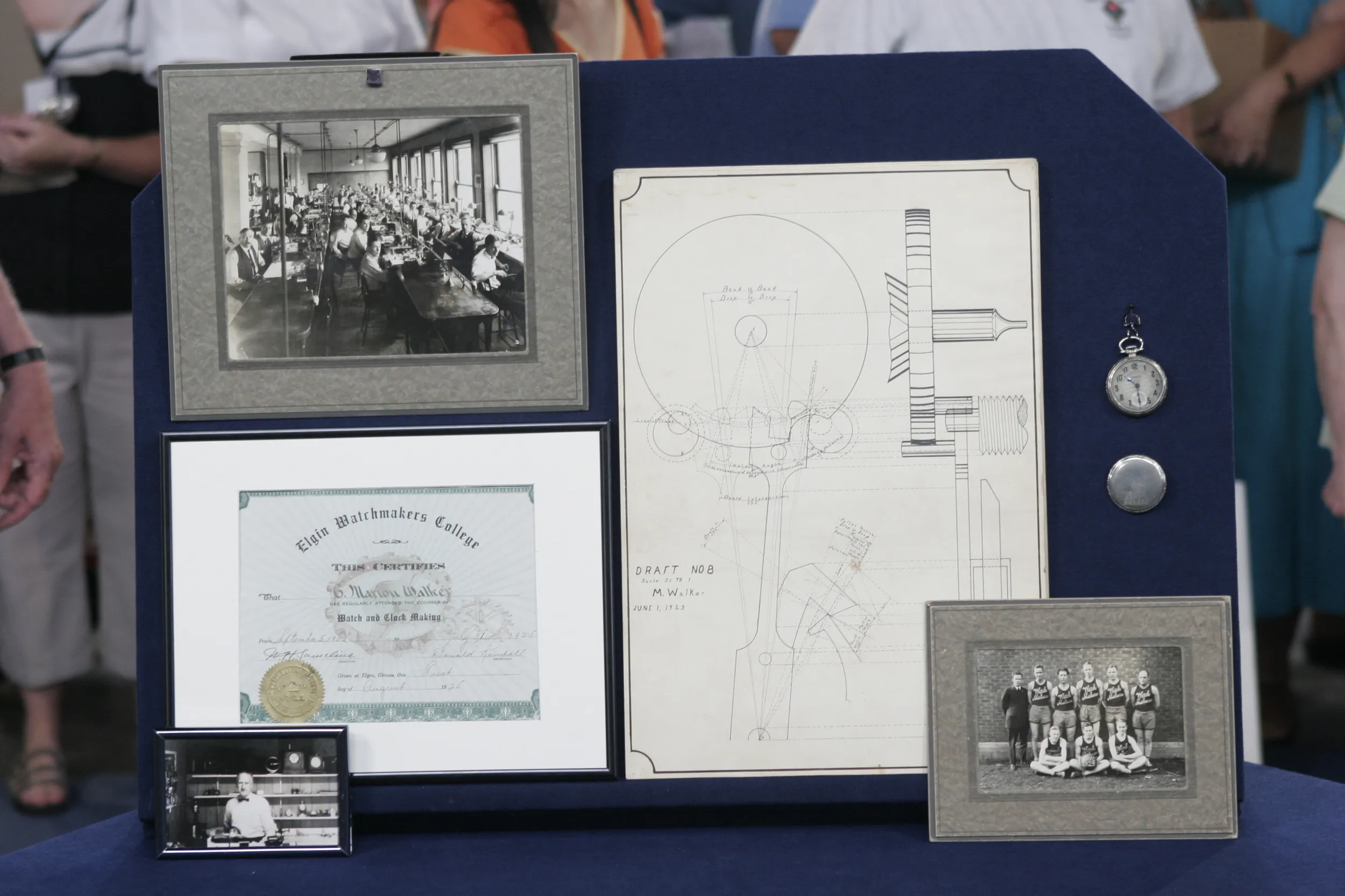
Elgin Student Watch & Papers, ca. 1924
appraisal
Duncan Phyfe Sewing Table, ca. 1805
Understanding Our Appraisals
Executive producer Marsha Bemko shares her tips for getting the most out of ANTIQUES ROADSHOW.
Value can change: The value of an item is dependent upon many things, including the condition of the object itself, trends in the market for that kind of object, and the location where the item will be sold. These are just some of the reasons why the answer to the question "What's it worth?" is so often "It depends."
Note the date: Take note of the date the appraisal was recorded. This information appears in the upper left corner of the page, with the label "Appraised On." Values change over time according to market forces, so the current value of the item could be higher, lower, or the same as when our expert first appraised it.
Context is key: Listen carefully. Most of our experts will give appraisal values in context. For example, you'll often hear them say what an item is worth "at auction," or "retail," or "for insurance purposes" (replacement value). Retail prices are different from wholesale prices. Often an auctioneer will talk about what she knows best: the auction market. A shop owner will usually talk about what he knows best: the retail price he'd place on the object in his shop. And though there are no hard and fast rules, an object's auction price can often be half its retail value; yet for other objects, an auction price could be higher than retail. As a rule, however, retail and insurance/replacement values are about the same.
Verbal approximations: The values given by the experts on ANTIQUES ROADSHOW are considered "verbal approximations of value." Technically, an "appraisal" is a legal document, generally for insurance purposes, written by a qualified expert and paid for by the owner of the item. An appraisal usually involves an extensive amount of research to establish authenticity, provenance, composition, method of construction, and other important attributes of a particular object.
Opinion of value: As with all appraisals, the verbal approximations of value given at ROADSHOW events are our experts' opinions formed from their knowledge of antiques and collectibles, market trends, and other factors. Although our valuations are based on research and experience, opinions can, and sometimes do, vary among experts.
Appraiser affiliations: Finally, the affiliation of the appraiser may have changed since the appraisal was recorded. To see current contact information for an appraiser in the ROADSHOW Archive, click on the link below the appraiser's picture. Our Appraiser Index also contains a complete list of active ROADSHOW appraisers and their contact details and biographies.


