Meissen Teapot, ca. 1740
GUEST: My great-great-great-aunt Emma had a porcelain collection, and it has passed down through my great-great-grandmother, my great-grandmother, my grandmother, and then to me as a birthday present.
APPRAISER: Did they live in Europe or in another part of the States?
GUEST: I believe that my great-great- great-aunt Emma was in Boston.
APPRAISER: Any idea where she felt this came from?
GUEST: No.
APPRAISER: Did she identify it?
GUEST: Well, the only identification that I've got is on the bottom it says "earliest Dresden." I believe that she put it on there because that's what I was told. But I don't know that for certain.
APPRAISER: Your great-great-great-aunt Emma was almost correct in calling it the earliest Dresden. Dresden is a city in eastern Germany which is famous for making porcelain. Perhaps even more famous is the town next door called Meissen. And it was in the town of Meissen that porcelain making actually began in Europe. The Chinese, of course, invented porcelain over 1,000 years ago, but the Europeans didn't know how to make it until about 300 years ago, when a very bright individual in Meissen called Johann Böttger figured out, using rather primitive chemistry, how to make this extraordinary, translucent material that we call porcelain. And they've been making it in Meissen ever since. And some of the best porcelain made in Meissen was made in the first period of Meissen making, which is basically the first half of the 18th century.
GUEST: Okay.
APPRAISER: This teapot, it looks tiny to most of us, but at the time it was made, it was not that unusual for teapots to be very small, because they were made in the Chinese manner, really.
GUEST: I thought it was made for a child.
APPRAISER: No, it was made as a conventional teapot at the time, the time being probably about 1740. The style of it is very Rococo. All of that scrolling work that you can see rather delicately molded onto the body. But what I like about the teapot is the painting on it. The Meissen artists at the time, some of them who worked in the factory and some who worked outside the factory, were extremely talented and painted with a very, very fine hand indeed, making these remarkable painterly scenes. The painting could be by one of the best known painters at Meissen at the time, whose name was Johann Herold. It would really take a little more research to decide on that. You can identify it as being early from the size, from the modeling, also from that extraordinarily well painted scene. And the base of it, too. We often think of Meissen as having to have a little cross swords mark, which is the very familiar mark of Meissen. It actually is there. You can't see it very easily, but it's very, very faint, painted on the bottom. In any event it's a very valuable and quite important teapot because of its beautiful condition and early period. I would have to value it today at, at least $12,000, and perhaps as much as $15,000 or even more.
GUEST: Really?
APPRAISER: Yes, really.
GUEST: It's a great find and a great heirloom from your great-great- great-aunt Emma.
APPRAISER: Thank you.

$10,000 - $12,000 Retail
$8,000 - $12,000 Retail
$12,000 - $15,000 Retail

Porcelain

appraisal
Royal Crown Derby Teaware, ca. 1815
appraisal
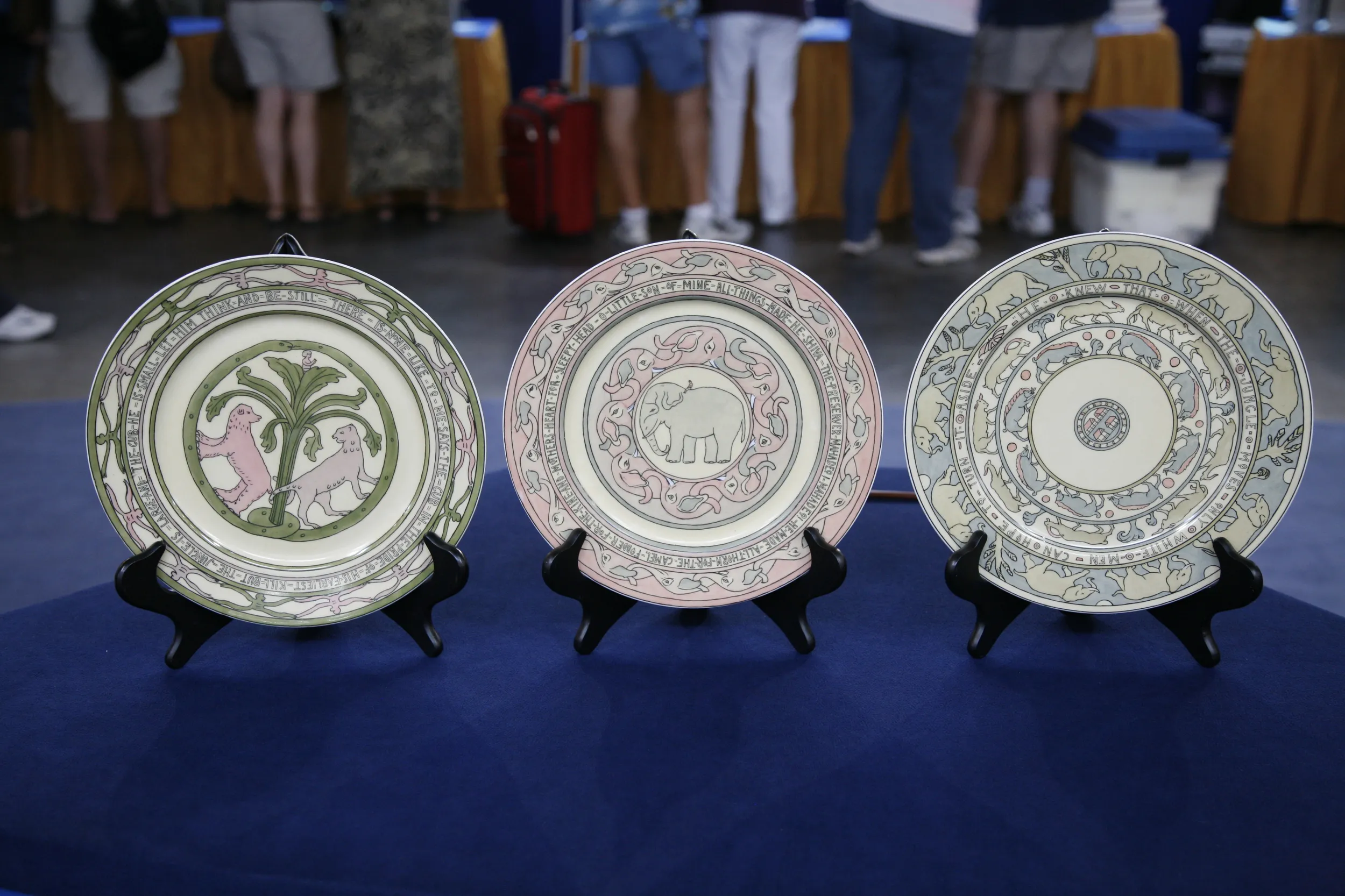
"The Jungle Book" Arts & Crafts Plates, ca. 1905

appraisal
KPM Porcelain Clock, ca. 1890

appraisal
Willets Belleek Pitcher, ca. 1880
Understanding Our Appraisals
Executive producer Marsha Bemko shares her tips for getting the most out of ANTIQUES ROADSHOW.
Value can change: The value of an item is dependent upon many things, including the condition of the object itself, trends in the market for that kind of object, and the location where the item will be sold. These are just some of the reasons why the answer to the question "What's it worth?" is so often "It depends."
Note the date: Take note of the date the appraisal was recorded. This information appears in the upper left corner of the page, with the label "Appraised On." Values change over time according to market forces, so the current value of the item could be higher, lower, or the same as when our expert first appraised it.
Context is key: Listen carefully. Most of our experts will give appraisal values in context. For example, you'll often hear them say what an item is worth "at auction," or "retail," or "for insurance purposes" (replacement value). Retail prices are different from wholesale prices. Often an auctioneer will talk about what she knows best: the auction market. A shop owner will usually talk about what he knows best: the retail price he'd place on the object in his shop. And though there are no hard and fast rules, an object's auction price can often be half its retail value; yet for other objects, an auction price could be higher than retail. As a rule, however, retail and insurance/replacement values are about the same.
Verbal approximations: The values given by the experts on ANTIQUES ROADSHOW are considered "verbal approximations of value." Technically, an "appraisal" is a legal document, generally for insurance purposes, written by a qualified expert and paid for by the owner of the item. An appraisal usually involves an extensive amount of research to establish authenticity, provenance, composition, method of construction, and other important attributes of a particular object.
Opinion of value: As with all appraisals, the verbal approximations of value given at ROADSHOW events are our experts' opinions formed from their knowledge of antiques and collectibles, market trends, and other factors. Although our valuations are based on research and experience, opinions can, and sometimes do, vary among experts.
Appraiser affiliations: Finally, the affiliation of the appraiser may have changed since the appraisal was recorded. To see current contact information for an appraiser in the ROADSHOW Archive, click on the link below the appraiser's picture. Our Appraiser Index also contains a complete list of active ROADSHOW appraisers and their contact details and biographies.


