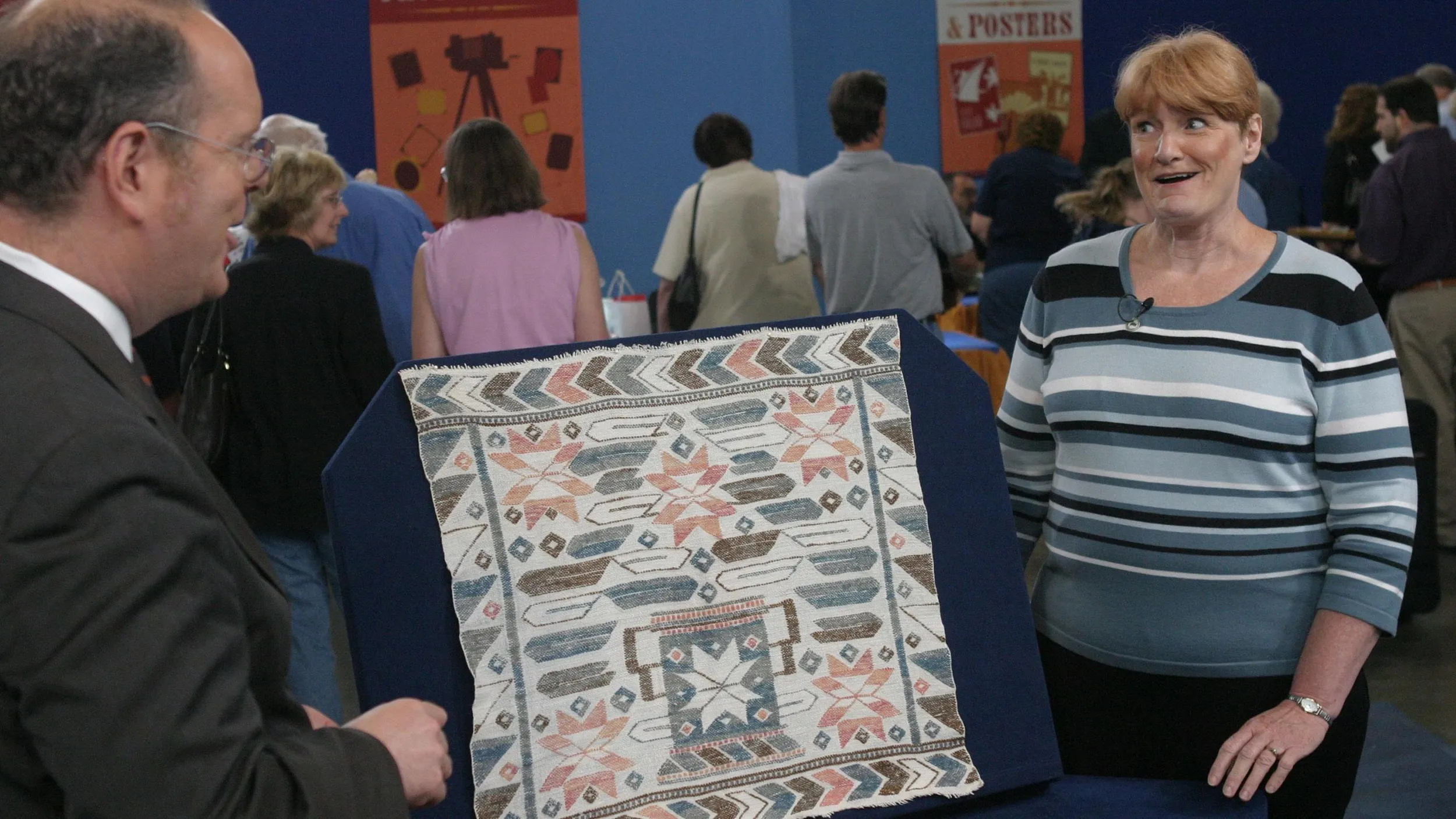
Märta Måås-Fjetterström Textile, ca. 1920
GUEST: It's a piece I found at a thrift store in Minnesota. One of the things I always go for are, uh, linens, needlework of any kind, because it interests me, and I like just to study it, appreciate it. I have a lot of appreciation for women who have done needlework. And this kind of stuck out at me.
APPRAISER: When I first saw this, I was thinking, well, we're in Minnesota. Of course I'm gonna see a lot of kind of 20th-century Scandinavian-inspired textiles.
GUEST: Certainly.
APPRAISER: Uh, which, generally, in the market today are of very little interest, because they're things that were either made in this country or were commercially made in Scandinavia.
GUEST: Mm-hmm.
APPRAISER: And then as I looked more closely, I realized, but wait, this isn't just another one.
GUEST: Oh.
APPRAISER: This has something more going on. There's an incredible subtlety to the coloration and the way this is woven and put together.
GUEST: Mm-hmm.
APPRAISER: We've got shading of different colors of roses to fuchsia.
GUEST: I see.
APPRAISER: And then blue-greens to blue. And there's an artistry in this that you wouldn't just see in a common piece.
GUEST: Mm-hmm.
APPRAISER: So I was thinking, gosh, you know, this really is better than most.
GUEST: Uh-huh.
APPRAISER: And got intrigued myself. And then I recognized that in the corner, it was signed, which, most commercial pieces aren't signed. And this is signed with the initials MMF, which stands for a woman named Märta Måås-Fjetterström, who was probably the leading textile designer and producer in Sweden in the early 20th century. Um...
GUEST: Oh, no. (chuckles)
APPRAISER: She started out as a painter, started a workshop by 1918, 1919, producing textiles, curtain fabrics, all handmade, also rugs and carpet. I mean, she was of such prominence that she designed and manufactured the rugs that are used for the Nobel Prize ceremonies in Stockholm. So she's really a designer of some note. Typically in the market, we come across pieces of hers that are quite large. I've never seen a handwoven, flat-weaved textile of this size coming from her. And the quality backs up with the initials. Do you have any idea of what this may be worth?
GUEST: Absolutely not-- I knew it was worth the dollar that I paid for it...
APPRAISER: Mm-hmm.
GUEST: ...just to have something to, you know, to study, because it was so interesting.
APPRAISER: Right, 'cause I would say, with the popularity of Märta Måås-Fjetterström things in the market today, 'cause it's really coming on quite strong, I would place a retail value on a piece like this today of somewhere between $2,000 and $4,000.
GUEST: (inhales deeply) (groans) (laughs)
APPRAISER: Certainly worth the dollar investment.
GUEST: Oh, my goodness!
$7,000 - $8,000 Retail
$2,000 - $4,000 Retail
$2,000 - $4,000 Retail
Featured In
episode
Vintage St. Paul
Discover which marvelous Minnesota treasure has skyrocketed in the market to $2M – $3M!

episode
Never Seen That Before!
Discover finds that even our experts hadn’t seen prior to these magical ROADSHOW moments!
Traditional Crafts
appraisal
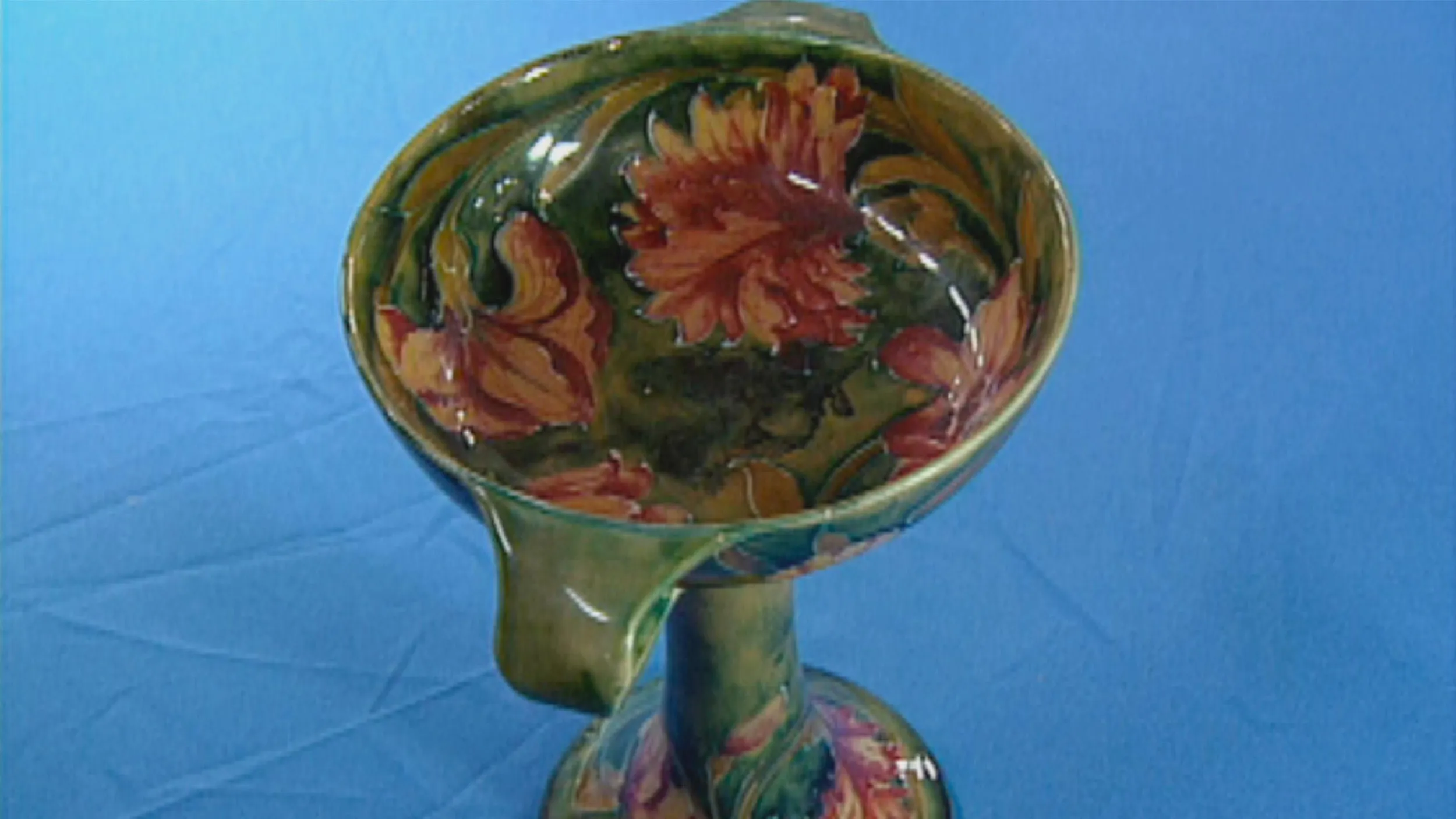
William Moorcroft Pottery, ca. 1910

appraisal
1876 John Alexander Stoneware Cooler
appraisal
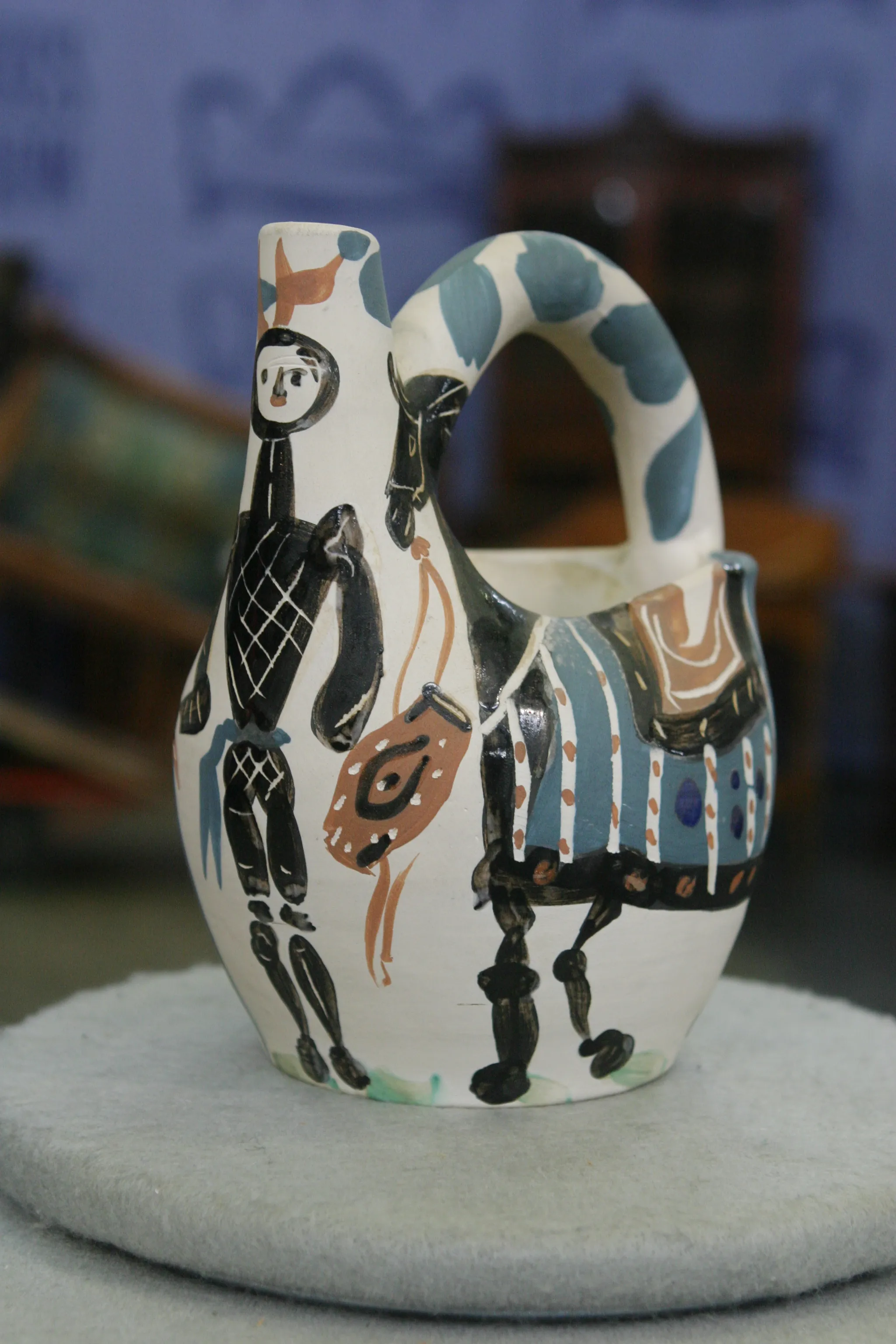
1952 Picasso Madoura Ceramic Jug
appraisal
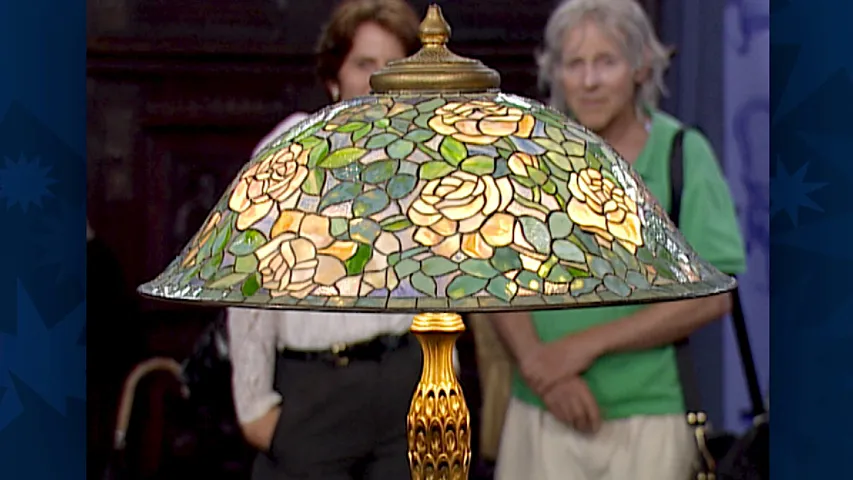
Tiffany Studios Rose Helmet Lamp, ca. 1905
Understanding Our Appraisals
Executive producer Marsha Bemko shares her tips for getting the most out of ANTIQUES ROADSHOW.
Value can change: The value of an item is dependent upon many things, including the condition of the object itself, trends in the market for that kind of object, and the location where the item will be sold. These are just some of the reasons why the answer to the question "What's it worth?" is so often "It depends."
Note the date: Take note of the date the appraisal was recorded. This information appears in the upper left corner of the page, with the label "Appraised On." Values change over time according to market forces, so the current value of the item could be higher, lower, or the same as when our expert first appraised it.
Context is key: Listen carefully. Most of our experts will give appraisal values in context. For example, you'll often hear them say what an item is worth "at auction," or "retail," or "for insurance purposes" (replacement value). Retail prices are different from wholesale prices. Often an auctioneer will talk about what she knows best: the auction market. A shop owner will usually talk about what he knows best: the retail price he'd place on the object in his shop. And though there are no hard and fast rules, an object's auction price can often be half its retail value; yet for other objects, an auction price could be higher than retail. As a rule, however, retail and insurance/replacement values are about the same.
Verbal approximations: The values given by the experts on ANTIQUES ROADSHOW are considered "verbal approximations of value." Technically, an "appraisal" is a legal document, generally for insurance purposes, written by a qualified expert and paid for by the owner of the item. An appraisal usually involves an extensive amount of research to establish authenticity, provenance, composition, method of construction, and other important attributes of a particular object.
Opinion of value: As with all appraisals, the verbal approximations of value given at ROADSHOW events are our experts' opinions formed from their knowledge of antiques and collectibles, market trends, and other factors. Although our valuations are based on research and experience, opinions can, and sometimes do, vary among experts.
Appraiser affiliations: Finally, the affiliation of the appraiser may have changed since the appraisal was recorded. To see current contact information for an appraiser in the ROADSHOW Archive, click on the link below the appraiser's picture. Our Appraiser Index also contains a complete list of active ROADSHOW appraisers and their contact details and biographies.


