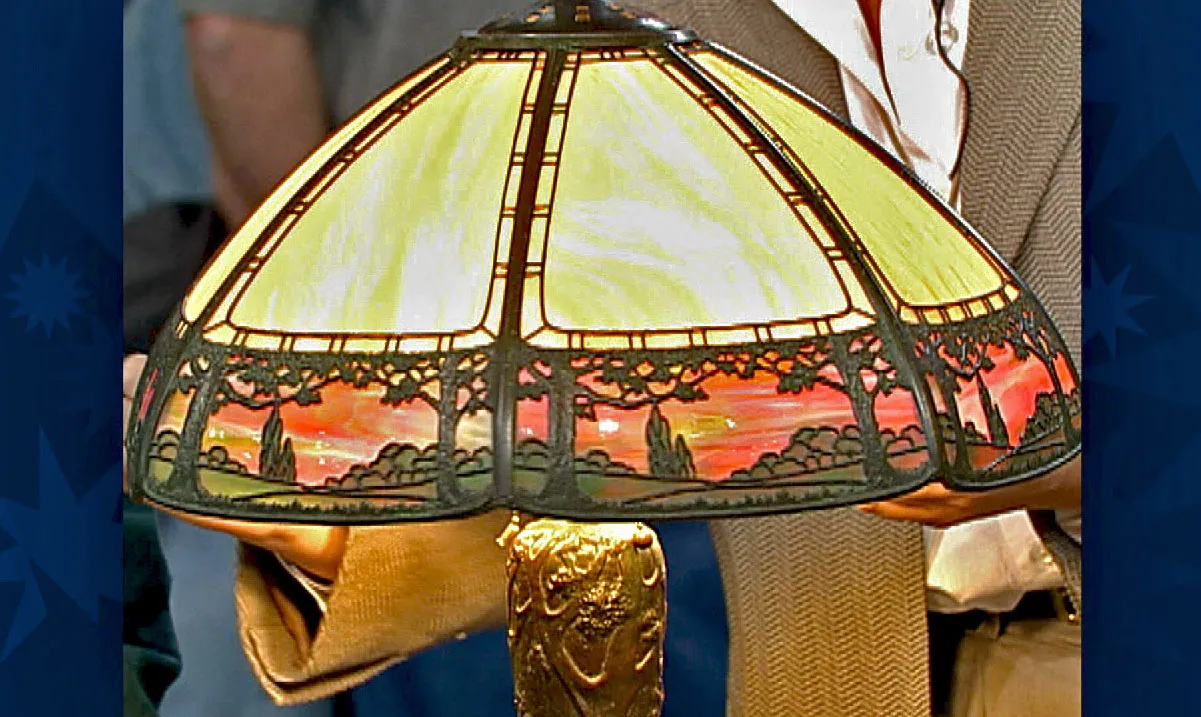
GUEST: This lamp has been in my family for a long, long time. My father's side of the family is from North Carolina, and the lamp was purchased from the Reynolds family of Reynolds Tobacco in North Carolina, and it was at my grandma's house in North Carolina for many, many years, and then it went to my father and then to me. I'm kind of like the family... I don't know, historian kind of person. I like all the family treasures to stay in the family, but I really don't know anything about this.
APPRAISER: And when it was at your grandmother's house, was it always a lamp, or did she turn it into a lamp?
GUEST: As far as I can remember as a child, it was a lamp, and even in the pictures I've seen, it's a lamp.
APPRAISER: Well, I can start by telling you it did not start out life as a lamp.
GUEST: Okay.
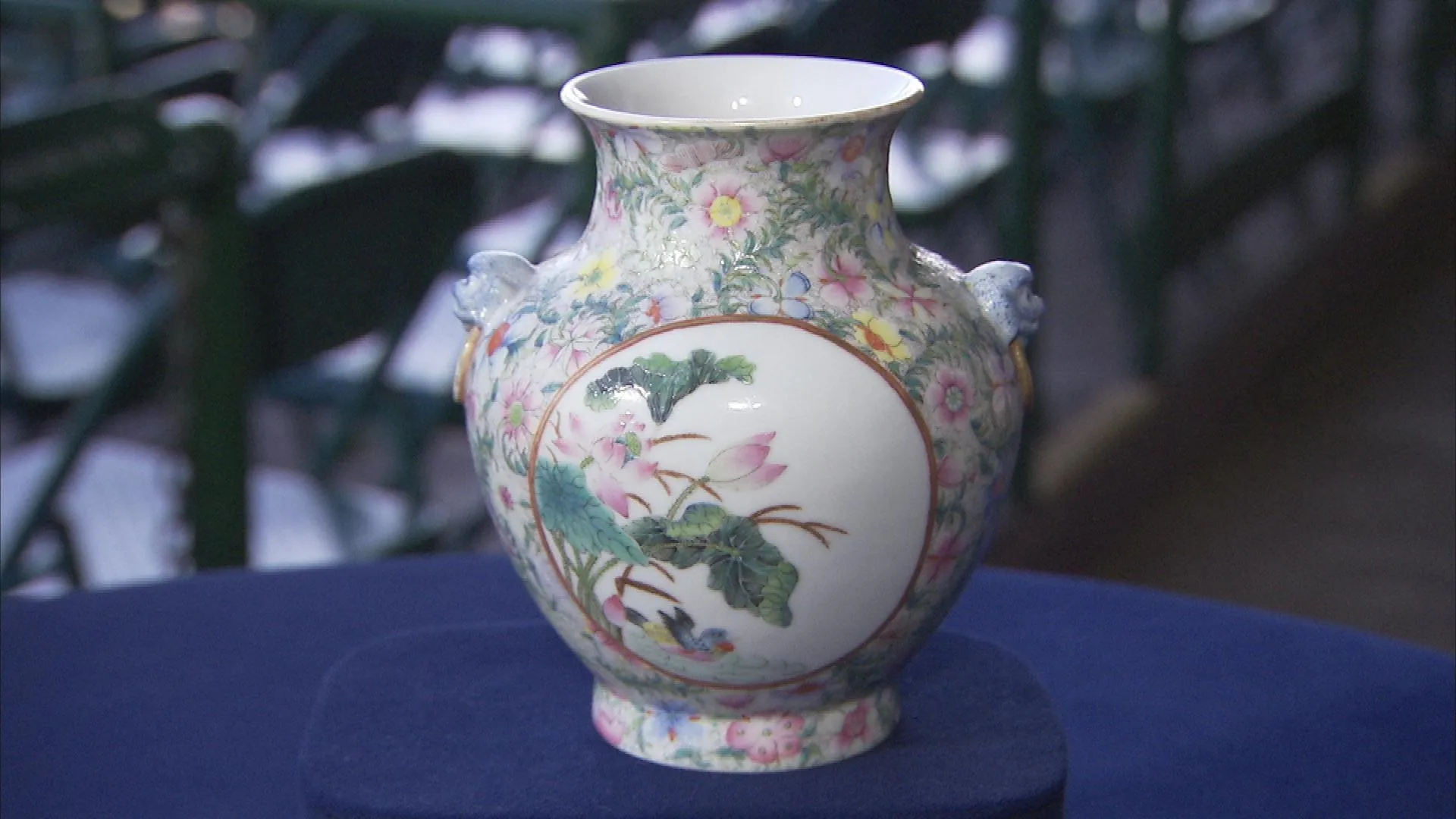
APPRAISER: It was originally a vase.
GUEST: Wow.
APPRAISER: Made in France in the third quarter of the 19th century.
GUEST: Wow.
APPRAISER: And made in the area of Limoges with a technique that is referred to as pate-sur-pate. And pate-sur-pate, translated from the French, is "paste on paste."
GUEST: Okay.
APPRAISER: And it refers specifically to this white decoration.
GUEST: I see.
APPRAISER: Where you get layers of liquid clay that are applied, and then modeled so that you get this effect of having a body underneath the diaphanous drape. It gives it an incredible lightness.
GUEST: Mm-hmm.
APPRAISER: The thing that first struck me about this piece was the color. Normally with Limoges vases, they will be a very, very pretty celadon-y green, often. This kind of elephant skin, purply gray...
GUEST: Yes.
APPRAISER: ...comes into play. But this sky blue as the predominant color is really very interesting. And the decoration in general is a little bit more elaborate than you normally see.
GUEST: Okay.
APPRAISER: This decoration, on the lower portion, all of these foliate scrolls, is very much in the 18th-century taste that was popular then. If you look very closely here, there's platinum decoration, which will have raised it, with the gilding. Do you see the silvery gray?
GUEST: Uh-huh.
APPRAISER: It's platinum.
GUEST: Wow.
APPRAISER: They used platinum rather than silver because it wouldn't tarnish.
GUEST: I see.
APPRAISER: Now, in order to make this into a lamp, this has been drilled. A very good restorer can unlamp this, fill the hole. You will never know.
GUEST: Oh, really? Okay.
APPRAISER: As a vase made into a lamp with the hole, in its current condition, I would value it at auction at between $2,000 and $3,000.
GUEST: Wow.
APPRAISER: If it did not have that hole, it would probably be worth closer to $4,000.
GUEST: Oh, my God, I'm getting goosebumps. Oh, my God.
APPRAISER: Yeah, Grandma did really, really well. Thank you for bringing it in.
GUEST: Oh, thank you very much. I'm flabbergasted.
APPRAISER: It's a great object.