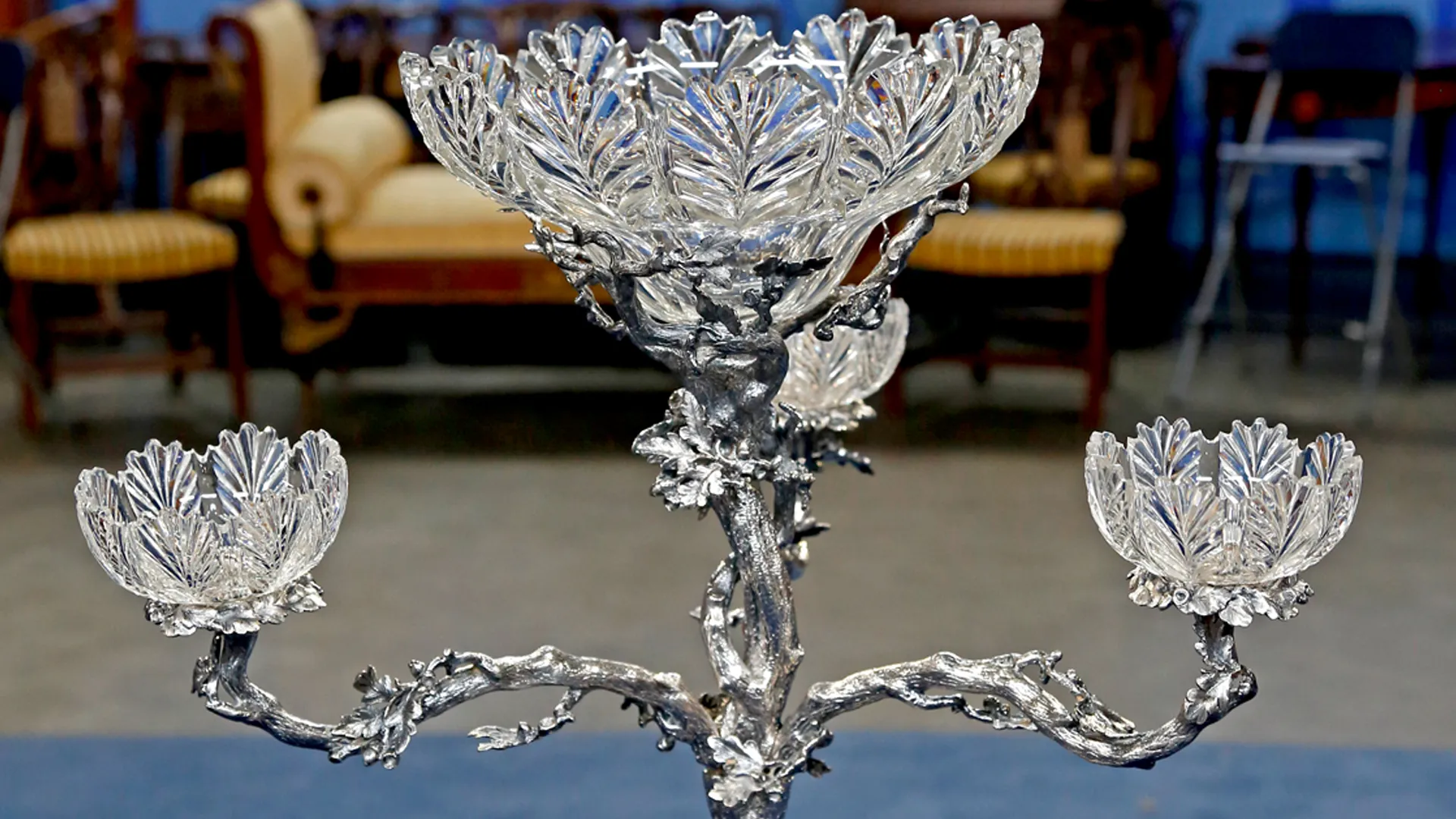
GUEST: I brought a silver epergne that my mom and dad purchased in the 1950s. And as you see, it has the crystal bowls that fit on top. It's been a very interesting piece for our family to have through the years.
APPRAISER: Do you know where they purchased it in the 1950s?
GUEST: They purchased it in Adel, Georgia, at an antique shop. And the dealer told them that she had just purchased it a few days earlier. He asked what the price was. And she told him that she hadn't put a price on it yet. And he said, "Well, make one." So she said, well, she would put $300 on it. So he immediately counted out $300 and said, "I'll take it home."
APPRAISER: You mentioned earlier that it was silver, and you're close. It's silver plated.
GUEST: I see.
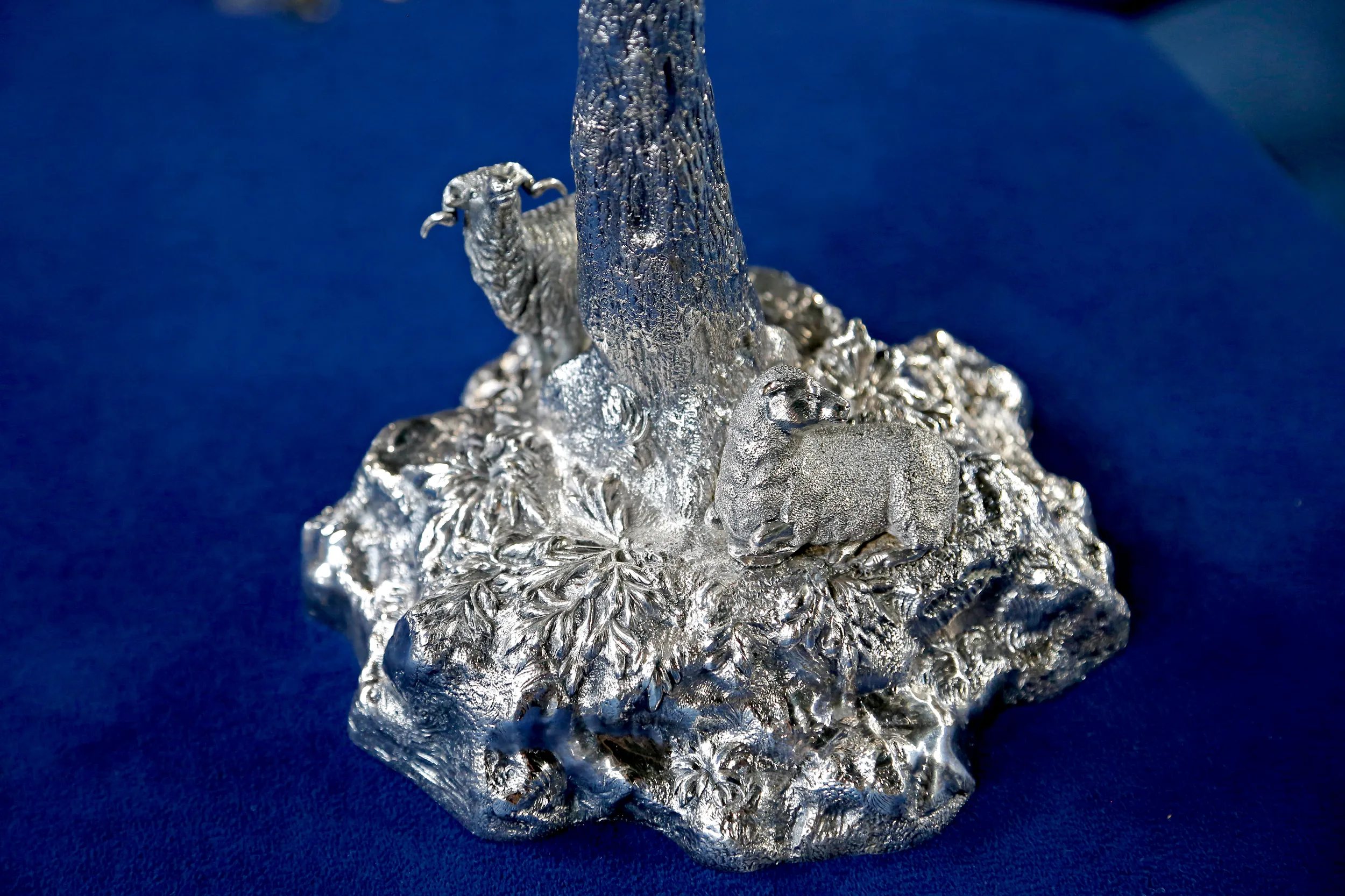
APPRAISER: Exactly. So what it is, is an English Elkington silver-plated epergne with cut glass bowls. And an epergne is a centerpiece, so it would have been in the center of a table, and it would have had flowers or little nuts; fruit would work as well. It dates to the late 19th century and it is phenomenal for what it is. The naturalistic branches, the sheep. I mean it is just everything you could want it to be in an old Victorian centerpiece. It was made to look like a high-class piece.
GUEST: I see.
APPRAISER: And so it's got all this wonderful detailing and things. But it's silver plated. And so it's kind of like an inexpensive version of a high-class, wonderful piece. At auction today I would estimate this to sell between $3,000 and $5,000.
GUEST: Oh, my.
APPRAISER: It's a wonderful piece that's everything you could possibly be looking for. And the reason why is because of the detailing work.