Late 19th C. Scottish Dirk
GUEST: I have what I believe to be a Scottish dirk. I bought this about 30 years ago at an antique show. I like to collect Scottish stuff. And it had thistles on it, and looks very Scottish to me.
APPRAISER: (laughs)
GUEST: And then I have some Scottish military badges, and, uh, one of 'em matches this. And I believe that's a Cameron Highlander badge.
APPRAISER: First of all, it's just a beautiful object. It's really well made, and it is a Scottish dirk. It evolves from the medieval knife of Scotland. It becomes a ceremonial piece representing authority. Traditionally, a Scottish dirk or knife back in the day would have been used for everything you'd want to use a knife for, and, in a pinch, for self-defense, as well.
GUEST: Mm.
APPRAISER: It's got this lovely engraved blade. The blade itself is actually made by a London manufacturer, Hawks. And it has this wonderful little dot with a six-pointed star around it.
GUEST: What's that called?
APPRAISER: So that is a proof mark that meant that it held a certain standard to the manufacturer when it was passed. So the blade was steel, engraved, made in London. The mounts, like, likely, were Scottish. And the carved handles many times were made of a local wood, uh, a bogwood, which tends to get dark and aged over time...
GUEST: Okay.
APPRAISER: ...or oak. Sometimes they imported ebony, but it was meant to be dark. And then these stones are just lovely. It's a kind of a citrine that is mined in Scotland in the Cairngorm mountains.
GUEST: Okay.
APPRAISER: Lots of granite there. These granite deposits grow these big crystals. And they would have done here is faceted it and then foil-backed it, so it gives it more of a reflection. As you said, the badge here represent the Cameron Highlanders. The Cameron Highlanders were a unit that was raised in the late 18th century by Sir Alan Cameron. And this would date from the late 19th century. It probably belonged to an officer. It's an officer's quality dirk. And again, in the late 19th century, it would have served a role as a symbol of power, a symbol of authority, versus something that you would have necessarily used in battle.
GUEST: Okay.
APPRAISER: What's wonderful about this, the dirk, it has these companion utensils. You have a, a fork in the lower section.
GUEST: Oh!
APPRAISER: And that's got a little spring mount that keeps it from falling out. And the upper utensil is a smaller knife, with a nice steel blade.
GUEST: Oh, okay.
APPRAISER: But a lovely thing. You bought it at a show? Where did you buy it?
GUEST: I bought it at a show here in Boise about 30 years ago, I...
APPRAISER: Do you remember what you paid for it?
GUEST: Yes, I paid $600 for it.
APPRAISER: At auction, this is easily a $2,000 to $3,000 blade.
GUEST: My goodness, yeah. I'll be darned.

$2,000 - $3,000 Auction
Featured In
episode
Idaho Botanical Garden, Hour 2
Watch breathtaking Boise appraisals at Idaho Botanical Garden. One is up to $40,000!
19th Century
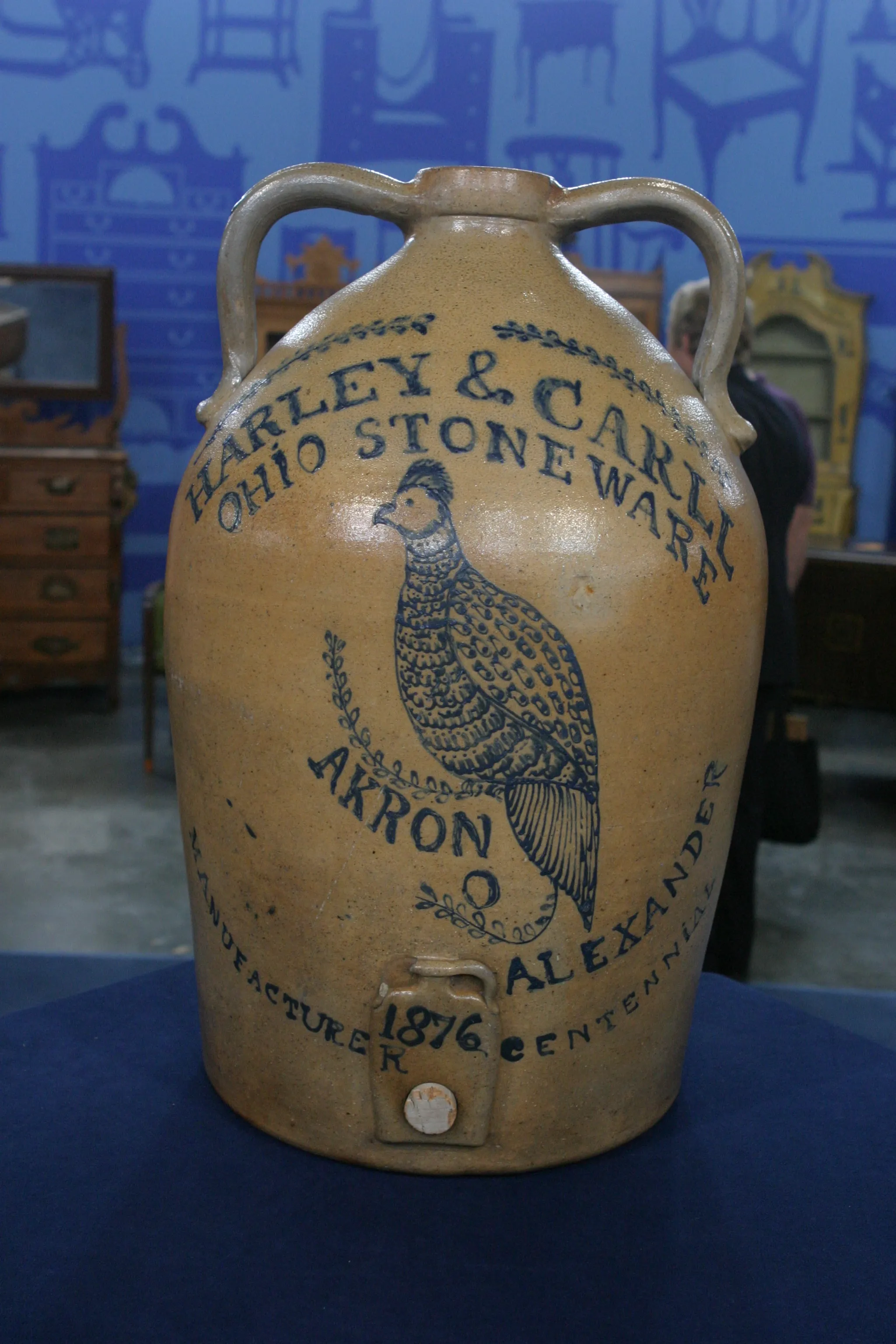
appraisal
1876 John Alexander Stoneware Cooler
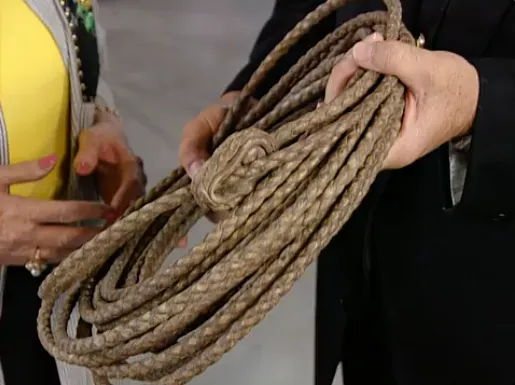
appraisal
Braided Rawhide Lariat, ca. 1850
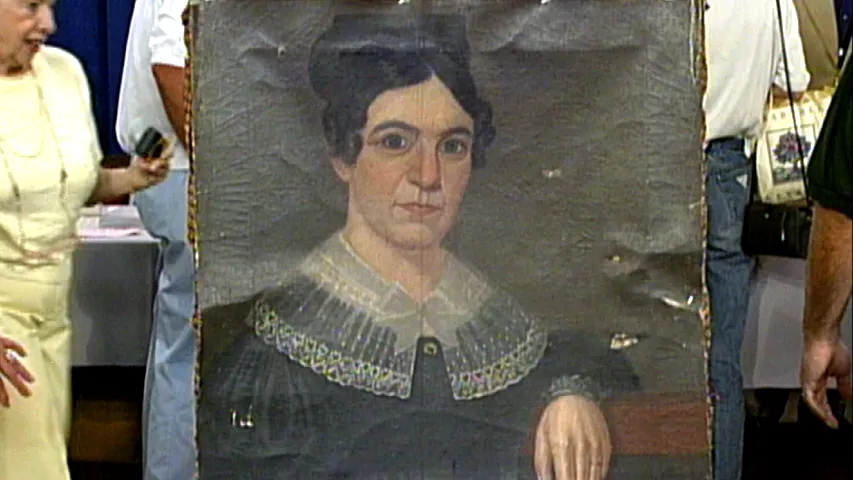
appraisal
American School Portrait, ca. 1820
appraisal
Eskimo Hunting Helmet, ca. 1820
Understanding Our Appraisals
Executive producer Marsha Bemko shares her tips for getting the most out of ANTIQUES ROADSHOW.
Value can change: The value of an item is dependent upon many things, including the condition of the object itself, trends in the market for that kind of object, and the location where the item will be sold. These are just some of the reasons why the answer to the question "What's it worth?" is so often "It depends."
Note the date: Take note of the date the appraisal was recorded. This information appears in the upper left corner of the page, with the label "Appraised On." Values change over time according to market forces, so the current value of the item could be higher, lower, or the same as when our expert first appraised it.
Context is key: Listen carefully. Most of our experts will give appraisal values in context. For example, you'll often hear them say what an item is worth "at auction," or "retail," or "for insurance purposes" (replacement value). Retail prices are different from wholesale prices. Often an auctioneer will talk about what she knows best: the auction market. A shop owner will usually talk about what he knows best: the retail price he'd place on the object in his shop. And though there are no hard and fast rules, an object's auction price can often be half its retail value; yet for other objects, an auction price could be higher than retail. As a rule, however, retail and insurance/replacement values are about the same.
Verbal approximations: The values given by the experts on ANTIQUES ROADSHOW are considered "verbal approximations of value." Technically, an "appraisal" is a legal document, generally for insurance purposes, written by a qualified expert and paid for by the owner of the item. An appraisal usually involves an extensive amount of research to establish authenticity, provenance, composition, method of construction, and other important attributes of a particular object.
Opinion of value: As with all appraisals, the verbal approximations of value given at ROADSHOW events are our experts' opinions formed from their knowledge of antiques and collectibles, market trends, and other factors. Although our valuations are based on research and experience, opinions can, and sometimes do, vary among experts.
Appraiser affiliations: Finally, the affiliation of the appraiser may have changed since the appraisal was recorded. To see current contact information for an appraiser in the ROADSHOW Archive, click on the link below the appraiser's picture. Our Appraiser Index also contains a complete list of active ROADSHOW appraisers and their contact details and biographies.


