Late 1938 Martin D-18 Guitar
GUEST: This was my father-in-law's guitar. And he purchased it from his brother, who was a professional musician. I just know it's a 1938 Martin and he played it all the time. He really enjoyed it. He didn't really play much professionally. He tried to do that. I think in the '30s, there's a picture someplace of him with George Gobel.
APPRAISER: Oh, really?
GUEST: Yes.
APPRAISER: He did make it onto the radio?
GUEST: He did make it onto radio with George Gobel the one time.
APPRAISER: He didn't give it a lot of hard playing, and, most importantly, he didn't have work done on it. The D-18 model is probably the most sought-after model by bluegrass and folk players.
GUEST: Oh, really?
APPRAISER: They like the D-18 because it's a relatively simple guitar. It doesn't have a whole lot of needless ornamentation. And what they love about it is that the back and sides are made of mahogany, which-which is, acoustically...
GUEST: Oh...
APPRAISER: ...a very, very fine wood, even though it's not very showy. So these actually, uh, work better with, uh, recordings and microphones. Now, the front of the guitar is made from spruce that came from the Adirondack Mountains.
GUEST: Really?
APPRAISER: Inside the guitar, we have a stamp on the center strip that says "C.F. Martin, Nazareth, Pennsylvania," and on the upper block, where the neck is actually set in, it will have the model number, which is D-18, and it will have the serial number, which we can date to late 1938. And 1938 was a pivotal year for Martin, where they actually changed the bracing, the internal bracing on the guitar. So I'm just gonna feel quickly right in here, and I feel that that "X" where the bracing crosses...
GUEST: Oh...
APPRAISER: ...is very near the sound hole. So we call that "advanced bracing," which makes it a more valuable guitar.
GUEST: Really? Okay.
APPRAISER: You've had some correspondence with the Martin Company to find out about the model number, but what you didn't find out was what it's actually worth.
GUEST: Right.
APPRAISER: Do you have an idea of that?
GUEST: No, well, the letter said the new ones in the '60s were worth about $1,000.
APPRAISER: Mm-hmm.
GUEST: So we thought, well, maybe with inflation, about $5,000.
APPRAISER: Okay.
GUEST: Wa-- I need to... (stammering): 'Cause we'd like to insure it properly, and...
APPRAISER: Okay. The top has been overcoated lightly. And that just means a clear coat of varnish...
GUEST: Oh, really?
APPRAISER: To-to cover up some of the wear that's happened to it. But that's not a big deal, because in today's market, the replacement value of this guitar, with the advanced bracing, would be about $28,000 to $30,000.
GUEST: (gasps) Okay, uh...
APPRAISER: Yeah.
GUEST: Wow. (both laugh) Oh, my. (laughs) He would be so proud. It's such an honor for him, it really is. He was such a great guy.

$45,000 - $55,000 Insurance
$28,000 - $30,000 Insurance
Featured In
episode
Madison, Hour 1
Roadshow takes a look at the stereoscopic photography of H.H. Bennett in Wisconsin Dells.

episode
Vintage Madison 2024, Hour 1
Learn how the antiques market has evolved since 2008. One find is now up to $150,000!
Celluloid
appraisal
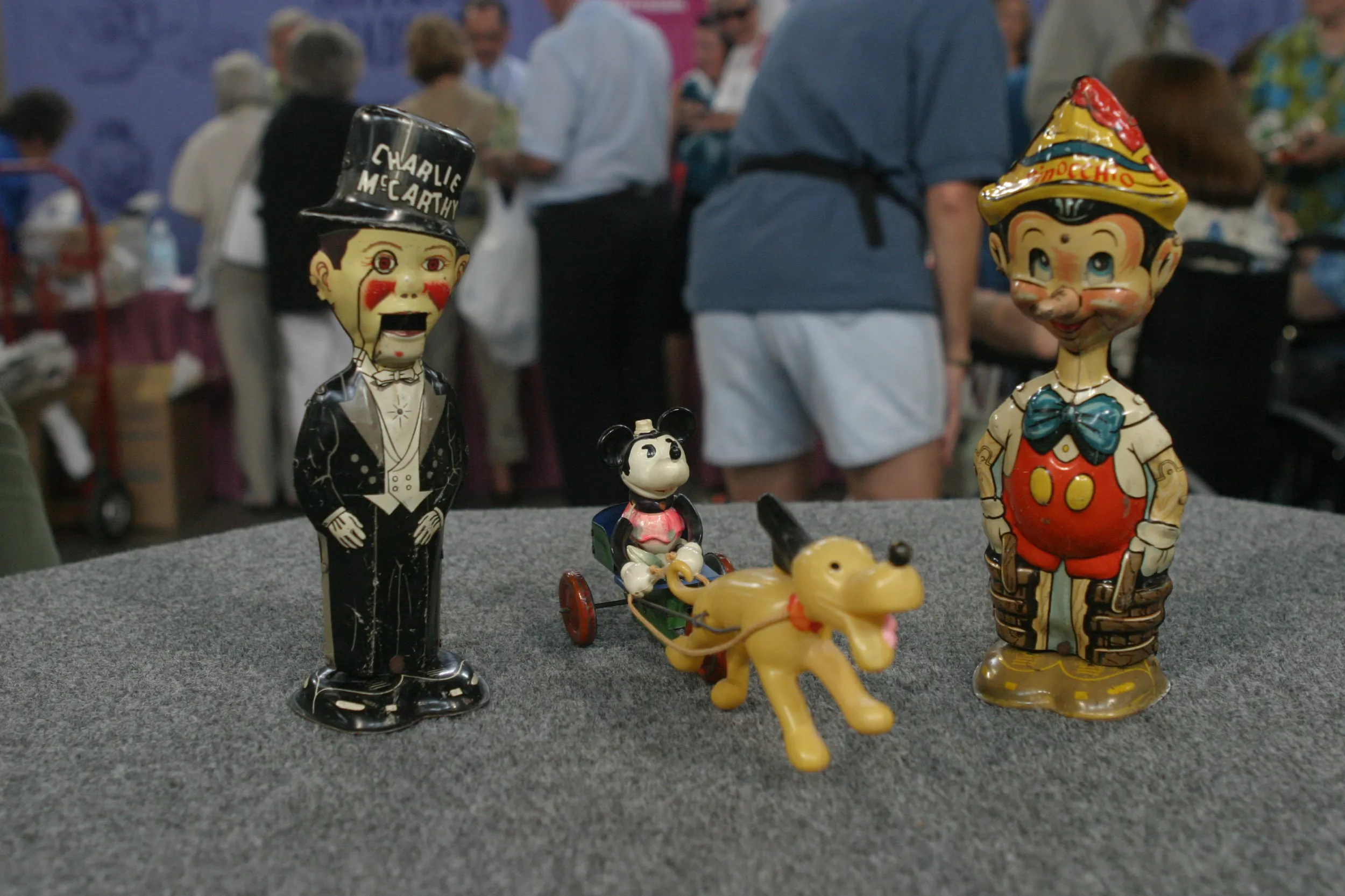
Comic Wind-up Toys, ca. 1930
appraisal
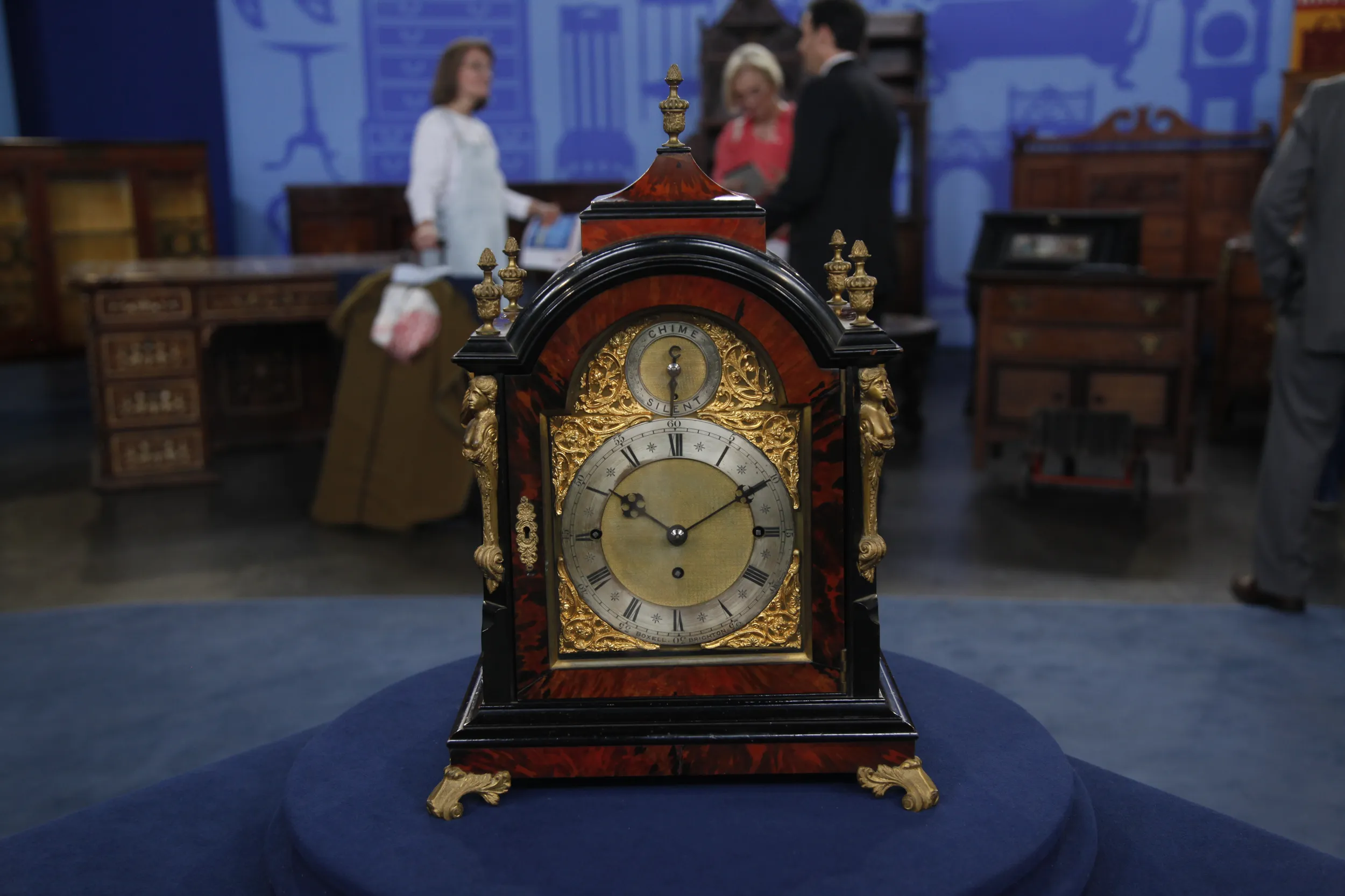
T. Boxell English Bracket Clock, ca. 1870
appraisal
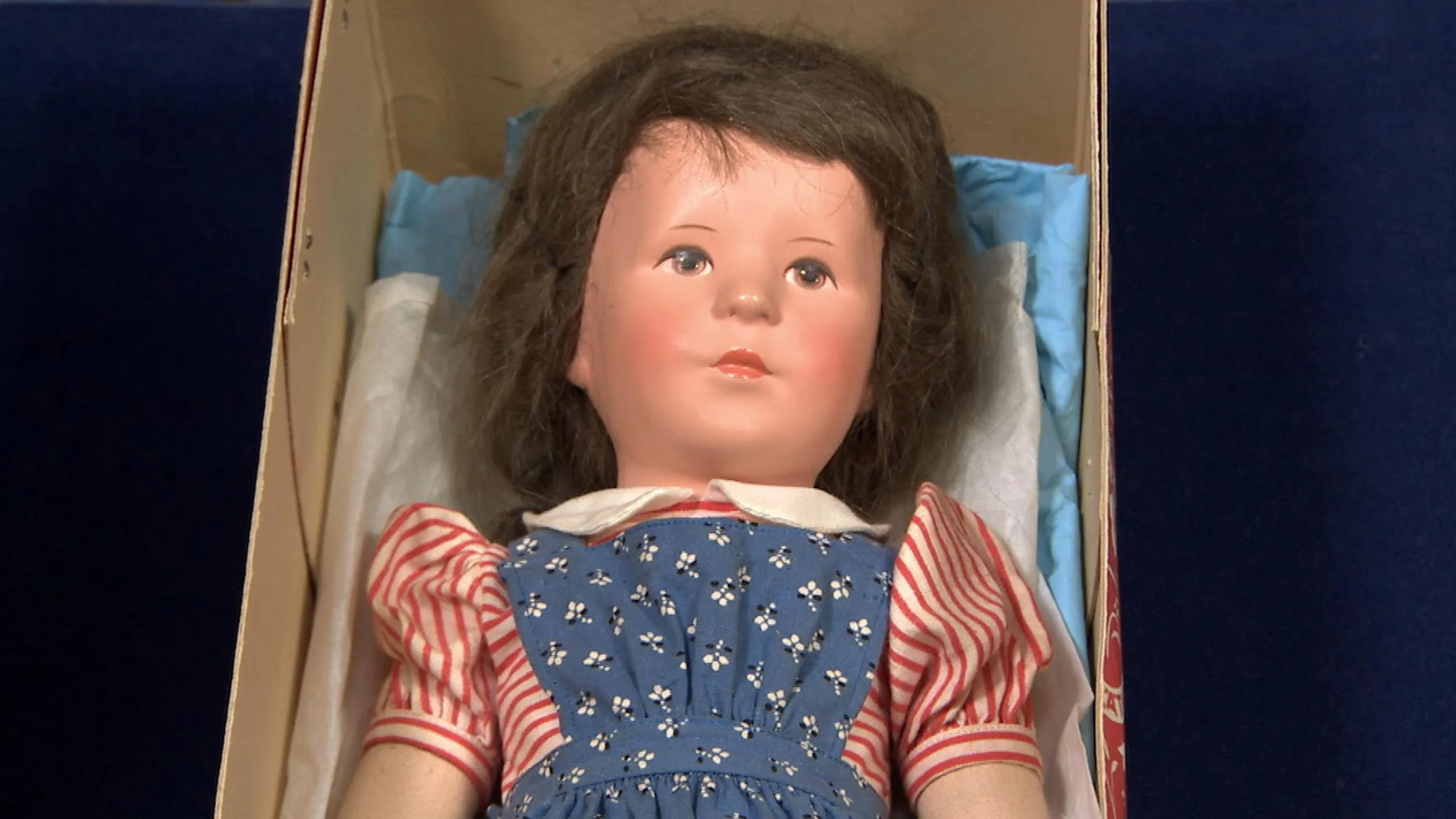
Käthe Kruse Doll in Original Box, ca. 1954
appraisal
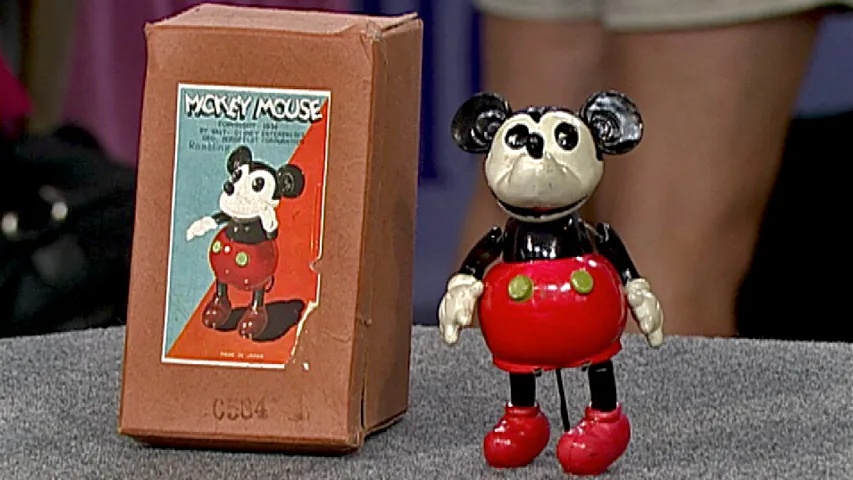
Rambling Mickey Mouse Toy & Original Box, ca. 1934
Understanding Our Appraisals
Executive producer Marsha Bemko shares her tips for getting the most out of ANTIQUES ROADSHOW.
Value can change: The value of an item is dependent upon many things, including the condition of the object itself, trends in the market for that kind of object, and the location where the item will be sold. These are just some of the reasons why the answer to the question "What's it worth?" is so often "It depends."
Note the date: Take note of the date the appraisal was recorded. This information appears in the upper left corner of the page, with the label "Appraised On." Values change over time according to market forces, so the current value of the item could be higher, lower, or the same as when our expert first appraised it.
Context is key: Listen carefully. Most of our experts will give appraisal values in context. For example, you'll often hear them say what an item is worth "at auction," or "retail," or "for insurance purposes" (replacement value). Retail prices are different from wholesale prices. Often an auctioneer will talk about what she knows best: the auction market. A shop owner will usually talk about what he knows best: the retail price he'd place on the object in his shop. And though there are no hard and fast rules, an object's auction price can often be half its retail value; yet for other objects, an auction price could be higher than retail. As a rule, however, retail and insurance/replacement values are about the same.
Verbal approximations: The values given by the experts on ANTIQUES ROADSHOW are considered "verbal approximations of value." Technically, an "appraisal" is a legal document, generally for insurance purposes, written by a qualified expert and paid for by the owner of the item. An appraisal usually involves an extensive amount of research to establish authenticity, provenance, composition, method of construction, and other important attributes of a particular object.
Opinion of value: As with all appraisals, the verbal approximations of value given at ROADSHOW events are our experts' opinions formed from their knowledge of antiques and collectibles, market trends, and other factors. Although our valuations are based on research and experience, opinions can, and sometimes do, vary among experts.
Appraiser affiliations: Finally, the affiliation of the appraiser may have changed since the appraisal was recorded. To see current contact information for an appraiser in the ROADSHOW Archive, click on the link below the appraiser's picture. Our Appraiser Index also contains a complete list of active ROADSHOW appraisers and their contact details and biographies.


