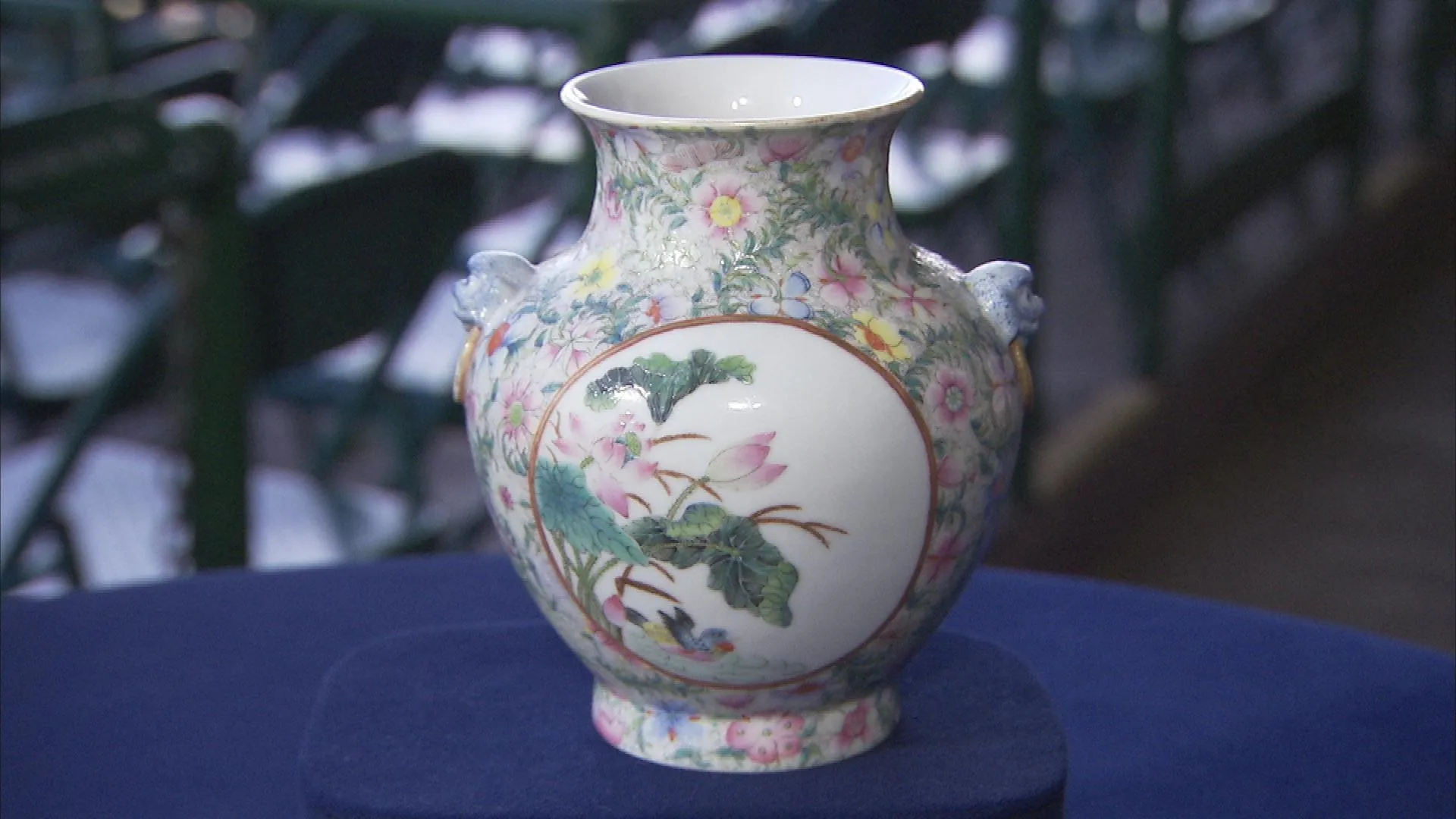
GUEST: Well, my husband and I were on vacation in London. We're art collectors. We happened to walk into an auction house. We saw this piece and realized that it was coming up for auction the next day. We came back, we bid on it, and we were lucky enough to get it.
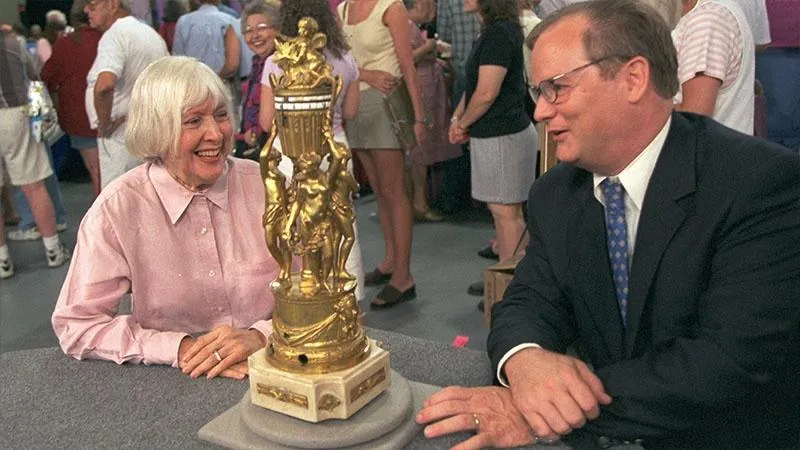
APPRAISER: You put it down in front of me, and I had a pretty good feeling almost right away that it was 18th century because very few of the later period ones which were made in the 1800s, ah… actually have holes drilled in the front for the winding. This one has that. This meant that it has a pendulum instead of a balance wheel, which is the earlier type. And so when you wound it, you didn't have to turn it around and - and disrupt the pendulum. The mechanism is down here, and I bet you know how it works.
GUEST: Well, I was fascinated because it works turning this way…
APPRAISER: Yes.
Guest: …rather than, you know, the usual clocks.
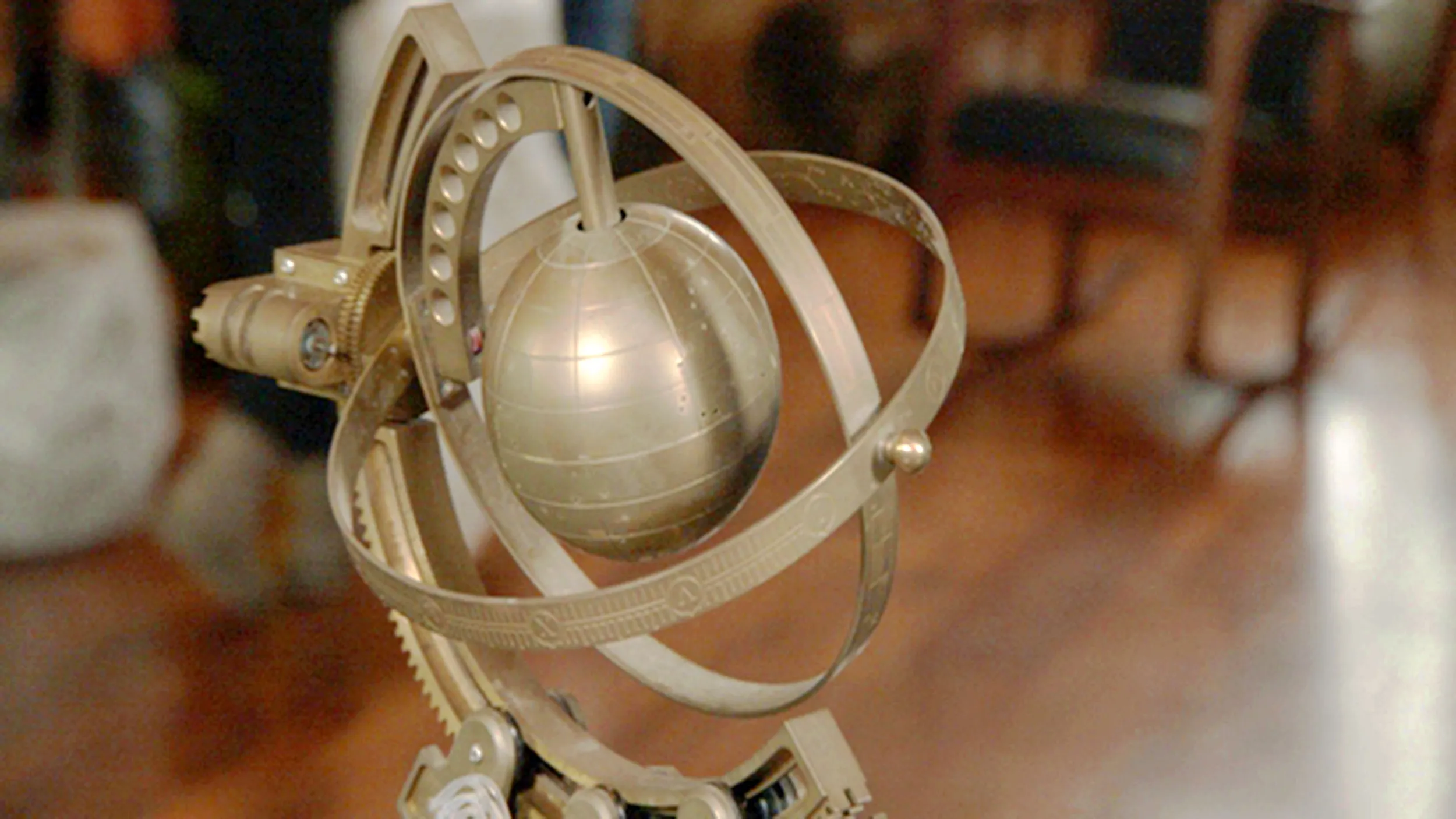
APPRAISER: Well, we call that an "orbit clock."
GUEST: "Orbit," okay. I didn't know that.
APPRAISER: An orbit clock has annular rings. The ring on the top represents the minutes, and below is the indication of the hours. In the 18th century, when they finished these clocks, they, ah, did them in ormolu, which was a heat process of gold and mercury as an amalgam, which was spread on. And you see that underneath, inside, it's plain brass. So that's proof that this was spread on with great care and great attention so as to not waste any of that amalgam, which was very valuable. Another thing remarkable about the early ones is they were made up of many intricately cast pieces. For example, this finial, if you'll call it that, I see… five different pieces that are screwed together and fit together rather like a jigsaw puzzle. You told me that there're candelabra.
GUEST: Yes, the candelabra are magnificent, but I just couldn't bring them all at once. The candelabra are taller, and they have these figures and it matches.
APPRAISER: It's difficult for me to evaluate all three of these pieces without seeing the candelabra, but I can tell you from the nature of this clock, that it was probably made as a three-piece set originally.
GUEST: Yes, I have it.
APPRAISER: However, many times, the candelabra are separated from the original clock, so if you have all three, that's a really… a great thing.
GUEST: Yes, I do.
APPRAISER: Now, just talking in terms of what the clock is worth without the candelabra, can you recall maybe what you paid for it?
GUEST: I had a figure of £6,000, but I don't remember. I don’t…
APPRAISER: Six thousand pounds?
GUEST: I think so.
APPRAISER: In the '70s, which is when I think you said you bought it...
GUEST: Yes, in the '70s. And I know…
APPRAISER: £6,000 would maybe have been $10,000 or so, roughly speaking. I feel that the clock alone is worth in the neighborhood of $25,000 to $30,000, if it was just the clock. I believe that if you had the ah… candelabra with it and they were authentic to the piece...
GUEST: They are.
APPRAISER: ...that would at least double the value. I think it would be fair to say that they would run over $60,000 if they're as in good condition as this is and as fine.
GUEST: Wonderful.
APPRAISER: Thank you very much for bringing it in. It's a lovely piece.
GUEST: Thank you.