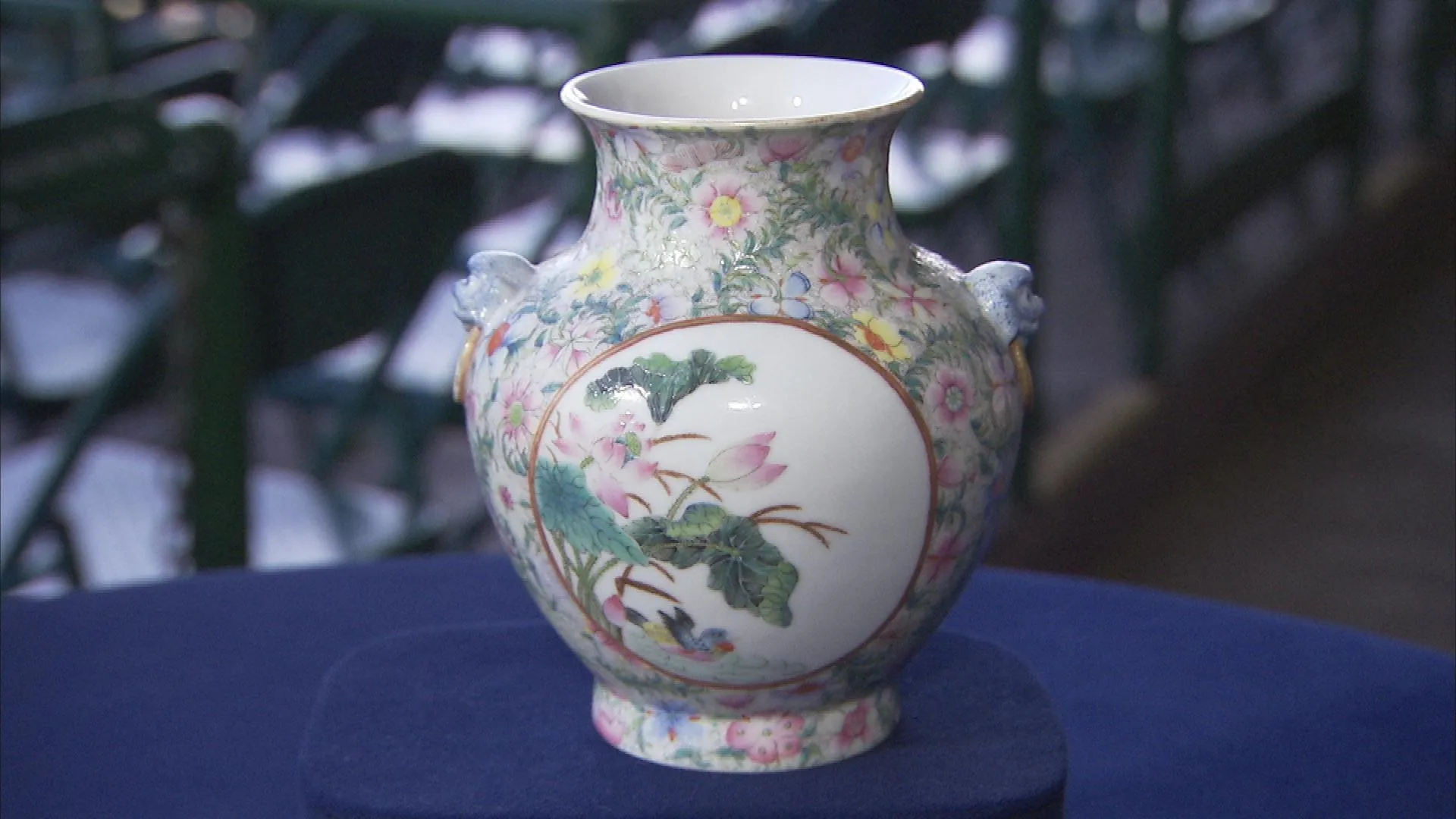
GUEST: These were given to my mother about, I would say, 30 years ago by an English antique dealer. My family has been in the antique trade for, well, four generations now. This one gentleman they had known for quite a long time, and he presented these to my mother just as a gift. As I remember through the years, she did not really know much about them.
APPRAISER: You, coming from a family of antique dealers, didn't know what they were?
GUEST: Yes.
APPRAISER: And it took a village here for us to figure out what they were.
GUEST: Oh.
APPRAISER: You were sent to the Asian table. They said, "No, these are not Asian. We are sending them to the pottery and porcelain table."
GUEST: Right.
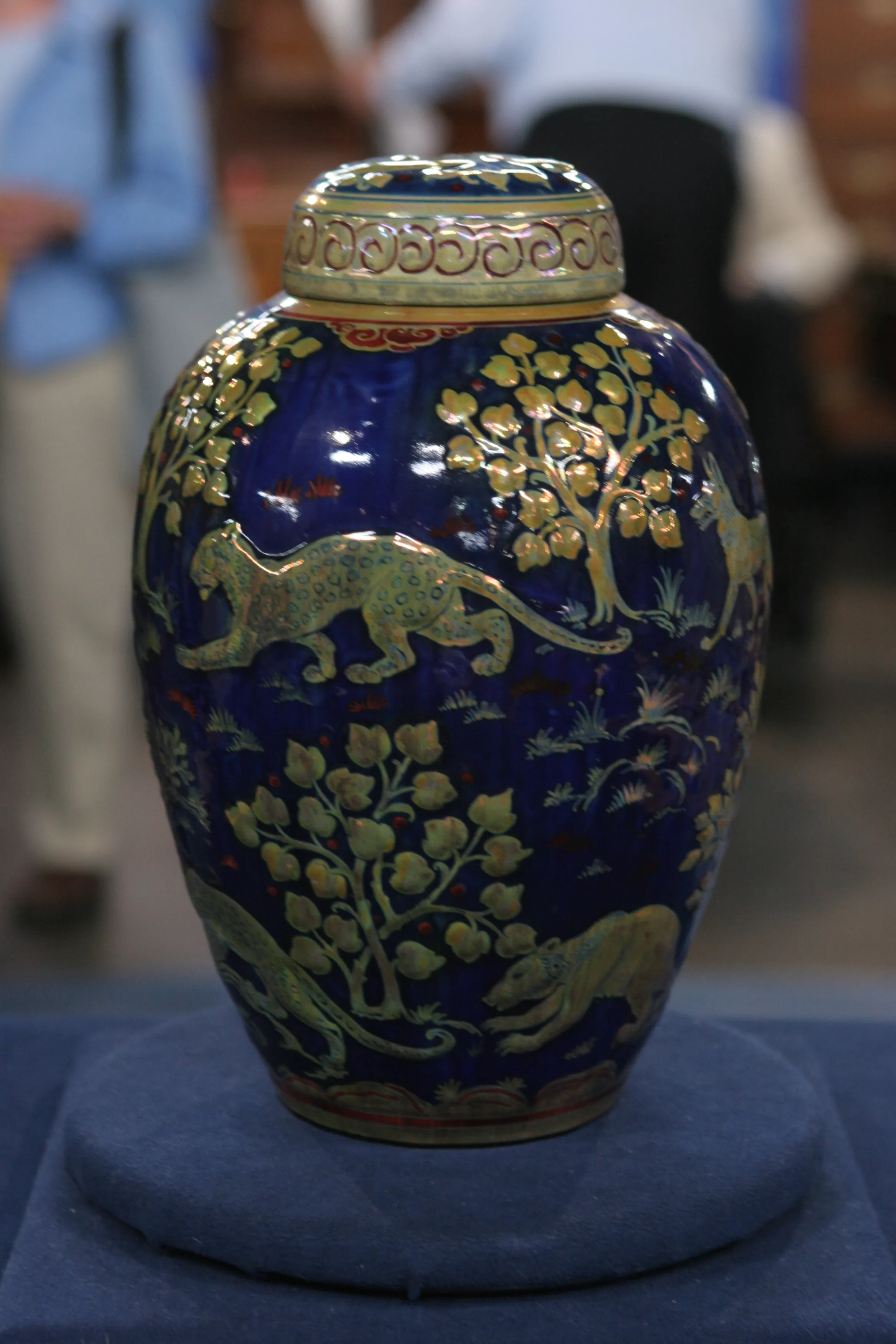
APPRAISER: We looked at them, saw the quality of them, and they were so terrific. Some of the decoration is a transfer, but the enameling is all done by hand.
GUEST: Right.
APPRAISER: It is done in an Asian style. It's done in a Kutani style, the red Kutani style. Whoever it was that made these perhaps saw the exhibitions in Paris or in London around 1868, 1869, which were the original Japanese exhibitions. Once the doors to Japan opened up for trade, many, many people get to see what was happening in Japan, and the Japonesque movement starts. I went to yet another table, and we could be told yes, it is aesthetic movement, probably very late 1860s through the 1870s.
GUEST: Right.
APPRAISER: And then another colleague came and said, "Where it says Bordeaux on the back," he says, "this is what it is." The Bordeaux is the town and the type of ware. These are made by Jules Vieillard, and Vieillard was in Bordeaux, and this type of low-fired earthenware, they coined that Bordeaux Faience-- low-fired, pale earthenware.
GUEST: Yes.
APPRAISER: With a glaze. So this mark here is the Vieillard Bordeaux mark. The cartouche in the center says, "JV," and probably something like "et fils"-- and son.
GUEST: Yes.
APPRAISER: Because his sons ended up with the business. But they made it look like an Asian cartouche.
GUEST: Yes, yes, they did. But not quite.
APPRAISER: But not quite. They went out of business in the 1890s, so the dating sounds right. But I'm just crazy for these. I think they are so fun and so beautifully done. We are thinking that auction-type prices, the plates would probably be about $500 apiece.
GUEST: Right.
APPRAISER: And the bowls, probably $750 to $1,000 apiece.
GUEST: Right. Thank you very much.
APPRAISER: My pleasure.