John George Brown "Making Houses of Sand" Oil, ca. 1880
GUEST: I don't really know anything about the artist. It was in my parents' home my entire lifetime.
APPRAISER: Right.
GUEST: And I know that my mom used to tell us that this picture was in her childhood home.
APPRAISER: Well, the artist is John George Brown...
GUEST: Mm-hmm.
APPRAISER: ...and he was born in Durham, England in 1831. He had artistic talent early on, but his parents decided he needed a trade, so they sent him to be a glass cutter in Edinburgh.
GUEST: Oh, wow.
APPRAISER: While he was there, he attended the, the Royal Scottish Academy...
GUEST: Okay.
APPRAISER: ...so that he could keep up with his interest in art. And by the age of 22, he decided to move to London and started painting portraits. But he was enamored with the idea of going to America. So in 1853, he emigrates and he settles in Brooklyn. And we can see his signature there with the initials "N.A.", which means that he was a member of the National Academy in New York. As an artist, he is probably one of the most prominent genre painters in America in the 19th century. He actually had the claim of fame to be at the important Tenth Street Studio, which was a major studio of artists that included Winslow Homer and, and Frederic Church and Albert Bierstadt.
GUEST: Okay.
APPRAISER: So he was among the best of the best.
GUEST: Okay, wow.
APPRAISER: He was best known for painting children, and he was very masterful at it. Most of his paintings tend to feature little boys, and they tend to feature street urchins, bootblacks, and newsboys on the streets of New York.
GUEST: Mm-hmm.
APPRAISER: Often they're immigrant children. They're wearing tattered clothes, and yet they have cheerful smiles.
GUEST: Mm-hmm.
APPRAISER: They often have a dog with them, so... (chuckling) ...it's, it's a very typical kind of thing. And he was very prolific as a painter. The subject here is really more unusual for him. It's a little girl.
GUEST: Mm-hmm.
APPRAISER: And although he did paint girls from time to time, he did so more readily in the 1860s. And this painting is probably done circa 1880, and it, of course, focuses on such a charming child, and he's really reflecting the innocence and playfulness of childhood here...
GUEST: Mm-hmm.
APPRAISER: ...which was a very popular topic in the Victorian era. The painting has a label in the back with the title, which is Making Houses of Sand. The composition is quite interesting, because J.G. Brown was just known for painting very realistic images of the children. And what makes this a little more interesting is that in the background, there are all sorts of figures, and they're a little bit more abstract. So I find that really creative in terms of his work and not something we normally see. The painting is oil on canvas, and it's in excellent condition. Because of the subject, I think that in a gallery, in New York in particular, the painting would sell for $150,000.
GUEST (laughing): Oh, my gosh! (laughing) Oh, my gosh. (voice breaking) I had no idea. I'm gonna start crying. I had no idea. Thank you. (laughing) I had no idea, oh, my gosh.
APPRAISER: It's-it's just stunning. And when I saw it, I thought, oh I was just-- it's breathtaking.
GUEST: It's really cute now, because I have one granddaughter.
APPRAISER: Oh!
GUEST: And we live up on the water in northern Michigan...
APPRAISER: Yeah.
GUEST: ...and she can be the little girl in the sand.
APPRAISER: Oh, yeah. Oh, wow.
GUEST (choked up): It's so... Wow. Thank you.
APPRAISER: Oh, you're welcome.
GUEST: Thank you.

$150,000 Retail
Featured In

episode
Castle Farms, Hour 1
Don't miss ROADSHOW's first visit to charming Charlevoix, Michigan! — Mon, March 30, 2026
Fine Art
appraisal
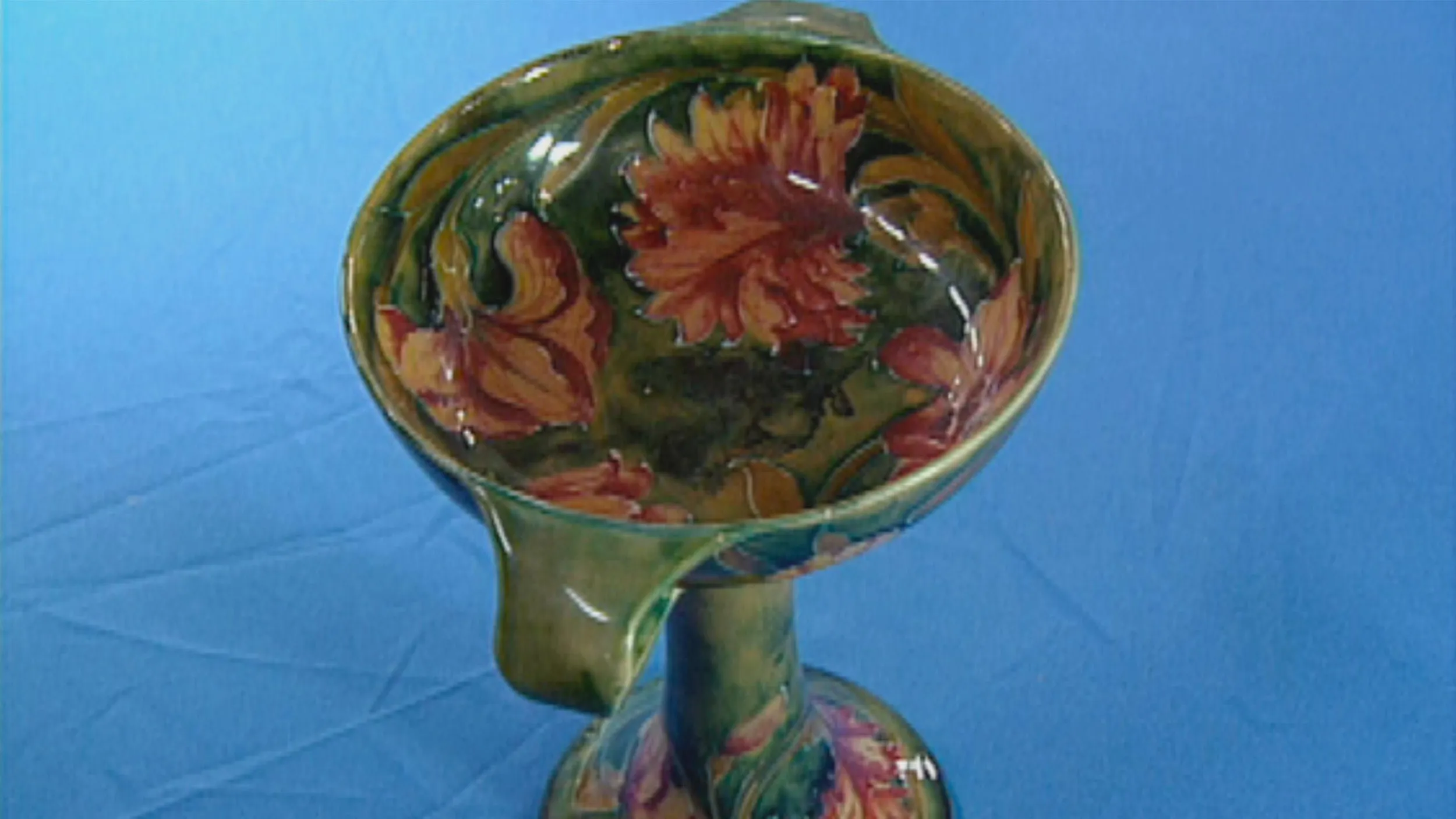
William Moorcroft Pottery, ca. 1910
appraisal
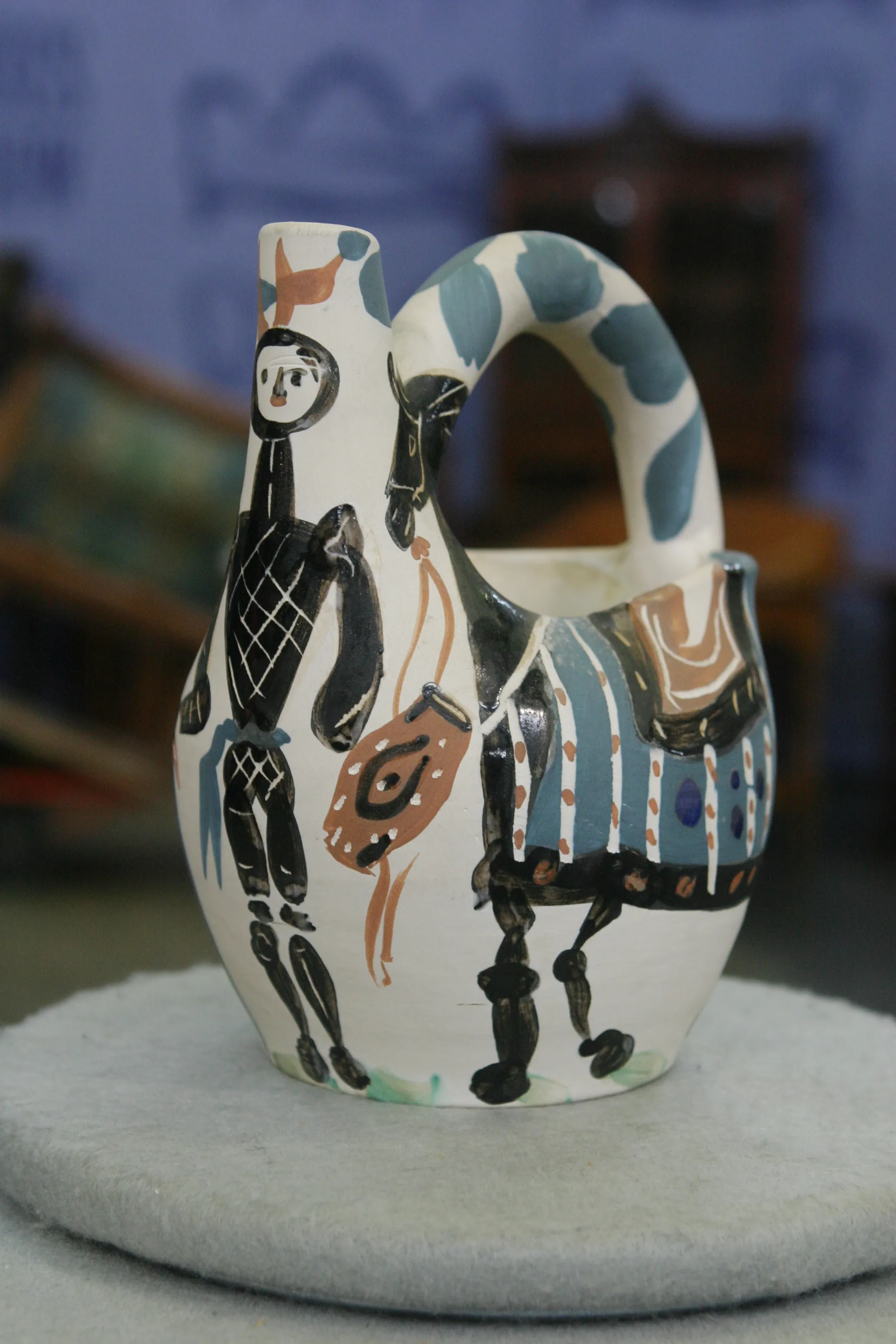
1952 Picasso Madoura Ceramic Jug

appraisal
Edgar Alwin Payne Painting, ca. 1925
appraisal
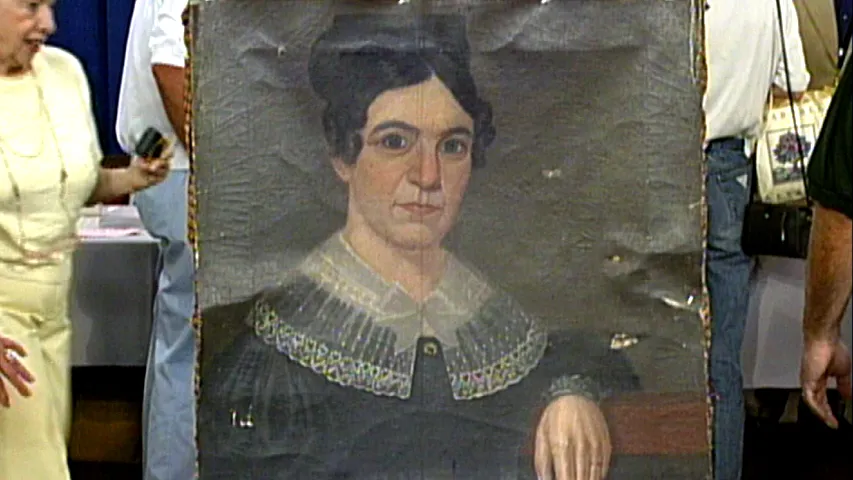
American School Portrait, ca. 1820
Understanding Our Appraisals
Executive producer Marsha Bemko shares her tips for getting the most out of ANTIQUES ROADSHOW.
Value can change: The value of an item is dependent upon many things, including the condition of the object itself, trends in the market for that kind of object, and the location where the item will be sold. These are just some of the reasons why the answer to the question "What's it worth?" is so often "It depends."
Note the date: Take note of the date the appraisal was recorded. This information appears in the upper left corner of the page, with the label "Appraised On." Values change over time according to market forces, so the current value of the item could be higher, lower, or the same as when our expert first appraised it.
Context is key: Listen carefully. Most of our experts will give appraisal values in context. For example, you'll often hear them say what an item is worth "at auction," or "retail," or "for insurance purposes" (replacement value). Retail prices are different from wholesale prices. Often an auctioneer will talk about what she knows best: the auction market. A shop owner will usually talk about what he knows best: the retail price he'd place on the object in his shop. And though there are no hard and fast rules, an object's auction price can often be half its retail value; yet for other objects, an auction price could be higher than retail. As a rule, however, retail and insurance/replacement values are about the same.
Verbal approximations: The values given by the experts on ANTIQUES ROADSHOW are considered "verbal approximations of value." Technically, an "appraisal" is a legal document, generally for insurance purposes, written by a qualified expert and paid for by the owner of the item. An appraisal usually involves an extensive amount of research to establish authenticity, provenance, composition, method of construction, and other important attributes of a particular object.
Opinion of value: As with all appraisals, the verbal approximations of value given at ROADSHOW events are our experts' opinions formed from their knowledge of antiques and collectibles, market trends, and other factors. Although our valuations are based on research and experience, opinions can, and sometimes do, vary among experts.
Appraiser affiliations: Finally, the affiliation of the appraiser may have changed since the appraisal was recorded. To see current contact information for an appraiser in the ROADSHOW Archive, click on the link below the appraiser's picture. Our Appraiser Index also contains a complete list of active ROADSHOW appraisers and their contact details and biographies.