John Bailey Dwarf Clock, ca. 1800
GUEST: I wanted a grandfather clock, and I bought it. It was online. It was damaged when I bought it. Water and insect damage. So, I had it restored. They added new feet, and the scroll on top was damaged, as well. So, the restorer resolved that.
APPRAISER: What did you pay for the clock originally?
GUEST: Well, it was listed for $500.
APPRAISER: Yeah.
GUEST: And with the damage, I offered them $300. And so, they took it.
APPRAISER: This is a Massachusetts dwarf clock made by John Bailey in Hanover, Massachusetts, which is on the South Shore of Massachusetts. Made circa 1800 to 1805. It's a scaled-down tall case clock, but it's a kidney-dial dwarf clock.
GUEST: Mm-hmm.
APPRAISER: Dwarf clocks are rare to begin with, but kidney-dial dwarf clocks-- and it refers to the shape of this dial-- are even rarer. I only know of a handful of them in existence. John Bailey was a really important clock maker. He was a Quaker, he was a preacher, he was an ingenious mechanic. He took out a patent in 1792 on a steam jack, which was for roasting meat.
GUEST: Mm.
APPRAISER: And he was really responsible for clock making in the South Shore, Massachusetts, area, which was a thriving region. He had a sizable shop, and he apprenticed important makers who in turn would train other clock makers, and really competed with the Boston clock makers.
GUEST: Hm.
APPRAISER: And I think one of the reasons why this clock was designed is because it was a lot less expensive than a competing tall clock that was made in Boston. They found an invoice for one of these that was sold for about $40 originally.
GUEST: Hm.
APPRAISER: A full-scale tall case clock would've sold for about $60 to $90 at the time. The dial is fantastic. It has John Bailey-type hands that you expect to see. The signature is perfect. This dial is like the day it was made. The swag, this is all raised gild beading. Perfect condition. The dial is a ten. It just doesn't get any better than that. Equally as great is this case.
GUEST: Mm-hmm.
APPRAISER: It's a pine case, grain painted to look like a more expensive exotic wood. And they did a fantastic job, and the details are phenomenal. I'm going to pull this bonnet off. And you can see that everything is original. It has its original brass movement that runs for eight days on a wind. This is what we call a fall-off strike. So it strikes once every time the hour passes. Has its original seat board here, and that's really important. You can see that there's a restoration here on the back right foot.
GUEST: Mm-hmm.
APPRAISER: This side's original. So in the clock world, normal restorations are to the feet and to the fretwork. They're the two most fragile points, so you expect to see some restorations. But in general, this clock is just in great condition. How much did you pay for the restoration?
GUEST: So, around $4,000 to $4,500.
APPRAISER: It sounds like a lot, but in this case, it was worth it. This is probably the second-greatest clock I've ever seen at the ANTIQUES ROADSHOW that I've been doing for 20 years. I would put a retail value on this clock of $75,000.
GUEST: (makes hitting sound effect) That's amazing. Very amazing. Well, geez. Thanks for all the information. (chuckling) Yeah.
APPRAISER (chuckling): And I'd like to point out that this is the one that got away.
GUEST: (chuckles) Oh, it got away?
APPRAISER: I saw this on an online auction years ago. I don't remember how I missed it, but, uh, I would've been pretty good competition for you at the time. (both laughing)

$75,000 Retail
Featured In

episode
Castle Farms, Hour 2
See Michigan marvels unveiled during ROADSHOW’s stop at Castle Farms in Charlevoix! — Mon, April 6, 2026
19th Century
appraisal
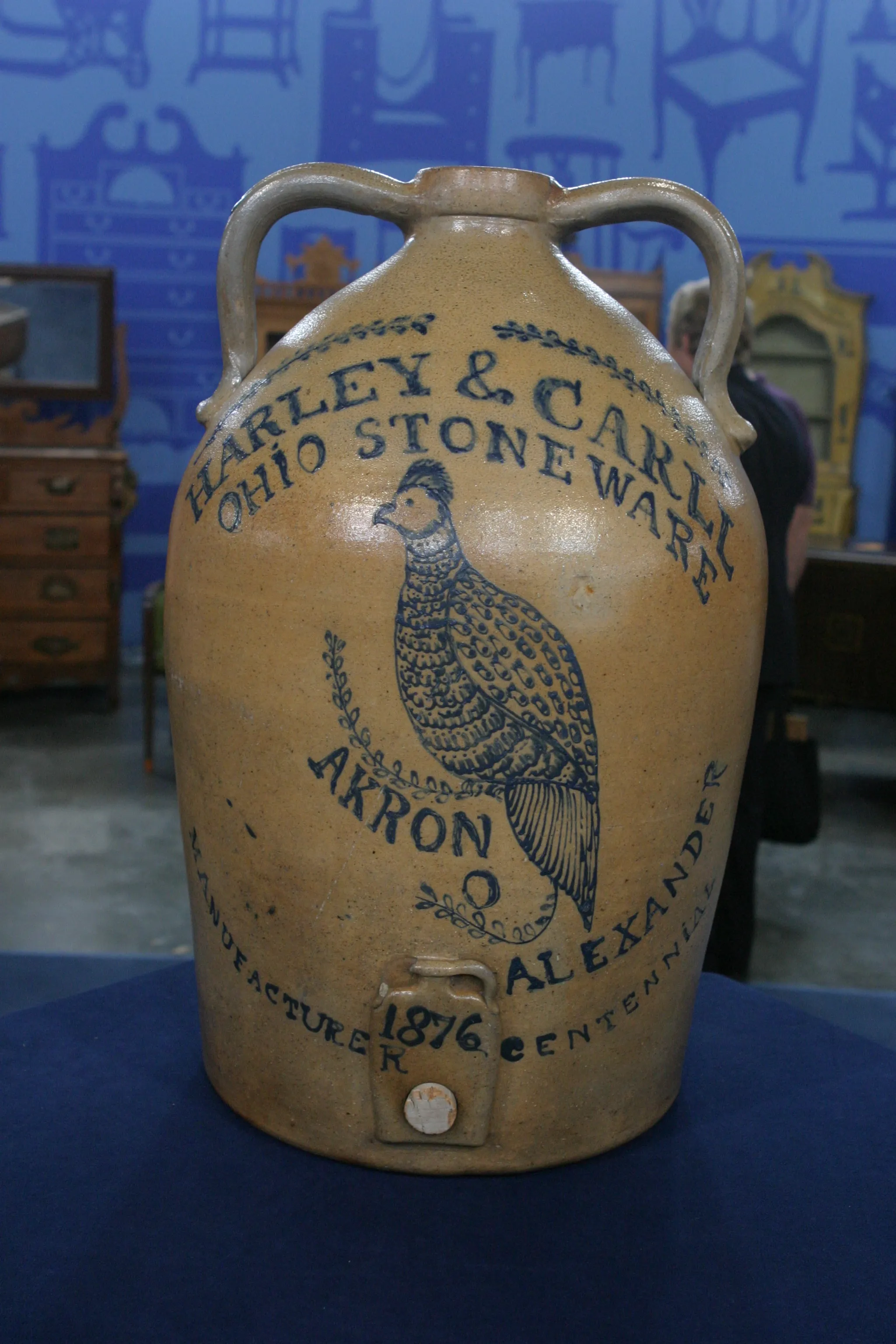
1876 John Alexander Stoneware Cooler
appraisal
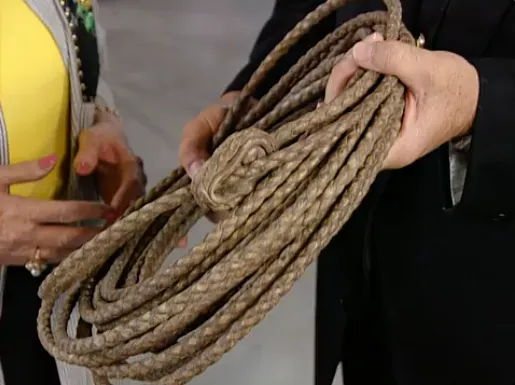
Braided Rawhide Lariat, ca. 1850
appraisal
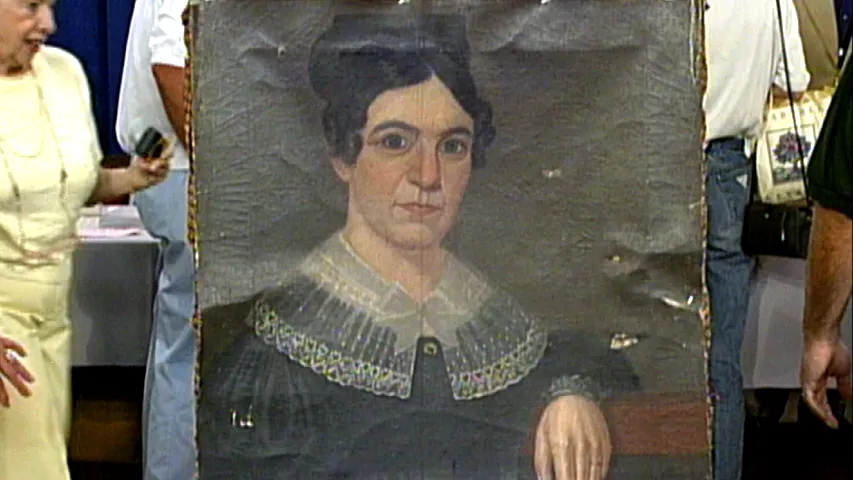
American School Portrait, ca. 1820
appraisal
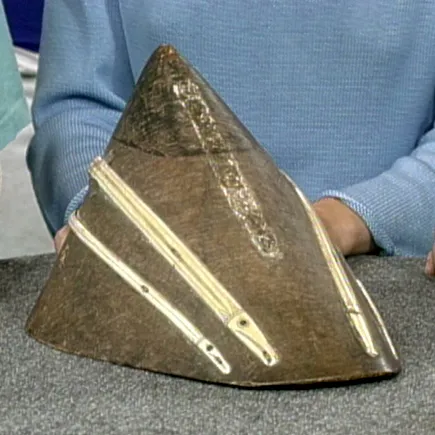
Eskimo Hunting Helmet, ca. 1820
Understanding Our Appraisals
Executive producer Marsha Bemko shares her tips for getting the most out of ANTIQUES ROADSHOW.
Value can change: The value of an item is dependent upon many things, including the condition of the object itself, trends in the market for that kind of object, and the location where the item will be sold. These are just some of the reasons why the answer to the question "What's it worth?" is so often "It depends."
Note the date: Take note of the date the appraisal was recorded. This information appears in the upper left corner of the page, with the label "Appraised On." Values change over time according to market forces, so the current value of the item could be higher, lower, or the same as when our expert first appraised it.
Context is key: Listen carefully. Most of our experts will give appraisal values in context. For example, you'll often hear them say what an item is worth "at auction," or "retail," or "for insurance purposes" (replacement value). Retail prices are different from wholesale prices. Often an auctioneer will talk about what she knows best: the auction market. A shop owner will usually talk about what he knows best: the retail price he'd place on the object in his shop. And though there are no hard and fast rules, an object's auction price can often be half its retail value; yet for other objects, an auction price could be higher than retail. As a rule, however, retail and insurance/replacement values are about the same.
Verbal approximations: The values given by the experts on ANTIQUES ROADSHOW are considered "verbal approximations of value." Technically, an "appraisal" is a legal document, generally for insurance purposes, written by a qualified expert and paid for by the owner of the item. An appraisal usually involves an extensive amount of research to establish authenticity, provenance, composition, method of construction, and other important attributes of a particular object.
Opinion of value: As with all appraisals, the verbal approximations of value given at ROADSHOW events are our experts' opinions formed from their knowledge of antiques and collectibles, market trends, and other factors. Although our valuations are based on research and experience, opinions can, and sometimes do, vary among experts.
Appraiser affiliations: Finally, the affiliation of the appraiser may have changed since the appraisal was recorded. To see current contact information for an appraiser in the ROADSHOW Archive, click on the link below the appraiser's picture. Our Appraiser Index also contains a complete list of active ROADSHOW appraisers and their contact details and biographies.


