J.E. Caldwell & Co. Bracket Clock, ca. 1880
GUEST: It's my, uh, wife's grandparents' clock purchased by her grandfather. My, uh, wife remembers it always being in the house, uh, growing up. I know it's J.E. Caldwell. I don't know if he was the manufacturer or if he was more of a, uh, importer and reseller.
APPRAISER: Yeah. Well, he was actually a retailer. And his retail shop in Philadelphia became the biggest in the city. They became very well-known for selling clocks of the highest grade. So the case form is called a bracket clock. It's a form that was made for... a couple of centuries. This is the Victorian example, meaning that it was probably made about 1880 or so. It represents the best of its category in terms of having a very solidly built, robust mechanism with fusee compensation. It has a, a... a number of features which are displayed here on the dial. Here you have a shut-off for the strike portion of the clock. You can turn this clock silent so it just ticks, or you can turn it on and it'll do the quarter-hour striking as well as the hour striking. And then the center dial here, actually is for rating the clock. So, uh, temperature is a variant that.. affects clocks greatly. Warm rooms, they slow down. Cold rooms, they speed up. Instead of having to turn this clock around and actually adjust the pendulum, you can do some fine adjusting from the front of the dial.
APPRAISER: The case is mahogany, the finest wood. And you can see that it is wonderfully adorned with, uh, all kinds of brass appointments, full Corinthian capitals on the... fluted columns, chased feet with roses, applied swags, other flowers and florals. And here you have this classical theme just below the dome. Five finials with floral tops. It's just absolutely over-the-top in terms of quality. And the tune selection helps us date the clock. One of the tunes is “Westminster,” and of course, Big Ben was installed in 1859. (clock tone playing) And that sound of the quarter hour striking became synonymous with clocks of this period. And this clock has that, so we know that it had to have been made after that. So it was top of the market. Just an absolute fabulous piece.
GUEST: That's great.
APPRAISER: In its current state, in a retail setting, this probably has a value of somewhere to $3,000 to $4,000.
GUEST: Hm.
APPRAISER: Once it's serviced, this clock should easily make somewhere in the $6,500, $7,000 price range.
GUEST: Oh, that's great.

$3,000 - $4,000 Retail
Featured In

episode
Coastal Maine Botanical Gardens, Hour 1
Premiered Mon, Feb 16, 2026 — See a bounty of Boothbay booty from ROADSHOW’s first-ever visit to the state of Maine.
Wood
appraisal
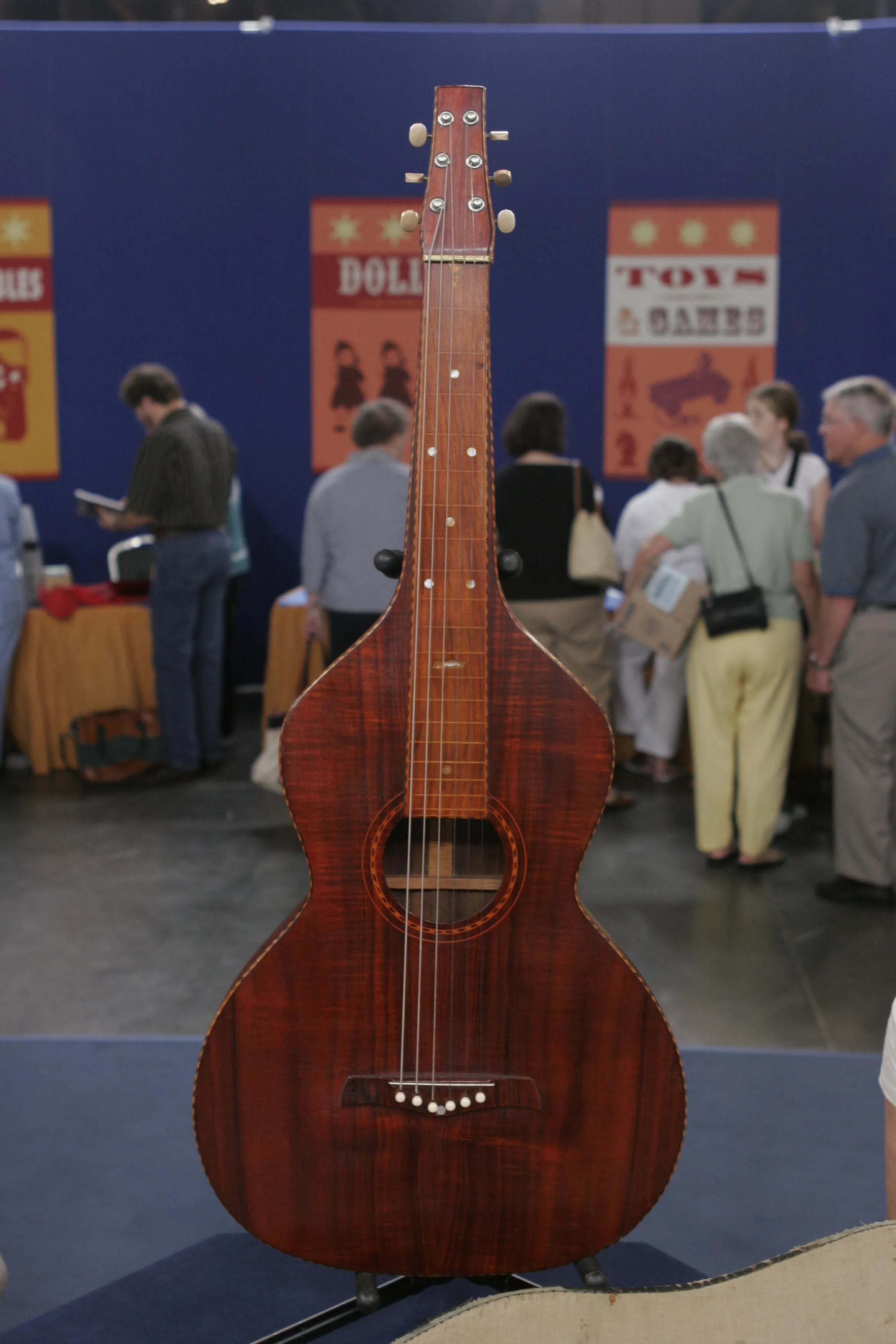
Weissenborn Style 4 Guitar, ca. 1925
appraisal
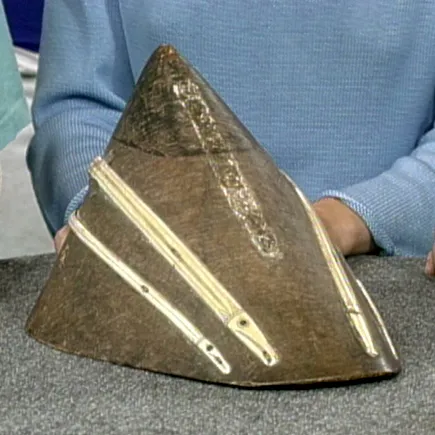
Eskimo Hunting Helmet, ca. 1820
appraisal
appraisal
Duncan Phyfe Sewing Table, ca. 1805
Understanding Our Appraisals
Executive producer Marsha Bemko shares her tips for getting the most out of ANTIQUES ROADSHOW.
Value can change: The value of an item is dependent upon many things, including the condition of the object itself, trends in the market for that kind of object, and the location where the item will be sold. These are just some of the reasons why the answer to the question "What's it worth?" is so often "It depends."
Note the date: Take note of the date the appraisal was recorded. This information appears in the upper left corner of the page, with the label "Appraised On." Values change over time according to market forces, so the current value of the item could be higher, lower, or the same as when our expert first appraised it.
Context is key: Listen carefully. Most of our experts will give appraisal values in context. For example, you'll often hear them say what an item is worth "at auction," or "retail," or "for insurance purposes" (replacement value). Retail prices are different from wholesale prices. Often an auctioneer will talk about what she knows best: the auction market. A shop owner will usually talk about what he knows best: the retail price he'd place on the object in his shop. And though there are no hard and fast rules, an object's auction price can often be half its retail value; yet for other objects, an auction price could be higher than retail. As a rule, however, retail and insurance/replacement values are about the same.
Verbal approximations: The values given by the experts on ANTIQUES ROADSHOW are considered "verbal approximations of value." Technically, an "appraisal" is a legal document, generally for insurance purposes, written by a qualified expert and paid for by the owner of the item. An appraisal usually involves an extensive amount of research to establish authenticity, provenance, composition, method of construction, and other important attributes of a particular object.
Opinion of value: As with all appraisals, the verbal approximations of value given at ROADSHOW events are our experts' opinions formed from their knowledge of antiques and collectibles, market trends, and other factors. Although our valuations are based on research and experience, opinions can, and sometimes do, vary among experts.
Appraiser affiliations: Finally, the affiliation of the appraiser may have changed since the appraisal was recorded. To see current contact information for an appraiser in the ROADSHOW Archive, click on the link below the appraiser's picture. Our Appraiser Index also contains a complete list of active ROADSHOW appraisers and their contact details and biographies.


