Japanese Bronze Lantern, ca. 1909
GUEST: My grandfather had been traveling around the globe around 1909. We think this is one of the pieces that he brought back, possibly from Japan. He was at the base of the home that my father grew up in, at the staircase. When my grandfather passed away, he came into our home in New Jersey. I inherited him in 2012. I've always been told that he was some type of an idol, a Japanese idol.
APPRAISER: It is Japanese.
GUEST: Okay.
APPRAISER: It's enormously heavy.
GUEST: Yes, yes, we weighed this section. It was 80 pounds.
APPRAISER: Just that section?
GUEST: Yes.
APPRAISER: Right, and it's because this is made of bronze. It's a lantern. What you see on the surface is not the way the metal appears when it comes out of the foundry. Also what they do in that process, when it comes out of the foundry is they are finishing the details. Then you need to do something to give a uniform appearance that takes away that, those kind of inconsistencies. And that is called a patina, and one of the things that you can see on the shoulder here is the first coat was a deep, reddish brick color.
GUEST: Yes.
APPRAISER: How much light do you think is going to come through this?
GUEST: With a candle? Not a lot.
APPRAISER: Not a lot. (chuckles) It's supposed to be more atmospheric. It's supposed to be something that is going to conjure up some sort of an emotional response. What kind of emotional response does he conjure up?
GUEST: Well, he scared us as children.
APPRAISER: (chuckling) That's exactly right. This is the stuff of nightmares.
GUEST: Yes. Yes.
APPRAISER: And that's exactly who that is. This is an oni. And an oni is a mythical figure that we can best describe as a devil who has superhuman powers. The eyes have a kind of off-white appearance that is been achieved with some sort of enamel that would have shown and been penetrating in low light. This dates to about 1909.
GUEST: Okay.
APPRAISER: Which is at the end of the Meiji period, which ended in 1912. During the Meiji period, Japan was rapidly industrializing. One of the ways they did that was by creating works of art that would be astounding. That would be sold to people who had influence, which would be seen by the other people of influence that would then have an effect on commerce with Japan. For insurance purposes, a reasonable figure would be in the $60,000 range.
GUEST: Oh, that's very nice. How nice. One of seven, I have to-- sure I'll have a discussion with them. (chuckles)

$60,000 Insurance
Featured In

episode
Coastal Maine Botanical Gardens, Hour 3
ANTIQUES ROADSHOW wraps up our visit to Boothbay! — Mon, March 23, 2026
Cultural Art & Objects

appraisal
1876 John Alexander Stoneware Cooler

appraisal
Cinnabar Lacquer Box, Ca. 1765

appraisal
Braided Rawhide Lariat, ca. 1850
appraisal
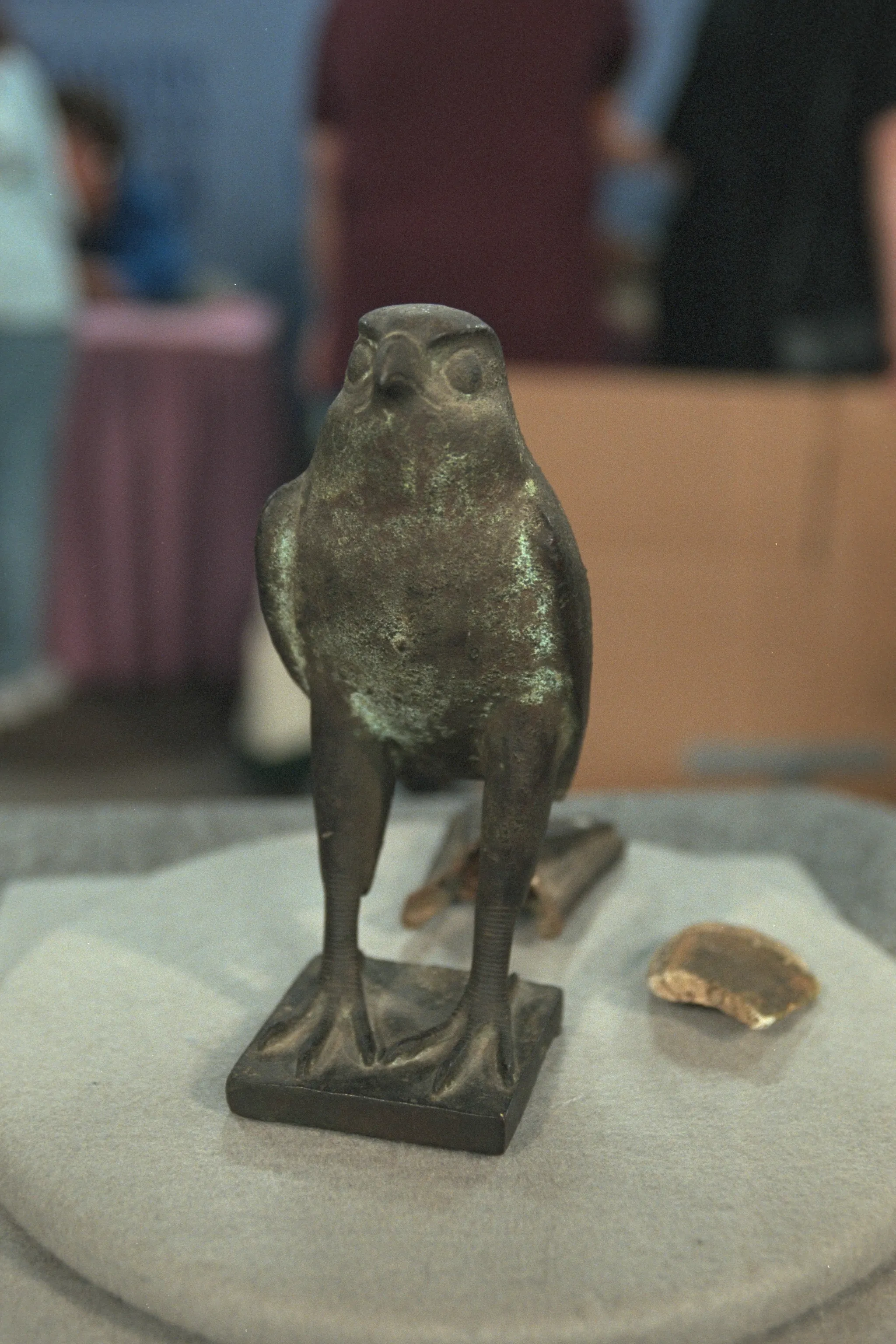
Late Period Egyptian Bronze Falcon
Understanding Our Appraisals
Executive producer Marsha Bemko shares her tips for getting the most out of ANTIQUES ROADSHOW.
Value can change: The value of an item is dependent upon many things, including the condition of the object itself, trends in the market for that kind of object, and the location where the item will be sold. These are just some of the reasons why the answer to the question "What's it worth?" is so often "It depends."
Note the date: Take note of the date the appraisal was recorded. This information appears in the upper left corner of the page, with the label "Appraised On." Values change over time according to market forces, so the current value of the item could be higher, lower, or the same as when our expert first appraised it.
Context is key: Listen carefully. Most of our experts will give appraisal values in context. For example, you'll often hear them say what an item is worth "at auction," or "retail," or "for insurance purposes" (replacement value). Retail prices are different from wholesale prices. Often an auctioneer will talk about what she knows best: the auction market. A shop owner will usually talk about what he knows best: the retail price he'd place on the object in his shop. And though there are no hard and fast rules, an object's auction price can often be half its retail value; yet for other objects, an auction price could be higher than retail. As a rule, however, retail and insurance/replacement values are about the same.
Verbal approximations: The values given by the experts on ANTIQUES ROADSHOW are considered "verbal approximations of value." Technically, an "appraisal" is a legal document, generally for insurance purposes, written by a qualified expert and paid for by the owner of the item. An appraisal usually involves an extensive amount of research to establish authenticity, provenance, composition, method of construction, and other important attributes of a particular object.
Opinion of value: As with all appraisals, the verbal approximations of value given at ROADSHOW events are our experts' opinions formed from their knowledge of antiques and collectibles, market trends, and other factors. Although our valuations are based on research and experience, opinions can, and sometimes do, vary among experts.
Appraiser affiliations: Finally, the affiliation of the appraiser may have changed since the appraisal was recorded. To see current contact information for an appraiser in the ROADSHOW Archive, click on the link below the appraiser's picture. Our Appraiser Index also contains a complete list of active ROADSHOW appraisers and their contact details and biographies.


