Jackie Robinson Archive, ca. 1938
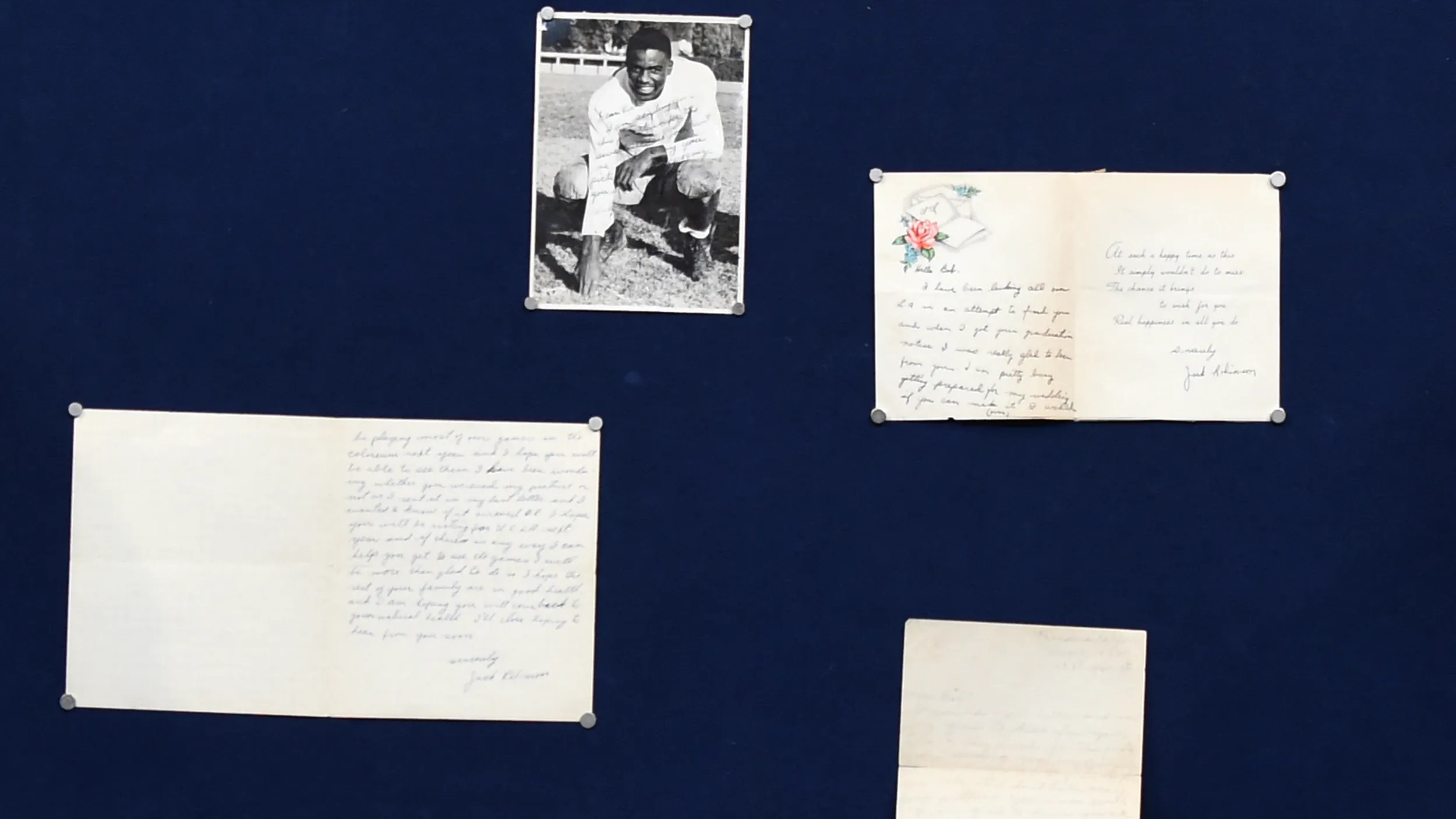
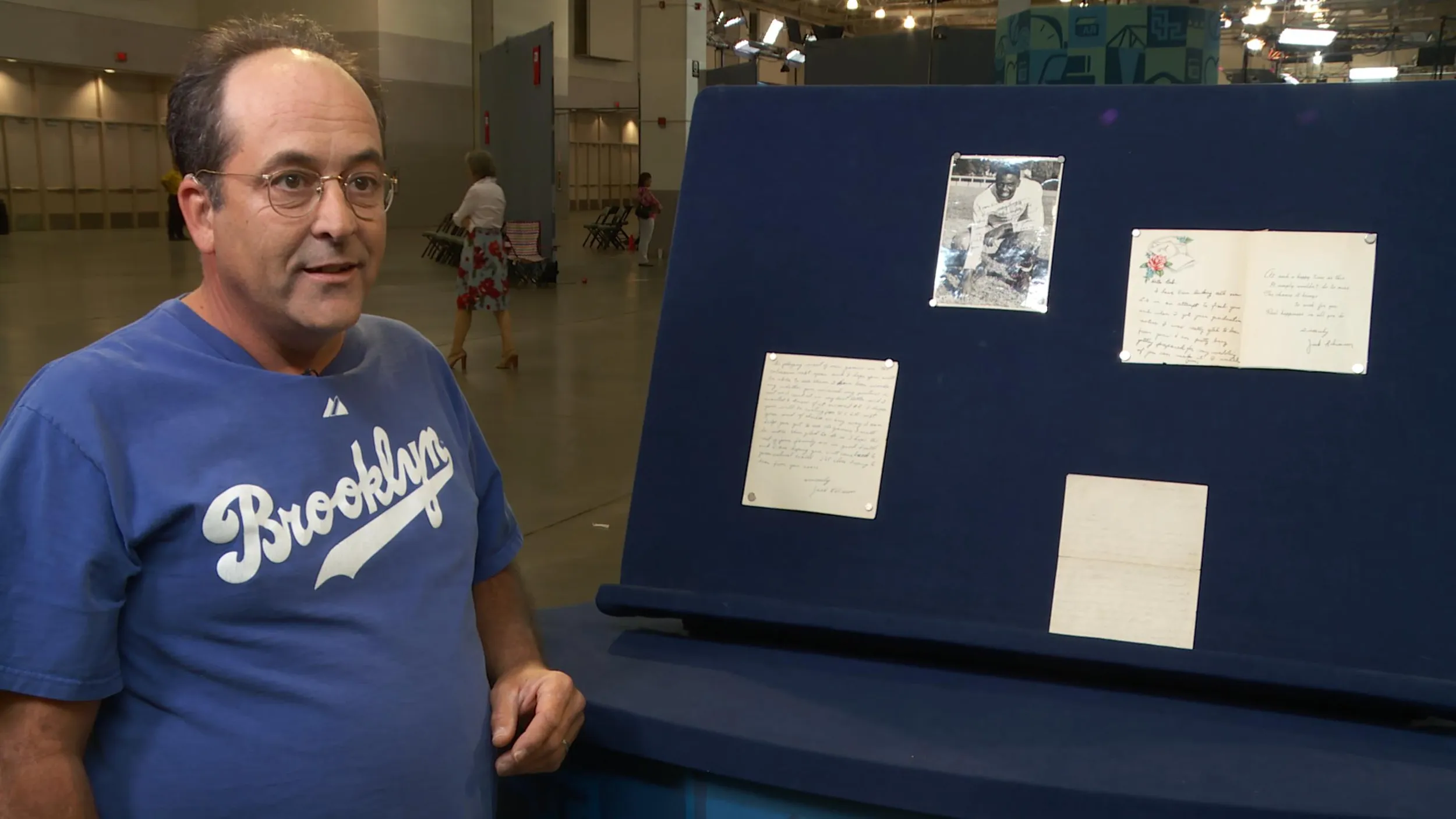
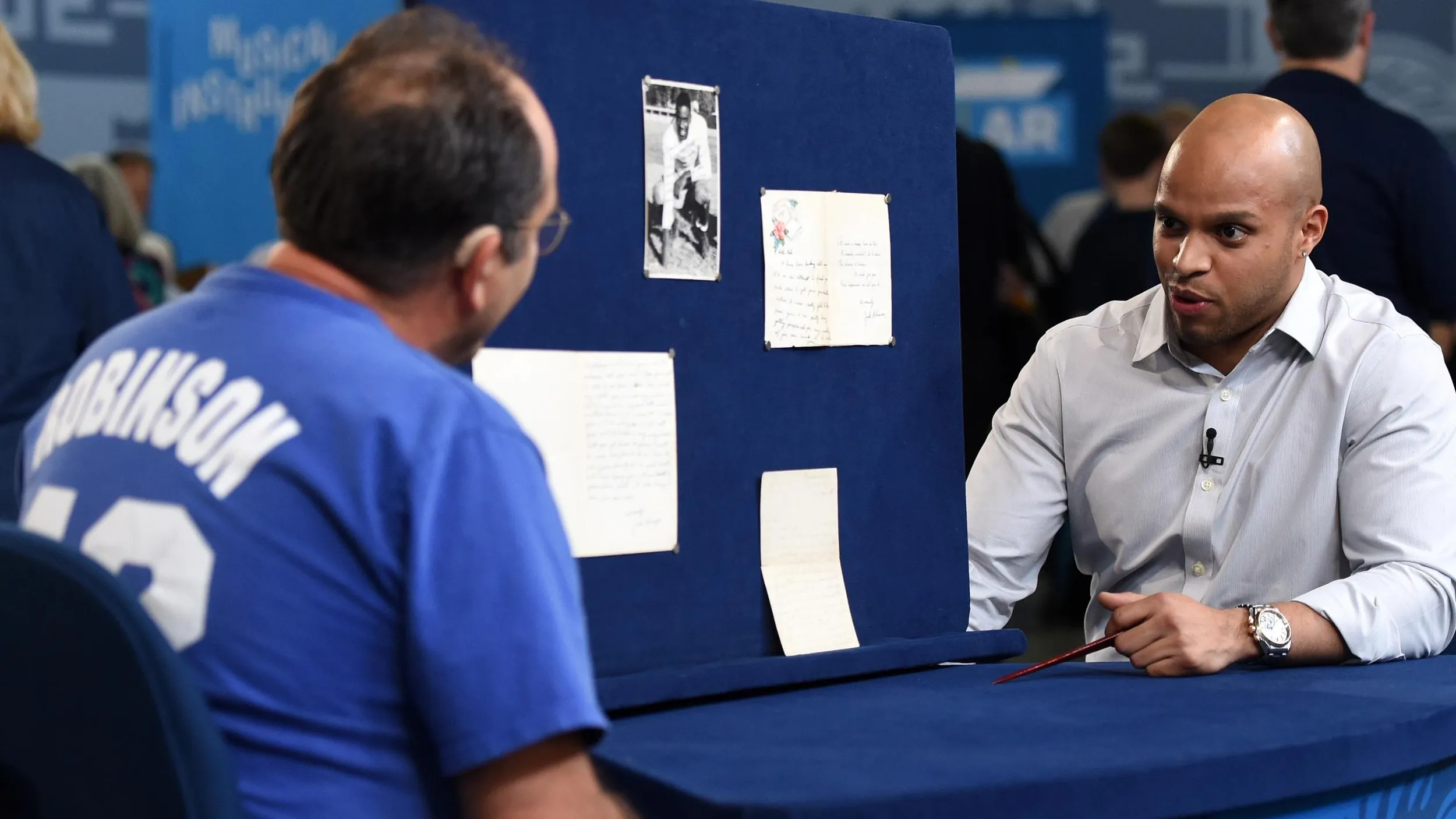
GUEST: When my dad was in high school in Los Angeles, he was friends with Jackie Robinson. And I have a group of letters and an image of Jackie playing UCLA football. It's kind of personal, but it's really great historically, too.
APPRAISER: Absolutely. We've got letters from the late 1930s. Jackie Robinson broke the color barrier in 1947. We're talking about letters that predates that significantly. He was for all intents and purposes a kid-- he was a teenager.
GUEST: Right.
APPRAISER: Who eventually went on to spark one of the most significant events in sports history. I personally have not encountered a Jackie Robinson handwritten letter collection or item from this young. Tell us about the content.
GUEST: Well, the content in these letters are personal, more like a friend writing to a friend instead of, like, a pen pal, which I found really interesting. He talks about how the UCLA curriculum is more difficult than his junior college, his JC stuff, and he was having trouble adjusting.
APPRAISER: Right, he talks about how he chose UCLA over Oregon. He talks about seeking your dad out while he was in L.A., because he really wanted to see him, his buddy. He invites your father to his wedding. He says, "Hey, I'm glad you found a church-- I'm looking for one, too." These are personal to Jackie Robinson. Nothing to do with baseball, nothing to do with sports. This comes from a time where his scholastic achievement was more important to him than, than the things we know he's famous for.
GUEST: Right.
APPRAISER: And to me, that's why this is significant. Here we see a 1938 letter, and the back he signs, "Jackie Robinson." A 19-year-old Jackie Robinson signature. I've never seen one that young.
GUEST: Wow.
APPRAISER: It's truly amazing. Have you had this appraised?
GUEST: I haven't had it appraised. It's actually... I knew about it a little bit before my dad passed away, but then I inherited his scrapbook. And this is actually a graduation card I didn't even know I had, because it was separate in the album from all the Jackie stuff.
APPRAISER: Sure.
GUEST: And I was just looking, and I was like, "Holy smokes, here's another one."
APPRAISER: Well, what I can tell you is this-- at auction, we can see this fetching anywhere between $15,000 and $20,000.
GUEST (laughing): Whoa! Really?
APPRAISER: And we're talking about the collection. I think it would... don't separate these items.
GUEST: Oh, no, no, no, right? Holy... that's... that's pretty cool. I mean, my dad would be really proud right now, because, you know, he considered him a pretty tight friend. There you go, Dad. (chuckles)
$15,000 - $20,000 Auction
Photos
Featured In
episode
Tucson, Hour 2 (2016)
A Jackie Robinson archive, a GMT Master Rolex, and diamond and onyx jewelry.
20th Century
appraisal
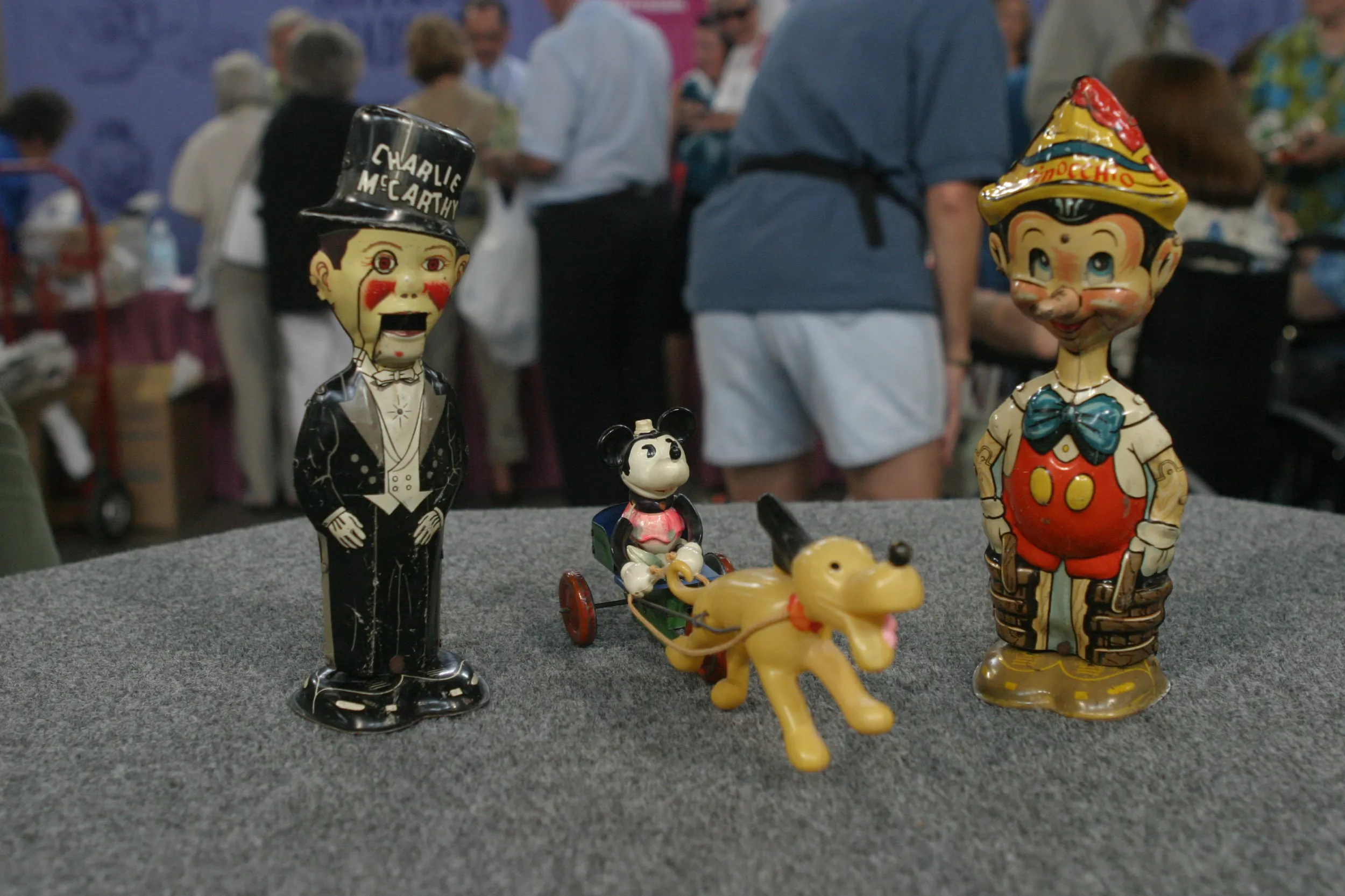
Comic Wind-up Toys, ca. 1930
appraisal
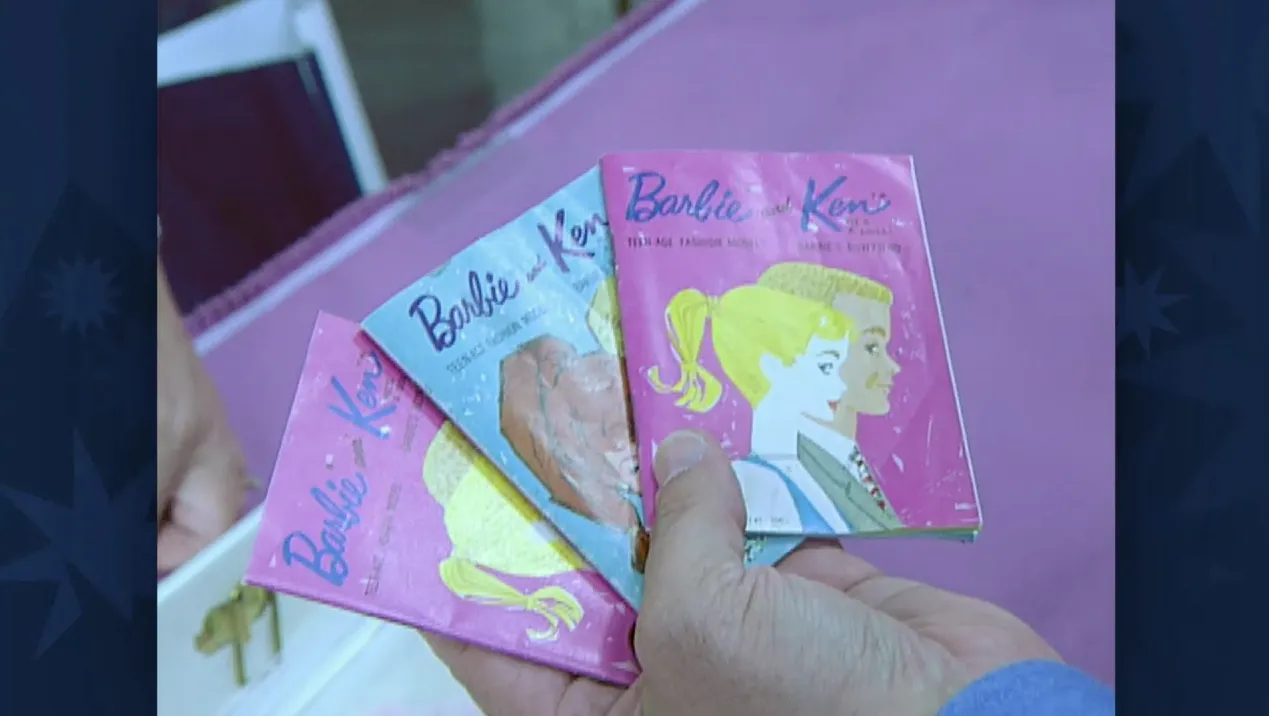
Barbie Accessories & Case, ca. 1960
appraisal
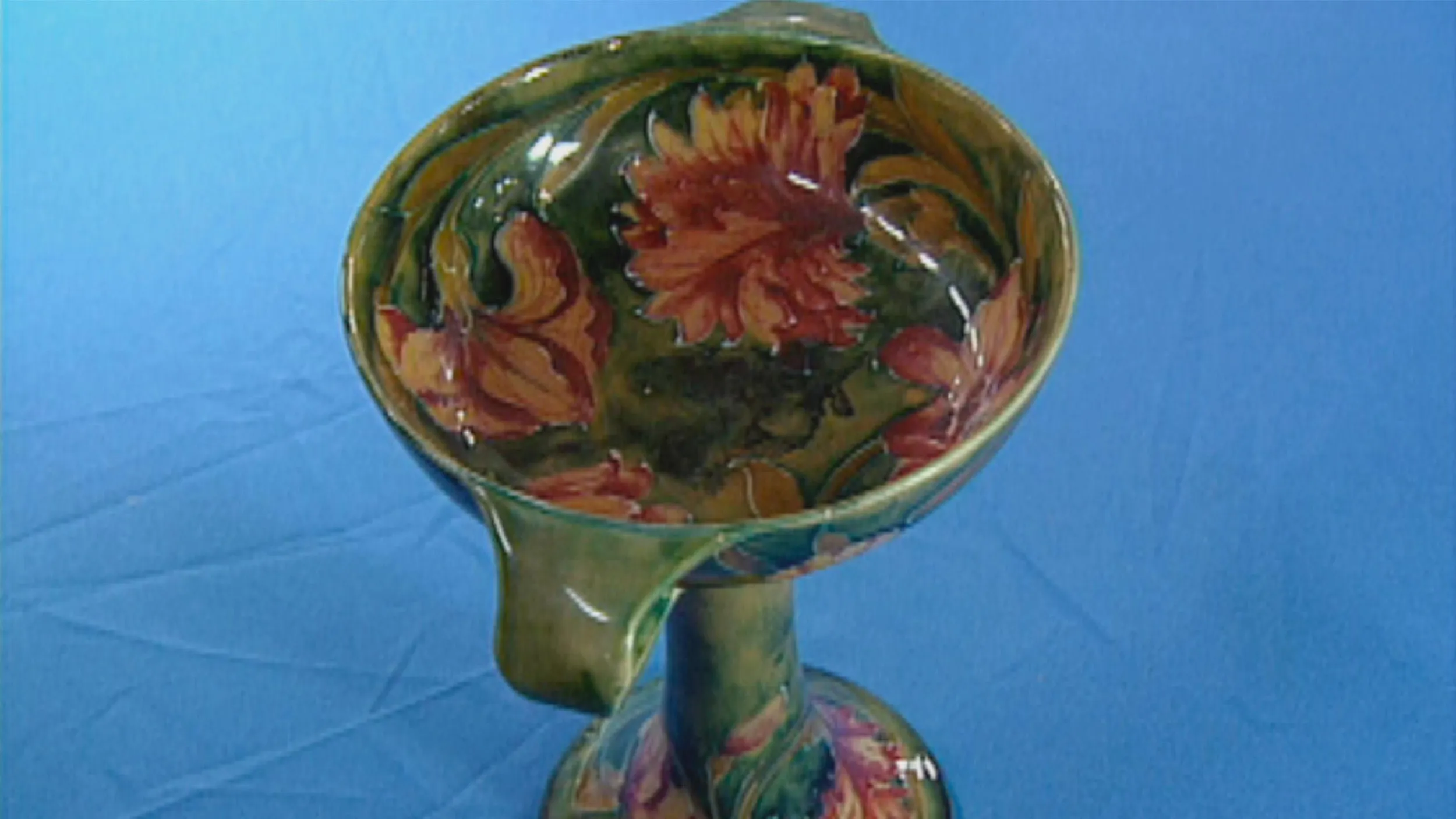
William Moorcroft Pottery, ca. 1910
appraisal
Understanding Our Appraisals
Executive producer Marsha Bemko shares her tips for getting the most out of ANTIQUES ROADSHOW.
Value can change: The value of an item is dependent upon many things, including the condition of the object itself, trends in the market for that kind of object, and the location where the item will be sold. These are just some of the reasons why the answer to the question "What's it worth?" is so often "It depends."
Note the date: Take note of the date the appraisal was recorded. This information appears in the upper left corner of the page, with the label "Appraised On." Values change over time according to market forces, so the current value of the item could be higher, lower, or the same as when our expert first appraised it.
Context is key: Listen carefully. Most of our experts will give appraisal values in context. For example, you'll often hear them say what an item is worth "at auction," or "retail," or "for insurance purposes" (replacement value). Retail prices are different from wholesale prices. Often an auctioneer will talk about what she knows best: the auction market. A shop owner will usually talk about what he knows best: the retail price he'd place on the object in his shop. And though there are no hard and fast rules, an object's auction price can often be half its retail value; yet for other objects, an auction price could be higher than retail. As a rule, however, retail and insurance/replacement values are about the same.
Verbal approximations: The values given by the experts on ANTIQUES ROADSHOW are considered "verbal approximations of value." Technically, an "appraisal" is a legal document, generally for insurance purposes, written by a qualified expert and paid for by the owner of the item. An appraisal usually involves an extensive amount of research to establish authenticity, provenance, composition, method of construction, and other important attributes of a particular object.
Opinion of value: As with all appraisals, the verbal approximations of value given at ROADSHOW events are our experts' opinions formed from their knowledge of antiques and collectibles, market trends, and other factors. Although our valuations are based on research and experience, opinions can, and sometimes do, vary among experts.
Appraiser affiliations: Finally, the affiliation of the appraiser may have changed since the appraisal was recorded. To see current contact information for an appraiser in the ROADSHOW Archive, click on the link below the appraiser's picture. Our Appraiser Index also contains a complete list of active ROADSHOW appraisers and their contact details and biographies.


