Italian Micromosaic, ca. 1870
GUEST: I got it from my father-in-law, who got it from his best friend that got it in Rome. He was there for about a year making a movie in the '60s. He was a screenwriter. And so he brought this home. And then I saw it at his house one day. I'm, like, "Oh, my gosh, it's the most beautiful thing I've ever seen." And so one day, my husband came home with it and said, "My dad said give you this," and so I was, like, "Oh!" (laughs)
APPRAISER: So this is a Grand Tour souvenir from Rome in Italy, dating between 1860 and 1880. And it's known as a micromosaic. The art of micromosaic was very popular in the 14th century...
GUEST: Mmm.
APPRAISER: ...in modern-day Istanbul.
GUEST: Oh!
APPRAISER: They really developed the technique. The center panel is comprised of small glass tesserae, tens of thousands of them, in colored glass.
GUEST: (whispers): Wow!
APPRAISER: Those are set within a piece of black slate. And then that green bit, that is a piece of stone known as malachite. So this is the scene of the Roman Forum...
GUEST: Mmm.
APPRAISER: ...which was the center of daily life in Rome at the period. And these sort of archaeological ruins were among the most prized sites for visitors to see...
GUEST: Mm-hmm.
APPRAISER: ...particularly in the 18th and 19th centuries, when many aristocrats and young scholars were on what was called the Grand Tour through Europe.
GUEST: Mm-hmm.
APPRAISER: Specifically here in the Forum, we have a number of, of sites. You have the Temple of Saturn in the center. The pillars onthe left depict the remnants of the Temple of Vespasian and Titus. It's about ten by four inches, which, for a micromosaic, is a fairly large size.
GUEST: Mm-hmm.
APPRAISER: Many of these in the period were sold with frames.
GUEST: Oh!
APPRAISER: And I suspect originally this may have had a gilt wood frame.
GUEST: Oh! Oh, that would be pretty.
APPRAISER: There were a number of workshops...
GUEST: Mm-hmm.
APPRAISER: ...that produced pieces like this. One of the most notable is the Vatican workshop.
GUEST: Oh!
APPRAISER: In looking at the quality of the tesserae pieces here...
GUEST: Mm-hmm.
APPRAISER: ...the colors of the glass, the intricacy of the panel...
GUEST: Oh, I can't believe it's that...
.APPRAISER: ..it's quite possible that this was done by the Vatican workshops.
GUEST: Oh!
APPRAISER: We would need to do some more research...
GUEST: Yeah.
APPRAISER: ...to confirm that.
GUEST: Okay!
APPRAISER: Were this to come up in a well-advertised auction, I would expect it to bring between $7,000 and $10,000.
GUEST: Nice! Nice! Yeah, I love it. (laughs)

$7,000 - $10,000 Auction
Featured In

episode
Springs Preserve, Hour 2
Head to desert oasis Springs Preserve for treasures that are sure to heat up the market.
Micromosaic

appraisal
Cartier Art Deco Minaudière, ca. 1925
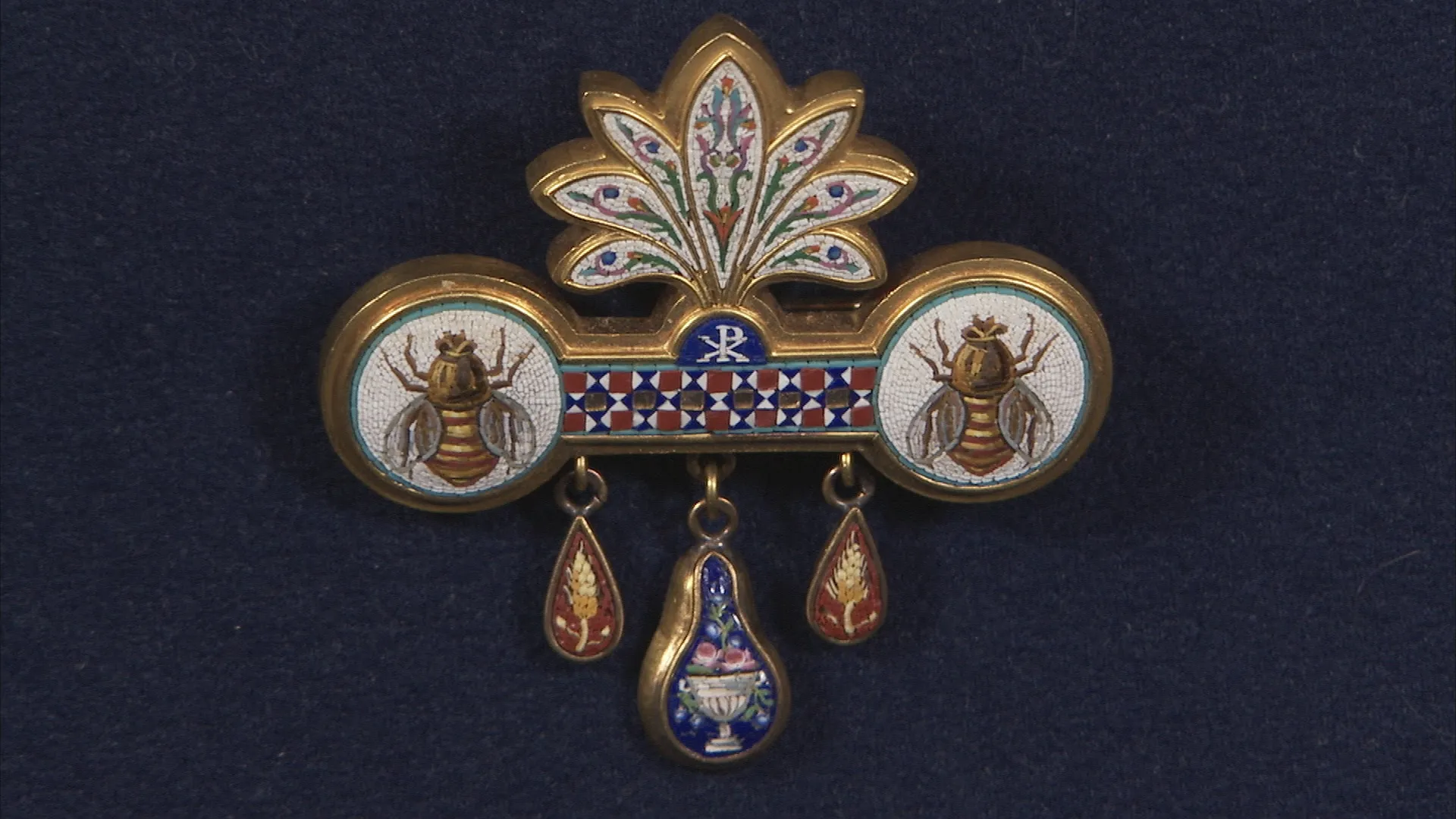
appraisal
Italian Micromosaic Brooch, ca. 1870
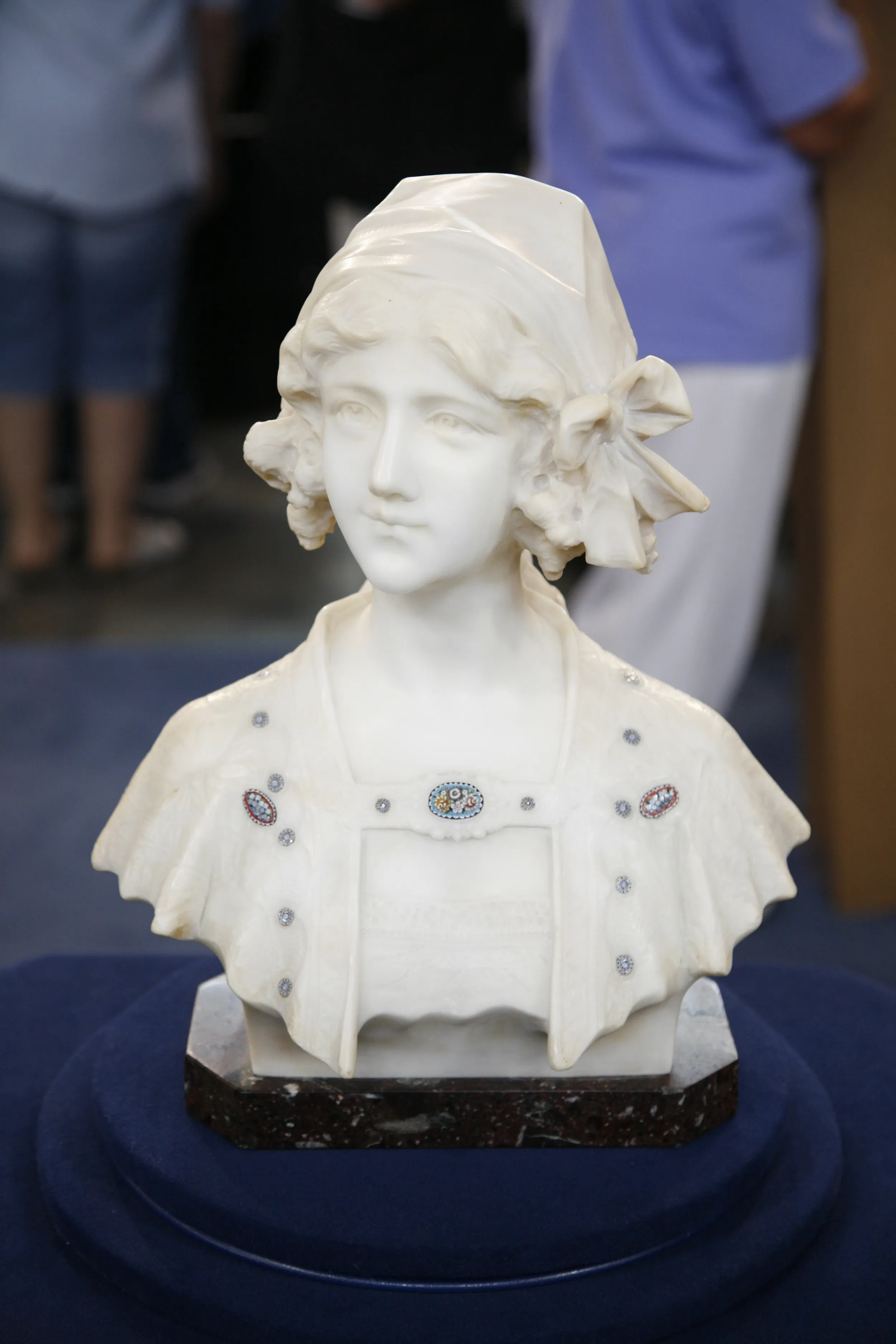
appraisal
Italian Alabaster & Micromosaic Bust, ca. 1895
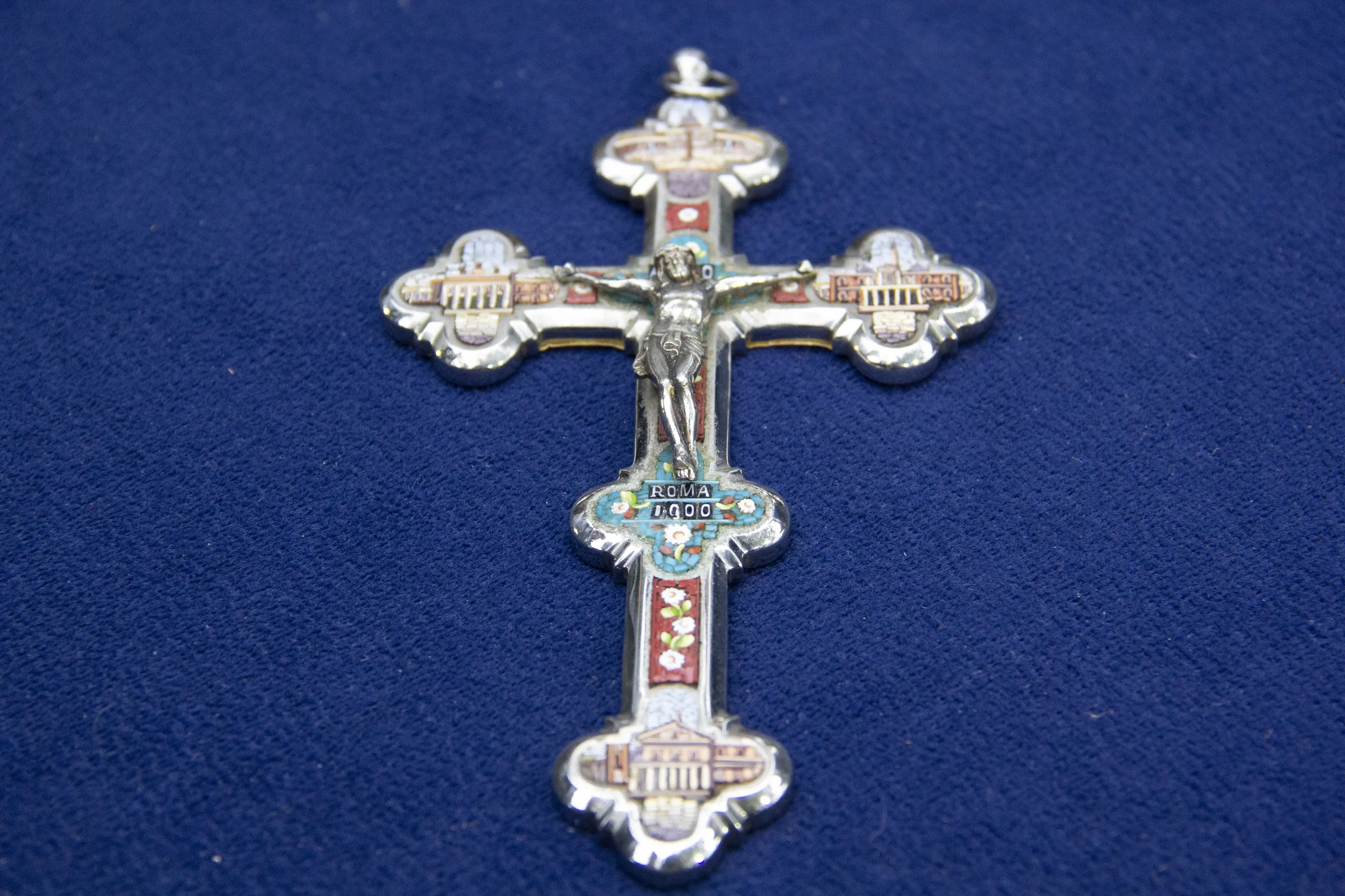
appraisal
Micromosaic Cross Blessed by Two Popes
Understanding Our Appraisals
Executive producer Marsha Bemko shares her tips for getting the most out of ANTIQUES ROADSHOW.
Value can change: The value of an item is dependent upon many things, including the condition of the object itself, trends in the market for that kind of object, and the location where the item will be sold. These are just some of the reasons why the answer to the question "What's it worth?" is so often "It depends."
Note the date: Take note of the date the appraisal was recorded. This information appears in the upper left corner of the page, with the label "Appraised On." Values change over time according to market forces, so the current value of the item could be higher, lower, or the same as when our expert first appraised it.
Context is key: Listen carefully. Most of our experts will give appraisal values in context. For example, you'll often hear them say what an item is worth "at auction," or "retail," or "for insurance purposes" (replacement value). Retail prices are different from wholesale prices. Often an auctioneer will talk about what she knows best: the auction market. A shop owner will usually talk about what he knows best: the retail price he'd place on the object in his shop. And though there are no hard and fast rules, an object's auction price can often be half its retail value; yet for other objects, an auction price could be higher than retail. As a rule, however, retail and insurance/replacement values are about the same.
Verbal approximations: The values given by the experts on ANTIQUES ROADSHOW are considered "verbal approximations of value." Technically, an "appraisal" is a legal document, generally for insurance purposes, written by a qualified expert and paid for by the owner of the item. An appraisal usually involves an extensive amount of research to establish authenticity, provenance, composition, method of construction, and other important attributes of a particular object.
Opinion of value: As with all appraisals, the verbal approximations of value given at ROADSHOW events are our experts' opinions formed from their knowledge of antiques and collectibles, market trends, and other factors. Although our valuations are based on research and experience, opinions can, and sometimes do, vary among experts.
Appraiser affiliations: Finally, the affiliation of the appraiser may have changed since the appraisal was recorded. To see current contact information for an appraiser in the ROADSHOW Archive, click on the link below the appraiser's picture. Our Appraiser Index also contains a complete list of active ROADSHOW appraisers and their contact details and biographies.


