Gold Necklace & Brooches, ca. 1865
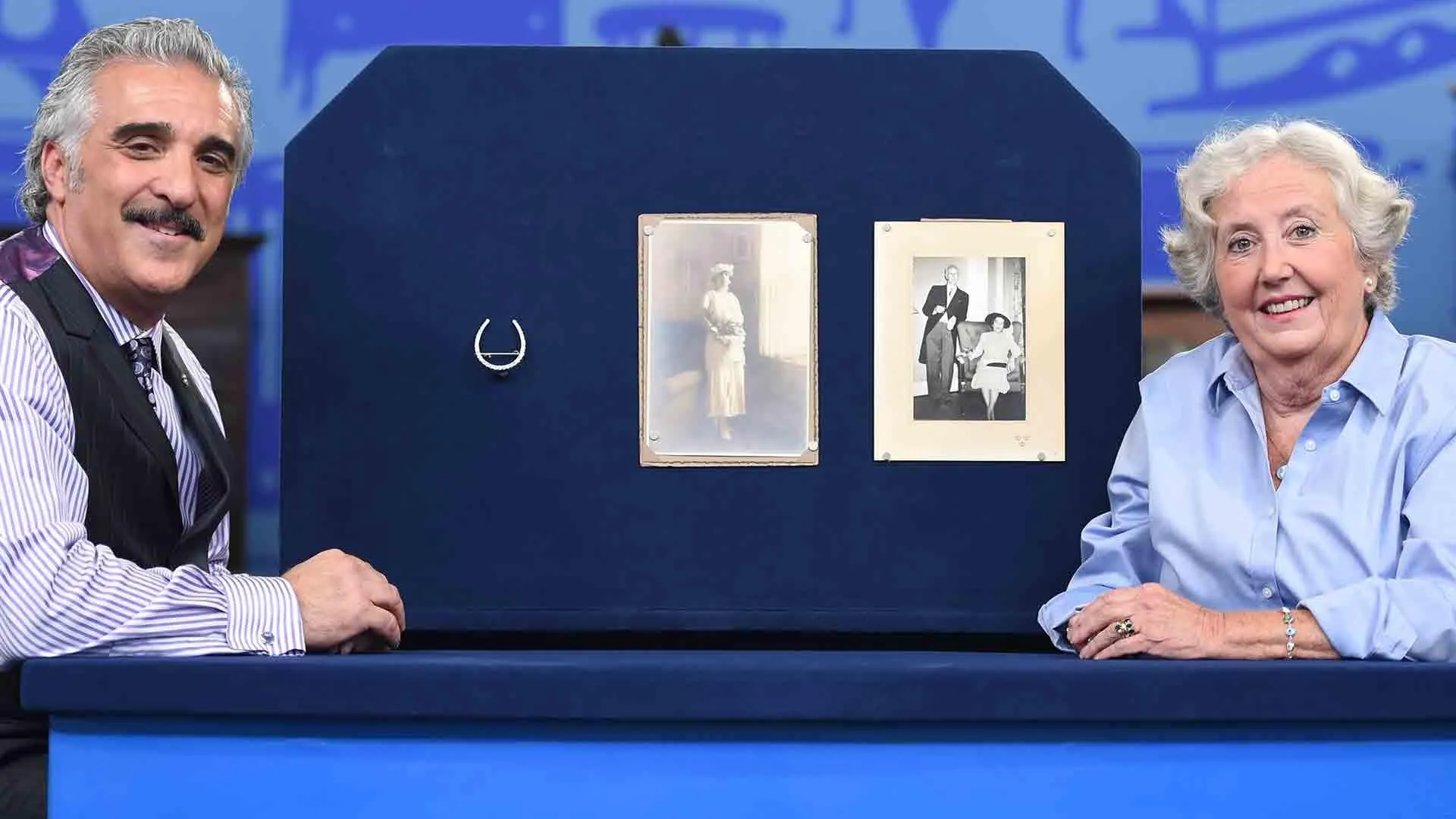
GUEST: This is a piece that I got from my grandmother. As far as I know it came from my great-grandmother. Something my grandmother always did was she would take us into the dining room on our birthdays, and she would show us four or five pieces of jewelry, and she would say to us, "Pick whichever one you want." So from the time I was 14 till I was about 22, I received a different piece of jewelry at every birthday. One of the brooches has an inscription on the back. It's in memoriam to a young girl. I don't wear the three pieces together, but my grandmother always did. She told me that the turquoise is Persian turquoise.
APPRAISER: It's nice to see them together because it helps me place them in time. There's a date inscription on the brooch. The memoriam is from 1867. In 1861, at the presidential inauguration, Mary Todd Lincoln wore a necklace of similar form, made with pearls, retailed by Tiffany & Co. We've tested this, and it's 18-karat gold, probably Italian. I would date it from around 1861 to 1865. It's a fringe necklace, it's a really classical style. In the 1860s, there was a revival of the Greek design. The two brooches are American brooches, and they're made in 14-karat gold. They have a value in the auction world of around $400 to $600 apiece. The necklace is another matter entirely. An auction estimate for this piece of jewelry is in the range of $5,000 to $7,000. (chuckles)
GUEST: (chuckling): I have to hold myself up.

$6,500 - $8,500 Auction
$5,800 - $8,200 Auction
Photos

Featured In
episode
Charleston, WV, Hour 3 (2015)
Mark L. Walberg and appraiser Rafael Eledge look at Civil War cigarette booklets.
episode
Special: The Civil War Years
Learn about historical items from on and off the battlefield during the Civil War.
19th Century

appraisal
1876 John Alexander Stoneware Cooler

appraisal
Braided Rawhide Lariat, ca. 1850
appraisal
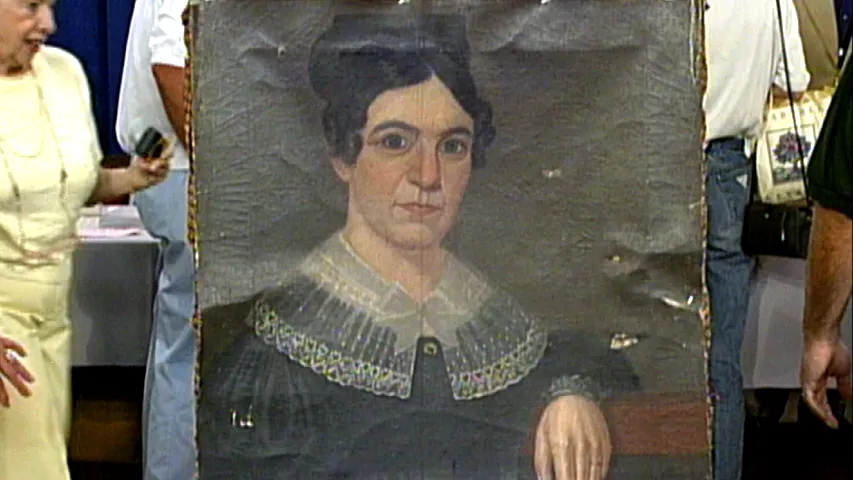
American School Portrait, ca. 1820

appraisal
Eskimo Hunting Helmet, ca. 1820
Understanding Our Appraisals
Executive producer Marsha Bemko shares her tips for getting the most out of ANTIQUES ROADSHOW.
Value can change: The value of an item is dependent upon many things, including the condition of the object itself, trends in the market for that kind of object, and the location where the item will be sold. These are just some of the reasons why the answer to the question "What's it worth?" is so often "It depends."
Note the date: Take note of the date the appraisal was recorded. This information appears in the upper left corner of the page, with the label "Appraised On." Values change over time according to market forces, so the current value of the item could be higher, lower, or the same as when our expert first appraised it.
Context is key: Listen carefully. Most of our experts will give appraisal values in context. For example, you'll often hear them say what an item is worth "at auction," or "retail," or "for insurance purposes" (replacement value). Retail prices are different from wholesale prices. Often an auctioneer will talk about what she knows best: the auction market. A shop owner will usually talk about what he knows best: the retail price he'd place on the object in his shop. And though there are no hard and fast rules, an object's auction price can often be half its retail value; yet for other objects, an auction price could be higher than retail. As a rule, however, retail and insurance/replacement values are about the same.
Verbal approximations: The values given by the experts on ANTIQUES ROADSHOW are considered "verbal approximations of value." Technically, an "appraisal" is a legal document, generally for insurance purposes, written by a qualified expert and paid for by the owner of the item. An appraisal usually involves an extensive amount of research to establish authenticity, provenance, composition, method of construction, and other important attributes of a particular object.
Opinion of value: As with all appraisals, the verbal approximations of value given at ROADSHOW events are our experts' opinions formed from their knowledge of antiques and collectibles, market trends, and other factors. Although our valuations are based on research and experience, opinions can, and sometimes do, vary among experts.
Appraiser affiliations: Finally, the affiliation of the appraiser may have changed since the appraisal was recorded. To see current contact information for an appraiser in the ROADSHOW Archive, click on the link below the appraiser's picture. Our Appraiser Index also contains a complete list of active ROADSHOW appraisers and their contact details and biographies.


