GUEST: I inherited it, and it just is so unusual with the two pieces sitting one on top of the other, and it's been this way in my family for a long, long time. I have lots of Biedermeier furniture in the family, so that's why I thought that's what it is. But this is the only piece that I can't figure out.
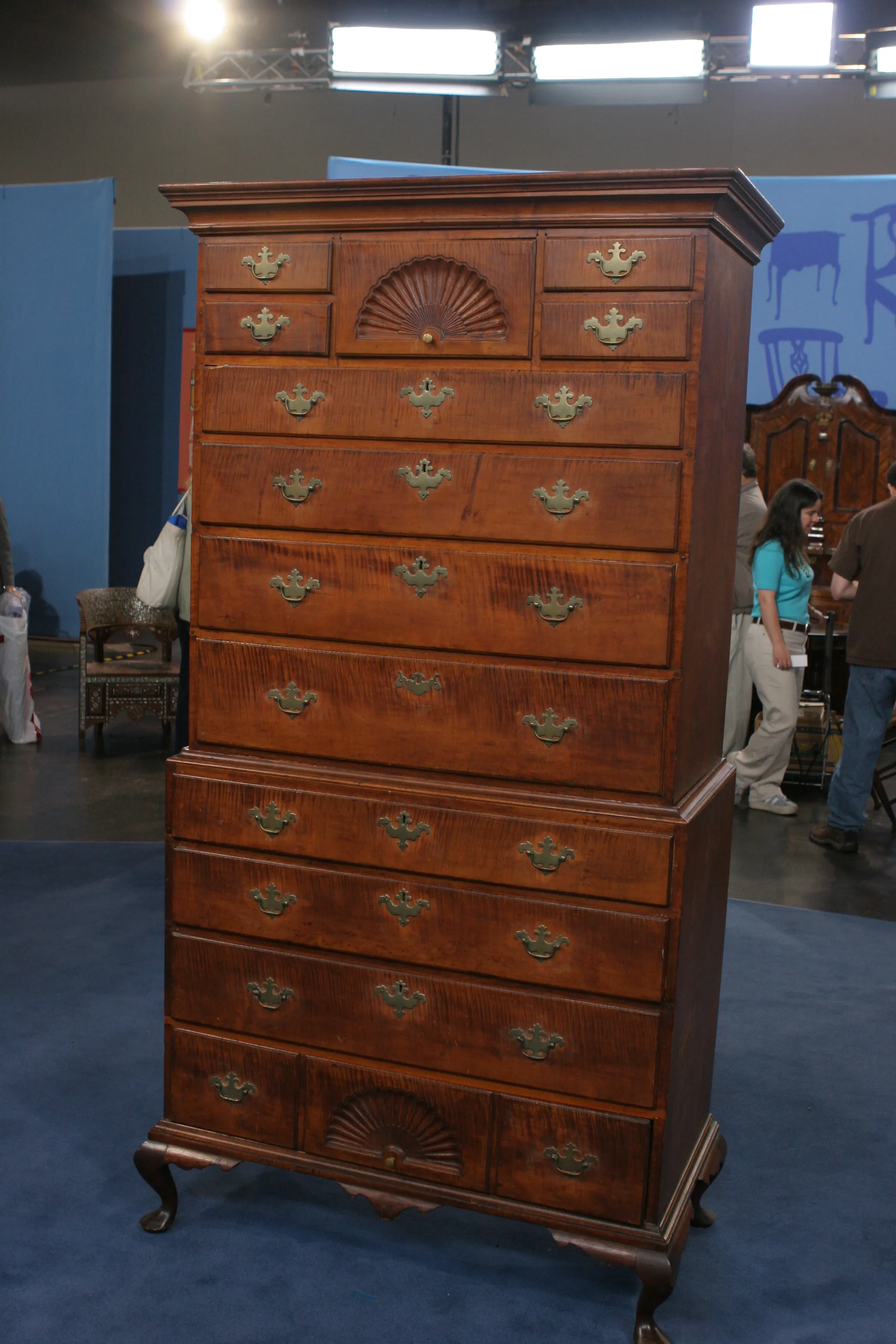
APPRAISER: This cabinet on chest wouldn't be a Biedermeier piece. This is actually also German. So it's in that family, but it's probably from the middle part of the 18th century, so about a good 50 to 75 years earlier than some of your Biedermeier pieces. This comes from the south of Germany, and it's walnut. And you're right, it does look kind of strange, doesn't it?
GUEST: Yes.
APPRAISER: Like, do these two pieces belong together? Actually, bizarrely, this is sort of a quirky South German form where you get small things on top of a...
GUEST: So it did originally go together?
APPRAISER: Yes and no.
GUEST: Okay.
APPRAISER: When you look at the inlay, it's different. If you look at the top or especially on the angles, see how it's like a little square pattern, it's very geometric. You look at the front, you've got a very different style that's all sort of ovals and cartouches. Usually when you have two pieces, the inlays should match because they were made to go together. So that's one thing right away that makes you wonder about whether or not they started out life together. The second thing is normally, the design that you would see on the top would sort of incorporate the feet. And although the front looks okay, you look in the back, they're just kind of hanging out there, past that little cartouche. So that's another indication that maybe this didn't start out together. The other thing really is the inside. If you want to pull out one side, I'll pull the other. It might be a little stiff. There we go. This is pretty simple. And generally, these interiors are quite simple. But it doesn't really relate to the style of the rest of the piece. So we basically have our two pieces that ended up together and have always been shown together because that's how one would have expected to see them in German furniture. In terms of value, this is something where the fashion and sort of taste have changed. Say this top and base were meant to be together. There would be one auction estimate. But because these two pieces are separate, I actually think it...this is the one time I would split them up and sell them separately. So with the bottom part as a chest of drawers, you'd probably be looking at in the region of $1,500 to $2,000 at auction, and with the top portion being around, say, $500 to $700 at auction. If this piece had been all original, you'd probably be looking in the range of $3,000 to $5,000. Interestingly, if we had sold this, say, maybe ten years ago, even five years ago, you'd be looking probably more probably about double the price.
GUEST: I won't ever sell it, so...
APPRAISER: Yeah.
GUEST: I'm glad to know about it.
APPRAISER: That's wonderful. I'm glad to be able to share that with you.