Clocks
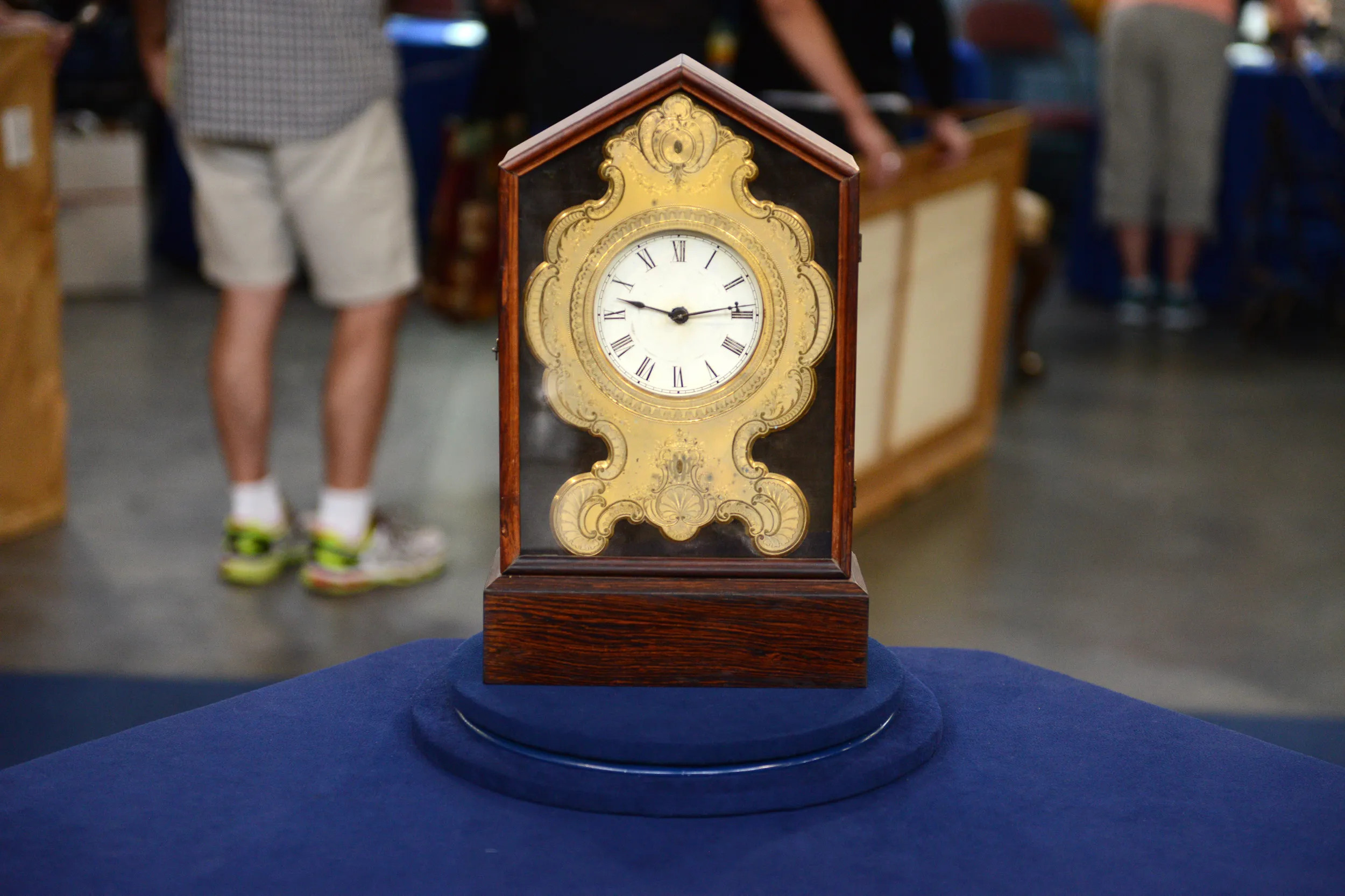
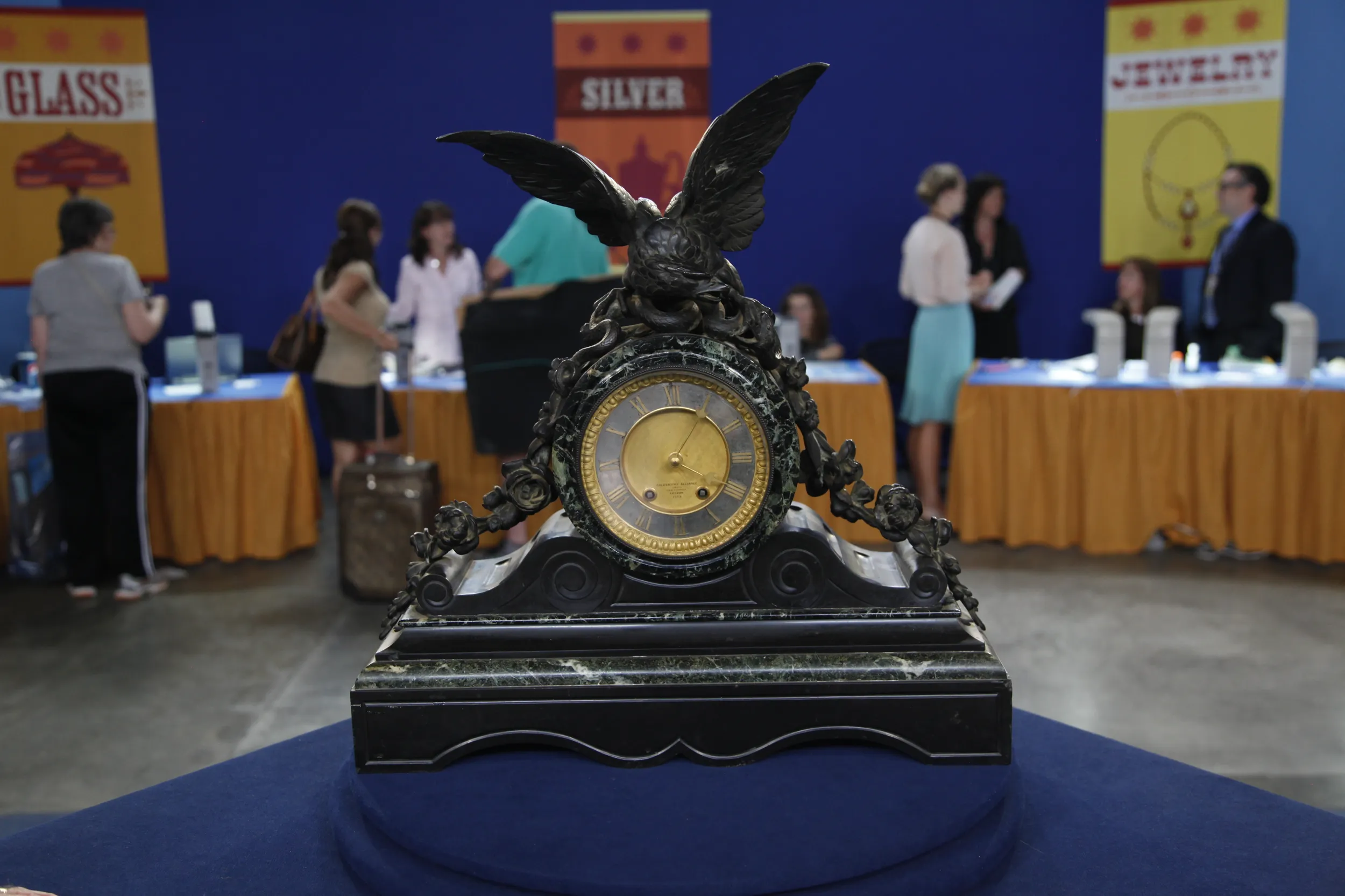
George Washington Commemorative Mantel Clock, ca. 1810
Appraiser
Gordon S. Converse
Updated Value (2013)
$110,000 - $125,000
Updated Value (2019)
$125,000 Auction
APPRAISED VALUE (1999)
$50,000 - $80,000 Auction
Update: January 30, 2012
A viewer recently pointed out that two different appraisals of clocks marked "Dubuc" posited differing information about Dubuc's role in the clocks' manufacture. One appraisal was from our Season 12 "Politically Collect" episode with appraiser Gordon Converse, and the second was from the Season 11 "Salt Lake City, Hour 2" with appraiser John Delaney.
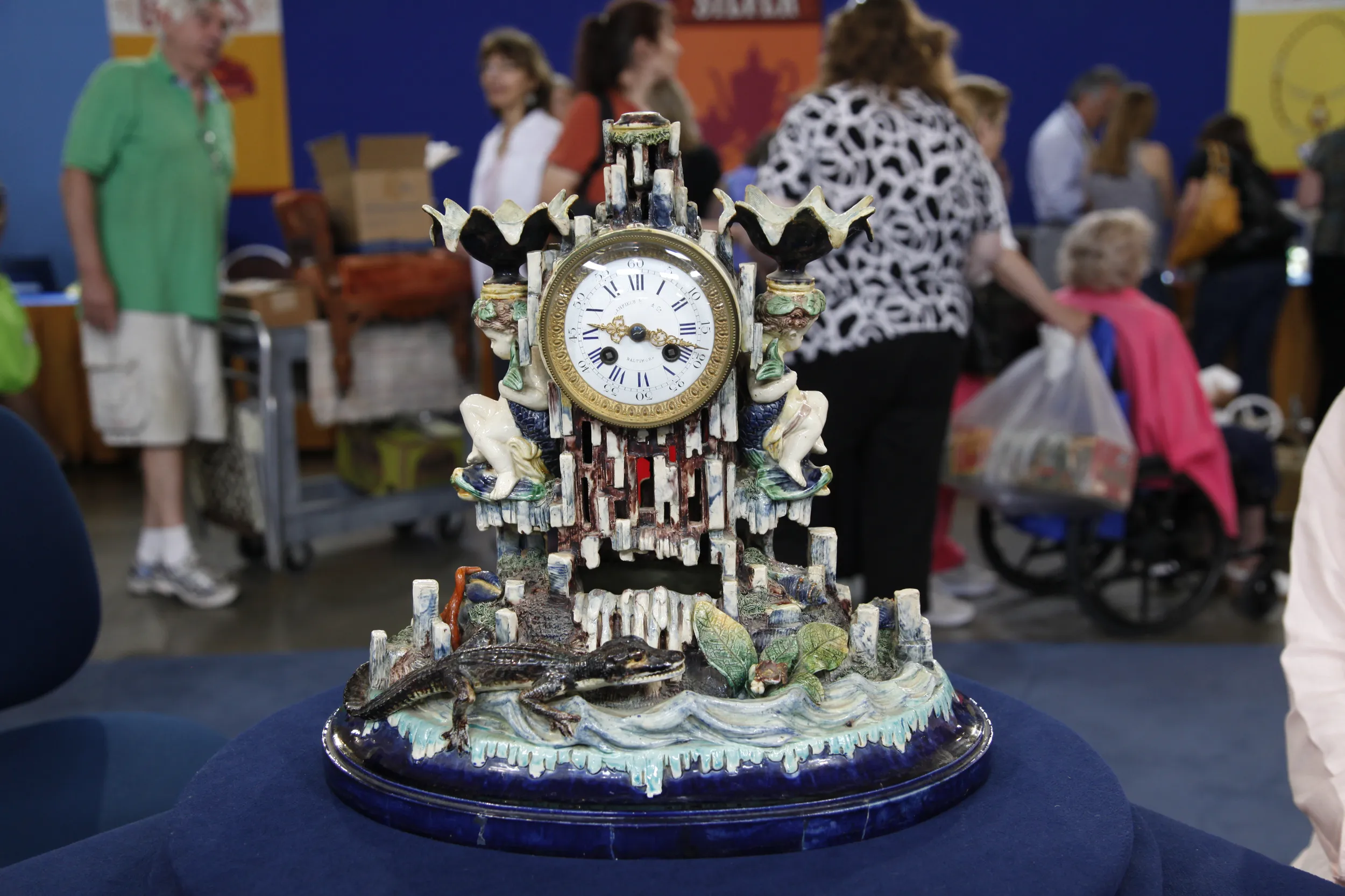
Delaney clarified the point saying: "Was Dubuc responsible for making the entire clock? Most likely not." However, "The reality is that he must have had a major role in the form's construction or creation. He is credited as being a bronzier in several listings, but he was partly responsible for assembling the form as a whole and bringing [the clocks] into this country, and in many instances is credited with making this form."
Update 12.6.2010: After a November broadcast of this segment, which originally aired in February 2000, a viewer wrote in to say that the appraiser misstated the location of George Washington's farewell address to his officers at the conclusion of the Revolutionary War. General Washington bade farewell to his officers not in Philadelphia, but at Fraunces Tavern in New York City on December 4, 1783. He then traveled to Annapolis, Maryland, and resigned his commission as commander-in-chief of the Continental Army.
Photos

Support Provided ByLearn More
Featured In
episode
Season 18
Vintage Providence
ANTIQUES ROADSHOW looks back at items from Providence, Rhode Island 15 years later.
episode
Season 12
Special: Politically Collect
ROADSHOW celebrates America's passion for collecting and electing in a special edition.
Mantel Clock
Understanding Our Appraisals
Placeholder