Georg Jensen Gold Necklace, ca. 1960
GUEST: I inherited this necklace from my grandmother. She was born in 1900 and she lived until she was 102.
APPRAISER: Wow.
GUEST: So I got it in 2002. My grandmother grew up in Sedalia, Missouri, and then she was a woman ahead of her time. She went to college in Chicago and then worked at Northwestern University. Then she got married and moved to New Rochelle, New York. So she must have gotten the necklace either in New York or Chicago.
APPRAISER: How'd she come by it?
GUEST: I don't really know, but she was a really independent woman. In fact, one of the pieces of advice that she gave me was, a woman should always have her own money. So she might have bought it for herself.
APPRAISER: Very nice-- yeah, that's, that's impressive. Especially in those times.
GUEST: It s, she sure was. All right.
APPRAISER: It's from a famous Danish designer. His name is George Jensen. He's really well-known for his early career in silver design. He started in Copenhagen, and his original motifs were basically very natural. He would make brooches and jewelry with deer motifs and tulip motifs. George Jensen did pass away in 1935. The company continued on. To this day, you can still buy George Jensen jewelry. It is from the mid-century, the late '50s, early '60s. It's marked on the back. It has his classic signature the company adopted after the 1940s.
GUEST: Okay.
APPRAISER: Which is his name with this oval shape of dots surrounding it.
GUEST: Got it.
APPRAISER: It's very iconic.
GUEST: Okay.
APPRAISER: And it says "750 18K"-- which is the same thing. The Europeans mark their gold 750 when it's 18K. And it's model number 7104. And we see that marked on the clasp. Pieces similar to this are selling in the $12,000 to $14,000 range.
GUEST: Wow! (chuckles) Wow!
APPRAISER: Yeah.
GUEST: Wow. (laughs) That's fantastic.
APPRAISER: I think that, being a unique piece, it might fetch just a little bit more.
GUEST: Oh, okay, tell me. (laughs) (laughs)
APPRAISER: I think, in a retail situation, a necklace like this would be $15,000.
GUEST: Whoa. (chuckles) Thank you, Grandmother.
(both laugh)
GUEST: And if I wanted to insure it, how much would you recommend?
APPRAISER: I would suggest somewhere in that range.
GUEST: Okay.
APPRAISER: And just the gold weight alone is worth about $4,200.
GUEST: Fantastic.
APPRAISER: Gold is so expensive right now. It's really at an all-time high. There's jewelry out there that's jewelry that is also art.
GUEST: Uh-huh.
APPRAISER: And that is really what gives this the value.

$15,000 Retail
Featured In

episode
Living History Farms, Hour 3
Luminous treasures are unveiled at Living History Farms. One is $50,000 to $70,000!
20th Century
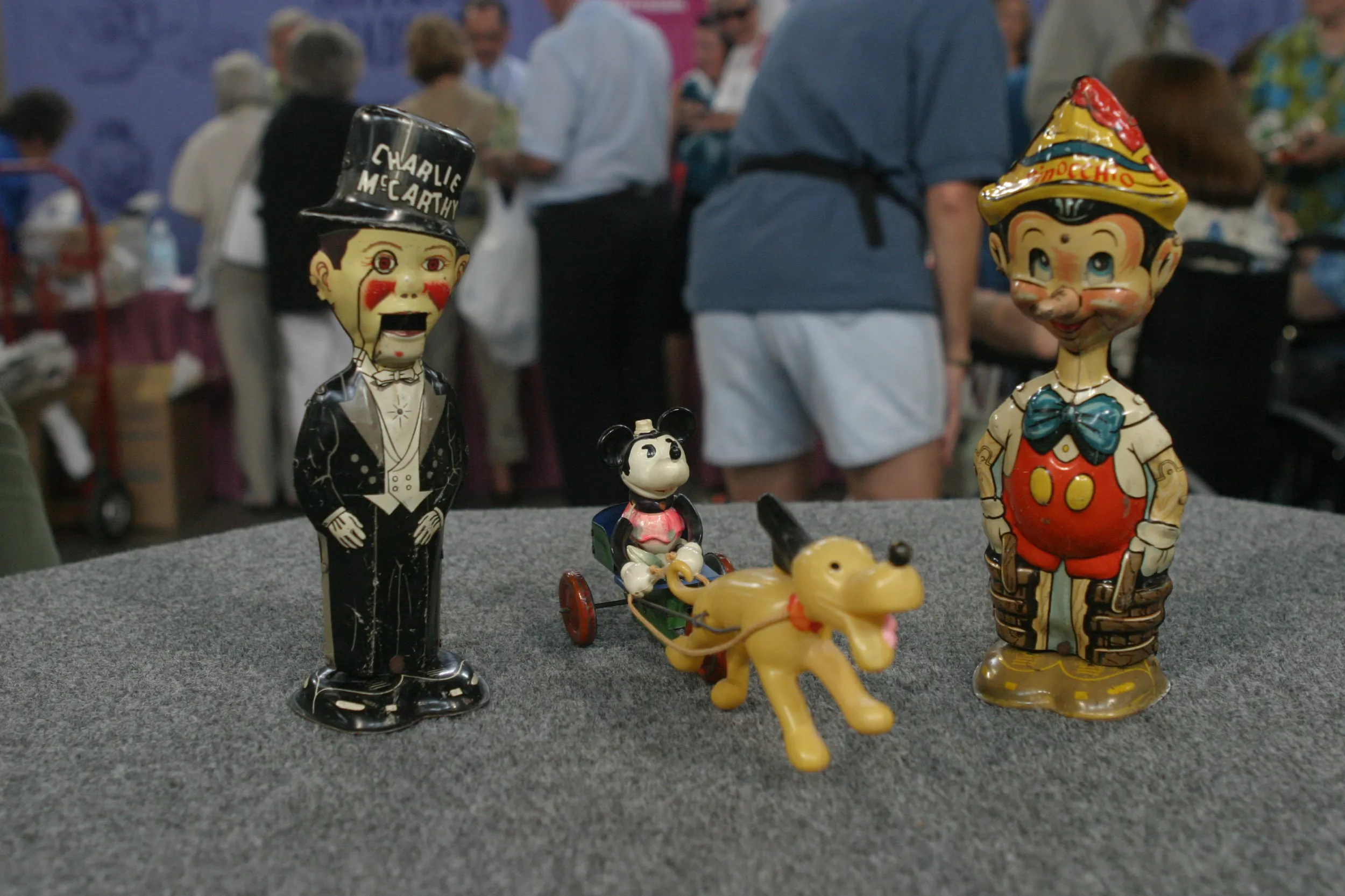
appraisal
Comic Wind-up Toys, ca. 1930
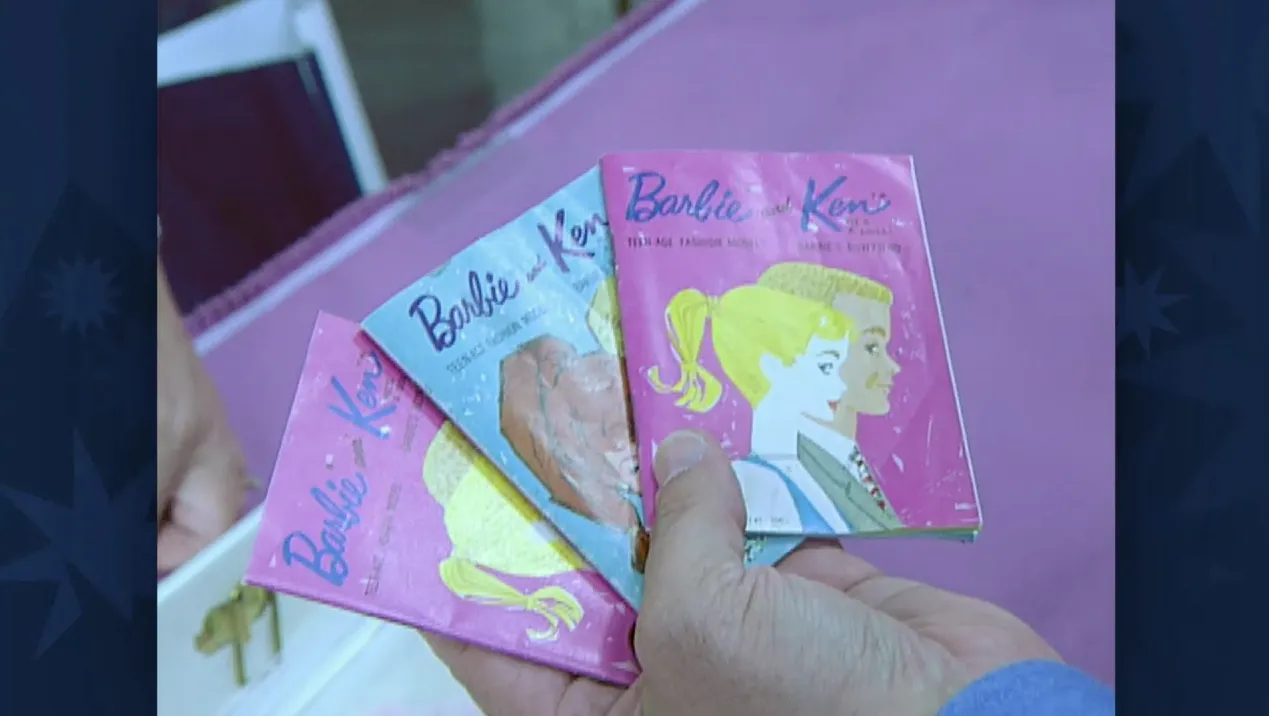
appraisal
Barbie Accessories & Case, ca. 1960
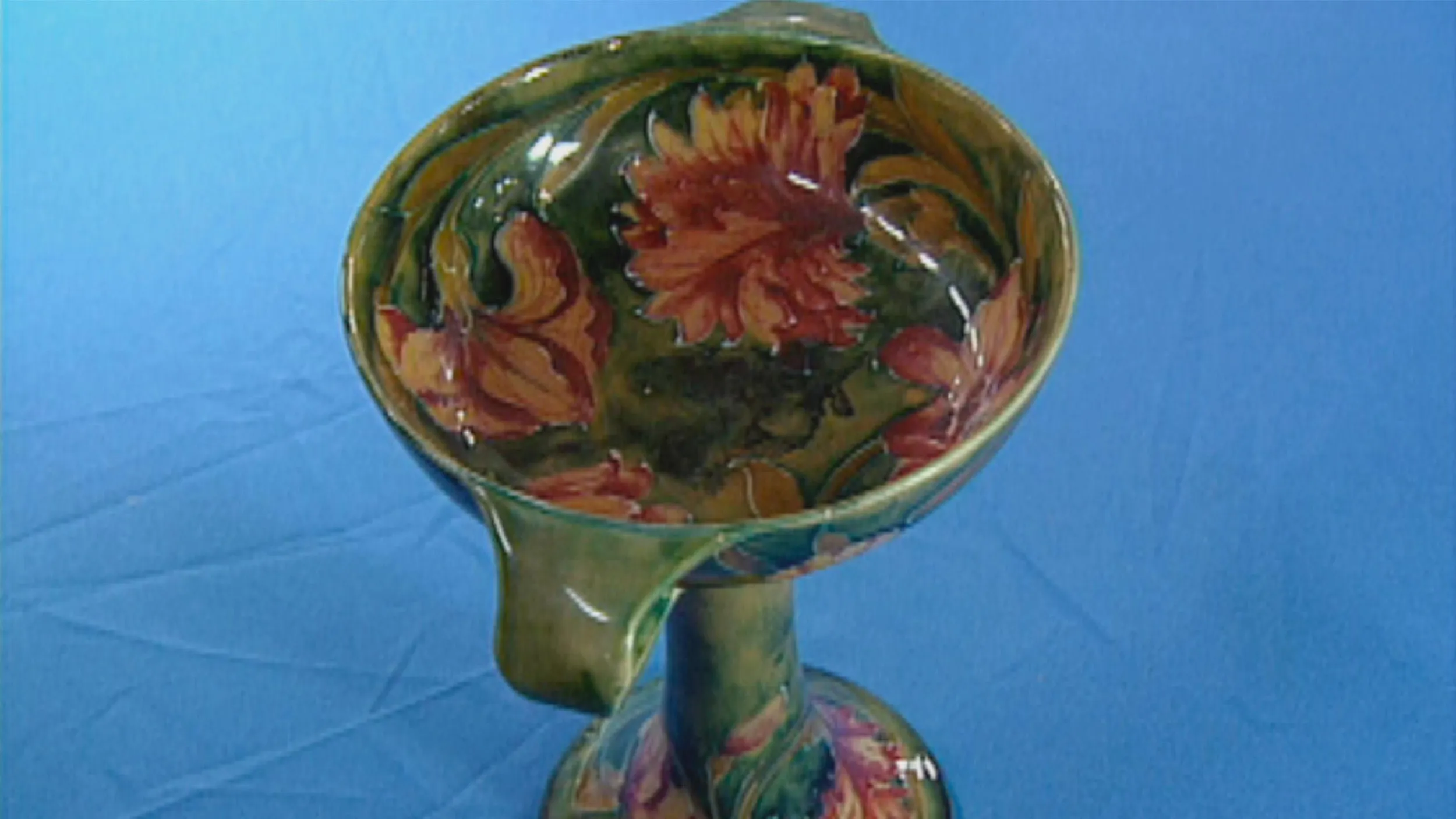
appraisal
William Moorcroft Pottery, ca. 1910
appraisal
Understanding Our Appraisals
Executive producer Marsha Bemko shares her tips for getting the most out of ANTIQUES ROADSHOW.
Value can change: The value of an item is dependent upon many things, including the condition of the object itself, trends in the market for that kind of object, and the location where the item will be sold. These are just some of the reasons why the answer to the question "What's it worth?" is so often "It depends."
Note the date: Take note of the date the appraisal was recorded. This information appears in the upper left corner of the page, with the label "Appraised On." Values change over time according to market forces, so the current value of the item could be higher, lower, or the same as when our expert first appraised it.
Context is key: Listen carefully. Most of our experts will give appraisal values in context. For example, you'll often hear them say what an item is worth "at auction," or "retail," or "for insurance purposes" (replacement value). Retail prices are different from wholesale prices. Often an auctioneer will talk about what she knows best: the auction market. A shop owner will usually talk about what he knows best: the retail price he'd place on the object in his shop. And though there are no hard and fast rules, an object's auction price can often be half its retail value; yet for other objects, an auction price could be higher than retail. As a rule, however, retail and insurance/replacement values are about the same.
Verbal approximations: The values given by the experts on ANTIQUES ROADSHOW are considered "verbal approximations of value." Technically, an "appraisal" is a legal document, generally for insurance purposes, written by a qualified expert and paid for by the owner of the item. An appraisal usually involves an extensive amount of research to establish authenticity, provenance, composition, method of construction, and other important attributes of a particular object.
Opinion of value: As with all appraisals, the verbal approximations of value given at ROADSHOW events are our experts' opinions formed from their knowledge of antiques and collectibles, market trends, and other factors. Although our valuations are based on research and experience, opinions can, and sometimes do, vary among experts.
Appraiser affiliations: Finally, the affiliation of the appraiser may have changed since the appraisal was recorded. To see current contact information for an appraiser in the ROADSHOW Archive, click on the link below the appraiser's picture. Our Appraiser Index also contains a complete list of active ROADSHOW appraisers and their contact details and biographies.


