Gary Ernest Smith Oil Painting, ca. 2000
GUEST: This is a painting from a local painter here that I acquired from a friend. We've had it for eight or nine years. My understanding was the painting was, um, from a view of the Capitol in Salt Lake City, kind of facing down towards Main Street, which obviously would have been a long time ago.
APPRAISER: And the artist?
GUEST: Gary Smith.
APPRAISER: This is an oil-on-board painting by one of the more well-known contemporary Mormon artists living today.
GUEST: Mm-hmm.
APPRAISER: He is from Oregon o, originally.
GUEST: Uh-huh.
APPRAISER: But he, he lives around here.
GUEST: Yes.
APPRAISER: And he's painted around here a lot.
GUEST: Mm-hmm.
APPRAISER: And has done a lot for the temples. He was actually director of the gallery at Brigham, uh, Young University. The painting's not dated. I think it, it's probably from circa 2000.
GUEST: Mm-hmm.
APPRAISER: The artist was born in 1942-- he's still active. It could be topographical, but I think what it really shows is this artist at, at his best. He's very well known for his use of simple composition, strong colors and forms, and imbuing a certain kind of spiritual sense...
GUEST: Mm-hmm.
APPRAISER: …into his landscapes, with ideas such as connection to God, connection to hard work, connection to the West and to the history of the American West. A lot of artists, their ultimate goal is to achieve something a little bit more, a little bit higher, uh, something closer to the spiritual plane. And, and, and in doing so, using their own medium. I know that this artist has written about working in that way.
GUEST: Mm-hmm.
APPRAISER: But it's also something that's, you can see. It, it has this vibration-- vibration of colors, vibration of movement, vibration of form-- that just altogether makes a, a, a really whole, complete artwork. He's important. He's important as a contemporary artist. He's important as a Western artist. He's important as a Mormon artist. Have you, have you ever had it appraised?
GUEST: Shortly after I acquired it, I was offered $2,000, and said, "You know, no, "it's probably got a lot more meaning...
APPRAISER: Mm-hmm.
GUEST: …than $2,000."
APPRAISER: A conservative auction estimate on this would be about $8,000 to $12,000.
GUEST: Mm-hmm. Wow. Way better than what I was offered.
APPRAISER: That’s great.
GUEST: It could go higher.
APPRAISER: Well, thank you. It brings a lot of joy.

$8,000 - $12,000 Auction
Featured In

episode
Red Butte Garden & Arboretum, Hour 2
Premiered Mon, Jan 12, 2026 — Watch all-new stunning treasures discovered during ROADSHOW’s visit to Salt Lake City, Utah!
Landscape

appraisal
Meiji Period Namikawa School Cloisonné Vase

appraisal
Walter Launt Palmer Oil Painting, ca. 1900

appraisal
Peter Moran Painting, ca. 1880
appraisal
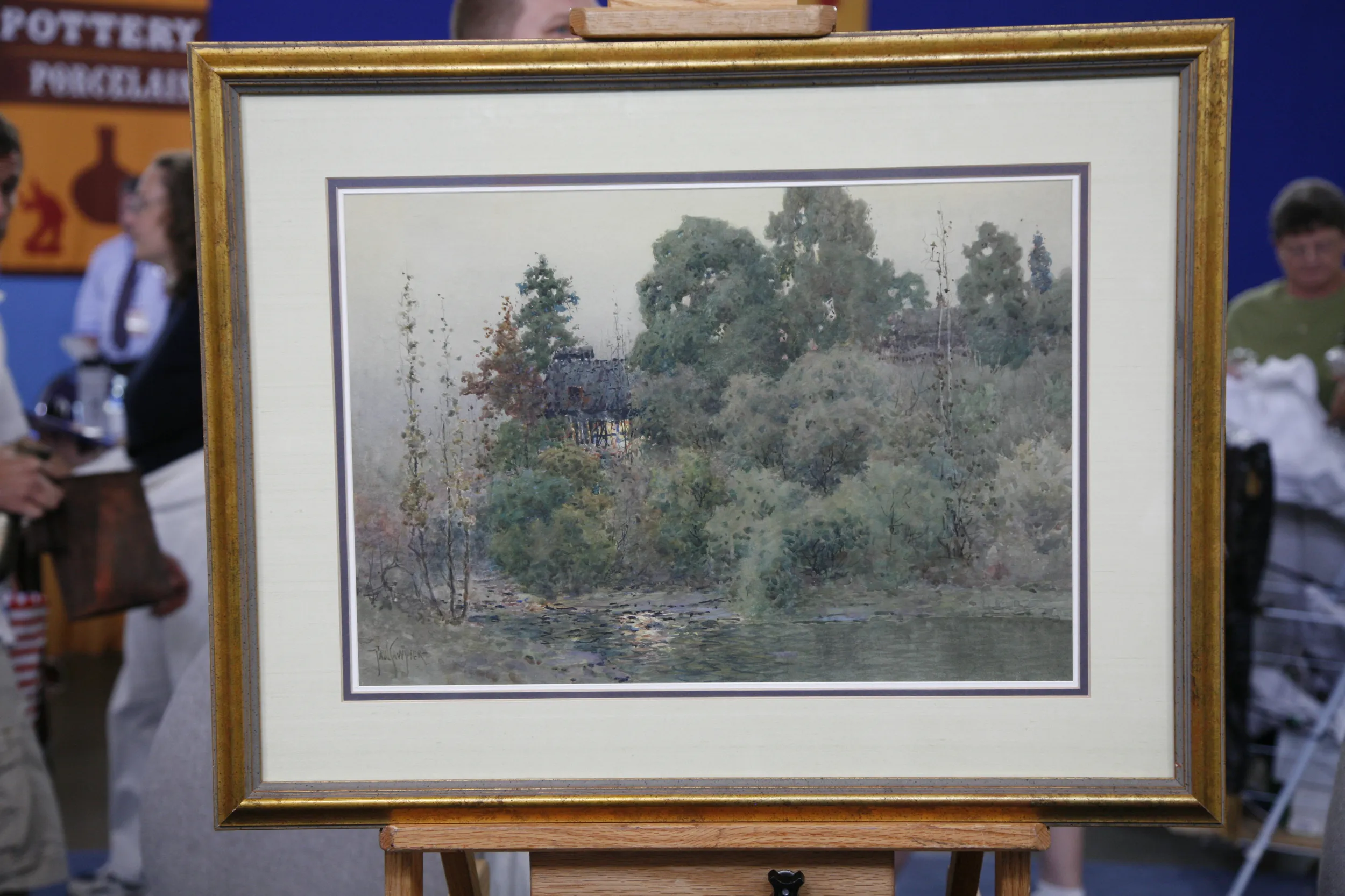
Paul Sawyier Watercolor, ca. 1900
Understanding Our Appraisals
Executive producer Marsha Bemko shares her tips for getting the most out of ANTIQUES ROADSHOW.
Value can change: The value of an item is dependent upon many things, including the condition of the object itself, trends in the market for that kind of object, and the location where the item will be sold. These are just some of the reasons why the answer to the question "What's it worth?" is so often "It depends."
Note the date: Take note of the date the appraisal was recorded. This information appears in the upper left corner of the page, with the label "Appraised On." Values change over time according to market forces, so the current value of the item could be higher, lower, or the same as when our expert first appraised it.
Context is key: Listen carefully. Most of our experts will give appraisal values in context. For example, you'll often hear them say what an item is worth "at auction," or "retail," or "for insurance purposes" (replacement value). Retail prices are different from wholesale prices. Often an auctioneer will talk about what she knows best: the auction market. A shop owner will usually talk about what he knows best: the retail price he'd place on the object in his shop. And though there are no hard and fast rules, an object's auction price can often be half its retail value; yet for other objects, an auction price could be higher than retail. As a rule, however, retail and insurance/replacement values are about the same.
Verbal approximations: The values given by the experts on ANTIQUES ROADSHOW are considered "verbal approximations of value." Technically, an "appraisal" is a legal document, generally for insurance purposes, written by a qualified expert and paid for by the owner of the item. An appraisal usually involves an extensive amount of research to establish authenticity, provenance, composition, method of construction, and other important attributes of a particular object.
Opinion of value: As with all appraisals, the verbal approximations of value given at ROADSHOW events are our experts' opinions formed from their knowledge of antiques and collectibles, market trends, and other factors. Although our valuations are based on research and experience, opinions can, and sometimes do, vary among experts.
Appraiser affiliations: Finally, the affiliation of the appraiser may have changed since the appraisal was recorded. To see current contact information for an appraiser in the ROADSHOW Archive, click on the link below the appraiser's picture. Our Appraiser Index also contains a complete list of active ROADSHOW appraisers and their contact details and biographies.


